AI Tech News
2026-10-27
Anthropic S-1
2026-10-27Anthropic's S-1 filing outlines massive long-term infrastructure commitments totaling hundreds of billions of dollars over the next decade with partners like Google, AWS, and SpaceX. This aggressive datacenter expansion strategy relies entirely on sustained market demand for its AI models to justify the enormous financial obligations and capacity buildouts. Additionally, the inclusion of short-notice cancellation clauses in certain agreements highlights the significant risks of overbuilding capacity if AI adoption unexpectedly stalls.
Comments
OpenAI has shared novel findings from its AI models regarding the Kakeya conjecture, the Exponential Time Hypothesis, and quantum chromodynamics. These breakthroughs span the fields of mathematics, computer science, and physics. The company has also provided methods for researchers to verify these results and build upon them for future scientific advancements.
Comments
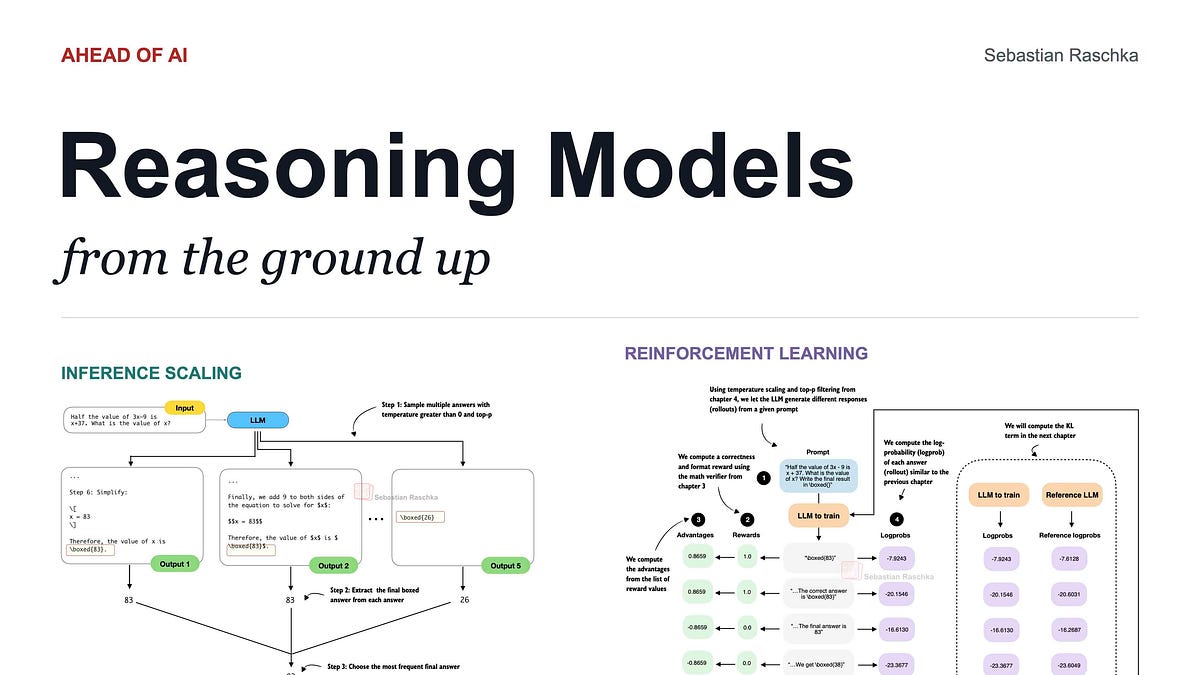
Sebastian Raschka has launched an extensive 11-hour video course teaching developers how to build reasoning models from scratch. Utilizing Python and PyTorch, the curriculum covers critical techniques including evaluation, inference-time scaling, reinforcement learning, and model distillation.
CommentsGPT-6.1 Terra
2026-10-27OpenAI has released GPT-6.1 Terra, a cost-efficient middle-tier model aimed at automation and technical writing rather than pure software development. Despite its competitive pricing, users note its confusing market position due to overlapping performance with the larger Sol model and a highly convoluted planetary naming schema.
Comments

The Mythical Man-Month in the Age of AI
2026-10-27This article reevaluates Fred Brooks's classic software engineering principles to determine how artificial intelligence impacts modern development productivity. By examining whether Brooks's Law still holds true for developers augmented by AI, the piece offers an updated framework for managing software teams and estimating project timelines in the AI era.
Comments
Wikipedia is utilizing automated cleanup tools alongside human editors to combat the influx of AI-generated content. This joint effort focuses on identifying and removing subtle machine-written biases and fabricated citations. Ultimately, the initiative aims to protect the platform's integrity and ensure the encyclopedia remains a human-curated resource.
CommentsLaw enforcement agencies are utilizing AI to pull over drivers for suspicious travel patterns based on comprehensive vehicle telemetry harvested by automakers. Manufacturers often require users to consent to sharing this data with third parties, including police, just to access basic features like remote start. This automated surveillance allows authorities to track detailed movement histories, raising significant privacy concerns.
Comments
Anthropic trained its Claude AI model on pirated books, leading to a $1.5 billion copyright settlement. The legal action stems from the company's unauthorized use of copyrighted works belonging to at least ten Stanford University professors.
Comments
New iMac with M6
2026-10-27Apple has unveiled the new iMac powered by the superfast M6 chip, positioning the all-in-one desktop as a highly capable platform for artificial intelligence. The updated model features a 24-inch 4.5K Retina display and introduces the latest Wi-Fi 7 and Bluetooth 6 connectivity.
CommentsIs my data used for model training?
2026-10-27Paying subscribers are raising concerns about Anthropic's privacy practices after discovering that dismissing feedback prompts in Claude Code might inadvertently be logged as training data. While some users suspect this is a deliberate loophole to bypass explicit data privacy promises, others argue it could simply be a sloppy implementation detail. The discussion highlights broader frustrations regarding corporate transparency, data surveillance, and the potential exposure of user intellectual property in AI models.
CommentsFrigadeHQ has launched Hob, a free and open-source desktop application that serves as a local alternative to cloud-based AI tools like ChatGPT and Claude. The software allows users to run open-weight models directly on their Mac, Windows, or Linux computers. By processing data on-device, Hob ensures complete user privacy and functions entirely offline.
Comments
As AI agents generate code faster than humans can review it, the role of software engineers is evolving rather than disappearing. Developers must maintain strong programming fundamentals, broad technical knowledge, and a readiness to troubleshoot complex errors when AI-generated systems inevitably break.
CommentsPrivate equity-backed software companies are confronting a $300 billion debt wall driven by high interest rates and floating-rate loans, undermining the aggressive pricing strategies that fueled their recent growth. This financial pressure is compounded by the rise of generative AI, which threatens to dismantle the niche monopolies these firms rely on by making custom software easier to replicate. Consequently, this combination of looming debt and shifting technological paradigms is widely seen as a major driver behind the current slowdown in software engineering hiring.
Comments
Survival LLM is a free, open-source AI assistant and emergency knowledge base that operates entirely offline on a local computer. By running without an internet connection, it provides users with reliable access to critical survival information and AI assistance during network outages.
Comments
A configuration mismatch in the GLM-5.3 model on Workers AI triggered an SGLang bug that exposed KV cache pages across different requests. The issue has since been resolved by the engineering team to prevent further cross-request data leakage.
Comments
Amazon is dismantling its AI labs and reallocating resources after experiencing sustained failures in the sector. The tech giant is funneling its focus into a new project led by a prominent AI robotics expert.
Comments
Anthropic has shared an update on its progress using the Claude AI model to accelerate drug development and discovery. The company has partnered with six external organizations to help cure diseases while also launching internal programs targeting rare childhood muscular dystrophy.
Comments
Liquid AI has introduced LFM3, a new family of open-weight, 2-billion parameter models covering text, vision, audio, and decision-making modalities. These models are specifically optimized for rapid fine-tuning and high-speed execution, bringing specialized multi-modal intelligence directly to any device.
Comments
Five inference providers now support abliterated DeepSeek language models. This expansion allows developers to route models with automatic fallbacks and modality-aware selection. It also provides a centralized platform to easily compare availability and token pricing across all supported services.
Comments
A new project introduces Prove, a plugin designed to bring specification-first agentic development to AI coding agents. This approach improves autonomous code generation by requiring reviewed specifications, utilizing isolated worktrees, and enforcing gated commits.
Comments
Hex Raises $100M
2026-10-27Hex has raised $100 million in new funding to accelerate its growth and product development. The company simultaneously announced the launch of Hex 4.0, introducing a major update to its platform.
Comments2026-10-26
While AI tools like LLMs can significantly accelerate software development, developers warn they often generate fragile, messy, or suboptimal code if not carefully managed. Industry professionals compare these AI models to power tools that require strong human expertise and rigorous code review to prevent technical debt and poor architectural decisions. Ultimately, to build truly ambitious and robust software, engineering teams must balance the speed of AI-generated code with a strict commitment to maintainability and performance best practices.
CommentsA dermatologist evaluating frontier large language models for skin cancer diagnosis found that advanced systems like GPT-6 Astra and Claude Fable 5.1 were surprisingly inaccurate. In contrast, a decade-old convolutional neural network significantly outperformed these modern AI models in correctly identifying the disease.
Comments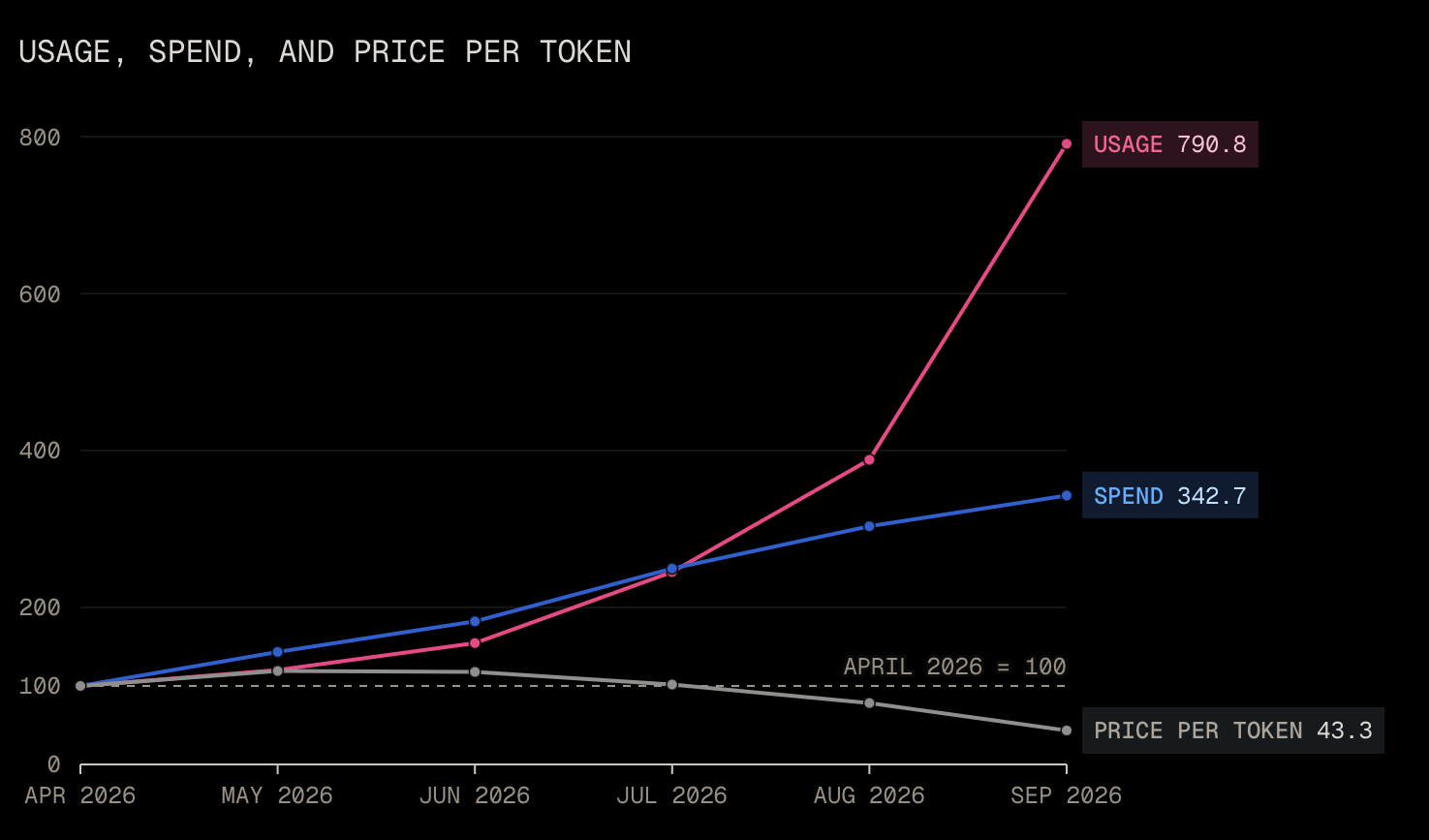
OpenAI and Anthropic have slashed their LLM prices by up to 80% over the past few months. This dramatic reduction highlights the rapidly declining true cost of generating a token as AI infrastructure becomes increasingly efficient.
Comments
The State of Context Engineering
2026-10-26Advancing AI models are introducing unexpected complexities for developers building applications and harnesses. In response, the practice of context engineering has evolved significantly this year, with new methodologies shaping its future trajectory.
Comments
IBM's CEO announced that open weight AI models are now highly competitive for on-premises deployment, delivering 90 percent of the performance of proprietary systems at just ten percent of the cost. By requiring only two or three server racks, these models offer enterprises an irresistible combination of high capability and significant affordability.
Comments
Attention Is Not What You Need (2025)
2026-10-26A newly published arXiv paper titled Attention Is Not What You Need challenges the foundational dominance of Transformer architectures by proposing alternative mechanisms that reduce or eliminate reliance on standard self-attention. This research highlights a growing shift in machine learning toward developing more efficient and scalable models that move beyond traditional attention-based paradigms.
CommentsReader discussions surrounding the displacement of human workers by AI highlight concerns over the loss of economic leverage and political power, rather than just wages. While some fear dystopian suppression of displaced populations, others argue that policies like universal basic income could actually foster greater civic engagement. Ultimately, the debate centers on whether AI is the true culprit behind these socioeconomic shifts or if broader policy failures and historical automation trends are to blame.
CommentsA new toolkit called ADRs4AI introduces deliberation records specifically designed to track human-AI collaboration by versioning them in Git. This framework allows developers to preserve their thought processes and ensure that decisions compound over time, bringing greater structure to the emerging practice of deliberative programming.
Comments