AI Tech News
2026-09-04

GPT-6 Astra
2026-09-04GPT-6 Astra has been introduced as the most intelligent and aligned model to date. It features state-of-the-art capabilities across computer use, coding, cybersecurity, and science.
CommentsCerebras has made the Qwen 3.8 27B model available on its public endpoints, achieving an impressive inference speed of 1500 tokens per second. Developers can now access this model and browse other available options directly through the platform's public API.
Comments

A comprehensive study analyzed nearly 17,000 sessions to evaluate how coding agents like Claude Code, Codex, and Cursor select and implement development tools. The research tested 1,163 prompt variations across 75 repositories to observe the agents' actual behaviors. By focusing on real implementation rather than just recommendations, the findings provide deep insights into the practical decision-making processes of AI assistants.
Comments
A developer used a large language model to translate the 68000 assembly code of their 1993 Amiga game, Babylonian Twins, and port it to the Godot engine. The creator recently shared their findings after reviewing the AI-assisted porting process. Additionally, the original game disks have been released for free on itch.io.
Comments
IFM has launched K2 Horizon, an open-source fleet of six frontier AI models designed to handle reasoning, coding, and agentic workflows. This connected ecosystem also provides specialized solutions for edge devices and enterprise deployment, offering developers a comprehensive suite of advanced tools.
Comments
Xanadu was waiting for agents
2026-09-04Ted Nelson's sixty-year-old vision of a fully interconnected docuverse, originally outlined in Project Xanadu, is finally coming to fruition. The recent rise of AI agents has introduced the native users required to navigate this complex information space, bringing his long-awaited technological dream to life.
Comments
Top-ranked Go player Shin Jin-seo has defeated the premier artificial intelligence engine KataGo in a dramatic comeback match while playing with a two-stone handicap. This victory marks a significant milestone in the ongoing competition between human grandmasters and advanced AI.
Comments
Tasklet, a Y Combinator-backed startup, is hiring a Customer Success Engineer to support users building complex AI-driven automation workflows. Rather than simply resolving support tickets, the position focuses on enhancing the overall user experience by optimizing the core product, self-serve resources, and internal tooling.
Comments
The Information reports that OpenAI's upcoming Astra model features a novel looped transformer architecture. This recurrent design has sparked debate among AI commentators, raising questions about the potential risks and broader implications of the technology.
CommentsAsk HN: Who is using MCP in production?
2026-09-04Hacker News developers are sharing diverse production use cases for the Model Context Protocol, including customer-facing voice agents, government open data initiatives, and automated web scraping. While many praise the protocol for providing a standardized, agent-friendly interface that simplifies third-party integrations and tool discovery, others caution about challenges like context window bloat and inefficiencies when handling large data payloads compared to traditional command-line tools.
Comments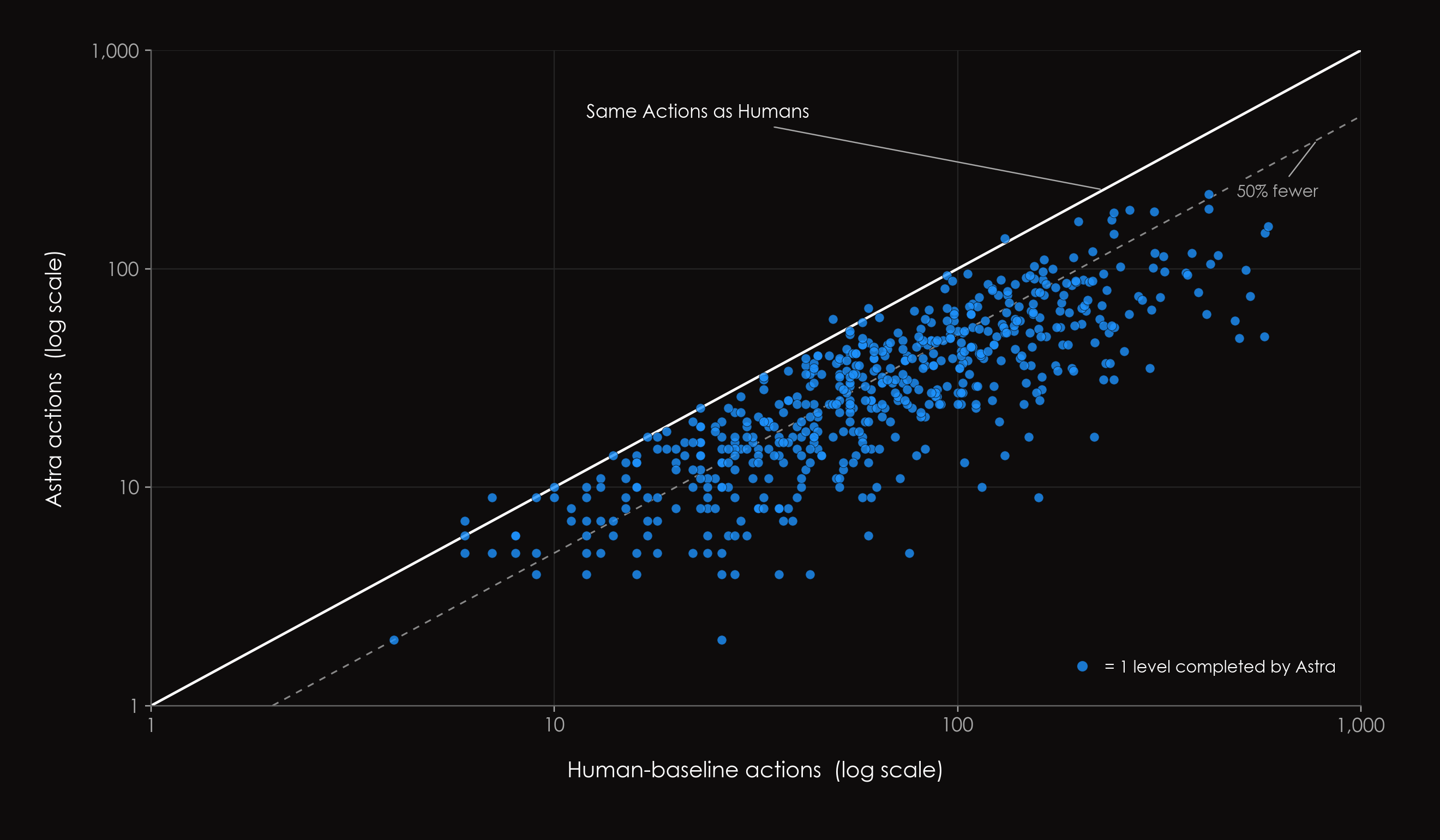
OpenAI's GPT-6 Astra on ARC-AGI-3
2026-09-04OpenAI's latest model, GPT-6 Astra, has achieved state-of-the-art results on the ARC-AGI-3 benchmark. This milestone demonstrates significant advancements in the model's abstract reasoning capabilities. The achievement marks a major step forward in the ongoing development of artificial general intelligence.
CommentsGenerative AI is disrupting front-end web development by empowering non-technical users to independently build and update websites at a fraction of the traditional cost. Although this automation threatens basic web design roles, senior engineers anticipate their expertise will remain essential for developing the underlying frameworks and guardrails of these new tools.
CommentsA simultaneous outage affecting OpenAI, Claude, and Grok led users to suspect a cascading failure across major cloud infrastructure providers. However, the community heavily debated the reliability of Downdetector's tracking data, arguing that self-reported spikes are often skewed by observer bias. Ultimately, the discussion highlighted widespread skepticism toward automated outage trackers and the unpredictable nature of shared digital infrastructure.
Comments2026-09-03

Muse Spark 1.3
2026-09-03Muse Spark 1.3 has been released with specialized training for autonomous agentic workflows and complex task execution. The latest version also introduces targeted optimizations to significantly improve its competitive coding performance.
Comments
Gemini 3.8 Flash and 3.8 Flash Cyber
2026-09-03The newly announced Gemini 3.8 Flash and 3.8 Flash Cyber models deliver next-generation artificial intelligence designed to power complex agentic workflows. Additionally, the specialized Cyber variant provides robust, tailored capabilities specifically engineered for advanced cybersecurity operations.
Comments
A recent analysis reveals that AI search engines like Perplexity are heavily citing obscure websites for software recommendations, with nearly 60 percent of sources falling outside the top 100,000 most-visited domains. Many of these highly cited sites, including three domains that generated over 215,000 best software pages, are specifically designed to be read by AI models rather than human users.
CommentsFable 5.1 World Modeling
2026-09-03PhiloLabs has released Fable 5.1, a world modeling update that enables the generation of virtual environments via code. The fable51-worlds project is now available on GitHub, where developers are encouraged to contribute to its ongoing development.
CommentsA recent discussion surrounding the rise of Large Language Models highlights a growing tension between the efficiency of standardized text and the loss of individual linguistic diversity. While some argue that homogenizing language improves clarity in professional contexts, critics warn that this algorithmic optimization strips away the rich expressiveness necessary for complex human thought. Ultimately, the debate reflects a broader cultural anxiety about sacrificing personal voice and diverse perspectives for the sake of technological convenience.
Comments
Users are expressing frustration over Mistral AI's confusing and shifting privacy policies regarding the use of customer prompts for model training. The discussion sparked a semantic debate over the contradictory phrase "opt-in by default" and how it misleads consumers about their actual privacy choices. Commenters contrasted Mistral's approach with competitors like Anthropic, which clearly disables data training by default for organizational tiers.
CommentsA look at the vintage Los Alamos Rolodex business cards highlights the enduring appeal of thoughtful, physical design compared to modern corporate branding. The discussion also pivots to critique the modern influx of AI-generated promotional imagery, underscoring a growing fatigue with cheap, automated AI slop in favor of authentic, human-crafted aesthetics.
CommentsMLC AI has introduced WebLLM, a high-performance inference engine that enables large language models to run directly inside web browsers. This open-source project allows developers to deploy advanced AI applications client-side, eliminating the need for backend server processing.
Comments
A recent arXiv paper explores how artificial neural networks spontaneously develop internal symbolic structures as they learn. The study bridges the gap between connectionist and symbolic AI paradigms by analyzing these hidden representations. Ultimately, the findings provide new insights into the interpretability and inner workings of deep learning models.
Comments2026-09-02

Claude Fable 5.1 and Claude Mythos 5.1
2026-09-02Anthropic has released Claude Fable 5.1 and Claude Mythos 5.1, their most advanced AI models optimized for coding and knowledge work. These new models also introduce powerful research capabilities, offering an early look at how artificial intelligence will accelerate future scientific progress.
CommentsReaders are debating the accuracy of tech commentator Ed Zitron's skeptical predictions regarding AI over-investment and industry profitability. While some defend his underlying concerns about the AI bubble as valid despite missed timelines, critics argue he acts as a confident pundit rather than an accurate forecaster. Furthermore, some commenters question the piece's definitive labeling of his claims as wrong, noting that several of his assertions remain highly debatable.
Comments
The efficient frontier of LLM inference
2026-09-02New techniques in large language model inference are optimizing the critical trade-off between latency and throughput. These methods either shift a deployment's position along the existing efficiency frontier or expand the boundary entirely to unlock greater overall system performance.
Comments
A new Safari extension called Weedout automatically filters out YouTube videos labeled as "Made with AI." The tool provides users with a simple way to avoid AI-generated content while browsing the platform.
Comments
A developer recently detailed their setup for running a local large language model server on an Apple M4 Pro Mac Mini. The configuration leverages the machine's 48 GB of RAM to efficiently handle AI workloads directly on the hardware.
CommentsA user recently discovered that OpenAI's desktop application, which was rebranded from Codex to ChatGPT, bundles a complete copy of LibreOffice. This unexpected inclusion accounts for a massive 1.7GB of storage space within the application's cache directory.
Comments
OpenAI has introduced Astra, the first model to meet the Critical cybersecurity capability threshold under the company's Preparedness Framework. Due to these advanced capabilities, the new AI model will be released with significantly stronger safety safeguards.
Comments
This article outlines strategies for building autonomous goal loops that enable AI coding agents to successfully tackle complex feature development. It explains how to equip these agents with real-world demands, protected metrics, and sufficient memory to ensure reliable and effective code improvements.
Comments