YC Accelerator News
The accelerator model popularized by Y Combinator continues to evolve, and this section keeps an eye on it. Articles cover new batches, application and admission news, changes to program structure or terms, and analysis of how startup accelerators shape early-stage companies.
Stories here often examine adjustments to batch size, funding terms, and application timelines, along with commentary from partners and alumni about what those changes mean. Comparative pieces look at how other accelerators respond when the most prominent program in the industry shifts its approach.
Anyone considering an accelerator application has a practical stake in this coverage, since terms and program design directly affect how much equity founders give up and what support they receive. Investors and ecosystem builders follow it too, because accelerator policy quietly steers where thousands of startups begin.
2026-08-31

“I just chose words carefully”
2026-08-31This blog post explores the principles of software craftsmanship and code quality by emphasizing the importance of precise communication in development. The author argues that carefully choosing words and naming conventions is just as critical to writing clean, maintainable software as the underlying logic. The piece highlights how thoughtful terminology directly impacts overall project clarity and long-term success.
Comments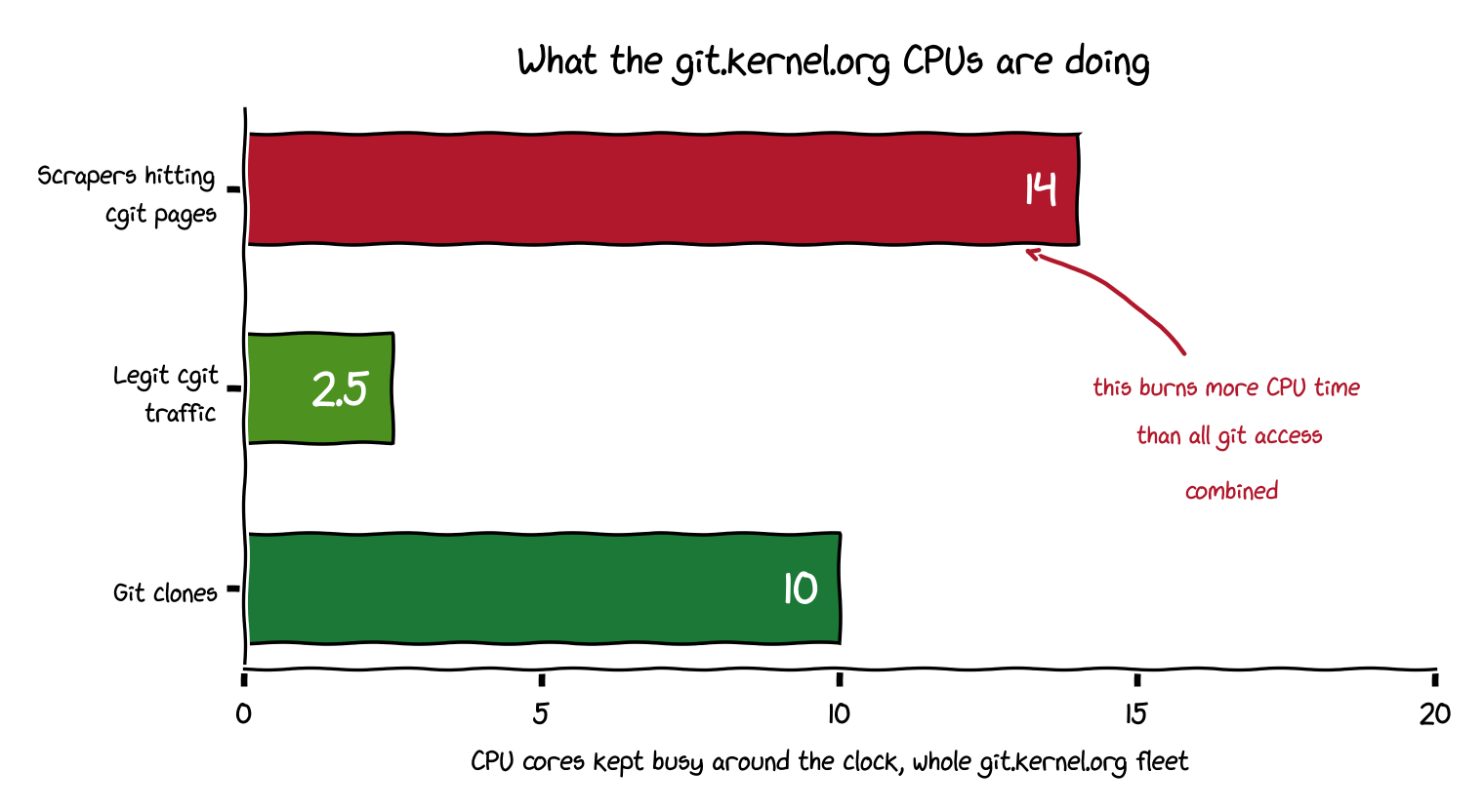
Creepy Crawlies
2026-08-31A recent analysis presents hard data detailing the significant impact of AI web crawlers on website infrastructure. The report demonstrates how these automated bots consume substantial bandwidth and server resources. This highlights the growing technical and financial burden they place on web publishers.
Comments

Understanding ChatGPT Work
2026-08-31OpenAI recently launched ChatGPT Work, a powerful yet complex tool that has seen rapid updates since its July 9th announcement. This article breaks down the confusing features of the new product to help users understand its capabilities and practical applications.
Comments
Matrox: Graphics for Professionals
2026-08-31Matrox is reinforcing its position in the professional graphics market by highlighting specialized solutions designed for demanding enterprise and creative workflows. The company continues to focus on delivering high-performance, multi-display hardware tailored specifically to the rigorous needs of professional users.
CommentsCobaltC – The Successor to C?
2026-08-31The official 1.0 specification for CobaltC has been released, introducing a new programming language billed as a potential successor to C. This foundational document outlines the core design, syntax, and features of the language for the developer community. Programmers can now review the specification to evaluate its capabilities and potential impact on systems development.
CommentsHaiku R1/beta6 has been released
2026-08-31Haiku has officially released version R1/beta6, marking the first major update for the operating system in approximately two years. The new beta arrives just a week after the project celebrated its 25th anniversary.
Comments
Vintage magnetic core memory modules once powered the computers aboard the 1980 Spacelab missions. These early computing components were essential for the reusable laboratory carried in the Space Shuttle's cargo bay. The hardware highlights the rugged, pioneering technology that supported early space exploration and scientific research.
CommentsA new project features a battery-free PCB business card that harvests NFC energy from a smartphone to power an onboard microcontroller. When tapped, the card draws enough radio frequency power to illuminate 21 animated LEDs without requiring an internal battery.
Comments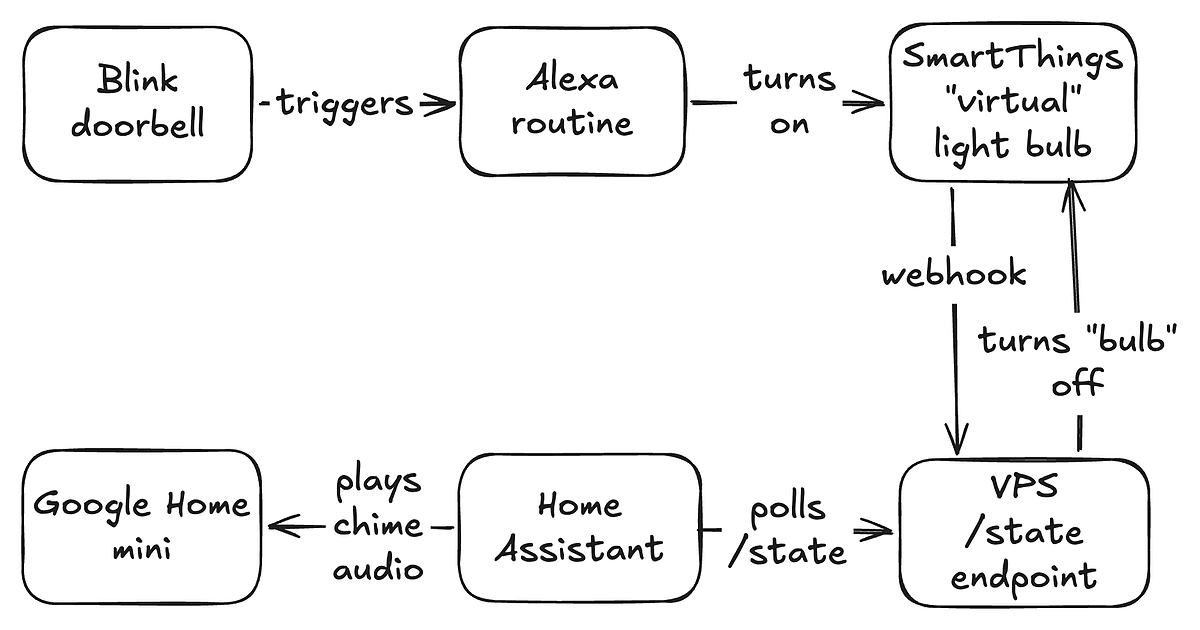
Prompted by a local burglary, a homeowner upgraded their security system only to discover their smart doorbell requires five separate cloud services just to send a notification. This overly complex setup highlights the frustrating fragmentation and heavy cloud dependency prevalent in modern smart home ecosystems.
CommentsA community discussion on losing passion for software development reveals that the influx of AI-generated code is shifting the focus from craftsmanship to mass production, leaving maintainers burned out by a tsunami of low-quality pull requests. Commenters argue that AI disrupts the gradual learning curve of coding and advise developers to ruthlessly protect their time from poor submissions while focusing on rediscovering a love for the actual programming process.
CommentsSort branches by last commit date
2026-08-31A recent community discussion highlights various methods for sorting Git branches by their last commit date to streamline developer workflows, including custom terminal aliases, fuzzy finder integrations, and dedicated terminal user interfaces. Additionally, configuring Git globally to sort by committer date is highly praised for automatically prioritizing recently rebased or actively worked-on branches.
CommentsHow to build a diffusion language model
2026-08-31A newly released guide provides a comprehensive introduction to diffusion language models and the research advances driving them. Adapted from major machine learning conferences, the resource details the core building blocks of modern open-source implementations. It covers essential techniques including masking diffusion, iterative refinement, post-training, and variable-length generation.
Comments
Continuous diffusion language models are making a significant comeback after several years of being overshadowed by fully discrete methods. This renewed interest signals a potential shift in how researchers approach natural language processing and generative AI.
CommentsAn open-source developer has released an experimental Linux DRM/KMS driver for the Silicon Motion SM750 GPU. The new driver enables advanced display capabilities such as HDMI output, custom RGB565 dithering, DMA, and software-scaled ultrawide modes. This release highlights the power of community-driven development in bringing modern features to specialized hardware.
CommentsHacking IKEA Furniture
2026-08-31After moving into a new home, a maker customized standard IKEA furniture to build a dedicated office setup when their exact desired pieces were unavailable for purchase. This DIY project highlights the popular maker culture trend of hacking affordable furniture to create personalized tech environments.
Comments
A 2011 article examines the reasons why commercially available bicycle generators are not considered a truly sustainable energy source. The piece is hosted on a unique solar-powered website that occasionally goes offline when solar energy is insufficient.
CommentsRelm4 is a new Rust library that simplifies building cross-platform graphical applications by wrapping the GTK4 framework with an Elm-like architecture for state management. While developers appreciate its idiomatic approach to handling widget updates and message dispatching, some point out that its heavy reliance on GTK makes it more of a Linux-first solution than a truly native cross-platform toolkit.
CommentsIn a creative emoji flipbook presentation, Alex Komoroske compares organizational dynamics to slime molds to explain how corporate inefficiencies emerge. The presentation illustrates how systemic coordination headwinds can lead to widespread dysfunction even when every individual employee is behaving well.
CommentsThe controversial CEO of surveillance technology firm Flock Safety recently experienced a personal encounter with the very tracking and privacy issues his company's automated license plate readers generate. Tech community discussions on platforms like Hacker News highlight the irony of the executive facing the consequences of widespread public surveillance. This incident adds fuel to ongoing debates about the ethics and risks of deploying such extensive monitoring networks.
CommentsStartup Anti-Patterns
2026-08-31This article explores the concept of startup anti-patterns, defined as seemingly effective strategies that ultimately cause more harm than good. Building on Simeon Simeonov's foundational 2013 insights, the piece highlights the critical importance of recognizing and avoiding these detrimental practices within the startup ecosystem.
Comments
Dad’s Custom Atari Peripherals
2026-08-31In a guest post for Goto 10, Jim Trageser highlights a father's creative project involving custom-built peripherals for classic Atari gaming systems. The article explores how this dedicated dad designed and constructed unique hardware to enhance the retro gaming experience.
Comments
SolarWindow has launched ElectroFlex, an ultra-thin, self-adhesive solar film measuring just 0.85 mm thick that can be applied to both flat and curved surfaces. Featuring a 24.4% cell efficiency, the flexible product targets transportation, aerospace, buildings, and other weight-sensitive applications.
Comments
Artie (YC S23) Is Hiring Technical AES
2026-08-31Y Combinator Summer 2023 startup Artie is hiring Technical Account Executives to help expand its sales team. The company is developing a real-time data platform that provides teams with reliable, low-latency data replication.
Comments
QubesOS has issued Qubes Security Bulletin 118 to address a critical vulnerability that allows arbitrary code execution in the privileged Dom0 environment. The security flaw can be exploited through an error reporting backchannel in the qvm-copy-to-vm utility, prompting the release of immediate cryptographic updates for all users.
Comments
Determining whether an ancient writing system included a symbol for zero presents unique historical and analytical challenges. The article explores the methods researchers use to trace the evolution of this concept across different ancient cultures. It highlights the complex transition of zero from a simple linguistic placeholder into a foundational mathematical tool.
Comments
Researchers have published an arXiv paper detailing the computational algorithms used to calculate the longest unbroken straight-line paths across the Earth's continuous landmasses and oceans. By leveraging advanced optimization techniques and great-circle navigation, the study highlights the complex intersection of geographic data analysis and algorithmic problem-solving.
CommentsA critical security flaw in Omarchy's default Docker configuration allowed any user process to silently escalate to root privileges without authentication. The vulnerability has been patched in version 4.0.1, and users are strongly urged to update their systems immediately.
CommentsZig: Pointer Stability for ArrayLists
2026-08-31Community discussions regarding Zig's pointer stability for ArrayLists criticize the manual locking mechanism as error-prone and lacking the compile-time safety found in languages like Rust. Developers note that the current API requires tedious manual lock management and suffers from poor documentation, which increases the risk of memory bugs. Commenters suggest that alternative designs, such as pre-allocating capacity or utilizing relative pointers and indices, could provide safer and more ergonomic solutions for dynamic arrays.
Comments
Electric rain can eat through metal
2026-08-31New research reveals that water generates an electrical charge as it slides down smooth surfaces. This newly discovered electrification accelerates the corrosion process, explaining how rain can gradually eat through metal.
CommentsA new approach to the Traveling Salesperson Problem introduces a directional cost bias to traditional heuristics, successfully uncovering superior local optima. This optimization technique is showcased in Abhijit's Algorithm, a novel TSP solver that challenges the tech community to surpass its current benchmark results.
Comments