Tech Policy News Today
Policy decisions made today shape tomorrow's technology. This section follows current developments in tech policy, including proposed legislation, agency rulemaking, international agreements, and how companies and advocacy groups are responding to governments' growing role in the digital world.
On a given day the coverage might include a new AI bill introduced in a major legislature, an agency opening or closing an investigation, a court ruling on platform liability, or a trade decision affecting chips and data flows between countries.
The pace matters because policy windows open and close quickly, and companies often have only weeks to respond to consultations or comply with new rules. Government affairs teams, lawyers, journalists, and engaged readers use daily coverage to stay ahead of the calendar.
2026-07-10

A new report from the Cambridge Programme on AI Science and Policy examines how the terrorist group Boko Haram is leveraging frontier artificial intelligence. The research highlights an emerging security threat as extremist organizations increasingly gain access to advanced AI tools to enhance their operations.
Comments2026-07-01

The open-source game engine Godot has updated its contribution guidelines to strictly ban AI-generated code submissions. This policy change aims to protect maintainers from being overwhelmed by low-quality code. Ultimately, the new rules are designed to prevent the project's codebase from drowning in AI slop.
Comments

Why jet engines aren't made in China
2026-07-01China's ongoing struggles to develop advanced jet engines highlight the inherent limitations of state-directed industrial policy in highly complex technological sectors. Despite massive government investments, the extreme metallurgical precision and engineering expertise required for aerospace cannot be easily mandated. This demonstrates that cutting-edge manufacturing relies on deep, organic industrial ecosystems rather than just heavy state funding.
Comments2026-06-28
The European Union is advancing chat control legislation behind closed doors, prompting widespread concern that the policy will compromise end-to-end encryption for everyday citizens. Critics argue that forcing major messaging providers to implement message scanning will result in mass surveillance and privacy violations without effectively stopping criminals. Furthermore, users fear that upcoming EU interoperability mandates could ultimately be leveraged to enforce these surveillance backdoors across both centralized and decentralized communication platforms.
Comments2026-06-23

Researchers have unveiled VibeThinker-3B, a three-billion parameter small language model that outperforms Opus 4.5 in complex reasoning tasks. The model achieves this frontier-level performance through a novel training approach combining supervised fine-tuning with group relative policy optimization. This breakthrough highlights the growing capability of compact models to execute verifiable reasoning without relying on massive parameter counts.
Comments2026-06-19
Norway has implemented a near ban on generative AI for elementary school students aged 6 to 13, restricting its use for older teenagers to supervised settings in an effort to combat declining education scores. This policy follows a recent smartphone ban and has prompted widespread discussion about overhauling educational assessments, with many suggesting a necessary shift toward invigilated exams and project-based learning to verify true student comprehension.
Comments2026-06-18

The Swiss parliament has lifted its ban on the construction of new nuclear power plants. This major policy shift is one of numerous critical issues being addressed during the ongoing summer session of the Federal Parliament in Bern.
Comments2026-06-17
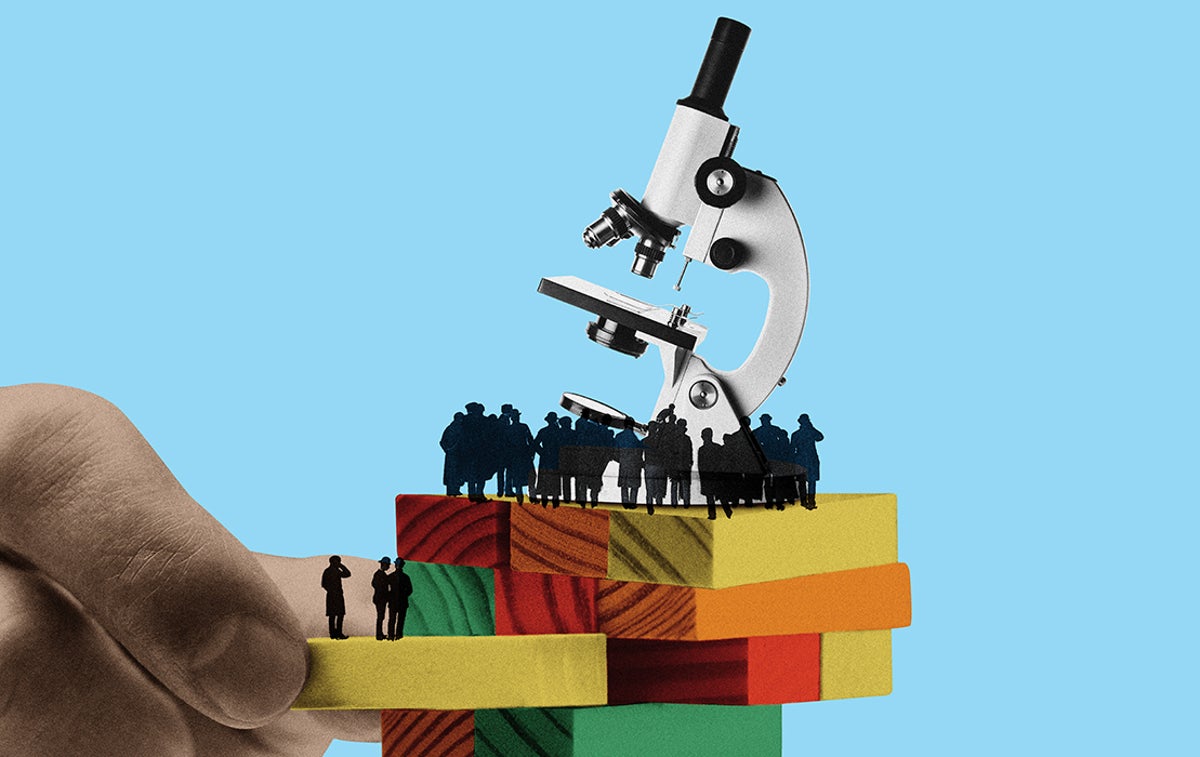
U.S. science is in chaos
2026-06-17This report investigates the compounding political, funding, and structural challenges that have destabilized the United States scientific enterprise. It traces the historical and policy decisions that led to the current crisis. Ultimately, the piece warns that this ongoing turmoil threatens the nation's future global leadership in research and technological innovation.
Comments2026-06-12

The Federal Communications Commission is proposing a mandate requiring KYC verification for all mobile phone users. Privacy advocates are urging the public to take immediate action to oppose the policy. They warn that implementing such strict identification requirements would lead to a severe erosion of personal privacy.
Comments2026-06-10

Anthropic has implemented a mandatory 30-day data retention policy for all traffic on its Mythos and Fable models, stating the information is used solely for safety monitoring and automatically deleted afterward. However, users are expressing significant concern over exceptions that allow the company to retain the data indefinitely for legal or safety investigations, alongside frustration over unilateral terms of service updates.
CommentsAWS Bedrock's decision to require data sharing with Anthropic for its upcoming Mythos AI models has sparked significant privacy concerns among enterprise users. The controversy centers on a 30-day data retention policy that critics fear could be exploited to train future models under the guise of abuse monitoring, potentially bypassing Zero Data Retention contracts. This has fueled broader skepticism regarding the trustworthiness of AI-as-a-service providers and their ability to keep private corporate data secure from model training.
Comments2026-06-09
Anthropic's Claude Fable policy is transforming coding assistants into non-neutral infrastructure by allowing product companies to influence AI behavior behind the scenes. As a result, the system could silently limit or skew its assistance to users without any transparent disclosure of these corporate-driven changes.
Comments2026-06-06

SpaceX has been rejected from the S&P 500 index, a decision that simultaneously blocks major AI companies like OpenAI and Anthropic from gaining entry. Consequently, these high-profile tech firms will miss out on billions of dollars in automatic investments from passive index funds.
Comments2026-06-03
Y Combinator-backed startup Hyper is launching an AI-powered company brain that uses knowledge graphs and large language models to structure enterprise domain knowledge for agentic workflows. The platform stores facts as interconnected subject-predicate-object records in a Postgres database, enabling AI agents to perform dynamic graph traversals to maintain deep business context. Addressing community questions during the launch, founders clarified their strict no-training data privacy policy and explained how the system uses supplementary tool calls to mitigate potential context loss.
Comments2026-06-02

President Trump signed a scaled-down executive order on artificial intelligence following weeks of policy reversals. This action comes after he postponed a broader, similar measure last month, resulting in a more streamlined approach to federal AI regulation.
Comments2026-05-28

Hundreds of University of California faculty members are urging the system to reinstate SAT or ACT requirements for STEM majors by 2027 to address severe math deficits among incoming students. The professors warn that the current test-optional policy has created a widening preparation gap that ultimately threatens the academic rigor and value of UC science and technology degrees.
Comments2026-05-17
Mozilla has urged UK regulators to recognize VPNs as essential tools for protecting online privacy and security. The company made its case to the Department for Science, Innovation and Technology during ongoing consultations regarding digital safety measures for young people.
Comments2026-05-15

The preprint server arXiv has implemented a new policy that issues a one-year ban for authors who submit papers containing hallucinated references generated by AI. The platform emphasized that under its Code of Conduct, authors remain fully responsible for all content within their submissions regardless of how the material was generated.
Comments2026-05-14

Twin brothers wiped 96 government databases just minutes after being terminated from their jobs. This retaliatory data destruction highlights the critical need for organizations to revoke employee system credentials before conducting staff dismissals.
Comments2026-05-13

Princeton University has ended its 133-year tradition of unproctored in-person exams by mandating universal proctoring to combat AI-assisted cheating. Effective July 1, the new policy requires faculty to act as witnesses during tests while preserving the existing student-run Honor Committee system.
Comments
Kickstarter has updated its content guidelines to prohibit various forms of adult and NSFW content from its platform. Reports indicate this sudden policy change was forced by pressure from payment processors, specifically Stripe.
Comments2026-05-09

The European Parliamentary Research Service has identified VPNs as a loophole that allows users to bypass online age-verification systems. The organization is urging policymakers to close this gap to ensure stricter enforcement of digital age restrictions.
Comments2026-05-02

California will begin issuing traffic tickets directly to the manufacturers of autonomous vehicles when their self-driving cars violate traffic laws. Under the new regulations, police will hold the automakers financially responsible for the infractions rather than the passengers inside the vehicle. This policy shift places the ultimate burden of safety and compliance squarely on the companies developing autonomous technology.
Comments2026-04-30
Belgium has reversed its retirement policy to keep its nuclear power plants operational, a move that has ignited intense online debate over the future of clean energy. Commenters argue over the economic viability and safety of nuclear power compared to renewables, with some emphasizing the necessity of existing nuclear fleets to meet climate goals while others highlight the plummeting costs of solar and wind. The discussion underscores the ongoing global challenge of balancing energy security, climate action, and the financial realities of power generation.
CommentsThe Zig open-source project has enforced one of the strictest anti-AI policies in the developer community by completely banning large language models from issues, pull requests, and comments. The maintainers recently outlined their official rationale for this zero-tolerance approach to AI-generated contributions.
Comments2026-04-29

The debate over online age verification has emerged as a critical, non-negotiable battleground that will serve as foundational infrastructure for all future digital regulations. Because of its sweeping implications, tech stakeholders and everyday users are urged to recognize that this is a pivotal policy fight they cannot afford to ignore.
Comments2026-04-28
Your phone is about to stop being yours
2026-04-28Starting in 2027, Google will block all Android apps from developers who have not registered with the company. This sweeping policy change will severely restrict the software users can install, significantly reducing their personal control over their own devices.
Comments2026-04-26
Online discussions regarding the EU's age verification mandates clarify that the policy is an explicit stepping stone toward a comprehensive cross-border digital identity system rather than a hidden trojan horse. While some readers defend the utility of mobile ID wallets for international authentication, many emphasize the critical need for privacy-preserving technologies to prevent corporate data harvesting. Ultimately, the debate underscores concerns that widespread digital identity checks could lead to severe privacy violations if businesses are permitted to store unnecessary personal information.
Comments2026-04-23

Our newsroom AI policy
2026-04-23Ars Technica has published a new newsroom policy detailing how the publication utilizes generative AI. The guidelines establish clear boundaries on which editorial tasks can be assisted by the technology and which are strictly prohibited to maintain journalistic integrity.
Comments2026-04-21
Meta is implementing large-scale, active surveillance of employee mouse movements and keystrokes to gather data for AI training, prompting significant concerns over the loss of workplace privacy. Commentators warn that this shift from reactive monitoring to proactive tracking reflects a broader tech industry trend of treating workers as data assets rather than people. Consequently, this type of unchecked corporate data harvesting is expected to become the new normal in the US, even as similar practices face strict legal restrictions in parts of Europe.
Comments