Tech News Today
Catch up on the technology stories that matter today. This section brings together news across software, artificial intelligence, startups, gadgets, and the business of big tech. Whether you follow product launches, funding rounds, or policy debates, the digest offers a quick way to stay informed.
A typical day's selection ranges from major AI model releases and smartphone launches to earnings surprises, security incidents, and regulatory rulings. Startup acquisitions and notable open-source developments sit alongside the bigger corporate headlines, giving a rounded picture of the industry in motion.
Keeping up with technology has become part of many people's jobs, not just a hobby. Developers, founders, investors, and curious general readers use a daily digest like this to spot the stories worth a deeper read and to stay conversant with an industry that rarely slows down.
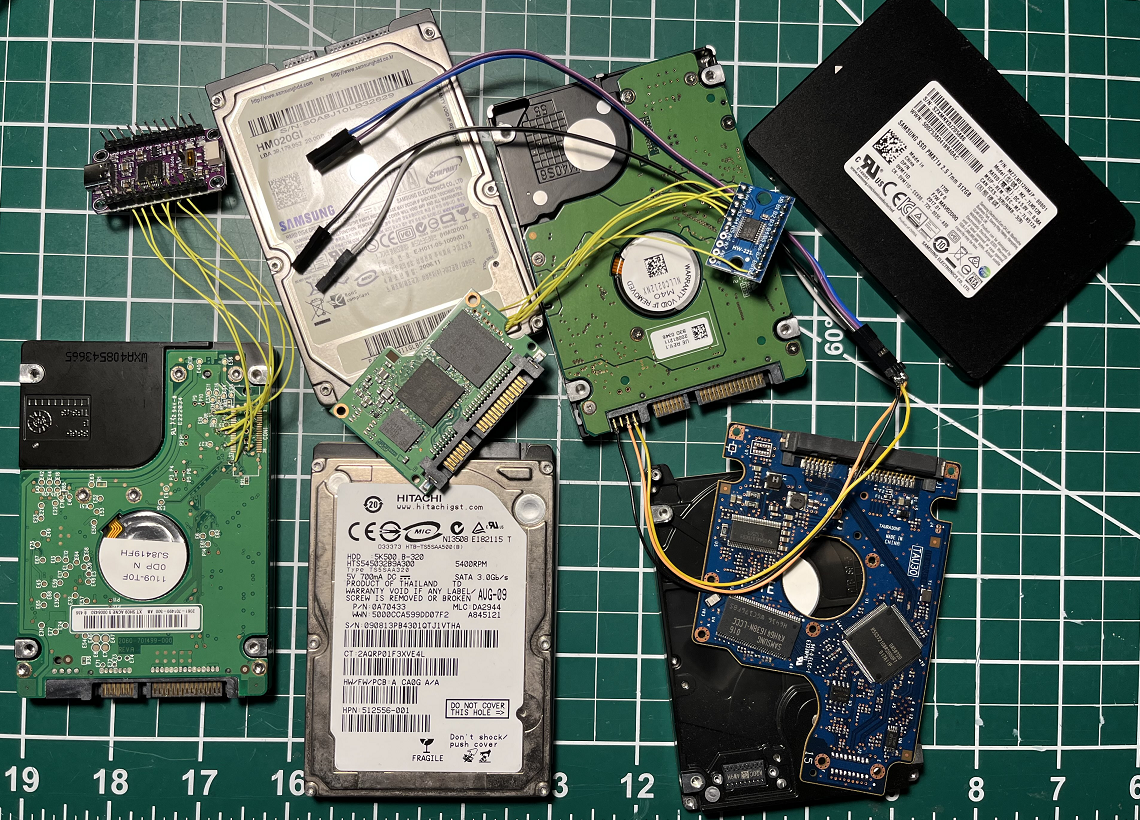
HDD Firmware Hacking
2026-05-14A new technical deep dive explores the inner workings of storage devices by dumping, reverse engineering, and modifying the firmware of various HDDs and SSDs. This hands-on project provides a comprehensive look at how hard drives function at the lowest software levels.
Computer Hobby Movement in Canada
2026-05-14The York University Computer Museum (YUCoM) serves as a historical collection and research center dedicated to the history of computing in Canada. By focusing on the Canadian computer hobby movement, the museum preserves the nation's early technological milestones. It remains a vital resource for understanding the evolution and heritage of domestic computing.

Microsoft BitLocker – YellowKey zero-day exploit
2026-05-14A newly discovered zero-day exploit named YellowKey is currently targeting Microsoft BitLocker encryption. Additionally, security teams are tracking a second zero-day vulnerability called GreenPlasma that enables local privilege escalation.

Meta won't let you block its AI account on Threads
2026-05-14Meta is testing a new Threads feature that allows users to tag a Meta AI account to ask questions and receive answers. However, users do not have the option to block the AI account if they prefer not to interact with it.
Saying Goodbye to one line of APL
2026-05-14A discussion surrounding an article about saying goodbye to a classic APL one-liner sparked nostalgia for the dense, vector-oriented language and its chalkboard origins. Readers brainstormed modern ways to interact with the code, suggesting tablet-based stylus apps with live evaluation and exploring modern dialects like BQN. The conversation also featured a detailed technical breakdown of a complex one-liner that uses boolean algebra to efficiently reduce consecutive spaces in a string.

I moved my digital stack to Europe
2026-05-13Driven by a desire for digital sovereignty, the author details their experience migrating their tech stack to European cloud providers. The piece examines this shift away from US tech giants and argues that Europe's cloud infrastructure has matured into a highly capable and competitive alternative.
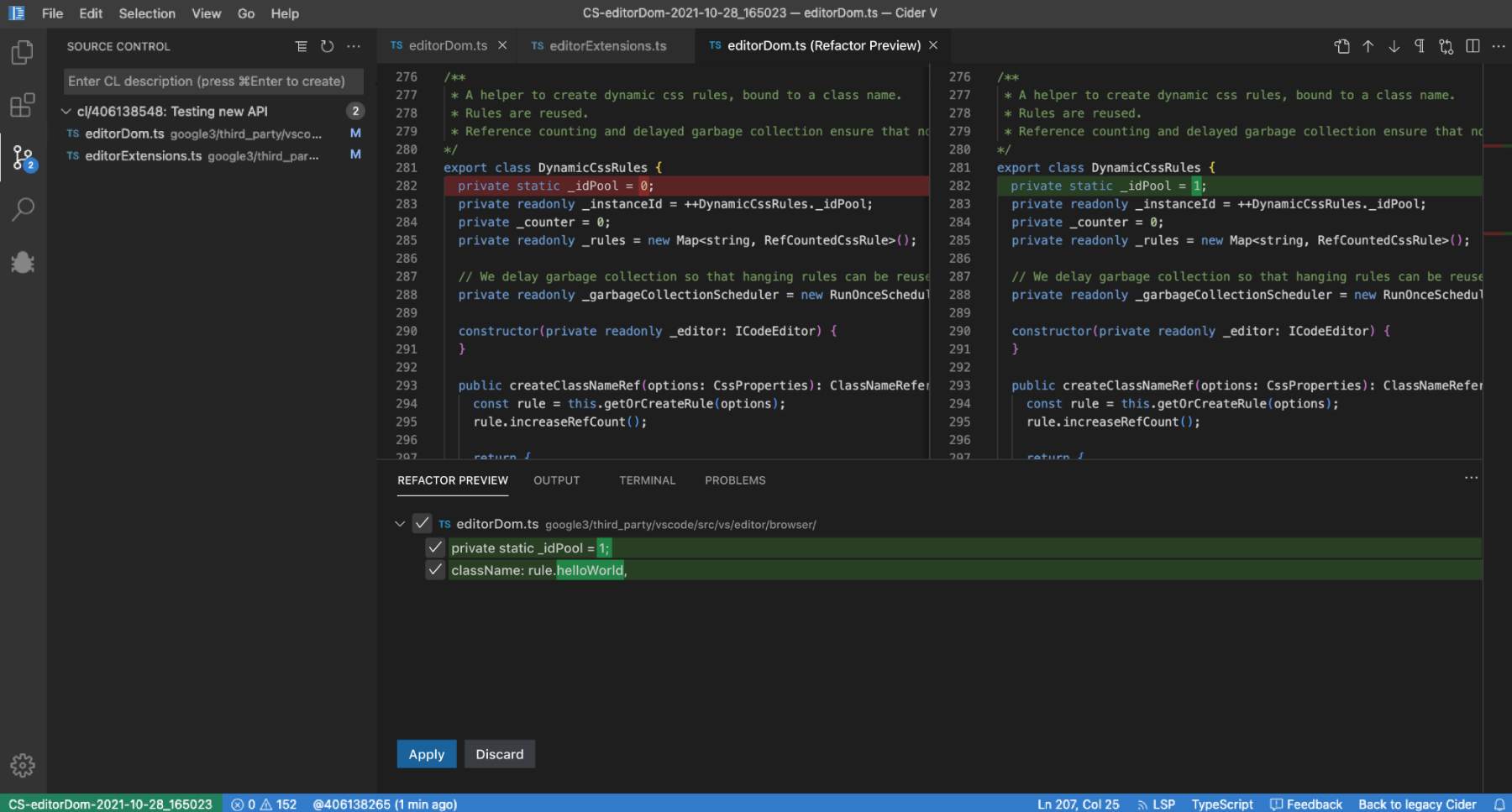
A History of IDEs at Google
2026-05-13Laurent Le Brun's blog post details the evolution of Google's internal development environments, tracing the company's shift from relying on third-party tools to building bespoke, cloud-based IDEs tailored for its massive monorepo. This overview highlights how the immense scale and complexity of Google's codebase forced the tech giant to engineer highly customized, scalable software ecosystems rather than relying on commercially available tools.

Leaving GitHub for Forgejo
2026-05-13A DevOps consultancy details its decision to migrate code repositories and development workflows from GitHub to Forgejo, prioritizing self-hosted and open-source solutions. This move reflects a growing trend among tech professionals to seek greater control, security, and operational continuity outside of proprietary platforms.
The US is winning the AI race where it matters most: commercialization
2026-05-13The United States is securing its leadership in the global artificial intelligence race by dominating the most critical technological layers. While energy resources are important, America maintains a wide margin over competitors in cloud infrastructure, data, and commercialization.
Chess puzzle I found in my dad's old book
2026-05-13Tech enthusiasts recently dissected a classic chess puzzle requiring the placement of four queens and one bishop to attack every square on a chessboard. By utilizing Python scripts and constraint programming, the community discovered 388 possible solutions, explored alternative piece combinations, and highlighted the puzzle's counter-intuitive need for overlapping piece responsibilities.
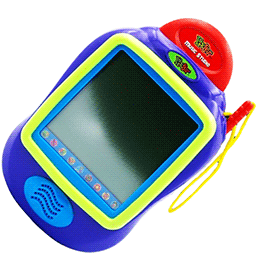
Preserving Fisher-Price Pixter
2026-05-13Developer Dmitry.GR has successfully transformed the Fisher-Price Pixter from an unknown and obscure device into a fully documented and emulated product. This preservation effort ensures the vintage hardware is saved from digital oblivion and remains accessible for future tech enthusiasts.

Deterministic Fully-Static Whole-Binary Translation Without Heuristics
2026-05-13A recent arXiv paper introduces a novel method for deterministic, fully-static whole-binary translation that completely eliminates the need for heuristics. By translating entire software binaries at compile time with strict predictability, this approach ensures exact cross-architecture code execution without relying on dynamic runtime analysis. This systematic technique promises to significantly improve software portability and performance across diverse hardware platforms.
S-100 Virtual Workbench
2026-05-13The S-100 Virtual Workbench provides an emulation environment for classic S-100 bus computers, sparking nostalgic conversations among veteran developers about their early programming experiences. Readers fondly recalled the hardware limitations and DIY ethos of the era, sharing memories of coding on Heathkit machines and early minicomputers. These discussions highlight how overcoming the technical constraints of early personal computing shaped a generation of hobbyists and programmers.

How can Apple deal with the memory shortage?
2026-05-13Apple is facing a growing memory shortage that could drive memory costs to as much as 40% of a device's total bill of materials. The tech community has been closely monitoring the situation since January as the company strategizes how to manage these skyrocketing component prices.
Starship V3
2026-05-13SpaceX is continuing its mission to revolutionize space technology with the development of Starship V3. The company, which was founded in 2002, designs, manufactures, and launches advanced rockets and spacecraft. These ongoing efforts are part of its ultimate goal to enable people to live on other planets.
Bambu Lab is abusing the open source social contract
2026-05-12The author of a prominent tech critique has reiterated their refusal to recommend Bambu Lab 3D printers following the company's aggressive push to make its always-connected cloud solution the default. To reclaim control over their existing P1S hardware, the creator has completely disconnected the printer from the internet and disabled automatic firmware updates. Additionally, they have abandoned the company's native software in favor of third-party slicing applications.
Why senior developers fail to communicate their expertise
2026-05-12Senior developers often struggle to communicate their expertise because they focus on technical complexity while business stakeholders prioritize managing uncertainty. This misalignment hinders collaboration, but the integration of AI offers a unique opportunity to bridge the communication gap. By adapting their messaging to address business risks, engineering leaders can better align technical execution with organizational goals in the AI era.

Rendering the Sky, Sunsets, and Planets
2026-05-12A new article explores techniques for rendering realistic skies, sunsets, and entire planets in real time directly within the browser. The guide details a progression of shader-based methods, from simple sky domes to complex atmospheric simulations utilizing raymarching and scattering models.

How to make your text look futuristic (2016)
2026-05-12This 2016 article explores the typographic techniques used to create futuristic text in movies, highlighting the classic use of the Eurostile Bold Extended font. It outlines six simple rules for designers to establish a convincing sci-fi aesthetic on screen. The guide emphasizes starting with clean, sans-serif typefaces as the foundation for future-forward text design.
Software Internals Book Club
2026-05-12The Software Internals Book Club engages hundreds of developers in deep technical discussions on complex software books via a dedicated mailing list. Reader discussions highlight community interest in accessing archived comments and joining future cohorts, while also sparking technical debates about the complexities of email validation and the need for updated networking literature.