Tech News Today
Catch up on the technology stories that matter today. This section brings together news across software, artificial intelligence, startups, gadgets, and the business of big tech. Whether you follow product launches, funding rounds, or policy debates, the digest offers a quick way to stay informed.
A typical day's selection ranges from major AI model releases and smartphone launches to earnings surprises, security incidents, and regulatory rulings. Startup acquisitions and notable open-source developments sit alongside the bigger corporate headlines, giving a rounded picture of the industry in motion.
Keeping up with technology has become part of many people's jobs, not just a hobby. Developers, founders, investors, and curious general readers use a daily digest like this to spot the stories worth a deeper read and to stay conversant with an industry that rarely slows down.
FUTO Swipe – A new swipe typing model
2026-06-23FUTO Swipe now supports the ClearFlow keyboard layout, a specialized design meant to minimize word overlap and maximize accuracy for gesture typing. Early adopters transitioning from standard QWERTY report significantly fewer mistakes and corrections, despite an initial learning curve and minor ergonomic adjustments. The layout is currently available for US English on Gboard and the FUTO app, offering a highly precise alternative for dedicated swipers.
CommentsPrinting Gaussian Splats
2026-06-23A newly highlighted industrial 3D printing technology utilizes UV inkjet CMYK resin to achieve unprecedented photorealistic fidelity that far exceeds standard hobbyist machines. These advanced commercial systems can produce incredibly lifelike objects, but they currently cost around $200,000 and remain largely restricted by corporate patents. However, more affordable prosumer alternatives from companies like HeyGears and EufyMake are beginning to emerge for early adopters.
Comments

The Coming Loop
2026-06-23This piece examines the growing ecosystem of wearable tech accessories, with a specific focus on the design and utility of modern loops and harnesses. It explores how these innovative strap systems are becoming increasingly practical, ultimately proving versatile enough to win over even the most skeptical potential buyers.
CommentsIn praise of memcached
2026-06-23Prompted by an article praising Memcached, engineers are debating the merits of using simple, volatile caching versus feature-rich databases like Redis that often struggle when combining persistence with caching. While many developers favor Memcached for its straightforward approach to avoid complex Redis outages, others argue that growing teams inevitably require advanced data structures regardless of the initial choice. Ultimately, the discussion highlights that avoiding production issues like cache stampedes relies more on sound architectural design and abstraction than the specific caching technology employed.
CommentsThe Low-Tech AI of Elden Ring
2026-06-23Discussions surrounding the low-tech AI of Elden Ring reveal that the game's notoriously cryptic NPC questlines are built on primitive custom bytecode systems and early behavior tree implementations. These strict technical limitations result in janky design choices, such as requiring players to repeatedly exhaust dialogue to advance a quest. However, players and the market ultimately reward this abstruse approach, as it creates a deeply immersive world where NPCs feel driven by their own independent goals rather than serving as mere utilities.
Comments
Quaise Energy has successfully drilled 100 meters into solid granite using its millimeter wave technology. This major milestone advances the development of superhot geothermal energy systems by demonstrating a viable alternative to traditional mechanical drilling.
CommentsFive monitors on a Commodore 128 [video]
2026-06-23A newly shared video demonstrates a custom multi-monitor setup featuring five displays connected to a vintage Commodore 128. This nostalgic tech project highlights the unique hardware capabilities of the classic 8-bit computer when pushed far beyond its original design limitations.
Comments
Madison Square Garden compiled a document to track individuals who have publicly criticized its facial recognition program. The file logs specific comments and tweets from activists opposing the venue's use of the technology.
Comments
A growing movement of users is rejecting corporate-controlled devices in favor of building their own custom cyberdecks, a DIY trend increasingly driven by women. This push toward convivial technology draws historical parallels to medieval guilds, the Luddites, and the Arts and Crafts movement, reflecting a broader desire for meaningful, self-directed interactions with our tools.
Comments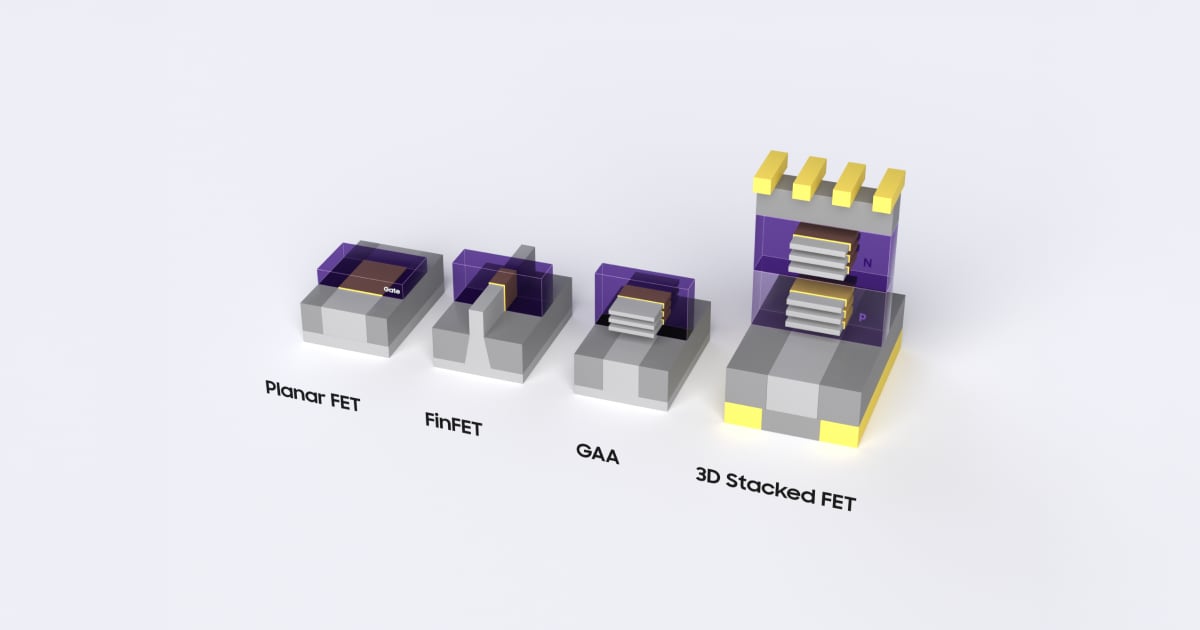
Samsung Electronics presented 3D stacked FETs featuring triple nanosheet channels at a 42nm gate pitch for advanced logic applications. The technology was unveiled at the 2026 VLSI Symposium, highlighting the company's progress in next-generation semiconductor design.
Comments
Software engineer Stephen Diehl warns that the cryptocurrency industry is on a trajectory to reach a bleak and unfavorable state by 2026. In his latest personal blog post, he draws on his technical background to critique the fundamental flaws and negative future outcomes of digital assets.
CommentsHelp I accidentally a wigglegram
2026-06-22A recent tech discussion explores the evolution of wigglegrams and stereograms, highlighting techniques that range from dedicated multi-lens hardware to synthetic depth mapping on modern smartphones. While the original poster's accidental attempts lack the precise parallax of professional 3D rigs, commenters note that mobile features and generative AI are making pseudo-3D creation more accessible. In response, enthusiasts are sharing custom software libraries, DIY camera builds, and stereoscopic apps to revive these underrated visualization methods.
CommentsTech community discussions suggest there is minimal downside to switching to open-weight models, as they are only a few months behind their proprietary counterparts. Additionally, user suspicions regarding silent performance degradation in paid services make open-source and local inference alternatives increasingly appealing for developers.
Comments
Reports reveal that police chiefs have been misusing Flock surveillance technology to track and stalk women. This abuse of power highlights the urgent need for mandatory legal warrants to prevent law enforcement from exploiting mass tracking systems.
Comments
GLM 5.2 vs. Opus
2026-06-22A new real-world test pits the hyped GLM-5.2 model against Claude Opus by challenging both to build a 3D platformer game from scratch using raw WebGL. This head-to-head comparison aims to reveal whether the capabilities of GLM-5.2 are genuinely impressive or merely optimized to ace standard AI benchmarks.
Comments
Chevron has signed a 20-year power purchase agreement with Microsoft to supply dedicated electricity to a new data center in West Texas. The co-located power facility, developed through Project Kilby in collaboration with Engine Number 1, will provide reliable energy to support the tech giant's expanding infrastructure.
CommentsA personal account of gaming with spinal muscular atrophy has prompted community discussions highlighting the vital role of open-source assistive hardware and adaptable controllers like the Xbox Adaptive Controller. Commenters praised nonprofits like GOAT for providing life-changing accessibility equipment, while also recognizing major tech companies like Microsoft and Valve for their extensive gaming accessibility tools. The conversation underscores the remarkable progress in assistive technology and the ongoing push for more cohesive, integrated control systems for disabled gamers.
CommentsApertus is a fully open foundation model designed to empower nations and organizations to build sovereign artificial intelligence systems. By providing complete transparency and unrestricted access, it allows users to develop localized AI technologies without relying on proprietary models. This initiative aims to democratize advanced machine learning and ensure long-term technological independence for its users.
Comments
Identity verification on Claude
2026-06-21Anthropic's implementation of identity verification for Claude is driving some international users away due to frustrations over US export controls and data privacy concerns. As affected subscribers begin migrating to alternative models like Mistral, the broader tech community is actively debating the company's underlying motives. Many question whether the new restrictions are merely a temporary compliance measure or a calculated strategy to achieve regulatory capture against open-weight AI.
CommentsRecent discussions emphasize that slow breathing techniques down-regulate the nervous system to lower heart rate and signal safety to the brain. This physiological modulation helps individuals overcome performance anxiety and manage risk behavior, enabling greater confidence and strategic thinking in high-stress scenarios ranging from public speaking to combat sports.
CommentsEverything is logarithms
2026-06-21A recent article framing baseless logarithms and other concepts through the mathematical lens of torsors has sparked a reader debate over technical nomenclature. Critics argue the term is confusing and clashes with classical mechanics, highlighting a broader frustration with heavily overloaded jargon in mathematics. The discussion ultimately questions whether such esoteric terminology hinders understanding compared to more familiar concepts like vectors.
Comments
Google Hits 50% IPv6
2026-06-21Google has reached a major milestone in internet technology adoption, with approximately half of its users now accessing the company's services over IPv6. This achievement highlights the continuing global transition toward the newer network protocol.
Comments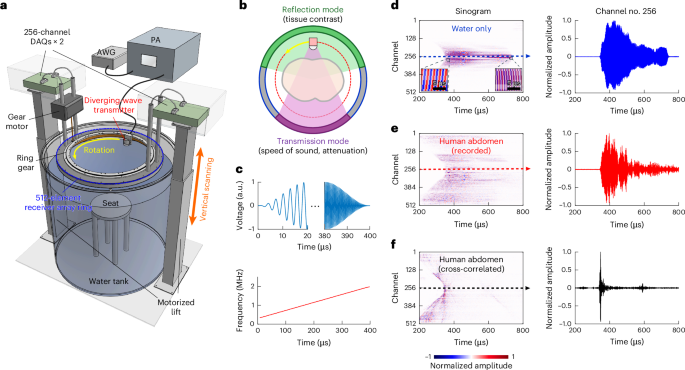
Researchers have developed a novel ultrasound tomography system that uses a 512-element circular receiver array and a rotating transmitter to capture complete cross-sectional images of the human body, overcoming the limited field of view of traditional handheld ultrasounds. The new technology closely matches MRI results and offers practical clinical applications, including radiation-free fat assessment and real-time biopsy needle localization.
Comments
Zigzag Decoding with AVX-512
2026-06-21The creator of the meshoptimizer library recently explored methods to accelerate AVX-512 vertex decoding. During this process, the developer discovered two interesting optimization techniques that were ultimately not used in the final implementation. This article explores these unused methods while teasing a future deep dive into the specific optimizations that actually made it into the codebase.
Comments
FDA advisors have unanimously voted to approve Moderna's mRNA vaccine, overcoming recent political interference at the agency. This decisive approval follows controversy in February when a Trump administration official initially refused to review the vaccine.
Comments
SMPTE has announced that its entire catalog of media technology standards is now freely available to the global community. This initiative provides media professionals, technologists, and engineers with unrestricted access to essential industry guidelines. Removing financial barriers to these resources is expected to foster greater collaboration and innovation across the sector.
Comments
A comprehensive atlas maps the vibrant colors of the natural world that standard digital screens are physically incapable of reproducing. By cataloging this vast spectrum of natural hues, the project highlights the limitations of current display technology and the persistent gap between digital reproduction and physical vibrance.
CommentsI Stored a Website in a Favicon
2026-06-20A developer has successfully stored and rendered an entire website within the tiny image file of a browser favicon by leveraging data URIs and creative encoding techniques. This technical stunt bypasses traditional web hosting methods, highlighting the creative extremes of web development and the hidden capabilities of modern browsers.
CommentsStartupWiki has launched as a free, AI-powered alternative to Crunchbase for tracking global startup ventures. The community-driven research directory covers diverse sectors including artificial intelligence, biotech, clean tech, and fintech to provide accessible data on emerging companies worldwide.
CommentsIn response to a proposed mandate requiring real ID for all internet traffic, readers are discussing extreme technical countermeasures to avoid future censorship and surveillance. Suggested tactics include building decentralized underground radio mesh networks, using cash-purchased hardware with immutable operating systems, and relying on specific end-to-end encrypted protocols to defeat metadata tracking. The discussion highlights a growing desperation within the hacker community, framing the fight against internet identification as a critical battle for fundamental civil rights.
Comments