Software Tech News
SubmitSoftware is where most of the technology industry's ideas take shape. This section collects news about applications, platforms, open-source projects, and online services, along with the teams and companies that design, ship, and maintain them.
Typical stories include major releases and redesigns, open-source projects gaining traction, creators presenting tools they built, SaaS companies changing pricing or features, and post-mortems explaining why a product failed or an outage happened. Critical takes on bloat, reliability, and user experience are common too.
Knowing which software is improving, stagnating, or being abandoned helps people pick better tools and avoid costly migrations later. Developers, product teams, IT buyers, and everyday users follow this coverage to keep their stack current and discover useful alternatives.
2026-11-15
Kiri – The Modern Container Runtime
2026-11-15Kiri is a fast, free container runtime and Docker Desktop alternative for Mac, Windows, and Linux. Built as a small Rust daemon, it works with the Docker CLI and Compose and can run `docker run` in 22 ms on a Mac.
Comments
A Microsoft 365 outage on Friday prevented Phantasialand from receiving an alert that its pool chlorine levels were too high, leading to chlorine gas poisoning. Fifteen hotel guests were injured in the incident.
Comments
Protomaps is making self-hosted map tiles cheaper and easier. Its PMTiles format uses HTTP Range requests and can be deployed as a single file to a storage bucket, simplifying infrastructure.
CommentsA Hacker News post claims Stripe closed a business after a single $1,500 invoice without asking for evidence, sparking debate over the company’s treatment of customers. Some commenters sympathize with the merchant and criticize Stripe’s support, while others argue the account was likely closed because the merchant failed to prevent card-testing and money-laundering risks on Stripe Connect.
Comments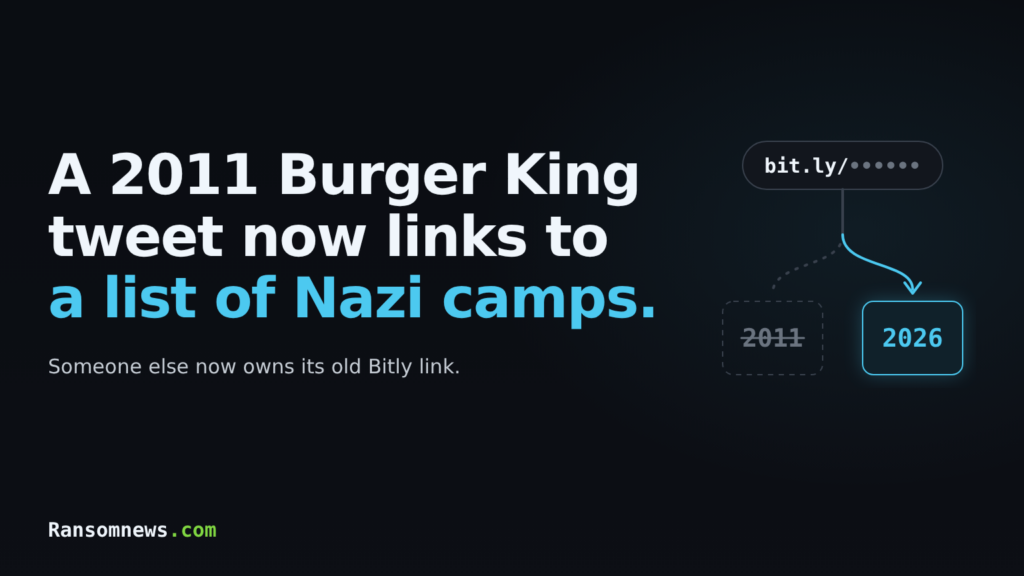
Old Bitly Links Are Being Hijacked
2026-11-15Old Bitly links in years-old tweets are being hijacked after being re-registered by third parties. Burger King and McDonald’s were not hacked; links in their 2011 tweets were replaced, and 57 of 97 Bitly links in old Trump tweets have similarly been swapped. The incidents highlight the risks of relying on recyclable short links.
Comments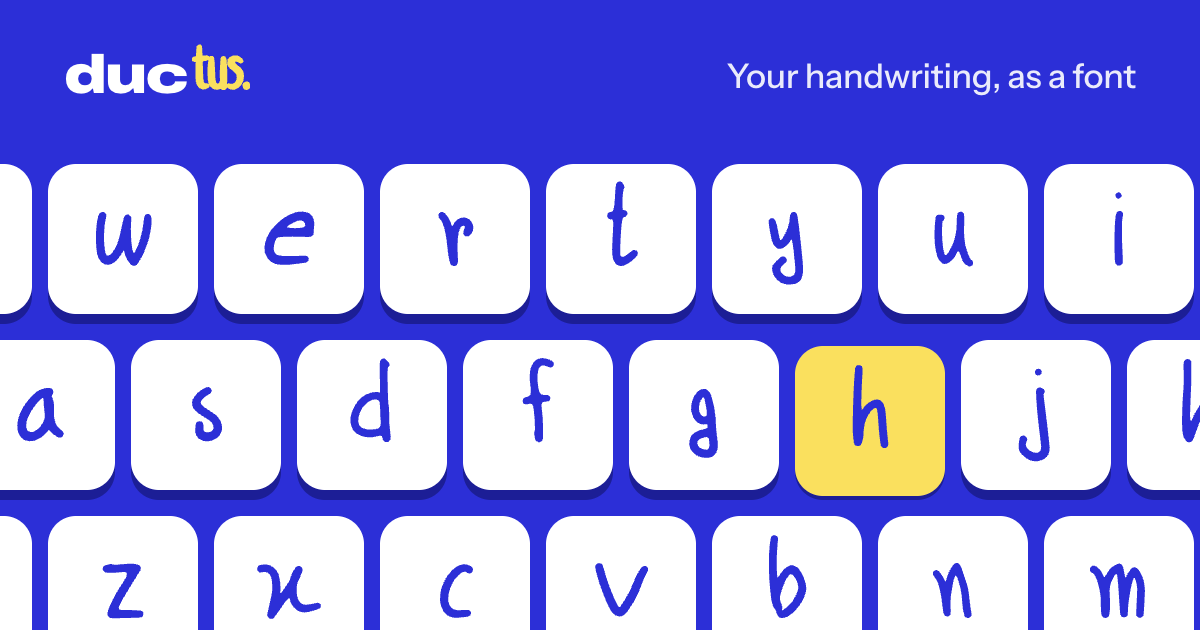
Handwriting, as a Font
2026-11-15A new browser-based tool lets you turn your handwriting into a font by writing each letter directly in the browser and downloading it as OTF or WOFF2 files. No account or upload is required, and your letters stay on your device.
Comments
A proposal argues that all code generated with AI assistance should be released as Open Source or under a Creative Commons Zero (CC0) license. It calls for AI-generated code to remain freely available rather than becoming proprietary.
Comments
Your Agent Will Pick the Hackable One
2026-11-15As firmware becomes cheaper to write, the software a device ships with will be treated as just a first version. AI agents will gravitate toward hardware they can modify, pressuring manufacturers to make devices more open and hackable.
Comments
Emacs Is My Browser
2026-11-15Joshua’s post “Emacs Is My Browser” explores using Emacs as a browser within a personal blog that also hosts notes, galleries, and lifestyle content. The description highlights the site’s fully conglomerated mix of posts rather than specific technical details.
Comments
A free cartoon WebGL flight simulator runs in the browser, letting players build a plane in the hangar, take off, and explore procedurally generated terrain. Players must land their aircraft in one piece, and the game was built with DAI Studio.
CommentsA router outage in southern Arkansas disrupted air travel after a copper-to-fiber/TDM upgrade apparently went wrong, with discussion pointing to inadequate testing, rollback planning, or failover handling. Commenters say such failures are plausible through multiple operational mistakes and compare it to past router-change outages. The details remain unconfirmed, but the incident is being framed as a botched network migration with possible contractor and government IT oversight issues.
CommentsReaders discussed how modern engineering increasingly hides mathematics inside proprietary CAD/FEA tools, with key finite-element and meshing techniques locked up by companies and fragmented across academia, national labs, and struggling open-source projects. Some mourned the decline of hands-on mathematical knowledge, while others were cautiously optimistic that LLMs could make legacy code and research easier to use and help open-source ecosystems challenge the engineering software stack.
Comments20 Years of Pyrolog
2026-11-15Pyrolog, an RPython-based Prolog implementation, marks 20 years since its first surviving commit into the PyPy repository on November 12, 2006. Development had already begun in spring 2006, according to the retrospective.
Comments
Clice v1.0 has been released as a stable modern C++ language server after reaching 1,000 commits and completing roughly four months of alpha testing with nightly builds. Extensive real-world testing across open-source projects helped fix bugs and stabilize every core feature for daily use. The release marks a major milestone for a project two and a half years in the making.
CommentsEclipse Mosquitto is an open-source MQTT broker available on GitHub. Developers can contribute to the eclipse-mosquitto/mosquitto project by creating an account and participating in its development.
CommentsThe piece notes that Turbo Pascal was smaller than many contemporary images and PDFs, highlighting how compact early development tools were. Readers use the comparison to question whether today’s larger software stacks are worth their productivity gains and to speculate about leaner, simpler OSes and programming systems.
CommentsA new Show HN project called Gawain scans Python codebases in milliseconds to flag every missing variable type hint. It aims to enforce type hints on all Python variables and is available on GitHub.
CommentsA NES emulator written in Odin
2026-11-15A developer has built a NES emulator in the Odin programming language, working on it in their spare time since late June 2024. The project is shared on GitHub.
Comments500 Lines or Less A 3D Modeller
2026-11-15A new installment in the 500 Lines or Less series explores building a 3D modeller in under 500 lines of code. It likely walks through the core design and implementation choices behind a compact 3D modeling tool.
Comments
Osint Case Studies
2026-11-15A piece examines OSINT case studies from real cybercrime investigations, showing how public-record emails and aliases are run through live searches. It details the method, distills six lessons from the cases, and outlines the ethics rules for responsible OSINT work.
CommentsThis piece examines disk encryption on NetBSD as a means of achieving data secrecy. It likely outlines the platform’s encryption options and practices for protecting stored information.
CommentsMy favourite modern NES games
2026-11-15The piece highlights a selection of modern games made for the NES, celebrating new releases that run on Nintendo’s classic 8-bit console. It offers the author’s personal favorites from this contemporary homebrew scene.
Comments
tsoracle is a new distributed oracle for Rust that provides strictly monotonic timestamps and gapless, dense ID sequences. It is Raft-replicated, crash-safe, and embeddable, positioning it as a drop-in solution for MVCC, snapshot isolation, cross-shard ordering, and gapless surrogate keys.
CommentsA paper on keylogger detection and containment is drawing attention for involving Andrew S. Tanenbaum, the computer scientist known for MINIX and his influential textbooks. Readers noted his continued involvement in academic promotions, including having been Werner Vogels’s promoter.
CommentsTurbo-Browser-MCP is a new high-speed Playwright MCP server designed for faster browser automation. It adds multi-tab batching, compact delta DOM snapshots, React/Shadow DOM/iframe form filling, disk file uploads, and submit guards.
CommentsAn open-source HF communications project aimed at remote communities and experimenters has received funding from ARDC. The initiative focuses on accessible high-frequency radio tools for areas and users poorly served by conventional connectivity.
Comments
A review of Rust's standard library identified three recurring patterns behind memory safety bugs, showing that unsafe code can still undermine the language's guarantees. Despite these imperfections, the findings reinforce that Rust's safety model remains valuable rather than absolute.
CommentsA new proposal introduces HTTP status code 483, “I’m Not a Freezer,” as a playful server response for requests that mistakenly treat an endpoint like a refrigeration appliance. It continues the long tradition of novelty HTTP status codes such as 418 “I’m a teapot.”
Comments2026-11-14

An analysis of 159,041 Lovable projects found that many exposed sensitive data without requiring users to log in. The exposed information included passport details and more than 200,000 private messages.
Comments
The documentary KDE: The Documentary chronicles the pioneering open-source community behind KDE, which offered a free and open alternative to proprietary desktops such as Windows. It traces the project’s story back to its origins in 1996 and highlights the community’s role in building accessible desktop software.
Comments