Software Tech News
Software is where most of the technology industry's ideas take shape. This section collects news about applications, platforms, open-source projects, and online services, along with the teams and companies that design, ship, and maintain them.
Typical stories include major releases and redesigns, open-source projects gaining traction, creators presenting tools they built, SaaS companies changing pricing or features, and post-mortems explaining why a product failed or an outage happened. Critical takes on bloat, reliability, and user experience are common too.
Knowing which software is improving, stagnating, or being abandoned helps people pick better tools and avoid costly migrations later. Developers, product teams, IT buyers, and everyday users follow this coverage to keep their stack current and discover useful alternatives.
2026-10-02

The Linux kernel's practice of assigning CVE identifiers to nearly every bugfix has sparked debate over whether the sheer volume of reported vulnerabilities is inflating security metrics and causing CVE fatigue. Critics argue this overly cautious approach conditions users to ignore critical updates, suggesting that better triaging is needed to distinguish actual security risks from standard bug fixes.
Comments

Clef and Clef-flash are newly introduced open-source decision models hosted on Workers AI, optimized for high-speed classification and agentic workflows. Additionally, a new reinforcement learning platform has been launched to enable developers to fine-tune these decision models using their own custom data.
Comments
SvelteKit 3
2026-10-02SvelteKit 3 has officially launched, delivering a major update to the popular web development framework. This highly anticipated release introduces significant new features and performance enhancements for building modern web applications. Developers are encouraged to download the update immediately to take advantage of the latest improvements.
CommentsAsk HN: Who is hiring? (October 2026)
2026-10-02The October 2026 Hacker News discussion on who is hiring highlights open engineering roles at companies including Hiya, Relativity Space, Seeq, Fig, FusionAuth, and Stellar Science. These organizations are seeking backend, full-stack, and AI-focused software engineers for remote, hybrid, and onsite positions across diverse industries like aerospace, telecommunications, and industrial analytics. The postings emphasize competitive salaries, equity, and opportunities to build cutting-edge technologies ranging from reusable rockets to AI-driven call screening.
CommentsStreetComplete has officially launched a public beta for its new iOS port. Development for the application is now being coordinated through a centralized master project board, replacing previous research and discussion efforts.
CommentsCSS Bed is a newly launched gallery featuring a collection of classless CSS themes designed to give web developers a visually appealing starting point for their projects. By providing clean styling for default HTML elements, it allows creators to quickly prototype and launch web pages without writing custom CSS.
Comments
Git 3.0 plans to transition its default content hashing algorithm to SHA-256, a move critics warn will be an avoidable and incomprehensibly expensive global nightmare. The upcoming shift is expected to cause massive disruption across the developer community while ultimately providing no tangible value.
CommentsJanus is a new Go-based API router for AI models that utilizes a Vulkan backend to execute GGUF files. It provides a versatile solution for local AI inference by supporting GPUs from AMD, Intel, and Nvidia.
Comments
RIP, vector database
2026-10-02Turbopuffer is signaling the end of the traditional vector database by fundamentally redesigning its storage architecture to advance search technology. By shifting the vector index from a primary to a secondary storage role, the company aims to push the boundaries of modern search capabilities.
Comments
Cloudflare K2: serverless event streams
2026-10-02Cloudflare has introduced K2, a serverless event streaming service built on R2 object storage to facilitate high-scale data movement and long-term retention. By decoupling producers and consumers at the edge, the platform delivers durable, ordered log streams without the operational overhead of traditional broker clusters.
Comments
Aweb – Communication for AI Agents
2026-10-02Aweb is a new open-source framework that provides essential communication infrastructure for AI agents across diverse sessions, runtimes, and machines. By offering open-source identity, durable messaging, and wake-up events, the platform enables AI systems to maintain reliable interactions and coordinate effectively across different organizations.
CommentsA new project called Bez is generating a complete browser engine directly from official web specifications and test suites. Hosted on a next-generation social coding platform, this innovative approach seeks to automate browser development and ensure strict standards compliance. By deriving the engine from tests and specs, the initiative could significantly reduce manual coding errors in web rendering.
CommentsA new open-source model routing tool for coding agents has been introduced, claiming to deliver top-tier performance comparable to leading models like Astra by dynamically routing tasks to faster alternatives like Deepseek. Community discussions highlight its token efficiency and note that it supports enterprise workflows by seamlessly integrating with all underlying LLMs utilized by GitHub Copilot.
CommentsThis article provides a follow-up on recent efforts to optimize the Rust compiler, building on the author's previous performance analysis from two months ago. It highlights significant recent developments and outlines key strategies aimed at substantially speeding up compilation times by September 2026.
Comments2026-10-01
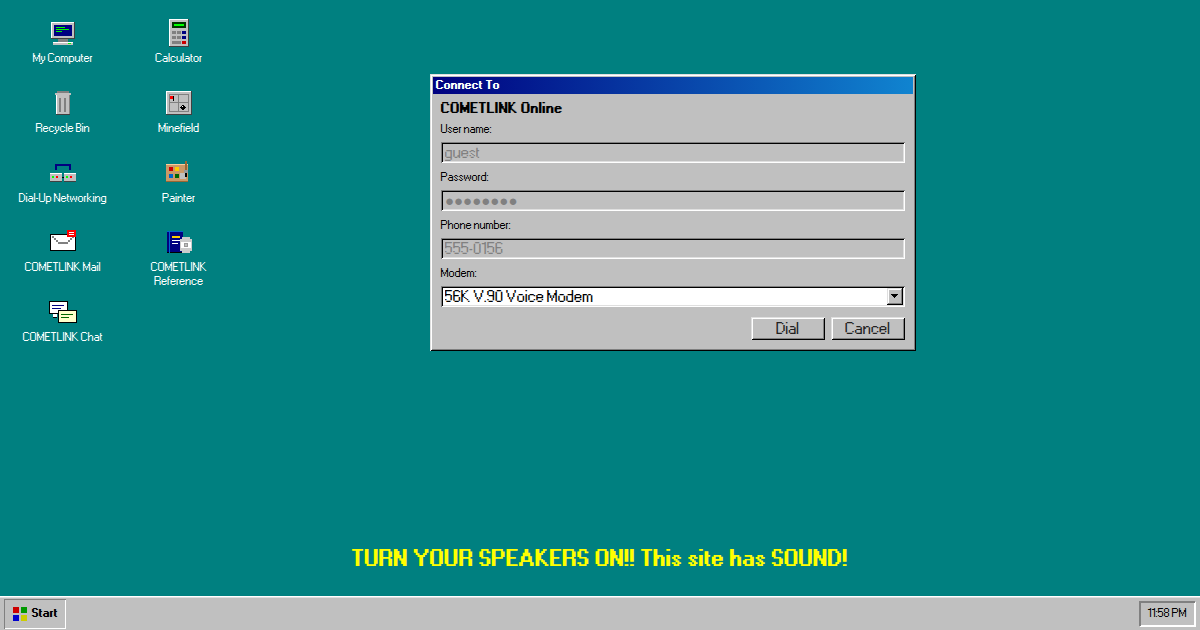
A new interactive website named 56k.rip recreates the authentic 1996 dial-up internet experience directly in your browser. The simulation features the iconic modem handshake sounds, slow page loads, and the classic risk of someone picking up the phone and disconnecting you. Users are encouraged to turn their sound on for the full nostalgic effect.
CommentsYantra is a newly released LALR(1) parser generator for C++ that streamlines compiler design by combining multiple tools into one. It efficiently handles lexer, parser, and abstract syntax tree generation within a single unified application.
CommentsEDG C++ front-end goes public
2026-10-01On September 30, 2026, EDG's C++ front end officially transitioned to open source under the nonprofit stewardship of The C++ Alliance. The announcement details how this shift impacts current users, outlines new avenues for community contributions, and provides resources for tracking the project's future development.
CommentsYC S25 startup Magnitude has launched an open-source inference engine that automatically compiles and tunes kernels to optimize itself for the user's specific hardware. This self-optimizing approach allows open AI models to run up to twice as fast as llama.cpp across Apple Silicon, NVIDIA, AMD, and standard CPUs.
Comments
Singapore's government dating app FirstDate utilizes the Nobel Prize-winning Gale-Shapley stable marriage algorithm to optimize user matchmaking. Originally developed in 1962, this game theory algorithm calculates matches based on individual preferences and is also used today for hospital residency and kidney exchange programs.
Comments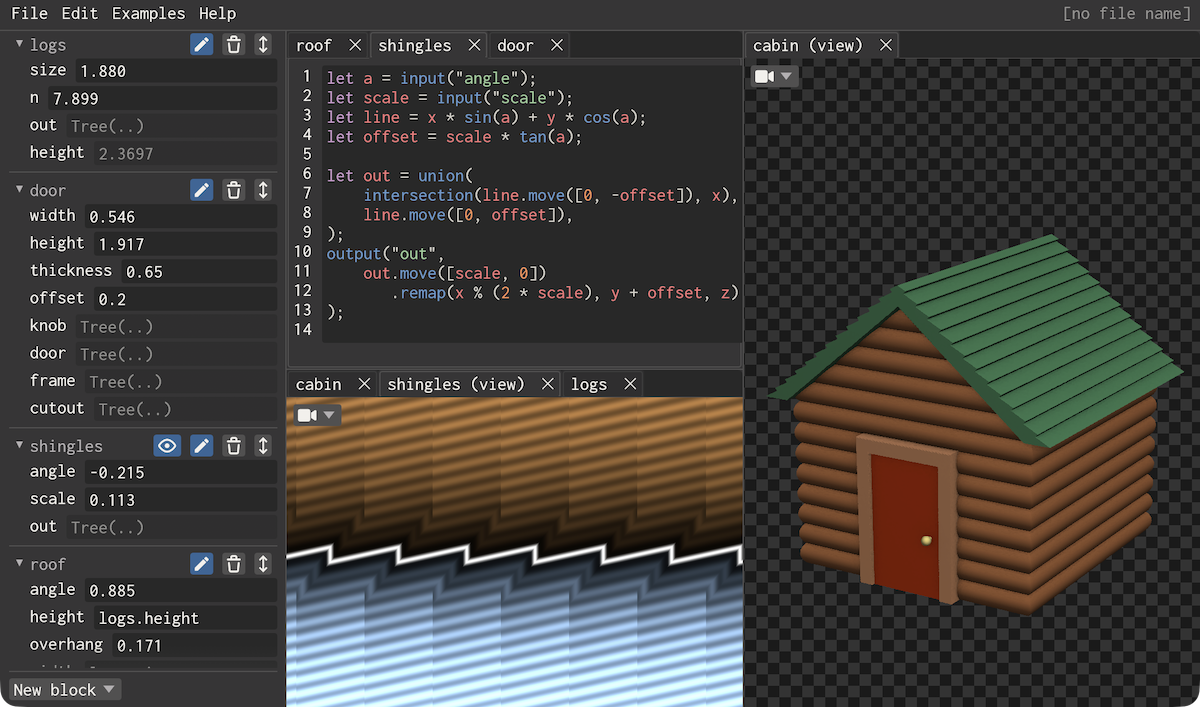
Halfspace is a new experimental integrated development environment designed specifically for solid modeling using distance fields. This specialized tool provides a dedicated workspace for creating complex 3D models through advanced mathematical representations.
Comments
Netlify has rebuilt its Edge Functions by transitioning from V8 isolates to Firecracker MicroVMs. This architectural shift makes the functions up to five times faster and significantly reduces latency. Developers will also benefit from greater overall system reliability and faster log delivery.
Comments
This article traces the evolution of the Bloomberg Terminal, highlighting its journey from an early data aggregator to an indispensable tool in the financial industry. It explores how the platform revolutionized the market by transforming disparate streams of raw financial data into actionable insights for investors.
Comments
Following the discontinuation of its original manufacturing, the CHOMPI portable sampler instrument has been released as fully open-source for both its hardware and software. Although the trademarked name restricts third-party marketing, enthusiasts can now build their own devices from the official specifications or purchase used units. The community has praised the decision, anticipating a wave of DIY builds and third-party clones to make the highly sought-after instrument more accessible.
Comments
Lathoa is a new math app for children that features an AI robot designed to intentionally make calculation errors. Kids are tasked with catching and correcting these mistakes to practice essential critical thinking skills. The app aims to prepare the next generation for an era where verifying AI outputs is a crucial ability.
Comments
A single unchecked login token left Microsoft's internal analytics service vulnerable to unauthorized access. This critical security flaw potentially exposed up to 17 trillion rows of internal records.
Comments
What TLA+ can and can't check
2026-10-01A recent article examines the practical capabilities and limitations of the formal specification language TLA+ for system verification. The author pushes back against the hype suggesting the tool can single-handedly solve complex AI safety challenges, clarifying exactly what it can realistically check and where its boundaries lie.
CommentsJevotron is a new command-line tool that enables multiple Jev integrations directly from the terminal. It allows users to perform automated anomaly detection to quickly identify data fields that require further investigation without leaving their command-line environment.
Comments2026-09-30
Livenerf: Has Opus 5.5 been nerfed yet?
2026-09-30A new benchmarking tool called Livenerf has been launched to track post-release performance changes in artificial intelligence models. The project specifically aims to determine if the Opus 5.5 model has been nerfed or downgraded in capability since its initial release. By providing continuous monitoring, Livenerf allows the developer community to verify that deployed AI systems maintain their original performance levels over time.
CommentsAmerica.gov
2026-09-30Readers discussing the new America.gov website criticized its user interface design and browser compatibility, while also noting that its published labor statistics contradict the administration's optimistic projections regarding AI-driven job growth. The site's integration of an AI chatbot to help citizens navigate government services sparked further debate over the risks of relying on potentially flawed LLM outputs for authoritative information versus the benefits of simplifying complex bureaucratic processes.
Comments