Software Tech News
Software is where most of the technology industry's ideas take shape. This section collects news about applications, platforms, open-source projects, and online services, along with the teams and companies that design, ship, and maintain them.
Typical stories include major releases and redesigns, open-source projects gaining traction, creators presenting tools they built, SaaS companies changing pricing or features, and post-mortems explaining why a product failed or an outage happened. Critical takes on bloat, reliability, and user experience are common too.
Knowing which software is improving, stagnating, or being abandoned helps people pick better tools and avoid costly migrations later. Developers, product teams, IT buyers, and everyday users follow this coverage to keep their stack current and discover useful alternatives.
2026-04-17
A newly announced project called Smol Machines has introduced a lightweight, self-contained virtual machine that boasts ultra-fast subsecond coldstart times. This highly portable tool provides developers with an efficient solution for rapidly spinning up isolated computing environments.
CommentsA new macOS utility called PanicLock allows users to instantly disable Touch ID and require a password to unlock their Mac. The tool can be triggered via a single click, a keyboard shortcut, or by simply closing the laptop lid, providing a quick security measure for sensitive situations.
Comments

NIST gives up enriching most CVEs
2026-04-17The US National Institute of Standards and Technology announced a new policy this Wednesday regarding the US National Vulnerability Database. Under this change, the agency will no longer enrich most CVEs with extended analysis. This shift represents a major change in how critical cybersecurity data is processed and distributed across the tech industry.
CommentsCadQuery is an open-source Python library that allows developers to build parametric 3D CAD models entirely through code. This scripting approach replaces traditional graphical interfaces to enable highly automated, customizable, and version-controlled design workflows.
CommentsA simplified model of Fil-C
2026-04-17A recent community discussion highlights Fil-C as an underrated project that brings memory safety to C without requiring a rewrite in Rust. However, critics emphasize that the project currently suffers from data race vulnerabilities due to non-atomic pointer updates and incurs noticeable performance overheads compared to compile-time safe alternatives. Despite these limitations, developers continue to experiment with the language, recently introducing a Bazel template to facilitate hermetic builds and invisible capability system variations.
Comments
Stage is a new AI tool that streamlines the code review process by organizing pull requests into logical chapters. This structured approach allows human reviewers to comprehend code changes much faster, ultimately putting developers back in control of their workflows.
CommentsA new demonstration highlights an integrated workflow combining SPICE circuit simulation, LeCroy oscilloscope control, and Claude Code for automated hardware verification. This toolchain allows developers to simulate electronic designs and leverage AI to verify the results directly against physical oscilloscope measurements.
CommentsA Python Interpreter Written in Python
2026-04-17A new project called Byterun implements a Python interpreter written entirely in Python, sparking community debate over the architectural differences between self-hosting interpreters and compilers. While critics note that circular interpreters can create inefficient runtime chains compared to self-hosted compilers, supporters highlight the project's value for educational experimentation and demystifying language execution. The ensuing discussion also delves into the technical nuances of bootstrapping and the exact definitions of interpreters, JIT compilers, and PyPy's compiled RPython subset.
CommentsIntroducing: ShaderPad
2026-04-17Programmer and designer Riley J. Shaw has introduced ShaderPad, a new project reflecting his commitment to repair and craft in technology. This release aligns with his broader mission to build transparent, remixable tools that promote a sustainable and accessible future.
Comments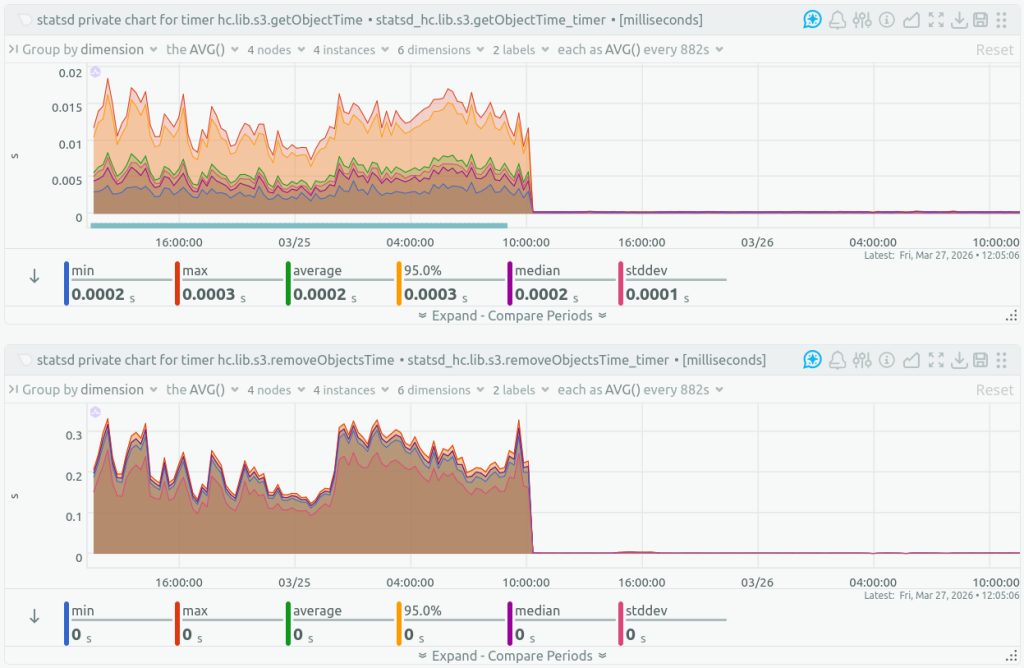
Healthchecks.io has migrated to a self-hosted, S3-compatible object storage system to manage larger request payloads from its monitoring endpoints. The service now routes HTTP POST bodies up to 100kB to this new infrastructure, while continuing to store smaller payloads directly in its PostgreSQL database.
CommentsFIM – Linux framebuffer image viewer
2026-04-17FIM is a Linux framebuffer image viewer that enables users to display images and perform file recovery directly from the terminal without a graphical desktop. Community discussions highlight similar framebuffer tools for media playback, though users note that modern lightweight Wayland setups often provide better hardware performance than traditional framebuffer devices. Despite these performance trade-offs, developers continue to embrace these minimalist environments for their extreme system simplicity and potential security benefits in an AI-driven landscape.
CommentsThe GNU libc atanh is correctly rounded
2026-04-17The GNU C Library has updated its math functions to achieve fully correct rounding for the double-precision atanh operation, moving beyond the traditional 1 ULP accuracy target. This ongoing initiative provides strict numerical guarantees that are essential for designing reliable algorithms in critical fields like aerospace and medical simulations. While these highly accurate implementations perform well on modern CPUs, developers still face significant optimization challenges when adapting them for GPU and NPU architectures.
Comments
Everything we like is a psyop?
2026-04-17This article examines the growing concern that TikTok's algorithmic feed is artificially shaping modern culture and consumer trends. It questions whether popular digital phenomena are the result of organic interest or manipulative growth hacking. Ultimately, the piece urges society to establish clear boundaries between legitimate marketing practices and inauthentic algorithmic manipulation.
Comments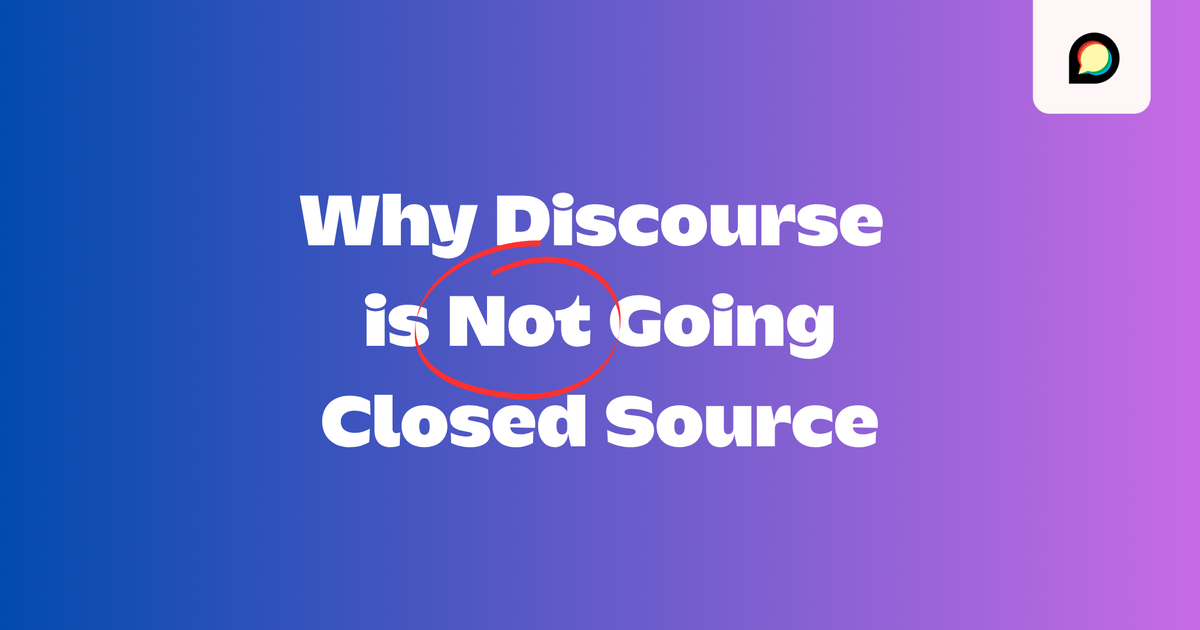
Discourse Is Not Going Closed Source
2026-04-17Following Cal.com's recent decision to close its source code over AI concerns, Discourse has announced it will remain open source. The platform's creators reaffirmed their commitment to transparent development after 13 years of building the software in public.
Comments2026-04-16

Claude Opus 4.7
2026-04-16The latest model, Claude Opus 4.7, is now generally available. This update delivers notable improvements over Opus 4.6, specifically enhancing performance in advanced software engineering and tackling the most difficult tasks.
Comments
Codex for almost everything
2026-04-16Positioning itself as a tool for almost everything, the updated Codex app for macOS and Windows introduces advanced features like computer use, in-app browsing, image generation, memory, and plugins. These comprehensive enhancements are designed to significantly accelerate and streamline developer workflows.
CommentsIPv6 traffic crosses the 50% mark
2026-04-16Despite IPv6 traffic crossing the 50% mark, technical discussions highlight ongoing debates regarding its practical benefits and the internet's persistent reliance on NAT. While widespread adoption is recognized as crucial to combat IPv4 address exhaustion, many practitioners still prefer IPv4 for local network setups due to its cleaner architecture and the complexities of bridging the two protocols.
Comments
Cloudflare is upgrading its AI Gateway into a unified inference layer designed to streamline development for AI agents. The platform update allows developers to access models from over 14 providers while introducing new Workers AI bindings and an expanded catalog of multimodal models.
Comments
A newly introduced Android CLI tool allows developers to build applications three times faster by integrating seamlessly with any automated agent. This enhancement to the Android developer tools ecosystem streamlines workflows and significantly boosts overall productivity.
CommentsThe Free Software Foundation is seeking a direct human contact at Google to report a Gmail account responsible for sending over 10,000 spam emails. The organization is appealing to the tech community for help bypassing its standard abuse reporting forms, which have previously failed to generate any response or resolution.
Comments
Tree-sitter integration is significantly enhancing the R programming experience by introducing modern development tooling. This upgrade provides R developers with advanced capabilities for parsing, searching, formatting, and editing their code. As a result, R now offers the same high-quality development environment previously limited to other mainstream programming languages.
CommentsAI cybersecurity is not proof of work
2026-04-16Tech community debates are questioning the validity of Anthropic's claims regarding its closed Mythos model and its advanced cybersecurity capabilities compared to open-source alternatives. Skeptics argue that without transparent testing setups, these assertions serve as marketing rather than proof, raising concerns about whether artificial intelligence genuinely discovers complex vulnerabilities or merely games benchmarks. The discussion also highlights broader disagreements over whether strong coding proficiency naturally translates to identifying arbitrary security flaws, emphasizing the need for practical and reproducible verification.
Comments
Artifacts has officially launched as a scalable, Git-compatible versioned storage solution built specifically for agents, developers, and automations. The platform allows users to create millions of repositories, fork from remote sources, and seamlessly hand off URLs to any standard Git client.
Comments
Cloudflare Email Service
2026-04-16Cloudflare has entered the public beta phase for its new Email Service, allowing developers to integrate email capabilities directly into their agents. This infrastructure enables agents to natively send, receive, and process messages, expanding their multi-channel reach into users' inboxes.
CommentsA new technique leverages a modified LLVM fork to retrofit JIT compilation directly into C-based interpreters by optimizing the interpreter's underlying execution loop. By manually annotating the interpreter's C code, developers can significantly boost performance, such as doubling execution speed for Lua, without altering the actual programs being interpreted. While the approach currently requires specialized knowledge and manual modifications, it offers a promising method for accelerating language interpreters that could potentially be automated in the future.
CommentsA new technique dubbed RedSun grants SYSTEM-level access on Windows 11, 10, and Server, underscoring the security risks of antivirus software operating with full system privileges. Discussions surrounding the issue emphasize that allowing tools like Windows Defender to run as SYSTEM creates massive attack surfaces ripe for privilege escalation exploits. Security advocates argue that Microsoft should handle core system-level scanning natively while restricting antivirus remediation components to lower-privilege, sandboxed environments.
CommentsYC W26 startup Kampala allows developers to reverse-engineer private applications into usable APIs by analyzing network traffic and HAR files. Reader discussions highlight the tool's utility for building custom automations, but also note challenges such as mobile SSL pinning and potential terms of service violations. The creators clarified that the platform is designed to facilitate personal automation workflows rather than enable mass-scale scraping.
CommentsA developer recently created MacMind, a single-layer transformer neural network implemented entirely in HyperTalk for the classic 1989 Macintosh. This fascinating technical experiment pushes the boundaries of retro computing by successfully running modern AI architecture natively within the decades-old HyperCard environment.
Comments
The Gemini app is now on Mac
2026-04-16Google is expanding the reach of its AI assistant by launching the Gemini app for macOS. This new release provides Mac users with a dedicated, native desktop experience for seamless interaction.
CommentsA recently discussed article introduces the mathematical foundations of spherical harmonics specifically tailored for graphics programmers. Readers in the accompanying discussion explain how these orthogonal functions efficiently compress and integrate complex lighting data while outlining the necessary mathematical prerequisites like calculus and linear algebra. The conversation also highlights the mathematics' broader utility beyond computer graphics, noting its applications in spatial audio, optics, and quantum mechanics.
Comments