Property Management Tech News
Managing properties increasingly depends on software. This section follows property management technology, covering the platforms and tools landlords, managers, and tenants use to run buildings and rentals.
Typical stories include rental and leasing platforms, tenant screening and payment tools, smart locks and building sensors, AI for maintenance requests, short-term rental regulation, and funding for proptech startups.
Property technology affects housing costs, tenant experience, and investment returns. Property managers, investors, founders, and renters follow this coverage to understand how real estate is going digital.
2026-09-27
The Evolution of Vending Machines
2026-09-27Modern vending machines have evolved significantly, transitioning from cash-based operations historically tied to organized crime to advanced, cashless dispensers offering diverse products like giant Lego sets. Despite these technological upgrades and the allure of passive income, operators note that the business still demands significant effort to secure prime locations, negotiate property leases, and manage inventory and repairs.
Comments2026-09-25

Despite sitting on $8.14 trillion in valuable land, California is shifting its economic strategy to pursue mobile wealth. The state is now prioritizing the attraction and retention of billionaires rather than leveraging its massive underlying real estate assets.
Comments
2026-08-30

Landlords using algorithmic rent-pricing software are facing a new wave of litigation under recently enacted state and local laws. These emerging municipal regulations offer a simpler legal pathway to establish liability and impose significant penalties compared to ongoing antitrust lawsuits targeting automated revenue management products.
Comments2026-08-24

The pandemic-driven shift to remote work has improved work-life balance for employees but created significant economic challenges for U.S. cities. With fewer workers commuting to urban centers, municipalities face severe budget risks as declining office occupancy threatens crucial property, sales, and income tax revenues.
Comments2026-08-15
The Color of White Light
2026-08-15Reader discussions surrounding the article The Color of White Light highlight the limitations of traditional lighting metrics like the Color Rendering Index in accurately evaluating modern LED sources. Experts advocate for newer, more comprehensive standards like TM-30 that utilize a larger number of color samples to prevent manufacturers from artificially inflating their scores. Ultimately, the conversation underscores the complexity of objectively measuring white light, noting that color is a subjective human perception rather than a fixed physical property.
Comments2026-08-10
The article highlights school districts building homes to recruit teachers, which readers see as a response to a severe housing affordability crisis. Commenters argue that the traditional social contract of homeownership has been dismantled by restrictive zoning laws and the financialization of real estate. They further blame public pension funds for exacerbating the shortage by investing heavily in single-family homes through hedge funds to meet their financial obligations.
Comments2026-08-08
Oracle has banned the submission of AI-generated code to the OpenJDK project over safety and intellectual property concerns. This restriction contrasts sharply with the company's internal practices, where executives credit AI tools with accelerating software development. Additionally, Oracle faces a credit rating downgrade from S&P due to uncertain returns on its massive $70 billion datacenter expansion.
Comments2026-08-07
The Sylvester–Gallai Theorem
2026-08-07The Sylvester–Gallai theorem states that any finite, non-collinear set of points in a Euclidean plane contains a line passing through exactly two of those points. Michigan State University mathematician Leroy Milton Kelly developed a notable proof for this principle using a point-line distance minimization approach. By identifying the closest point-line pair in the set, his method elegantly demonstrates this fundamental geometric property.
Comments2026-08-01

Reflecting on the early days of open-source software distribution, the author contrasts the cryptography debates of twenty-five years ago with modern controversies surrounding AI model weights. By recalling the physical challenges of sharing large files over slow dial-up internet, the piece highlights how the fundamental struggles over open access and intellectual property have evolved alongside technology.
Comments
A past and future of trade secrets
2026-08-01Readers criticized the original article for its confusing and overly philosophical tone, but acknowledged the importance of its core subject regarding intellectual property. Over the last two decades, US patent protections have weakened while trade secret laws have significantly strengthened. Consequently, major technology companies are increasingly able to conceal the inner workings of search algorithms and self-driving systems within undocumented black boxes.
Comments2026-07-31

Long before modern recommendation algorithms shaped our viewing habits, neighborhood video stores served as vital social hubs. Patrons relied on face-to-face conversations and shared camaraderie to discover new films and organically shape cultural tastes. The subsequent shift to digital platforms has not only revolutionized media consumption, but also stripped away these essential physical spaces for civic engagement.
Comments2026-07-23

The rapid expansion of AI infrastructure has driven massive investments in GPU clusters, but the lack of a mature secondary market leaves their used value highly uncertain. This valuation risk is highlighted by xAI's recent debt agreement, which could force lender Apollo Global Management to assume ownership of the hardware if the company defaults. Consequently, financial backers face the unpredictable prospect of inadvertently entering the GPU rental business.
Comments2026-07-19

New York City Mayor Mamdani has announced proposed regulations requiring landlords and real estate agents to disclose the use of artificial intelligence in property listings. This initiative is designed to increase transparency and protect tenants navigating the city's housing market.
Comments
After fifteen years of effort, a couple in Rayleigh, Essex, has successfully grown bananas in their UK garden. Emma and Steve Stav achieved this rare feat by cultivating an impressive collection of 200 banana plants on their property.
Comments2026-07-13
A developer shares a recent debugging story revealing how a seemingly innocuous readonly property unexpectedly caused severe performance bottlenecks in their application. The article explores the hidden computational costs of property getters and provides insights for engineers looking to identify and resolve similar performance degradation issues.
Comments2026-07-08
A recently discovered obfuscated bash script printed on a novelty Uniqlo t-shirt has been decoded by the tech community, turning the apparel into a wearable piece of programming art. In response, legal experts are analyzing the garment to explore the intellectual property, technology, and commercial law implications of printing executable code on clothing.
Comments2026-07-05
Moby Dick Workout (2022)
2026-07-05Readers reacting to a humorous Moby Dick workout article share jokes about lifting whale blubber and playing Led Zeppelin drum solos. The discussion briefly pivots to a technical tangent praising the Winamp media player for its rapid recursive directory loading and instant search capabilities. Finally, commenters compare the excessive length of classic maritime novels to a simple plumbing test for evaluating apartment rentals.
Comments2026-07-04
Agentic coding notes
2026-07-04A recent discussion highlights how rigorous hardware testing methodologies, such as heavy fuzzing and property-based testing instead of traditional unit tests, can be successfully applied to modern software development. Participants emphasize that skills in measurement and experimental design, traditionally cultivated in chip companies, are becoming increasingly valuable for evaluating and guiding AI coding agents. The conversation also explores how integrating AI tools with robust feedback loops enables autonomous usability testing and self-correction in software projects.
Comments2026-07-03
Alibaba is reportedly banning Anthropic's Claude Code from its workplace over concerns regarding potential backdoors and the broader security risks of hosted AI tools. This decision highlights growing industry anxieties that feeding proprietary code into remote models exposes sensitive intellectual property to espionage, data breaches, and supply chain attacks, prompting organizations to reevaluate their reliance on third-party AI providers.
Comments2026-07-02
Japan's highest court has ruled that artificial intelligence cannot be named as an inventor on patent applications, affirming that AI is a tool lacking legal ownership rights. The ruling has sparked broader reader debates regarding the economic utility of intellectual property laws, weighing whether patents genuinely incentivize innovation in high-cost sectors like pharmaceuticals or simply protect corporate monopolies.
Comments2026-07-01
Sony's revocation of access to 551 previously purchased PlayStation movies has sparked widespread outrage and renewed calls for legislation to protect digital ownership rights. Consumer advocates are urging lawmakers to treat digital purchases as permanent property rather than revocable licenses, arguing that strong regulations in major markets would force companies globally to stop removing paid content.
Comments2026-06-25
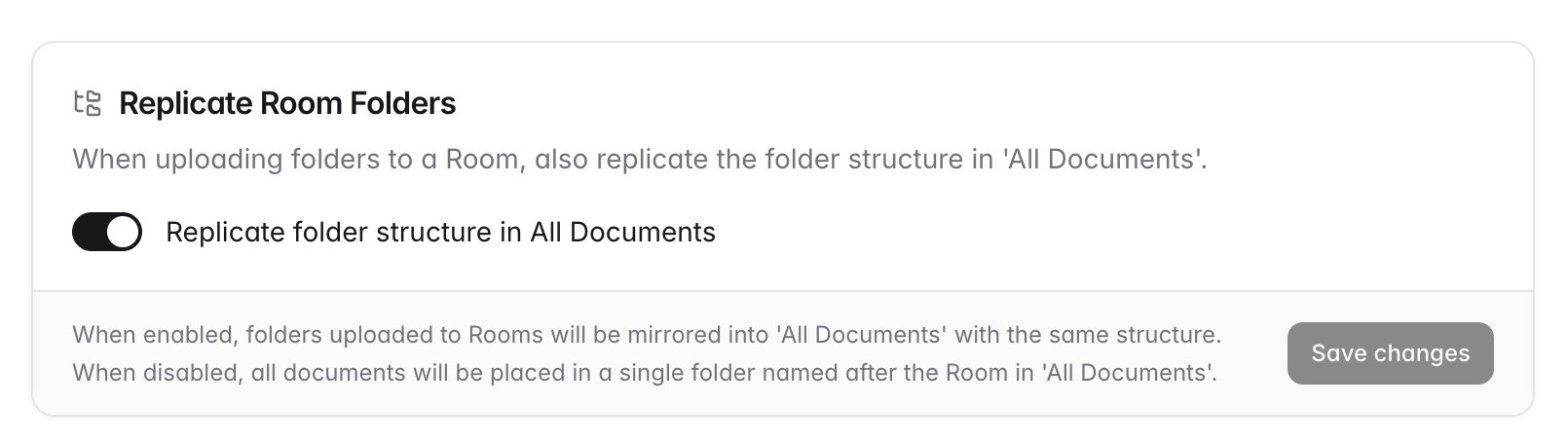
Papermark has accused entrepreneur Nico Laqua of stealing its open-source and enterprise-licensed data room code to build a competing product. The company is demanding the immediate takedown of the allegedly infringing software. The creators condemned the unauthorized use of their intellectual property as outright fraud.
Comments2026-06-20
South Korea's defense industry is rapidly capturing global market share by offering highly effective weapon systems at nearly half the cost of American and European alternatives. A primary driver of this success is Seoul's willingness to transfer intellectual property, allowing client nations to establish domestic manufacturing and avoid the political restrictions often attached to US military exports. As a result, countries are increasingly turning to South Korean contractors to secure reliable, sovereign supply chains amid shifting geopolitical alliances.
Comments2026-06-16

Despite the massive commercial success of his comic strip Calvin and Hobbes, creator Bill Watterson fiercely protected his intellectual property by refusing to license merchandise or expand the franchise. Ultimately, this unwavering commitment to his creative principles and resistance to endless monetization led him to end the series and completely withdraw from public life.
Comments2026-06-12

The House of Representatives passed H.R. 6028, officially framed as a minor technical reorganization of government agencies. Despite its modest presentation, the legislation would enact fundamental structural changes to the U.S. Copyright Office. This overhaul could significantly impact intellectual property administration and the broader technology sector.
Comments2026-06-09

xAI is increasingly operating like a datacentre REIT by renting out massive amounts of GPU capacity to competitors such as Anthropic and Google. This strategic shift appears to be driven by a combination of financial engineering ahead of the SpaceX IPO, a genuine compute shortage, and the company's unique infrastructure advantages.
Comments2026-06-08

A small Texas city has sold 87 acres of land to a data center developer for $10 million, breaking a promise made to a local farmer who originally donated the property for a public park in 1999. The controversial sale underscores the intense competition for real estate as tech companies rapidly expand their data center infrastructure.
Comments2026-06-02

Squillions: How money laundering won
2026-06-02Global money laundering has reached an unprecedented scale, operating as an illicit enterprise whose estimated value would make it the third-largest industry in the world behind commercial property. This staggering financial footprint underscores the critical need for advanced technological and regulatory solutions to combat sophisticated economic crimes and track illicit digital flows.
Comments2026-06-01

Success in the rapidly growing semiconductor industry requires chip designers to shift their strategies when moving from academia to commercial roles. This article explores the key differences in risk management and silicon intellectual property utilization necessary for professionals to thrive in the field.
Comments2026-05-29

A San Francisco startup is facing a lawsuit after allegedly using Airbnb rentals as testing grounds for its robots, resulting in extensive property damage. Bay Area hosts claim the company's testers destroyed personal belongings and trashed the homes, prompting them to issue negative reviews to the guests involved.
Comments