Programming Tech News
Writing software is a craft that keeps reinventing itself. This section gathers news and articles for people who program, covering language releases, compilers and runtimes, frameworks, development workflows, and the ideas that change how code gets written and reviewed.
Typical stories include new versions of Rust, Python, Java, JavaScript, and TypeScript, performance and debugging investigations, essays on architecture and code quality, and discussions of how AI coding assistants are changing day-to-day development. Hands-on tutorials and lessons from long-running projects show up often.
The tools and practices developers choose affect how fast teams ship and how well their software holds up over time. Working engineers, students learning to code, and engineering leaders follow this coverage to sharpen their skills and make better technical decisions.
2026-09-06
The new open-source project Cloud in a Bottle aims to make personal cloud self-hosting accessible to everyone by offering containerized apps and unified authentication. By prioritizing a streamlined user experience, the platform allows users to manage their own web applications as intuitively as using a smartphone, eliminating the need for complex sysadmin skills.
CommentsThe revolt of the reader
2026-09-06In his essay The revolt of the reader, author Bryan critiques the proliferation of AI-generated content and the flawed detection tools policing it. Sparked by an LLM-written guest post from the Rust Foundation, the piece argues that these technologies threaten both the decentralized nature of internet infrastructure and the human provenance of writing.
Comments
Learn Programming with OCaml
2026-09-06A discussion surrounding a book on learning OCaml highlights the ongoing debate over whether functional ML languages should be taught as a first programming language. While commenters note that adapting to OCaml's strict functional paradigm can be initially painful for beginners, many agree the experience ultimately creates better programmers by instilling strong habits in abstraction and immutability.
CommentsRecurseCenter.return()
2026-09-06Readers are expressing strong enthusiasm following news of the Recurse Center's return and its associated hub. The positive discussion highlights the tech community's ongoing appreciation for the initiative and its collaborative spaces.
Comments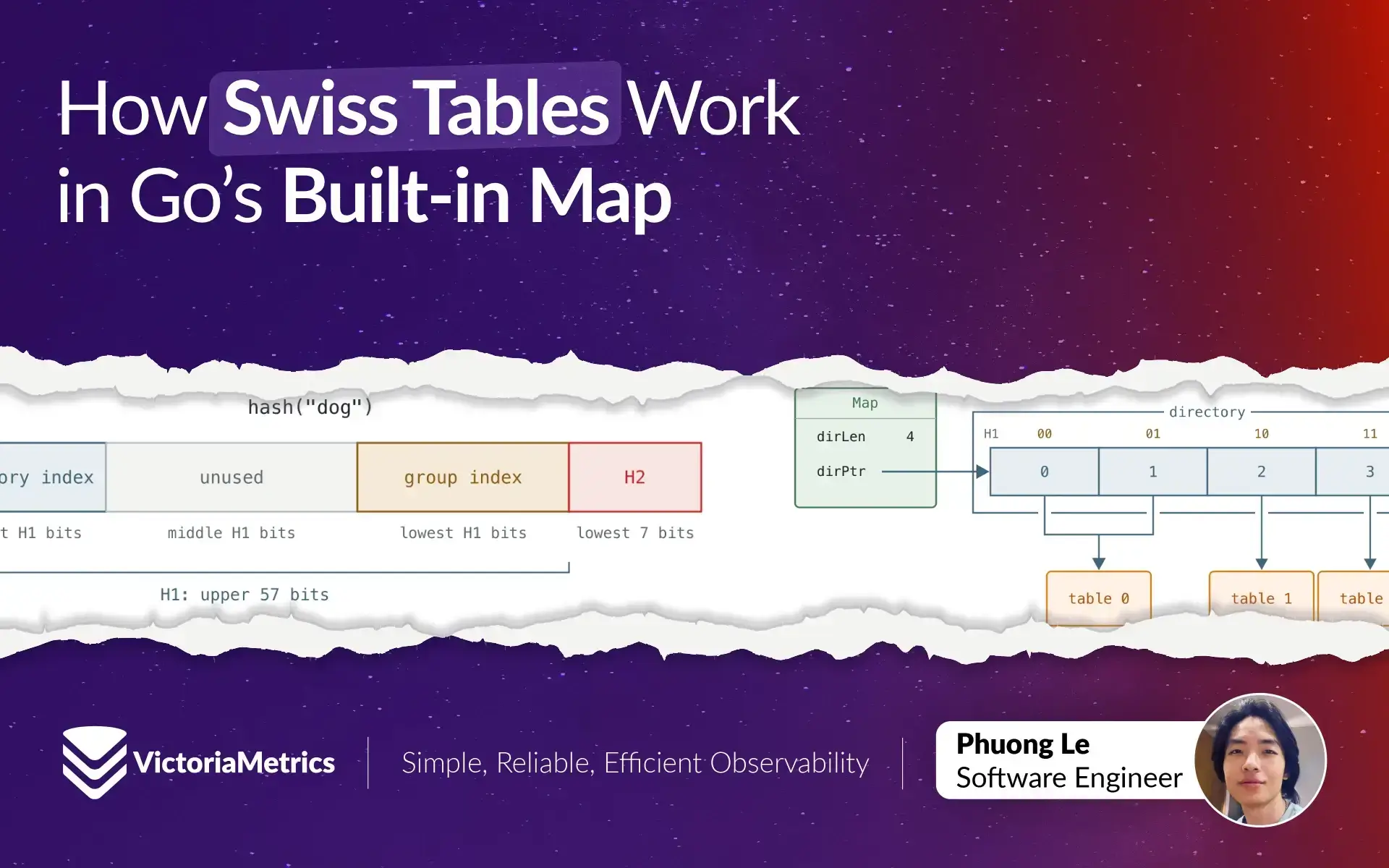
How Swiss tables work in Go built-in map
2026-09-06Go 1.24 upgrades its built-in map implementation by replacing the traditional bucket-based runtime with the highly efficient Swiss Tables algorithm. A new technical deep dive explores this architectural shift, breaking down core concepts like control bytes, hashing, probing, and table growth.
Comments
This technical deep dive visualizes how Rust's dynamic trait dispatch and virtual tables operate in memory. Through a series of hands-on coding experiments, the author explores the language's unique memory management peculiarities. Written from a C++ developer's perspective, the guide helps programmers understand the underlying mechanics of the dyn Trait syntax.
CommentsDespite recent takedowns, the alternative Twitter front-end Nitter currently has more working instances than it did prior to the crackdown. This resilient growth is supported by ongoing community efforts on GitHub, including new forks like shitter that maintain the project's accessibility.
CommentsOKF Agent Memory is a new pure Go tool that provides Git-native persistent memory for AI coding agents without relying on external databases. By utilizing Google OKF v0.2 for ultra-fast in-memory search and an embedded MCP server, the lightweight architecture reduces token bloat by 80% to optimize development workflows.
Comments2026-09-05
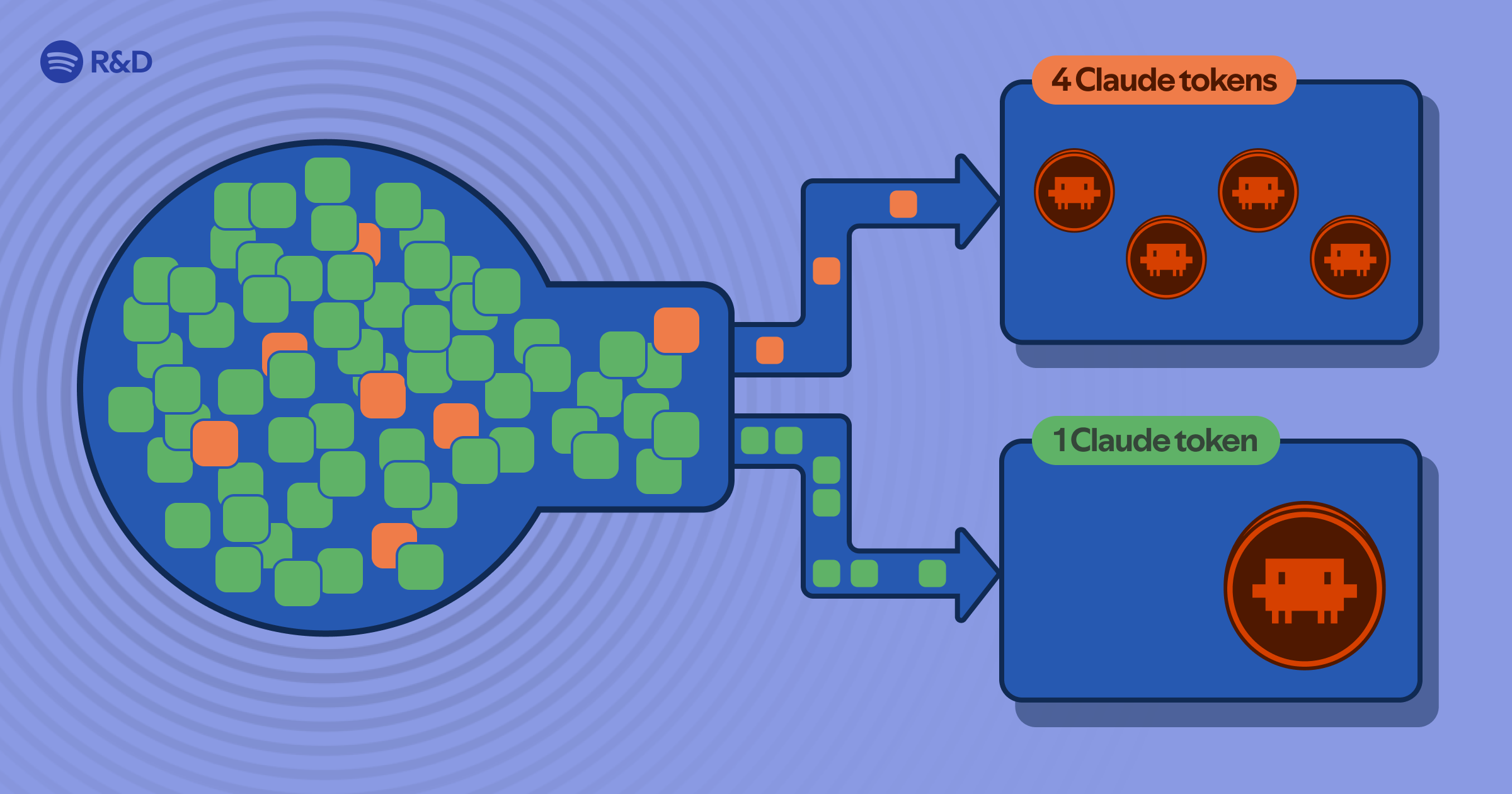
Spotify's new Portal tool has reduced token usage for the Claude Code AI agent by 90% by optimizing input and output operations. Because AI coding agents typically spend the majority of their resources on I/O rather than actual reasoning, this efficiency gain significantly lowers processing costs.
Comments
Can guitar frets perform multiplication?
2026-09-05Programming author Charles Petzold explores the intersection of mathematics and music by demonstrating how the physical layout of guitar frets can be used to perform multiplication. The article uses the instrument's fretboard as an intuitive physical model to explain complex computational concepts.
Comments
Git Submodules as a Package Manager
2026-09-05Git submodules can be utilized as a native package manager by treating the .gitmodules file as a package manifest and the gitlink as a lockfile entry. This setup allows developers to manage and pin project dependencies using built-in Git features. Ultimately, this method simplifies workflows by eliminating the need for external dependency management tools.
CommentsFermat's Last Theorem in Lean 4
2026-09-05The Anthropic organization has launched a new GitHub repository dedicated to formalizing Fermat's Last Theorem using the Lean 4 interactive theorem prover. This collaborative open-source project invites developers and mathematicians to contribute to the effort of translating the famous mathematical proof into machine-verifiable code.
Comments
Cybersecurity firm Rietta patched a government Ruby on Rails website for a critical ActiveStorage vulnerability just hours after the 9.5 CVSS flaw was disclosed. Despite the rapid response, the site faced exploit attempts almost immediately, with attacks starting before regular business hours resumed.
Comments
Vite now natively integrates the Rust-based React Compiler, reducing build times from 14.3 seconds to just 0.81 seconds in large codebases like React Router. This update delivers massive performance gains while resolving previous limitations to ensure faster, more consistent build management across the toolchain.
CommentsMoadim.io is an open-source loop engine that enables developers to schedule and run AI agents such as Claude, Codex, Hermes, and Pi. The platform executes these automated tasks over MCP and REST protocols to seamlessly integrate autonomous AI workflows into existing systems.
CommentsExactTex is a gradually-typed superset of LaTeX that allows developers to add type annotations to existing source files without breaking them. This incremental approach provides checked references, safe renaming, and early error detection before the final PDF is even generated.
Comments
IBM Bob
2026-09-05IBM has introduced Bob, a new artificial intelligence partner designed to assist developers throughout the entire software development lifecycle. The tool aims to streamline various stages of software creation, from initial coding to final deployment. By integrating directly into the SDLC, IBM Bob seeks to significantly enhance developer productivity and accelerate project delivery.
CommentsA new terminal assistant named TERMy has been introduced as a fast, lightweight alternative to LLM-based command-line tools. It leverages NPC-Forge, a framework designed to build conversational agents that run entirely on the CPU without relying on machine learning.
CommentsConnecting every app to every other app
2026-09-05New technologies leveraging DCR and CIMD are solving the complex n-squared scaling problem inherent in traditional OAuth integrations. By streamlining authentication and eliminating massive integration overhead, these solutions pave the way for seamless connectivity between every application.
Comments
Decompiler Explorer
2026-09-05Decompiler Explorer is a new interactive online tool that allows developers to easily compare the C-like output generated by multiple popular decompilers. This browser-based platform provides a convenient way for programmers to analyze and reverse-engineer compiled programs directly online.
CommentsGoogle has published an update on HEIR, a homomorphic encryption compiler that transforms standard programs to operate directly on encrypted data. The official Google Security blog announcement is accompanied by a candid, highly technical companion article that explores the project's progress in depth.
Comments2026-09-04

Project Xanadu: Even More Hindsight
2026-09-04A new retrospective examines the successes and failures of Project Xanadu, arguing that a lack of design iteration and practical use-cases prevented its visionary goals from becoming a useful reality. The author highlights how these historical shortcomings stalled the project's development and contrasts these past missteps with a more practical, modern approach to technology design.
Comments
Originally developed as an MIT research project, Julia has evolved into a widely used open-source programming language with over one million global users. The language has cultivated a dedicated following among scientists, engineers, and mathematicians at thousands of companies and universities worldwide.
Comments
A comprehensive study analyzed nearly 17,000 sessions to evaluate how coding agents like Claude Code, Codex, and Cursor select and implement development tools. The research tested 1,163 prompt variations across 75 repositories to observe the agents' actual behaviors. By focusing on real implementation rather than just recommendations, the findings provide deep insights into the practical decision-making processes of AI assistants.
Comments
A developer used a large language model to translate the 68000 assembly code of their 1993 Amiga game, Babylonian Twins, and port it to the Godot engine. The creator recently shared their findings after reviewing the AI-assisted porting process. Additionally, the original game disks have been released for free on itch.io.
Comments
IFM has launched K2 Horizon, an open-source fleet of six frontier AI models designed to handle reasoning, coding, and agentic workflows. This connected ecosystem also provides specialized solutions for edge devices and enterprise deployment, offering developers a comprehensive suite of advanced tools.
Comments
Tasklet, a Y Combinator-backed startup, is hiring a Customer Success Engineer to support users building complex AI-driven automation workflows. Rather than simply resolving support tickets, the position focuses on enhancing the overall user experience by optimizing the core product, self-serve resources, and internal tooling.
Comments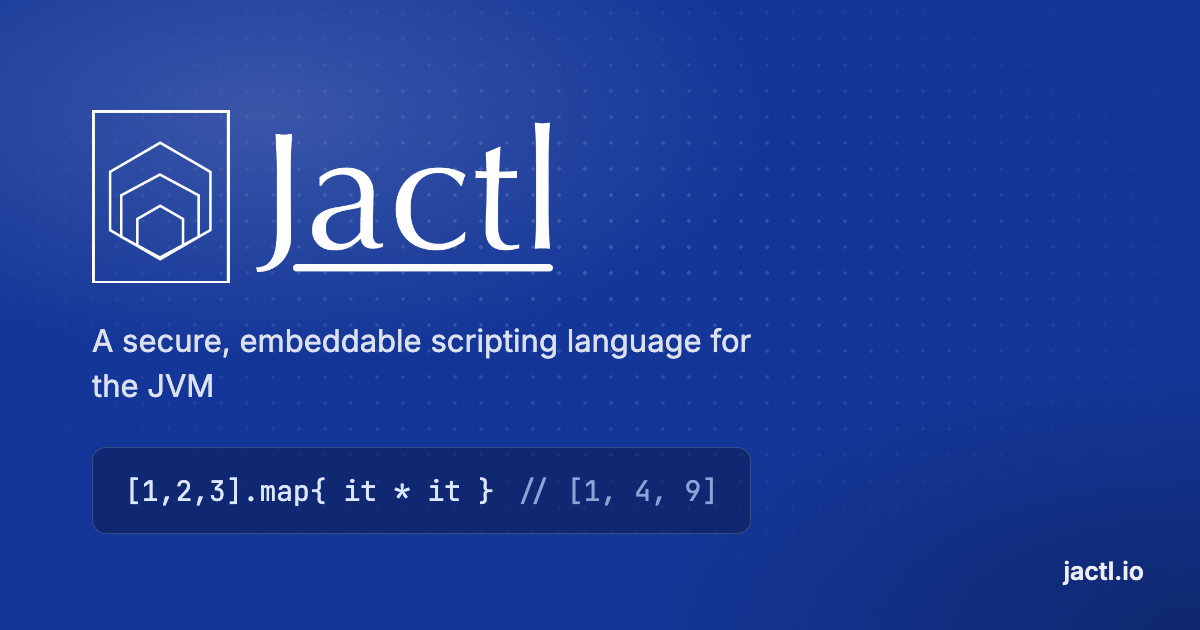
The Jactl scripting language introduces a custom continuation-based mechanism to simulate virtual threads in Java 8 without relying on Project Loom. The article details the underlying architectural design of this approach and provides benchmarks to evaluate its performance impact.
CommentsAsk HN: Who is using MCP in production?
2026-09-04Hacker News developers are sharing diverse production use cases for the Model Context Protocol, including customer-facing voice agents, government open data initiatives, and automated web scraping. While many praise the protocol for providing a standardized, agent-friendly interface that simplifies third-party integrations and tool discovery, others caution about challenges like context window bloat and inefficiencies when handling large data payloads compared to traditional command-line tools.
CommentsGenerative AI is disrupting front-end web development by empowering non-technical users to independently build and update websites at a fraction of the traditional cost. Although this automation threatens basic web design roles, senior engineers anticipate their expertise will remain essential for developing the underlying frameworks and guardrails of these new tools.
Comments