Programming Tech News
Writing software is a craft that keeps reinventing itself. This section gathers news and articles for people who program, covering language releases, compilers and runtimes, frameworks, development workflows, and the ideas that change how code gets written and reviewed.
Typical stories include new versions of Rust, Python, Java, JavaScript, and TypeScript, performance and debugging investigations, essays on architecture and code quality, and discussions of how AI coding assistants are changing day-to-day development. Hands-on tutorials and lessons from long-running projects show up often.
The tools and practices developers choose affect how fast teams ship and how well their software holds up over time. Working engineers, students learning to code, and engineering leaders follow this coverage to sharpen their skills and make better technical decisions.
2026-07-19
A developer successfully replaced a $120,000 bowling center control system with a custom $1,600 solution built using ESP32 microcontrollers. This project sparked widespread discussion about the broader potential of retrofitting legacy industrial and automotive equipment with modern, low-cost embedded technologies. Community members highlighted both the technical viability and the regulatory challenges of creating niche aftermarket solutions for outdated machinery.
CommentsClaude Code uses Bun written in Rust now
2026-07-19Bun creator Jarred Sumner announced that Claude Code version 2.1.181 and later now use the runtime's rewritten Rust port. This update makes the AI coding tool 10% faster on startup.
Comments
Transcribe.cpp
2026-07-19The Transcribe.cpp project is a new initiative designed to simplify audio transcription while providing an interactive sandbox for tech enthusiasts. By allowing users to play around with the technology easily, it aims to make complex code integrations both straightforward and fun.
Comments
OpenAI has reduced the context window size of its Codex model from 372k to 272k tokens. The company is backporting this change to the stable 0.144 release alongside refreshed GPT-5.6 model instructions and metadata. These updates ensure feature consistency between stable clients and the latest public main branch.
Comments
The eighth installment of a Commodore 64 BASIC programming series details the development of a new dungeon crawler called Goblin Attack. The game features redefinable keys, chasing enemies, and a d20 combat system. The tutorial also covers the technical challenge of fixing a critical memory bug that caused the game to silently overwrite its own code.
Comments
Cagire: Live Coding in Forth
2026-07-19Cagire is a terminal-based step sequencer that enables live music production and coding using the Forth programming language. By assigning a Forth script to each step, the single binary integrates synthesis, sampling, and support for MIDI and OSC to provide a unique command-line environment for musicians and developers.
Comments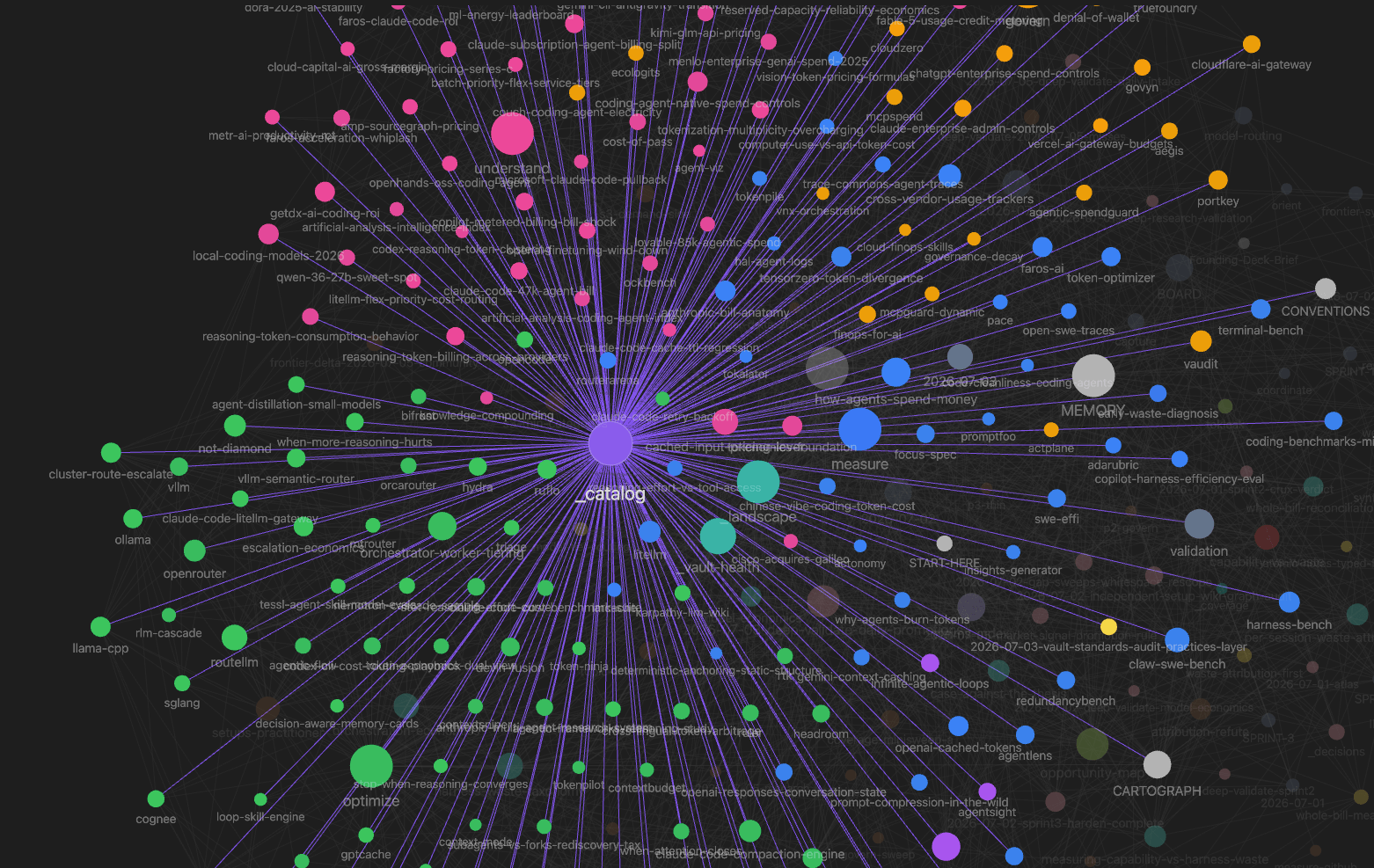
A developer maxed out their Claude subscription limit in thirty minutes while researching methods to reduce AI token consumption. Through this process, they built a custom deep research pipeline that uses shared memory and assigns distinct roles across three existing AI subscriptions. The author outlines how readers can replicate this cost-effective system using services they already pay for.
CommentsUnifiedIR for Julia
2026-07-19The official GitHub repository for the Julia programming language is highlighting new development efforts focused on implementing a UnifiedIR. Developers are encouraged to create an account and contribute to the ongoing compiler infrastructure improvements. This initiative represents a significant step in the language's continuous development and optimization.
Comments
Scrying the AMD GFX1250 LLVM Tea Leaves
2026-07-19AMD is preparing to unveil its new MI400 series Datacenter Accelerators at the upcoming Advancing AI event. In anticipation of the official reveal, developers are analyzing recent LLVM code commits to uncover technical details about the underlying GFX1250 architecture.
CommentsMaking Software: How to make a font
2026-07-19A recent article explores the technical mechanics of font encoding, rendering, and typography fundamentals such as kerning and ligatures rather than providing a practical design tutorial. The explainer was praised by readers for its clear breakdown of complex typographic concepts and the technical distinctions between different font formats. It also sparked community discussions regarding custom font creation tools and the potential computational performance impacts of highly complex character designs.
Comments2026-07-18
Moonshine AI has introduced a lightweight voice model that processes speech recognition, intent recognition, and text-to-speech in under 500 kilobytes. The tool offers ultra-low latency, providing developers with a highly efficient framework for building responsive voice agents and interfaces.
CommentsRegressive JPEGs
2026-07-18Developers are sharing creative workarounds to embed animations and live video streams by repurposing standard image formats like progressive PNGs and MJPEG instead of relying on traditional video tags. Techniques include using HTTP refresh headers and multipart responses to stream continuous frames directly into standard image elements. While some express frustration that websites still strip animations from modern formats like APNG, the community celebrates these inventive hacks for building interactive, JavaScript-free web applications.
Comments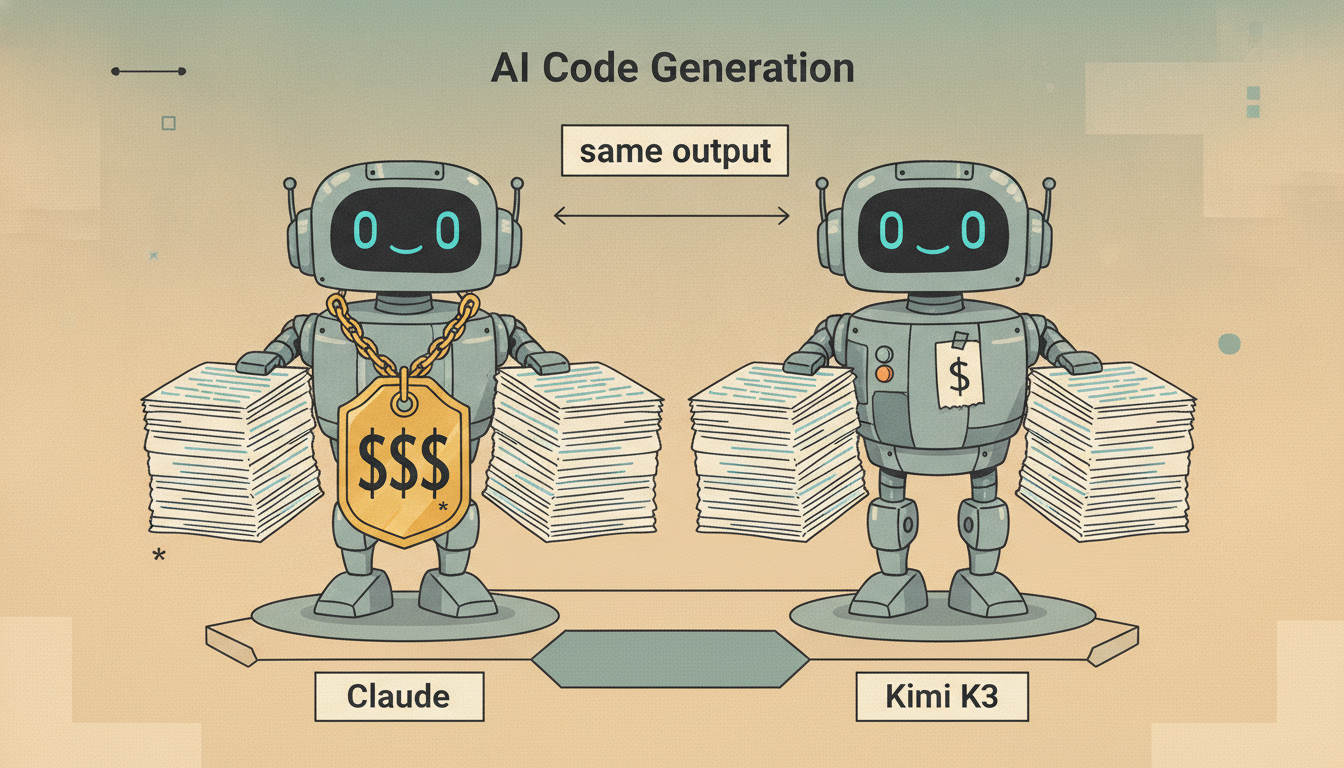
The Kimi K3 Moment
2026-07-18A developer evaluating the new Kimi K3 AI model found its coding capabilities and output quality to be virtually indistinguishable from industry leader Claude. This parity marks a significant milestone in the tech industry, demonstrating that top-tier software development AI is no longer exclusive to a single provider.
Comments
Codex Resets
2026-07-18A new tracking resource monitors the reset schedules for OpenAI's Codex usage limits by analyzing announcements made on X. By following updates from user @thsottiaux, the tool helps developers anticipate when their API rate limits will refresh.
CommentsWhat AI did to stackoverflow in a graph
2026-07-18A recent graphical analysis reveals a dramatic drop in Stack Overflow's web traffic following the widespread adoption of AI coding assistants. The visual data highlights a major shift in developer behavior as programmers increasingly rely on generative AI to answer coding questions instead of searching community forums. This trend underscores the disruptive impact of large language models on traditional knowledge-sharing platforms within the tech industry.
CommentsGleam Is Now on Tangled
2026-07-18The Gleam programming language has migrated its code repository to Tangled, a decentralized GitHub alternative built on the ATProto protocol. While the move highlights the growing use of decentralized infrastructure, readers criticized the original article for failing to explain what either technology actually does.
Comments
Elixir-lang.org has a new design
2026-07-18The official website for the Elixir programming language, elixir-lang.org, has launched a brand new design. Elixir is a dynamic, functional language running on the Erlang VM, designed to help developers build scalable and maintainable applications from zero to scale.
CommentsTech professionals are discussing the high costs of bikeshedding, noting that teams often waste thousands of dollars in salary debating inconsequential and reversible decisions. To combat this, engineers recommend making quick, intuitive choices and iterating on implementations rather than endlessly optimizing for unknown future scenarios. Ultimately, recognizing the minimal impact of trivial choices allows development teams to bypass exhaustive debates and accelerate actual implementation.
CommentsQ3Edit is an open-source, WebAssembly-powered browser tool that allows users to edit and play Quake III Arena maps without local installations. It uniquely integrates live MCP authoring, enabling seamless AI-assisted map creation directly within the editor using models like Codex and Claude.
CommentsA second-grade teacher successfully revived the beloved 1990s PC game Backyard Baseball by acquiring the IP rights and commissioning a development team to rebuild the title after the original source code was lost. Developers worked with fan-provided CD-ROMs and applied complex binary patches to reconstruct the game's executable. This effort allowed the classic title to be modernized with upgraded assets and contemporary platform features for current systems.
Comments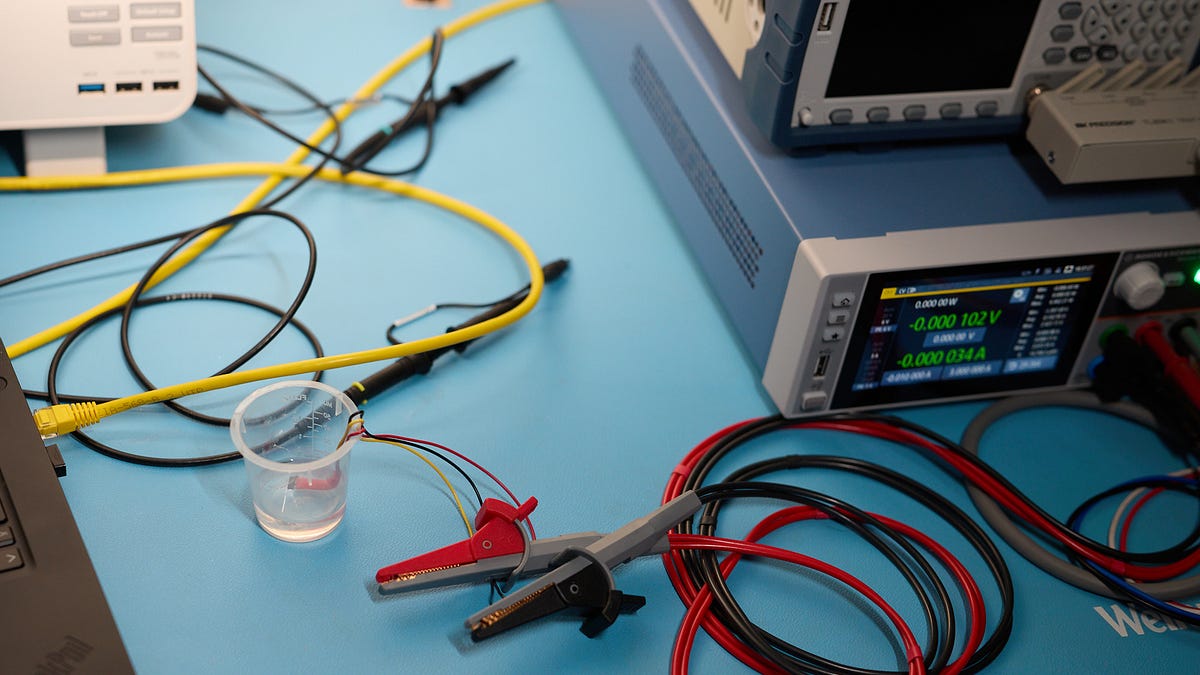
The author of the new book The Secret Life of Circuits shares a guide on creating authentic Voltage-Current plots at home. This DIY approach ensures that the circuit artwork featured in the publication remains highly realistic and physically accurate.
CommentsIgalia has updated its layer-based SVG engine in WebKit to reduce layer overhead through the implementation of conditional layer creation. This optimization significantly improves the rendering performance and efficiency of SVG content across WebKit-based browsers.
Comments2026-07-17
In a discussion thanking Hacker News for its 15 years of support, users are sharing how the platform has profoundly shaped their personal and professional lives. Commenters highlight how connections made through the site and the associated Recurse Center led to lifelong friendships and dream jobs at companies like DuckDuckGo. The thread also reflects on the enduring value of the community's supportive environment and its unique social guidelines.
CommentsThe Zilog Z80 has turned 50
2026-07-17Celebrating its 50th anniversary, the Zilog Z80 microprocessor has sparked nostalgic reflections from veteran technologists who credit learning digital logic and assembly on the chip for their foundational understanding of computing. Readers emphasize the enduring value of mastering hardware from first principles, contrasting the manual coding and hardware constraints of the 1970s with today's over-served ecosystems and modern architectures like RISC-V.
CommentsA recent technical piece shares practical insights and key lessons learned from operating SQLite in real-world environments. It outlines essential considerations for developers looking to deploy the popular embedded database in production. The guide provides actionable tips for managing, optimizing, and running SQLite effectively.
CommentsA recent technical deep dive details the optimization of a static search tree, achieving search speeds up to 40 times faster than traditional binary search for sorted data. By leveraging advanced techniques like manual SIMD instructions, memory layout adjustments, prefix partitioning, and query batching, the author maximizes overall throughput. The implementation builds on foundational work from Algorithmica, refining the code down to the assembly level to eliminate unnecessary instructions and achieve peak performance.
CommentsAn Engineer's Guide to USB Typе-С (2024)
2026-07-17A new engineering guide to USB-C explores the immense complexities of the USB-PD protocol that frequently lead to poorly implemented power delivery in consumer hardware. To help debug these widespread issues, the author highlights an open-source USB-PD protocol analyzer designed to troubleshoot power negotiation and cable capabilities. While some readers criticized the guide for overlooking basic five-volt implementations, the community praised the debugging tool and noted the continued usefulness of affordable PD decoy boards for custom hardware projects.
CommentsSolod: Go can be a better C
2026-07-17In a recent article, Solod argues that the Go programming language can serve as a superior alternative to C for modern software development. The discussion highlights how Go's modern features, such as built-in concurrency and memory safety, resolve many of the traditional complexities and vulnerabilities inherent to C. This comparison suggests that developers tackling systems-level programming should strongly consider adopting Go to improve both productivity and code reliability.
Comments
The human-in-the-loop is tired
2026-07-17Developers are experiencing a unique psychological fatigue as AI systems increasingly write their own code, shifting humans from active creators to passive supervisors. This transition at the intersection of machine reward functions and human dopamine loops highlights the growing exhaustion of remaining the human in the loop.
Comments
A Road to Lisp: Which Lisp
2026-07-17This article explores the diverse ecosystem of modern Lisp dialects by comparing the unique features, strengths, and ideal use cases of popular variants like Clojure, Common Lisp, and Racket. Ultimately, it serves as a practical guide to help developers navigate these differences and choose the right Lisp for their specific programming needs.
Comments