Programming Tech News
Writing software is a craft that keeps reinventing itself. This section gathers news and articles for people who program, covering language releases, compilers and runtimes, frameworks, development workflows, and the ideas that change how code gets written and reviewed.
Typical stories include new versions of Rust, Python, Java, JavaScript, and TypeScript, performance and debugging investigations, essays on architecture and code quality, and discussions of how AI coding assistants are changing day-to-day development. Hands-on tutorials and lessons from long-running projects show up often.
The tools and practices developers choose affect how fast teams ship and how well their software holds up over time. Working engineers, students learning to code, and engineering leaders follow this coverage to sharpen their skills and make better technical decisions.
2026-07-11
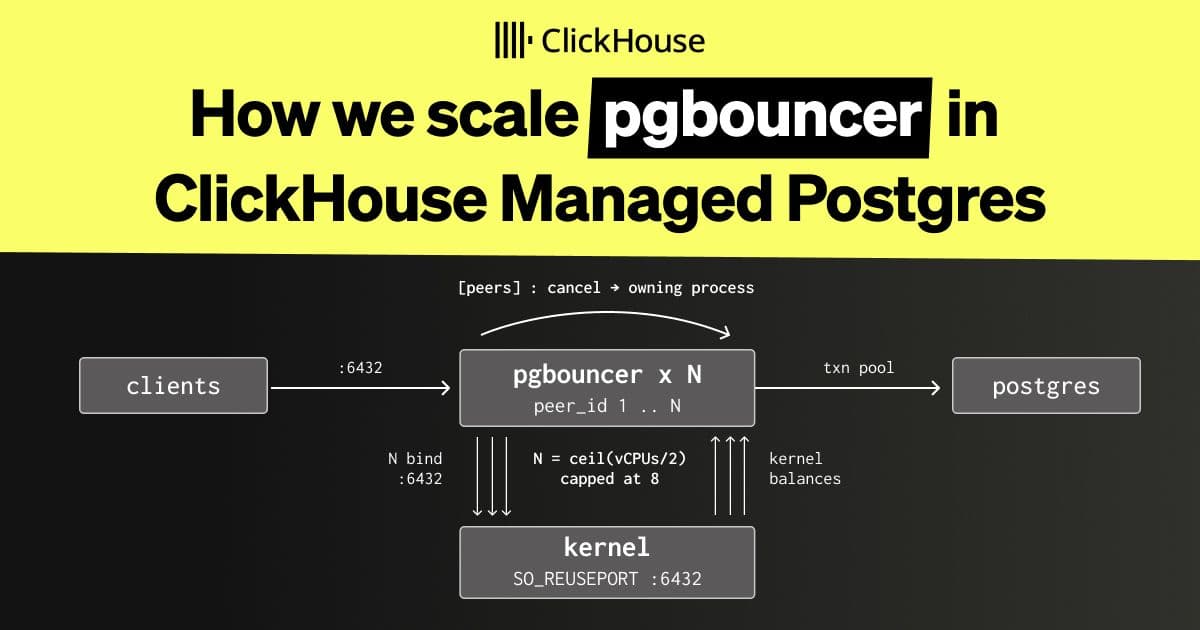
We scaled PgBouncer to 4x throughput
2026-07-11ClickHouse Managed Postgres overcame PgBouncer's single-threaded CPU limitations by deploying a peered fleet of processes utilizing the so_reuseport feature to scale across all available cores. This approach allows the connection pooler to fully utilize the entire CPU capacity of the host machine. Consequently, the team achieved a fourfold increase in throughput, as confirmed by recent performance benchmarks.
Comments
Ant is a new lightweight JavaScript runtime capable of running npm packages and TypeScript from a single 9 MB binary. Built from scratch on its own engine, it features a Node-compatible API, VM-isolated sandboxing, and built-in Wasm support.
Comments
Prefer strict tables in SQLite
2026-07-11The author argues that using strict tables in SQLite improves data integrity by preventing common datatype errors. Enforcing strict types blocks invalid entries, such as accidentally inserting text into numeric columns. Adopting this practice ensures more reliable and predictable database behavior.
CommentsA 1993 retrospective on the history of Singular Value Decomposition honors numerical analysis pioneers like Gene Golub, William Kahan, and Christian Reinsch for developing the practical SVD algorithm still used today. Accompanying reader discussions explore the mathematical intuition behind SVD, comparing it to generalized eigenvalues and explaining its utility in decomposing linear mappings into rotations and coordinate scaling.
CommentsAlternate clock designs and time systems
2026-07-11A recent article on alternate clock designs sparked a community discussion highlighting innovative and unconventional methods for visualizing time. Readers shared several creative web projects, including a twelve-variation visualizer and a unique Triclock design. The conversation also featured minor bug reports and widespread praise for specific favorites, most notably a digital Pi clock and a mesmerizing falling sand visualization.
CommentsRISCBoy is a completely open-source portable gaming console engineered from the ground up, featuring a custom CPU, graphics processor, and printed circuit board. The comprehensive hardware design and all associated project files are publicly available for developers and tech enthusiasts to explore and modify.
CommentsA new Show HN project introduces an interactive platform for developers to learn programming by rebuilding complex systems from scratch. Users can choose to construct their own versions of foundational tools like Redis, Git, and databases. Each hands-on lesson follows a simple choose, write, and run approach to teach core software engineering concepts.
CommentsThe Biff web framework for solo Clojure developers has introduced a new utility called Biff.graph. This tool allows programmers to organize and query their codebases as interactive graphs.
CommentsThe Python library Otary for image processing and 2D geometry has launched a new tutorials section featuring step-by-step guides and interactive Jupyter notebook workflows. These resources aim to help developers practically apply the library's clean API to real-world computer vision tasks beyond standard documentation. Community members note the tool excels at solving niche problems in just a few lines of code, often succeeding where large language models fail.
CommentsIn a 2019 blog post, Paul Khuong draws a conceptual parallel between thread preemption and garbage collection to explain the complexities of memory reordering. He illustrates how preemption can inherently resolve concurrent memory ordering issues, offering a unique perspective on system optimization. This insight adds to his broader body of work exploring advanced computing concepts, mathematical theories, and compiler design.
Comments
Optimization Solver as a Service
2026-07-11Quicopt has launched a new optimization solver service designed to streamline complex mathematical modeling for developers. Programmers can easily install the package via pip to build models using Pyomo or OR-Tools MathOpt. The platform then solves these models through its API in a simple three-step process.
CommentsReflecting on the 1984 book Digital Deli, readers discussed the extreme hardware constraints of early personal computing, noting how one contributor hand-coded the bestselling Apple Writer word processor using just 8KB of memory. The discussion contrasted these tight historical limitations with modern software bloat and today's massive GPU memory requirements. Participants also observed a cyclical trend in the industry, suggesting that modern AI tools are ushering in a new era of independent cottage programmers reminiscent of the early PC days.
Comments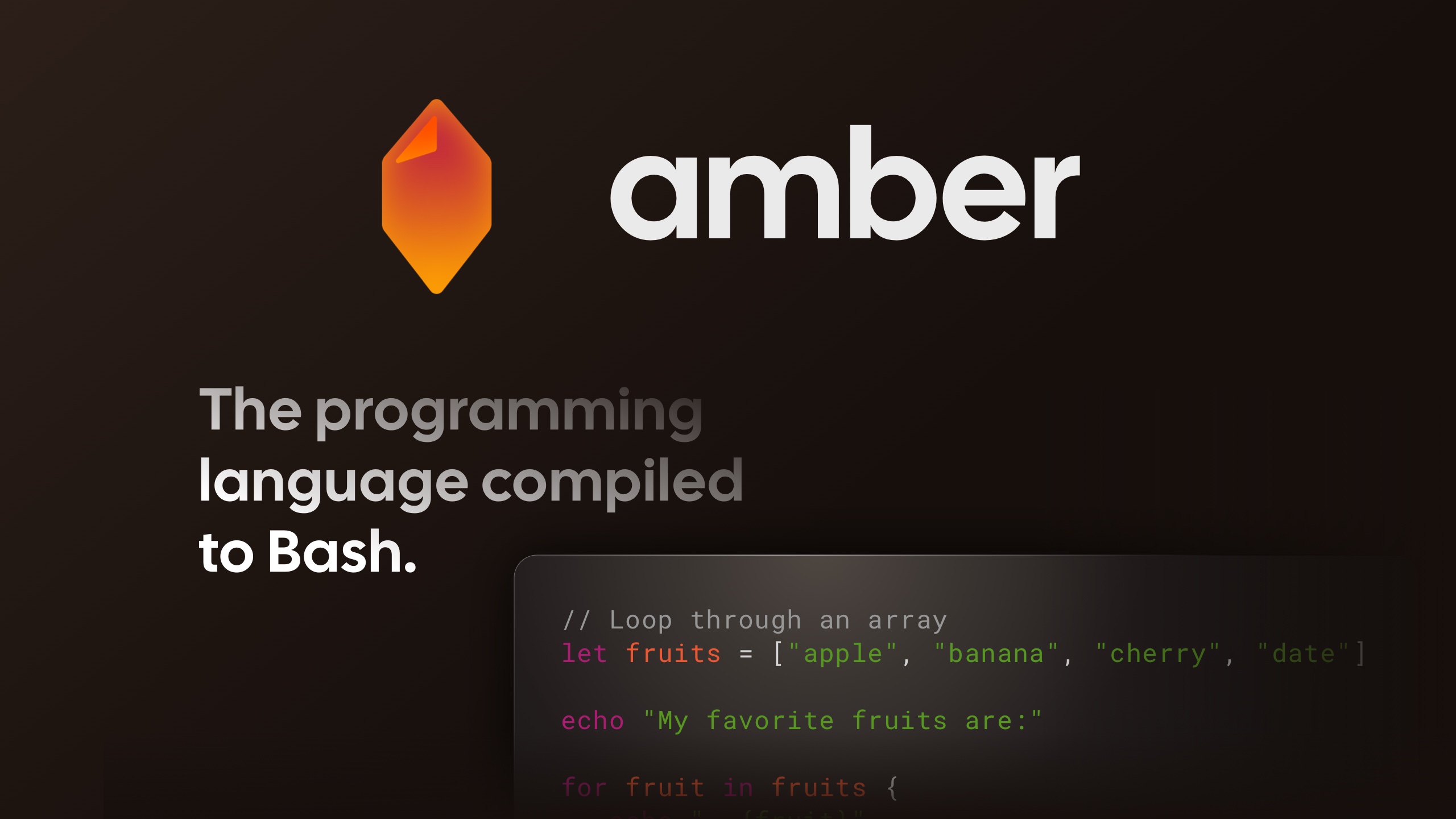
Amber is a new programming language designed to compile modern syntax directly into safe and readable Bash, Ksh, and Zsh shell scripts. It provides developers with a robust alternative to traditional shell scripting for automating system tasks. By catching errors at compile time, Amber significantly reduces the common pitfalls and debugging headaches associated with complex command-line environments.
Comments2026-07-10
Good Tools Are Invisible
2026-07-10The author argues that the best software tools should be completely invisible, criticizing the tech community for romanticizing the steep learning curves of programs like Vim as enjoyable puzzles. Ultimately, the piece emphasizes that software should prioritize seamless utility and efficiency to get out of the user's way rather than trying to be entertaining.
CommentsAn Indonesian solo developer named Rizky Nova has built a widely praised train simulation game using Unreal Engine on a low-spec machine with just 16GB of RAM. This impressive technical achievement has sparked extensive online discussions regarding how hardware limitations and resource constraints can foster creativity and drive innovative programming.
Comments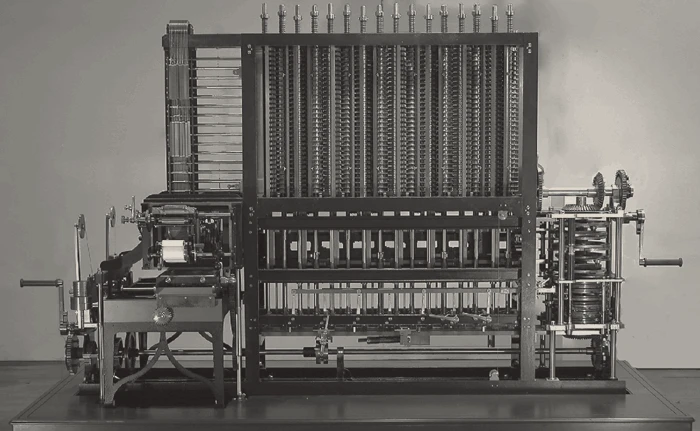
Tim Roughgarden explores computation as a fundamental law of nature, tracing its historical arc through major milestones in computer science. His overview spans from Alan Turing's foundational proofs on unsolvable problems to the P versus NP question at the core of modern computing.
Comments
After seven years of utilizing Haskell in its production environment, the company Scarf is migrating its core infrastructure to a different programming language. Avi Press announced the shift, noting that the decision to move away from the functional language after such a long-term commitment was made reluctantly.
Comments
Although often compared to a full operating system, Emacs actually functions as an orchestrator of applications and utilities running above the kernel. A recent article explores this architecture by framing the editor's diverse features as a collection of interconnected services, offering a more accurate way to understand how it manages complex workflows.
CommentsThe MiMo-V2.5 series introduces a comprehensive end-to-end inference optimization strategy designed to maximize Hybrid Sliding Window Attention efficiency. By implementing advanced techniques like tiered caching, SWA-aware prefix trees, and optimized processing pipelines, this engineering update significantly streamlines memory management and scheduling to deliver faster multimodal model inference.
Comments
Developers have built a real-time AI tutor designed to teach math and reading to children aged four to nine. Because young learners require immediate feedback and cannot read text interfaces, the team integrated early childhood pedagogy directly into the system's engineering. The article details the key architectural decisions and technical lessons learned from creating a fast and highly accurate educational model for young children.
CommentsWrite code like a human will maintain it
2026-07-10Large language models enable rapid code generation, tempting developers to bypass traditional best practices like the DRY principle. However, because humans ultimately maintain the software, relying on endless AI output creates significant long-term technical debt. Developers must therefore prioritize clean, readable code over the sheer volume of AI generation to ensure future maintainability.
CommentsWyrm is an open-source algebra engine that allows users to solve mathematical equations through touch-based interactions. Built on a dedicated soundness engine, the project is hosted on GitHub and actively welcomes developer contributions.
Comments2026-07-09
A developer has introduced Colibri, a lightweight engine that runs the massive 744-billion parameter GLM-5.2 AI model on consumer machines with just 25GB of RAM. Written in pure C with zero dependencies, the project achieves this feat by streaming model experts directly from disk instead of loading them entirely into memory. This innovation dramatically lowers the hardware requirements for running immensely large language models locally.
CommentsA new project called pgrust has successfully rewritten the PostgreSQL database engine using the Rust programming language. The Rust-based implementation recently achieved a major milestone by passing 100% of the standard Postgres regression tests. This accomplishment demonstrates the viability of leveraging Rust for complex, enterprise-grade database systems.
CommentsHy3
2026-07-09Simon Willison's recent blog post evaluates AI image generation using his pelican test, prompting readers to question the benchmark's validity as models may be over-trained on his specific SVG examples. The community discussion also reflects on the broader impact of AI on software development, with some developers expressing a preference for hand-coding despite the industry's rapid shifts. Additionally, readers debated the current capabilities of local models, noting that Gemma4 and Deepseek 4 currently outperform GPT-OSS for coding tasks.
CommentsA recent interview with Mitchell Hashimoto explores his pragmatic engineering decisions behind the Ghostty terminal emulator and his use of the Zig programming language. The ensuing discussion highlights his stance on open-source forking, where he argues that maintaining a custom fork to remove unwanted features is comparable in effort to maintaining a feature flag. This perspective sparked broader debates among readers regarding the synchronization burdens of forks, the open source project as a product mentality, and the potential for AI to automate downstream customizations.
Comments
A road to Lisp: Why Lisp
2026-07-09This article explores the enduring appeal and unique advantages of the Lisp programming language for modern software development. It highlights Lisp's powerful macro system, code-as-data philosophy, and significant historical influence on contemporary functional programming paradigms. Ultimately, the piece serves as a comprehensive guide for developers looking to understand why Lisp remains a highly respected and influential language today.
CommentsA recent article proposing a fast MPMC queue was corrected to clarify that its bounded waiting structure is not actually wait-free, sparking community discussions about the inherent trade-offs in concurrent queue design. Participants emphasized that developers must carefully weigh compromises between bounded memory, global FIFO ordering, and non-blocking behavior to select the data structure that best fits their specific system requirements.
CommentsY Combinator S26 startup Context.dev has launched a new web scraping API specifically designed to help AI agents extract structured data from the internet. The platform allows developers to scrape individual URLs into clean markdown or HTML, crawl entire websites, and process the information using a single REST API. This tool aims to streamline data collection and formatting for developers building AI-driven applications.
Comments
Developers can now streamline their workflow by using a new one-command setup for the Pi platform that provides a fully curated coding agent experience. This opinionated package comes pre-loaded with over 60 skills, 67 themes, sub-agents, and a Claude Code CLI provider to deliver a comprehensive, ready-to-use solution right out of the box.
Comments