Programming Tech News
Writing software is a craft that keeps reinventing itself. This section gathers news and articles for people who program, covering language releases, compilers and runtimes, frameworks, development workflows, and the ideas that change how code gets written and reviewed.
Typical stories include new versions of Rust, Python, Java, JavaScript, and TypeScript, performance and debugging investigations, essays on architecture and code quality, and discussions of how AI coding assistants are changing day-to-day development. Hands-on tutorials and lessons from long-running projects show up often.
The tools and practices developers choose affect how fast teams ship and how well their software holds up over time. Working engineers, students learning to code, and engineering leaders follow this coverage to sharpen their skills and make better technical decisions.
2026-06-09
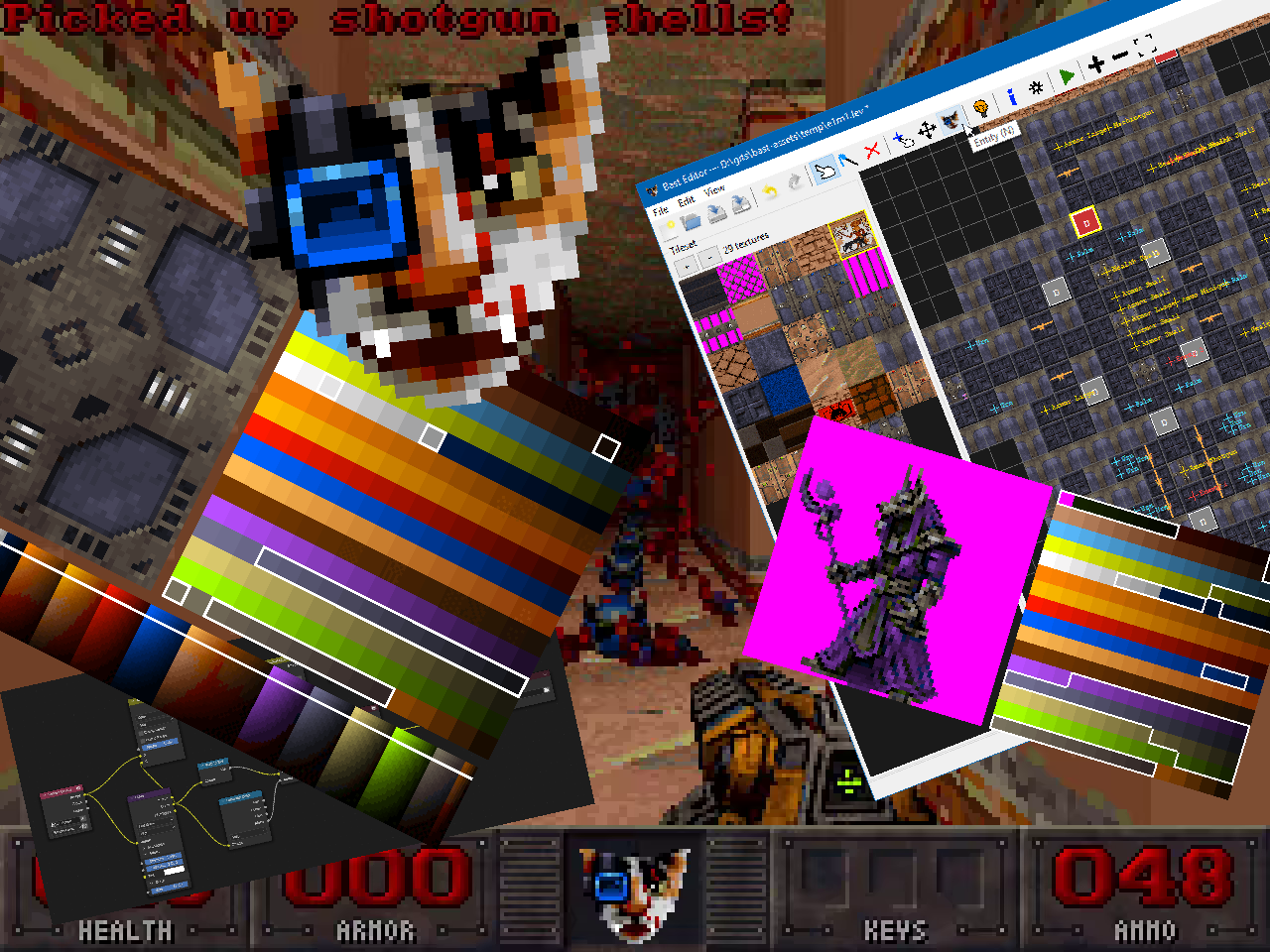
Making Graphics Like it's 1993
2026-06-09This deep dive explores the technical asset creation pipeline behind the game Catlantean 3D, detailing how developers recreate a nostalgic 1993 visual aesthetic. The article breaks down the specific retro rendering techniques and workflows used to achieve this classic early 3D look for modern audiences.
Comments
OpenCV 5 has officially launched, delivering a massive modernization to the foundational computer vision library. The update introduces a graph-based deep learning engine, extensive ONNX coverage, hardware acceleration, and native support for large language and vision models. Featuring a newly rebuilt, Python-first core, this release represents a significant leap in both performance and developer capabilities.
Comments
Anthropic's Claude Fable policy is transforming coding assistants into non-neutral infrastructure by allowing product companies to influence AI behavior behind the scenes. As a result, the system could silently limit or skew its assistance to users without any transparent disclosure of these corporate-driven changes.
Comments
Upcoming breaking changes for npm v12
2026-06-09The upcoming npm v12 release will introduce security-focused breaking changes to the default behavior of the npm install command. Developers can prepare for these updates now, as the new defaults are currently available behind warnings in npm version 11.16.0 and later.
Comments
Microsoft has shut down dozens of GitHub repositories hosting open-source Azure and AI coding tools following a targeted security breach. The hack was specifically designed to steal passwords and credentials belonging to AI developers.
Comments
Apple Core AI Framework
2026-06-09Apple has introduced a new Core AI framework that allows developers to run machine learning models directly inside their applications. This tool harnesses the capabilities of Apple silicon to provide optimized and efficient on-device AI processing.
CommentsGitdot is a new open-source alternative to GitHub written in the Rust programming language. The project was recently showcased on Hacker News with the goal of providing developers with a superior platform for hosting and collaborating on code.
CommentsTest-case reducers are powerful but underappreciated debugging tools that automatically minimize failing code or inputs to isolate the exact root cause of a bug. By stripping away non-essential data and reducing noise, these tools significantly speed up troubleshooting and make log files easier to analyze, offering tremendous efficiency benefits even beyond the compiler and functional programming communities that currently champion them.
CommentsPostgres 19 will finally introduce query hints, officially referred to as plan advice, after a 15-year debate within the community. This long-awaited addition aims to give developers more control over query execution. Shaun Thomas breaks down the history of this feature and explains how to use the new pg_plan_advice and pg_stash_advice tools.
Comments
Grit: Rewriting Git in Rust with agents
2026-06-09A new project named Grit has successfully used agents to rewrite the entire Git version control system in memory-safe Rust. The library-first implementation fully passes the original C Git test suite, highlighting the growing capability of agents to handle complex software migrations.
Comments
Cleaning up after AI rockstar developers
2026-06-09The article examines the long-term maintenance struggles and technical debt left behind by rockstar developers who prioritize rapid innovation over sustainable code. It highlights how the rise of AI-assisted development is exacerbating this issue, forcing engineering teams to spend significant time cleaning up highly complex and often unmanageable software.
Comments
A new arXiv paper explores how the orchestration frameworks used to guide AI agents, known as agent harnesses, can make simple deterministic tools like grep highly effective for agentic search. By optimizing these harnesses, developers can significantly reduce the need for complex semantic retrieval mechanisms, challenging the assumption that advanced tools are always necessary for AI information-seeking tasks.
Comments
Thi.ng is a long-term open-source initiative providing approximately 350 complementary code libraries and projects for computational design and art. This extensive collection serves as a foundational toolkit for developers and creators building algorithmic and generative works.
CommentsThe LD_DEBUG environment variable (2012)
2026-06-09A technical guide on using the LD_DEBUG environment variable for troubleshooting has received a notable update. Originally published in 2012, the refreshed article now includes links to additional tools to help developers debug dynamic linking issues. This revision provides programmers with an expanded set of resources for diagnosing complex runtime errors.
Comments2026-06-08
A new satirical React component library called Performative-UI was recently shared on Hacker News to poke fun at modern startup culture. It features a collection of design tropes and user interface elements specifically meant to signal an oversubscribed funding round and project unchecked hyper-growth.
Comments
Show HN: I Derived a Pancake
2026-06-08A developer has created an interactive calculator that applies complex food science, including leavening chemistry and acid-base stoichiometry, to determine the optimal recipe for perfect pancakes. The tool analyzes ingredient properties such as whey protein structure to dynamically compute ideal ratios based on the specific items users have on hand.
CommentsIn a Hacker News thread discussing personal tools created since the advent of AI, a developer showcased several self-made generative audio web apps. The projects, which include a VCR-inspired noise generator and a retro-styled audio tool, were praised by the community for their creative and relaxing qualities. Users also provided constructive feedback on addressing browser security warnings and adding accessibility features for motion sensitivity.
Comments
A new interactive Python tutorial explores the fundamentals of machine learning by building a perceptron from scratch. It guides readers through core concepts like weights, bias, and learning rates using hands-on demonstrations. The guide also explains data normalization and decision boundaries to reveal the mechanics behind the smallest brain you can build.
Comments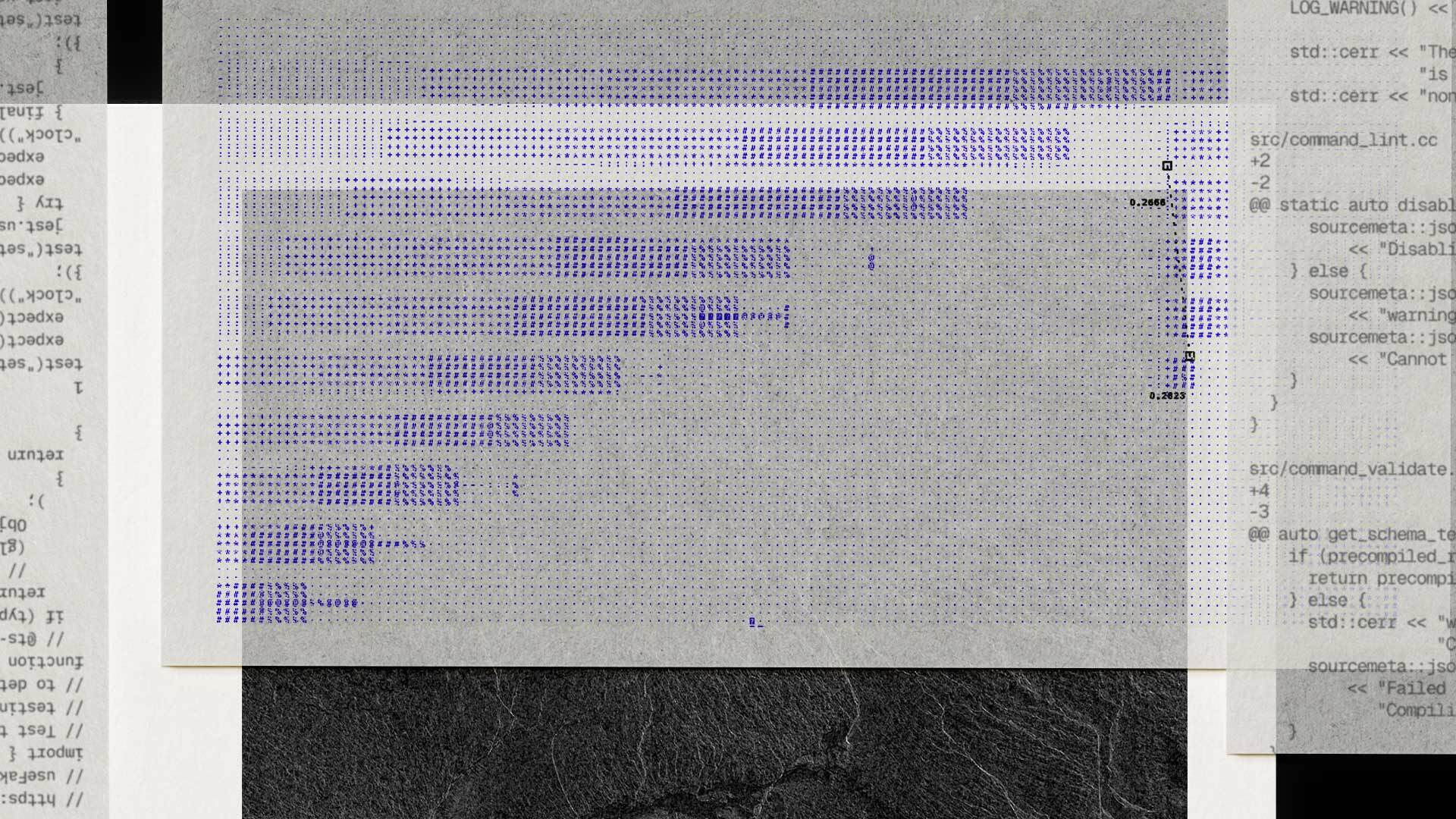
FrontierCode is a new evaluation benchmark designed to assess whether AI models generate high-quality code that developers would actually merge into production. Unlike existing benchmarks that only measure technical correctness, this new metric shifts the focus to evaluating real-world usability and overall code quality.
Comments
The latest OCaml onboarding guide offers a practical walkthrough of the Dune build system tailored for newcomers to the ecosystem. Addressing past feedback, this tutorial aims to simplify the initial learning curve and make getting started with the OCaml Distribution more accessible.
CommentsA new open-source project demonstrates how to create a Matter-compatible Wi-Fi smart light bulb using the Raspberry Pi Pico 2 W and the Rust programming language. By leveraging the Rust Embassy asynchronous framework, the repository offers practical code examples for developers looking to integrate the microcontroller into modern IoT ecosystems.
Comments
Y Combinator S22 startup Intuned has launched a platform that enables developers to build and scale reliable browser automations as code for services lacking APIs. The tool automatically generates and maintains integration code using reverse-engineered network calls or browser automation. It also manages these processes at scale by handling authentication, captcha solving, and observability.
Comments2026-06-07

A software engineer with a decade of experience has shared a candid reflection on how Large Language Models are devaluing their technical skills and causing them to question their future in the industry. This personal account highlights the growing anxiety among veteran tech professionals regarding the rapid automation of traditional software development tasks by generative AI.
CommentsThe winners of the 29th International Obfuscated C Code Contest for 2025 have been announced, showcasing the world's most creatively unreadable C programming. This annual competition challenges developers to write clever, heavily obfuscated code that compiles and runs while remaining completely incomprehensible to human readers.
Comments
After serving time in a maximum-security juvenile prison and battling severe addiction that resulted in a felony conviction, the author rebuilt their life through software development and open-source contributions. Their condensed narrative details this difficult journey from incarceration to a successful career in technology. The story is intended to offer hope and inspiration to anyone who feels they have no future.
CommentsLathe is an open-source tool that leverages large language models to generate customized, multi-part technical tutorials on demand. Rather than allowing AI to write code and bypass the learning process, it requires users to work through the hands-on lessons by hand to genuinely master new domains.
Comments
A recent technical breakdown reveals that Linear achieves its lightning-fast performance through a local-first sync architecture, instant first loads, and MobX observables. These architectural choices, combined with a keyboard-first design, create a highly responsive and seamless user experience.
Comments
Harness engineering is exploring how to leverage Codex to adapt its software development practices for an agent-first world. By integrating autonomous coding agents into daily workflows, the technical staff aims to significantly enhance overall engineering efficiency and embrace AI-driven development.
CommentsResearchers have published a new study analyzing the computational costs of AI coding agents by quantifying exactly where language model tokens are consumed during agentic software engineering tasks. The paper breaks down token usage across various developmental phases to identify major cost drivers and help developers optimize the efficiency of automated programming systems.
Comments
Symbolica 2.0 introduces programmable symbols and high-performance computer algebra capabilities for Python and Rust ecosystems. This latest release provides advanced tools for symbolic computation and numerical methods to optimize complex mathematical workflows.
Comments