Programming Tech News
Writing software is a craft that keeps reinventing itself. This section gathers news and articles for people who program, covering language releases, compilers and runtimes, frameworks, development workflows, and the ideas that change how code gets written and reviewed.
Typical stories include new versions of Rust, Python, Java, JavaScript, and TypeScript, performance and debugging investigations, essays on architecture and code quality, and discussions of how AI coding assistants are changing day-to-day development. Hands-on tutorials and lessons from long-running projects show up often.
The tools and practices developers choose affect how fast teams ship and how well their software holds up over time. Working engineers, students learning to code, and engineering leaders follow this coverage to sharpen their skills and make better technical decisions.
2026-05-18
Files.md is a newly launched open-source application designed as a simpler alternative to Obsidian for managing Markdown files. It offers a private and distraction-free environment intended to serve as a quiet space for focused thinking.
CommentsMinishLab has introduced Semble, a fast and accurate code search tool specifically designed for AI agents. It significantly reduces processing time and API costs by consuming approximately 98% fewer tokens than traditional grep and read commands.
Comments
Developers successfully blocked AI-generated spam commits in a GitHub repository by implementing a simple filter using Git's native author flag. This growing influx of automated bots has raised broader concerns within the tech community about the declining quality and future integrity of open-source software.
CommentsReaders of a recent syntax comparison for Common Lisp, Racket, Clojure, and Emacs Lisp have criticized the article for featuring unidiomatic code and technical inaccuracies. Commenters specifically highlighted major flaws in the Common Lisp examples, such as the improper use of eval and literal mutation, which cast doubt on the accuracy of the other language columns. Additionally, users noted that the article lacks depth and misses several standard libraries that would provide better idiomatic examples for each dialect.
CommentsA collaborative team has successfully completed the largest Minecraft world download project in history, capturing over a trillion blocks of data from the notoriously chaotic 2b2t server. The comprehensive release includes detailed visual renders, timelapses, and an upcoming torrent file allowing the public to freely explore the sprawling digital landscape.
Comments
Jank now has its own custom IR
2026-05-18The Jank compiler has introduced a custom intermediate representation to enhance its processing capabilities. Developers are pushing this new feature to its limits by running extreme Fibonacci benchmarks to determine which implementation achieves the fastest execution times.
Comments
Project Glasswing: what Mythos showed us
2026-05-18Researchers from Project Glasswing recently evaluated Mythos and other security-focused large language models by testing them on live code across critical infrastructure. The report details the practical strengths and weaknesses of these AI tools based on their observations. It also outlines the necessary operational work required to successfully scale these models in the future.
CommentsA recent writeup details the impressive technical achievement of a 16-byte x86 demo that transforms Matrix-style rain into sound. The feat has sparked widespread discussion among demoscene enthusiasts, who marvel at the extreme sizecoding skills required to create such complex audiovisual experiences using barely any code.
CommentsThe Fil-C Optimized Calling Convention
2026-05-18Filip Pizlo has introduced Fil-C, a new optimized calling convention that utilizes a novel fat pointer system called InvisiCaps to track types and access rights. The project aims to streamline C-based interpreters by eliminating redundant type checks and offering over 20 measured performance optimizations.
Comments
What Is Date:Italy?
2026-05-18A recent article explores the Ruby programming constant Date::ITALY, detailing its role in handling historical date calculations and Julian day numbers. The piece highlights the unexpected intersection of computer science and history by showing how Italy's early adoption of the Gregorian calendar continues to influence modern software library design.
Comments2026-05-17
A developer has successfully transformed a budget $80 RK3562 Android tablet into a fully functional Debian Linux workstation. The open-source project is now hosted on GitHub, where the creator is inviting the community to contribute to its ongoing development.
CommentsProlog Basics Explained with Pokémon
2026-05-17A newly published tutorial breaks down the fundamentals of Prolog logic programming by utilizing familiar data from the Pokémon franchise. By applying core concepts like rules and facts to Pokémon types and stats, the guide makes mastering this unique language much more accessible and engaging for developers.
CommentsCUDA Books
2026-05-17A new GitHub repository called awesome-cuda-books offers developers a curated collection of the best books for mastering CUDA programming. The open-source project welcomes community contributions to help expand and maintain this essential library of parallel computing resources.
CommentsA project demonstrating how to host a website on a constrained 8-bit microcontroller has sparked reader nostalgia for early code optimization challenges. The ensuing discussion also debates the future of 8-bit architecture, questioning whether Microchip's new 32-bit ARM-based PIC32 chips will eventually overshadow the popular AVR series.
Comments
Native all the way, until you need text
2026-05-17Despite the desire to build fully native macOS applications, developers face significant hurdles when creating complex text interfaces like streaming Markdown chat UIs. The technical challenges of rendering rich, selectable text ultimately push many to abandon native frameworks in favor of WebKit or Electron.
CommentsProlog Coding Horror
2026-05-17A recent developer post highlights the notorious complexities of the Prolog programming language, demonstrating how its unique declarative paradigm can easily result in convoluted logic. The story details a specific coding horror where poorly structured rules created severe debugging nightmares in a production environment. This serves as a cautionary reminder for engineering teams to carefully weigh the maintenance costs before adopting unconventional languages for standard business applications.
Comments
As Mercurial celebrates its 20th anniversary, developers reflect on how it lost the version control war to Git due to market popularity rather than technical shortcomings, with many users still favoring its superior user experience. Additionally, the discussion highlights alternative tools like Fossil, which is gaining traction for its comprehensive feature set and seamless integration with modern LLM-assisted coding workflows.
Comments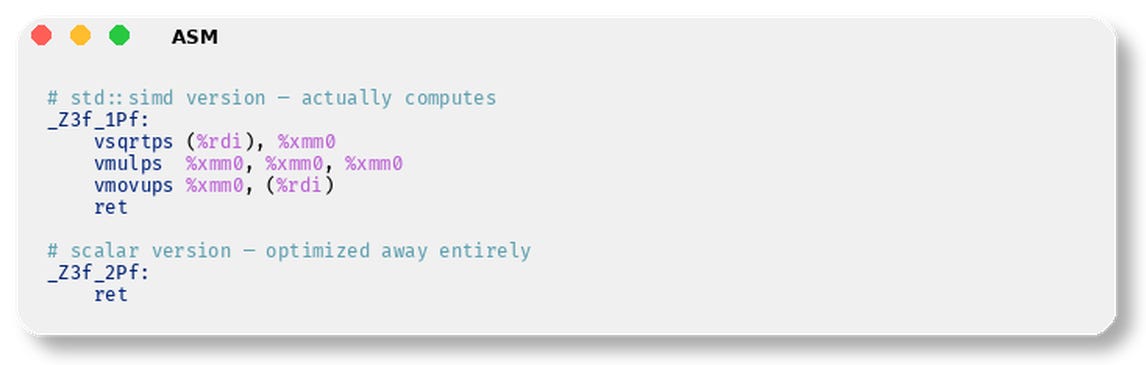
The C++26 standard has introduced a new std::simd library that developers are criticizing as both unsolicited and practically inadequate. Analysis shows that the implementation fails to express 90% of real-world SIMD code. This severe limitation renders the new feature largely ineffective for most high-performance computing tasks.
CommentsThe Third Hard Problem
2026-05-17This piece playfully builds on the classic computer science adage about cache invalidation and naming things to explore the third hard problem in modern software engineering. It highlights that today's developers face massive complexities and architectural challenges far beyond basic bugs like off-by-one errors.
Comments2026-05-16
A new article explores a developer's transition away from the utility-first framework Tailwind CSS in favor of a more structured, traditional CSS methodology. The piece details the challenges of unlearning framework habits and highlights the long-term benefits of mastering core styling principles. Ultimately, it serves as a practical guide for frontend engineers looking to improve their CSS architecture and write more scalable code.
Comments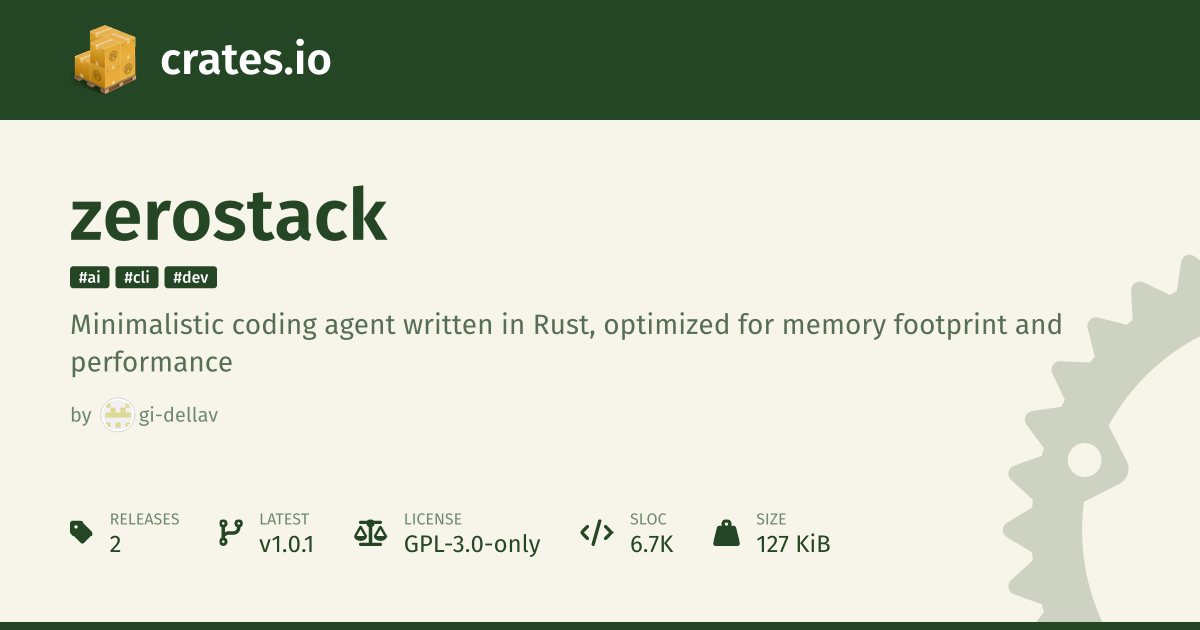
Zerostack is a new Unix-inspired coding agent written entirely in pure Rust. The tool is now available on crates.io, the central registry for sharing Rust packages, allowing developers to easily integrate it into their own projects to enhance their workflows.
CommentsWe've made the world too complicated
2026-05-16A recent discussion highlights how the abstract and highly layered nature of modern tech work often leaves employees feeling alienated compared to those in immediate, hands-on trades. While some suggest mitigating this by fostering direct customer interactions and clarifying end-user impact, the inherent complexity of large-scale software development frequently makes these feelings unavoidable.
CommentsFuthark by example (2020)
2026-05-16The 2020 tutorial Futhark by example introduces developers to Futhark, a high-performance and purely functional array programming language. It demonstrates how the language enables efficient data-parallel execution across both GPU and CPU architectures through practical coding samples.
CommentsRocksky is a new music scrobbling and discovery platform built on the AT Protocol, despite being described in its launch as a next-generation social coding platform. Showcased on Hacker News, the application primarily allows users to track their listening habits and explore new music.
CommentsMCP Hello Page
2026-05-16The article highlights a practical use of HTTP content negotiation to serve a helpful HTML guide when users browse a Model Context Protocol server endpoint directly. Community discussions also explore broader challenges with the MCP specification regarding authentication and gateways, though developers remain optimistic about the protocol's future for standardizing AI agent tools.
CommentsAdditive Blending on the Nintendo 64
2026-05-16Commenters discuss a technical deep dive into why the Nintendo 64 lacked the vibrant visual effects seen on the original PlayStation, attributing it to hardware limitations with additive blending. The discussion draws parallels between this graphical constraint and audio mixing, explaining how preventing value overflow without dynamic compression forces lower overall brightness. Ultimately, fans debate whether the N64's muted explosions suffer from a lack of realistic light emission or simply deliver a more satisfying, stylized game feel.
Comments3D Gaussian Splatting in a Weekend
2026-05-163D Gaussian splatting is a machine learning technique that reconstructs 3D scenes from 2D image datasets by replacing traditional triangle primitives with unique Gaussian splats. The algorithm optimizes the model by iteratively rendering the scene from various angles and comparing it to ground truth photographs, offering a highly efficient method for rapidly generating realistic environments.
Comments
Erlang/OTP 29.0
2026-05-16The Erlang development team has officially released version 29.0 of the Erlang programming language and its associated Open Telecom Platform. This major update introduces new features and enhancements aimed at improving system performance and the overall developer experience. It continues to reinforce the platform's core strengths in concurrency and fault tolerance for building scalable distributed applications.
CommentsThis guide details practical SQL query patterns used to detect transaction fraud, sharing exact queries to identify red flags like rapid transaction velocity and impossible geographical distances. It also highlights the use of advanced window functions to analyze merchant clusters and track unusual off-hours buying behavior.
CommentsA recent satirical tech commentary highlights the rampant supply chain vulnerabilities plaguing a major software package manager where malicious uploads are a frequent occurrence. Application security engineer Kevin Patel of NISC emphasizes the industry's resigned attitude toward these regular breaches, noting the frustrating lack of effective preventative measures. The piece serves as a sharp critique of the inadequate security oversight and automated publishing processes inherent in popular open-source ecosystems.
Comments