Programming Tech News
Writing software is a craft that keeps reinventing itself. This section gathers news and articles for people who program, covering language releases, compilers and runtimes, frameworks, development workflows, and the ideas that change how code gets written and reviewed.
Typical stories include new versions of Rust, Python, Java, JavaScript, and TypeScript, performance and debugging investigations, essays on architecture and code quality, and discussions of how AI coding assistants are changing day-to-day development. Hands-on tutorials and lessons from long-running projects show up often.
The tools and practices developers choose affect how fast teams ship and how well their software holds up over time. Working engineers, students learning to code, and engineering leaders follow this coverage to sharpen their skills and make better technical decisions.
2026-04-27

Starting June 1, GitHub will transition its Copilot service to a usage-based billing model where developers consume GitHub AI Credits based on their actual usage. This shift represents a significant change in how the platform monetizes its popular AI coding assistant.
CommentsThe woes of sanitizing SVGs
2026-04-27The persistent security vulnerabilities associated with sanitizing SVGs can be effectively mitigated by implementing strict Content Security Policies. Developers can reliably secure untrusted content by combining iframe sandboxing with HTML meta tags to enforce permanent, restrictive CSP rules. Although currently underutilized due to poor documentation and minor UX friction, this sandboxing approach provides a highly robust defense against malicious scripts and phishing.
Comments

The quiet resurgence of RF engineering
2026-04-27After years of being perceived as a stagnant niche, RF engineering is experiencing a quiet but significant resurgence within the aerospace and technology sectors. An industry veteran with eight years of experience notes that the field is being rapidly revitalized by modern technological demands. This renewed importance highlights the critical role of RF in advancing next-generation wireless communication and space exploration.
Comments
Quarkdown – Markdown with Superpowers
2026-04-27Quarkdown is a modern, open-source typesetting system that supercharges standard Markdown with advanced capabilities. The versatile platform enables users to seamlessly generate professional papers, presentations, knowledge bases, and static websites.
CommentsSelf-updating screenshots
2026-04-27James Adam, known for his work on lazyatom.com, has published a new blog post detailing his techniques for creating self-updating screenshots. The article explores how to automate visual assets so they dynamically refresh without manual intervention. This approach offers a streamlined workflow for developers managing dynamic web documentation or visual regression testing.
Comments“Why not just use Lean?”
2026-04-27Recent discussions about using the Lean programming language for real-world software development highlight both its potential for writing fully verified code and significant practical obstacles. Commenters argue that accurately defining software specifications remains difficult, and that strict proof-oriented safety measures can often be bypassed by developers seeking convenient workarounds. Additionally, while AI might eventually generate these proofs, human guidance remains essential to ensure the verified code actually aligns with complex user needs and avoids creating incomprehensible technical debt.
CommentsA developer has introduced Dirac, an open-source coding agent that recently topped the TerminalBench benchmark using the Gemini-3-flash-preview model. The tool leverages advanced optimizations like Hash Anchored edits and massively parallel operations to dramatically improve efficiency. This allows it to reduce API costs by up to 80% compared to other agents while simultaneously improving overall code quality.
CommentsAn experienced programmer and Unix enthusiast shares the three core constraints they apply before starting any new software project. The article explores how setting these initial boundaries helps maintain focus and efficiency throughout the development process.
CommentsA recent walkthrough of TurboQuant has sparked backlash from researchers accusing the authors of uncredited reuse and downgrading prior quantization techniques. Critics argue the method is not a novel breakthrough but a sub-optimal application of existing 2021 research, bolstered by unfair baseline comparisons and irreproducible results. This controversy highlights growing concerns about AI-assisted research generating unwarranted industry hype while failing to adequately cite foundational academic work.
Comments
Box to save memory in Rust
2026-04-27A recent blog post by dystroy explores how to optimize memory usage in Rust by effectively utilizing the Box type for heap allocation. The article provides practical examples and explanations to help developers reduce their application's memory footprint and write more resource-efficient code.
Comments
Super ZSNES – GPU Powered SNES Emulator
2026-04-27Super ZSNES is a completely rewritten SNES emulator that leverages GPU acceleration to deliver enhanced performance for retro gaming. The project modernizes the classic experience by introducing high-resolution Mode 7 rendering, specific per-game enhancements, and an updated user interface.
Comments
The Prompt API
2026-04-27The newly introduced Prompt API provides developers with a versatile framework to integrate advanced language models into their applications. This powerful tool promises to unlock infinite possibilities for building more dynamic, responsive, and intelligent AI-driven user experiences.
CommentsFreeBSD Device Drivers Book
2026-04-27Developers can now contribute to a new open-source book focused on FreeBSD device drivers via the FDD-book GitHub repository. This community-driven project invites system programmers to help write and improve comprehensive documentation for FreeBSD kernel development.
Comments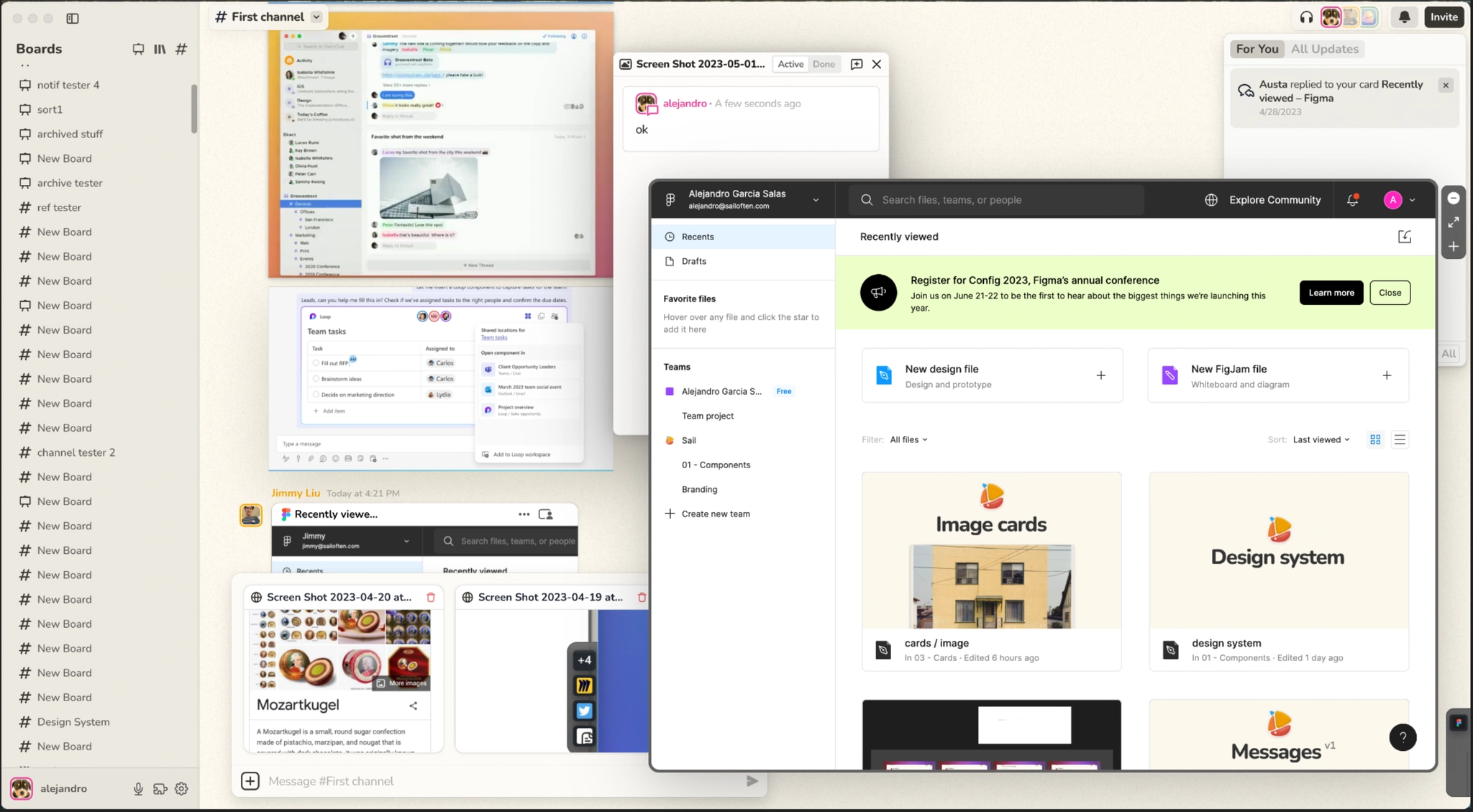
The team behind Sail & Muddy shares a detailed retrospective on the product, design, and engineering challenges involved in building a multiplayer browser. Their insights provide valuable takeaways for developers aiming to create seamless collaborative web experiences and navigate the complexities of real-time interaction.
Comments2026-04-26

This article explores the critical divide between tech professionals who risk irrelevance by letting AI do their thinking and those who gain genuine engineering leverage by using it to enhance their skills. It emphasizes that artificial intelligence should serve as a tool to elevate human problem-solving rather than a complete substitute for critical thought.
Comments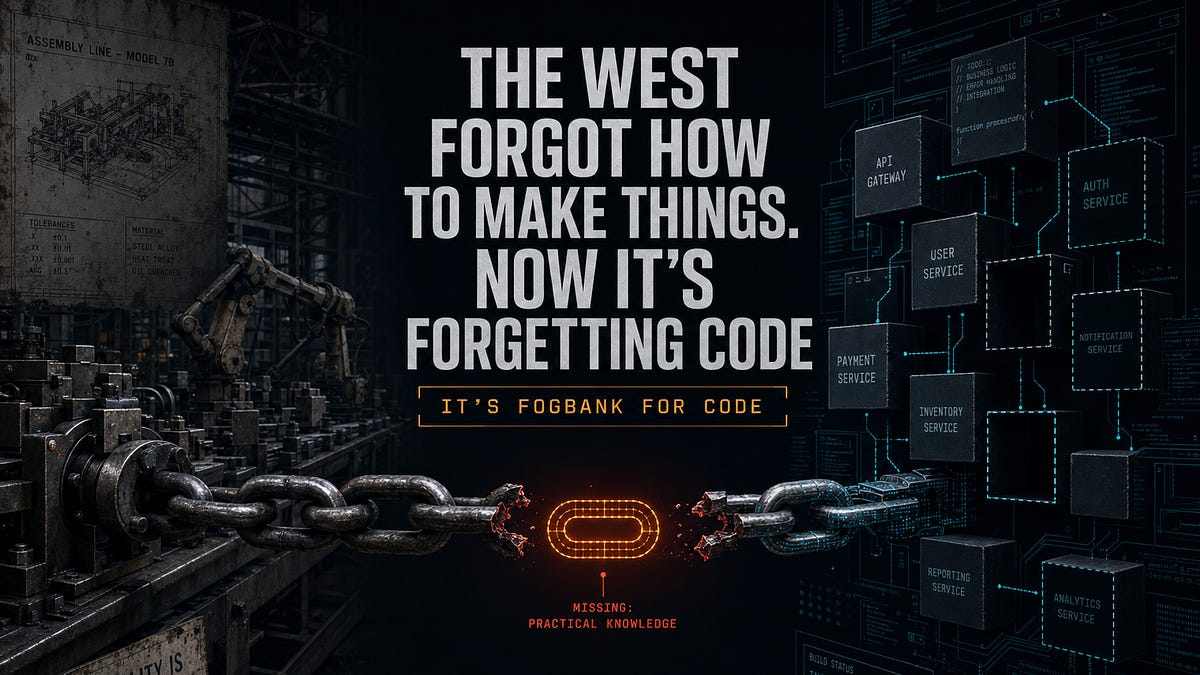
The West is rapidly losing its software engineering capabilities, mirroring the historical decline of its physical manufacturing and defense industries. This erosion of critical coding skills is following the exact same timeline and trajectory as the previous loss of physical production.
Comments
SWE-bench Verified is no longer a reliable benchmark for evaluating frontier AI coding capabilities. Recent analysis reveals that the dataset is increasingly contaminated by flawed tests and training data leakage. Consequently, researchers are now recommending SWE-bench Pro as a more accurate alternative for measuring progress.
CommentsStatecharts: hierarchical state machines
2026-04-26A recent guide explores the concept of statecharts, also known as hierarchical state machines, by detailing their definitions, benefits, and drawbacks compared to traditional state machines. The article also provides practical examples to help developers understand the differences and effectively implement them in their projects.
CommentsMath Is Hard – OpenBSD Stories
2026-04-26Sparked by an OpenBSD story regarding CPU division-by-zero exceptions, readers pivot into a broader critique of modern operating system design and the lingering dominance of the UNIX paradigm. Commenters express frustration that the industry relies on heavy, layered abstractions like Kubernetes rather than developing lean, vertically integrated systems, pointing to alternative microkernels like seL4 and Genode as potential steps forward.
Comments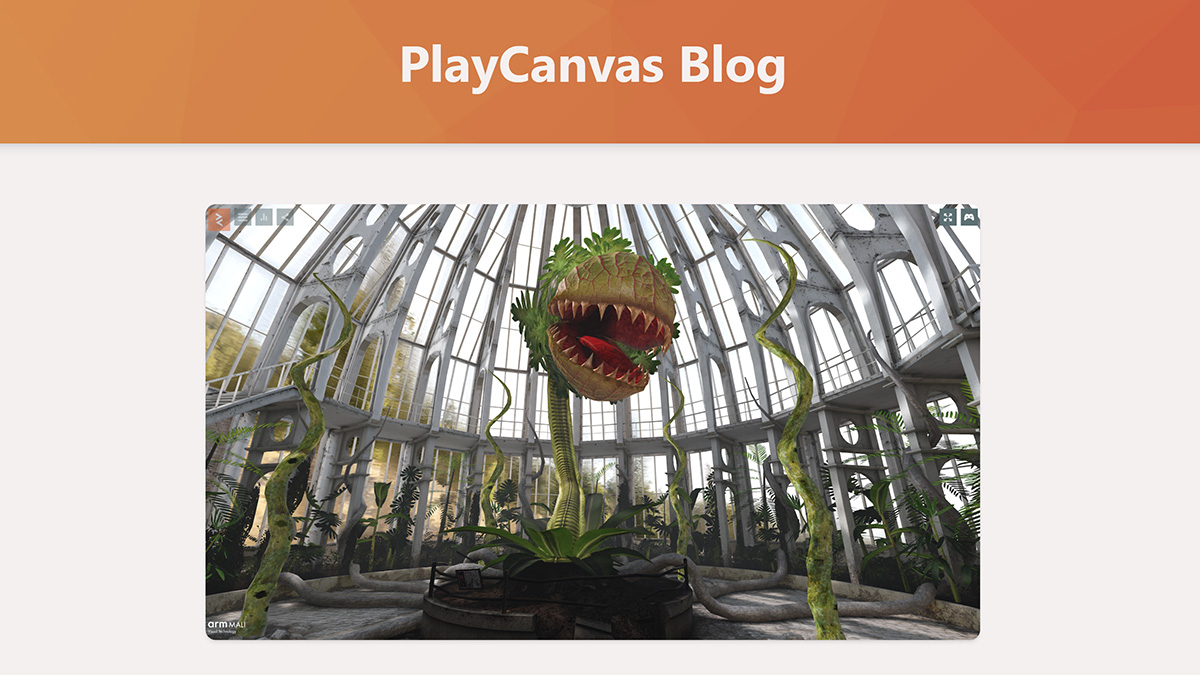
A developer has successfully transformed a photogrammetric 3D Gaussian Splat scene into a fully playable browser-based first-person shooter. Built entirely within the PlayCanvas engine, the project incorporates advanced mechanics such as collision detection, pre-baked lighting, and behavior-tree AI for non-player characters.
Comments
The Visible Zorker: Zork 1
2026-04-26A new software exhibit called The Visible Zorker allows users to play the classic text adventure Zork 1 while simultaneously displaying its underlying source code. This interactive tool provides developers and retro gaming enthusiasts with a real-time look at the foundational programming behind the iconic game.
Comments2026-04-25
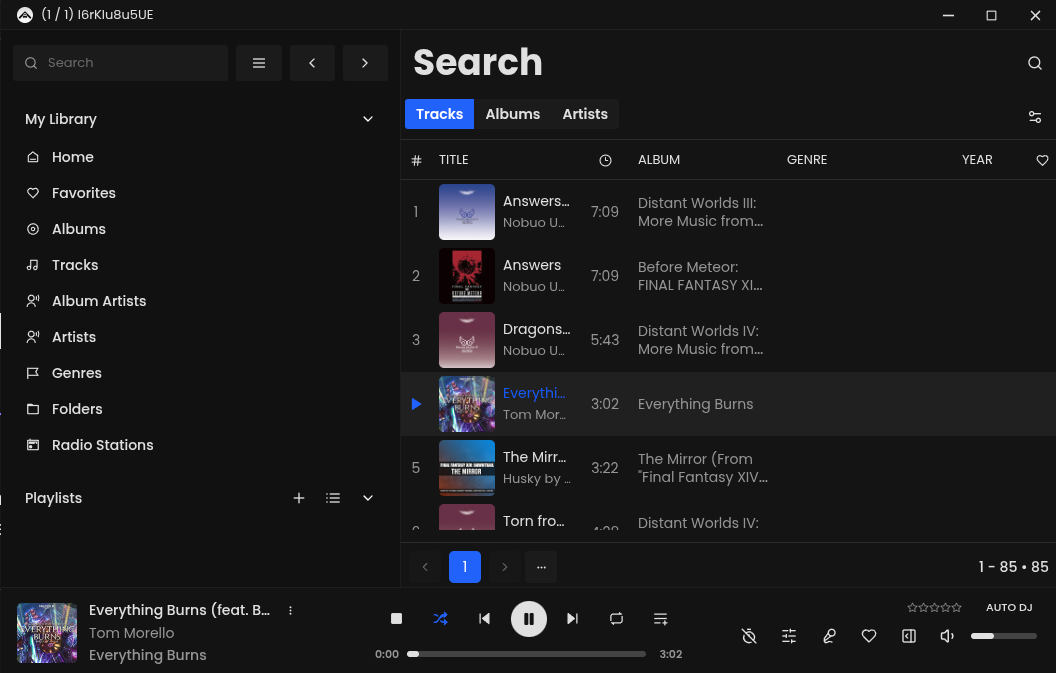
A developer successfully used the AI coding assistant Claude Code with Opus 4.6 to revive and complete an abandoned project connecting YouTube Music and OpenSubsonic. The tool significantly accelerated the development process, transforming an unfinished idea into a fully working application in a remarkably short amount of time.
Comments
A recent blog post on software craft highlights the enduring value and relevance of plain text in modern development. Despite the proliferation of complex data formats, plain text remains an essential foundation for building high-quality and easily maintainable software systems.
CommentsA developer launched a satirical GitHub repository named quantumslop that replaces the IBM Quantum backend with the Linux /dev/urandom random number generator. Although the project failed to win a QDay programming challenge, it offers a humorous take on the noise and hype surrounding current quantum computing advancements.
CommentsA newly launched GitHub repository now hosts Martin Galway's original music source files from classic 1980s Commodore 64 games. This open-source initiative allows developers and retro gaming enthusiasts to access, preserve, and contribute to the historical audio code.
CommentsWork with the garage door up (2024)
2026-04-25Discussions surrounding a recent article about working with the garage door up explore the benefits and psychological hurdles of building tech projects in public versus behind closed doors. While transparent development can demystify the creation process and engage communities, some developers find that sharing unfinished work prematurely drains their motivation due to the goal disclosure effect. Ultimately, the conversation highlights how individual psychology dictates whether creators thrive with their metaphorical garage door open or closed.
CommentsA new open-source project called grdpwasm introduces a web-based RDP client built with Go WebAssembly and the grdp library. This tool allows users to access remote desktops directly through their web browser without requiring additional local software. The code is currently available on GitHub for the community to test and contribute to its ongoing development.
Comments
The async/await evolution solved previous programming challenges by introducing sequential syntax that greatly improved code readability. However, this approach has introduced new structural costs and obscured crucial execution details. Specifically, the sequential appearance hides which operations actually depend on one another, demanding greater structural awareness from developers.
CommentsThe article explores the history and technical mechanisms of Discret 11, the analog television encryption system used for French pay-TV in the 1980s and 1990s. Readers in the discussion share nostalgic memories of their youth spent attempting to pirate these scrambled signals using makeshift antennas, brute-force software, and hardware modifications. These early hacking efforts to circumvent encryption and watch restricted programming served as a formative technical learning experience for many future engineers.
Comments
Stash is a new open-source, self-hosted memory layer that provides AI agents with persistent memory, knowledge graphs, and self-modeling capabilities. It is compatible with major models like Claude and ChatGPT, as well as Ollama and any MCP-compatible agent. This enables developers to easily add advanced contextual recall and goal tracking to their custom AI applications.
Comments