Programming Tech News
Writing software is a craft that keeps reinventing itself. This section gathers news and articles for people who program, covering language releases, compilers and runtimes, frameworks, development workflows, and the ideas that change how code gets written and reviewed.
Typical stories include new versions of Rust, Python, Java, JavaScript, and TypeScript, performance and debugging investigations, essays on architecture and code quality, and discussions of how AI coding assistants are changing day-to-day development. Hands-on tutorials and lessons from long-running projects show up often.
The tools and practices developers choose affect how fast teams ship and how well their software holds up over time. Working engineers, students learning to code, and engineering leaders follow this coverage to sharpen their skills and make better technical decisions.
2026-04-25
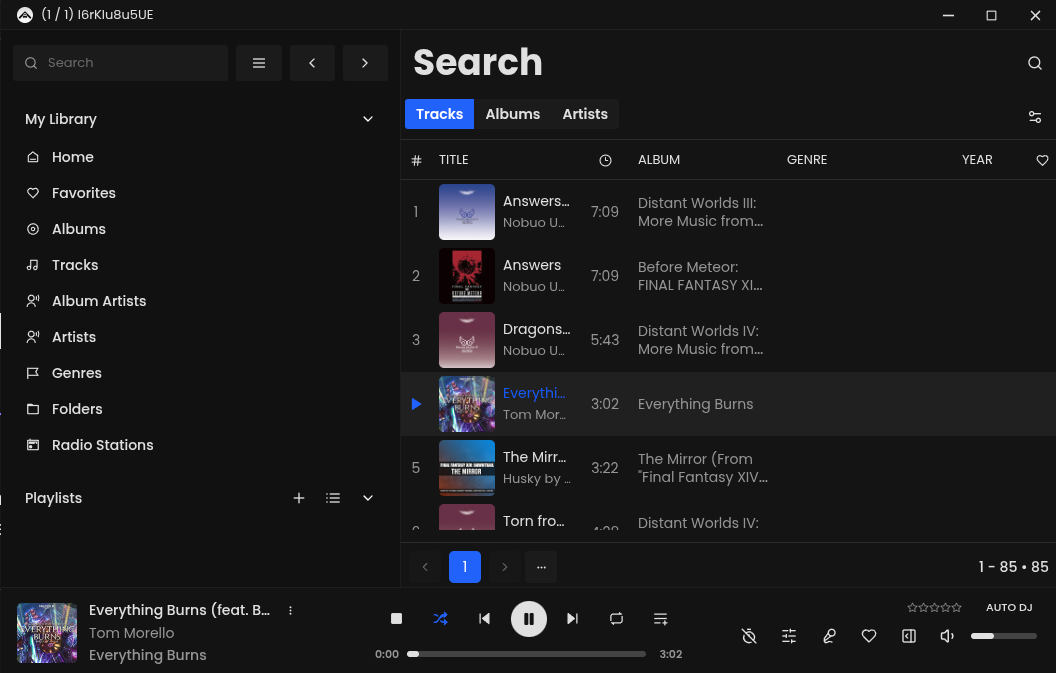
A developer successfully used the AI coding assistant Claude Code with Opus 4.6 to revive and complete an abandoned project connecting YouTube Music and OpenSubsonic. The tool significantly accelerated the development process, transforming an unfinished idea into a fully working application in a remarkably short amount of time.
Comments
A recent blog post on software craft highlights the enduring value and relevance of plain text in modern development. Despite the proliferation of complex data formats, plain text remains an essential foundation for building high-quality and easily maintainable software systems.
Comments
A developer launched a satirical GitHub repository named quantumslop that replaces the IBM Quantum backend with the Linux /dev/urandom random number generator. Although the project failed to win a QDay programming challenge, it offers a humorous take on the noise and hype surrounding current quantum computing advancements.
CommentsA newly launched GitHub repository now hosts Martin Galway's original music source files from classic 1980s Commodore 64 games. This open-source initiative allows developers and retro gaming enthusiasts to access, preserve, and contribute to the historical audio code.
CommentsWork with the garage door up (2024)
2026-04-25Discussions surrounding a recent article about working with the garage door up explore the benefits and psychological hurdles of building tech projects in public versus behind closed doors. While transparent development can demystify the creation process and engage communities, some developers find that sharing unfinished work prematurely drains their motivation due to the goal disclosure effect. Ultimately, the conversation highlights how individual psychology dictates whether creators thrive with their metaphorical garage door open or closed.
CommentsA new open-source project called grdpwasm introduces a web-based RDP client built with Go WebAssembly and the grdp library. This tool allows users to access remote desktops directly through their web browser without requiring additional local software. The code is currently available on GitHub for the community to test and contribute to its ongoing development.
Comments
The async/await evolution solved previous programming challenges by introducing sequential syntax that greatly improved code readability. However, this approach has introduced new structural costs and obscured crucial execution details. Specifically, the sequential appearance hides which operations actually depend on one another, demanding greater structural awareness from developers.
CommentsThe article explores the history and technical mechanisms of Discret 11, the analog television encryption system used for French pay-TV in the 1980s and 1990s. Readers in the discussion share nostalgic memories of their youth spent attempting to pirate these scrambled signals using makeshift antennas, brute-force software, and hardware modifications. These early hacking efforts to circumvent encryption and watch restricted programming served as a formative technical learning experience for many future engineers.
Comments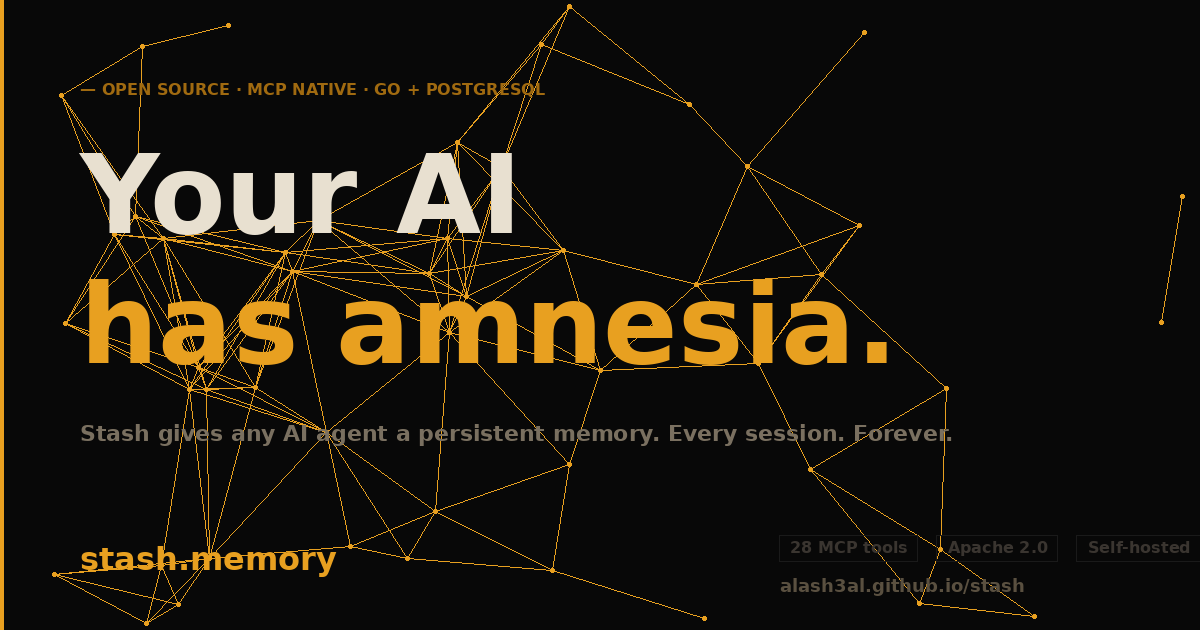
Stash is a new open-source, self-hosted memory layer that provides AI agents with persistent memory, knowledge graphs, and self-modeling capabilities. It is compatible with major models like Claude and ChatGPT, as well as Ollama and any MCP-compatible agent. This enables developers to easily add advanced contextual recall and goal tracking to their custom AI applications.
CommentsYC S26 startup Nex.ai has launched WUPHF, a platform enabling users to deploy collaborative teams of AI agents. These agents work together over a shared context to maintain a dynamic, Markdown and Git-based wiki inspired by Andrej Karpathy. The system is compatible with multiple popular coding tools and local large language models to streamline multi-agent workflows.
Comments
Cosmology with Geometry Nodes
2026-04-25Researchers are increasingly applying Geometry Nodes, a procedural 3D modeling tool, to real-world cosmology research. By leveraging these visual programming techniques, scientists can efficiently model complex cosmic structures and visualize massive astronomical datasets. This unexpected crossover highlights the growing utility of creative software in solving advanced scientific problems.
CommentsLambda Calculus Benchmark for AI
2026-04-25A new Lambda Calculus benchmark highlights that top-tier AI models like Anthropic's Opus still significantly outperform cheaper and open-source alternatives on complex, unbenched tasks. Despite recent marketing hype labeling smaller models as Opus killers, the tech community notes these cheaper options are merely sufficient for routine work and struggle with advanced problems. Consequently, developers suggest that future productivity gains will rely more on improved AI tooling and workflows rather than just chasing the next state-of-the-art model.
CommentsTurbo Vision 2.0 – a modern port
2026-04-25A modern port of the classic Turbo Vision 2.0 text-based user interface framework is now available. This updated release modernizes the retro development tool by introducing full cross-platform compatibility and comprehensive Unicode support.
Comments2026-04-24
A recent piece on how overthinking and scope creep sabotage projects has sparked a discussion comparing the phenomenon to the exhausting scope management challenges of PhD research. Readers in the thread also highlight the systemic academic issue of unpublished negative results. Additionally, commenters joke that the grandiose, overly ambitious examples of project expansion featured in the article read exactly like AI-generated text.
CommentsSpinel: Ruby AOT Native Compiler
2026-04-24Ruby creator Yukihiro Matsumoto has introduced Spinel, a new Ahead-of-Time native compiler designed to improve the execution speed of Ruby applications by compiling code directly into native machine code. The open-source project is now live on GitHub, where developers can explore the codebase and contribute to its ongoing development.
Comments
Google has introduced TorchTPU, a new engineering stack that enables PyTorch to run natively and efficiently on its TPU infrastructure. By leveraging an Eager First philosophy and XLA integration, the platform simplifies model migration and unlocks massive scalability for next-generation AI workloads.
CommentsA community discussion debating an article about abandoning desktop applications reveals a strong divide between commercial web development and open-source native software. While proponents of web apps praise zero-install portability and modern browser capabilities like WebAssembly, defenders of desktop software argue it remains essential for UI stability, user-controlled updates, and high-performance productivity tasks. Ultimately, commenters conclude that while web applications offer convenience for commercial growth, native desktop apps remain highly relevant and preferred for complex, open-source tools where stability and user control are paramount.
CommentsSDL Now Supports DOS
2026-04-24The popular cross-platform development library Simple DirectMedia Layer has officially added support for the classic DOS operating system. This new update allows developers to easily build, port, and run multimedia applications and games within retro DOS environments.
Comments
A developer has released a new home server operating system designed to make managing Linux environments more enjoyable for tech enthusiasts. By focusing on a streamlined user experience, the project aims to simplify the setup and maintenance of home servers for hobbyists.
CommentsBrowser Harness is a new open-source tool that enables large language models to autonomously navigate the web and complete complex browser-based tasks. It features a self-healing architecture that automatically adapts to changing website layouts to ensure reliable automation. This gives developers a robust framework for integrating advanced, flexible web interaction capabilities directly into their AI applications.
CommentsA newly posted interactive guide explaining LLMs based on an Andrej Karpathy lecture faced backlash from readers who accused the project of being low-effort, AI-generated slop. Although commenters initially dismissed a specific statistic about hard drive storage capacity as an AI hallucination, the figure was actually a slightly rephrased line from Karpathy's original video.
Comments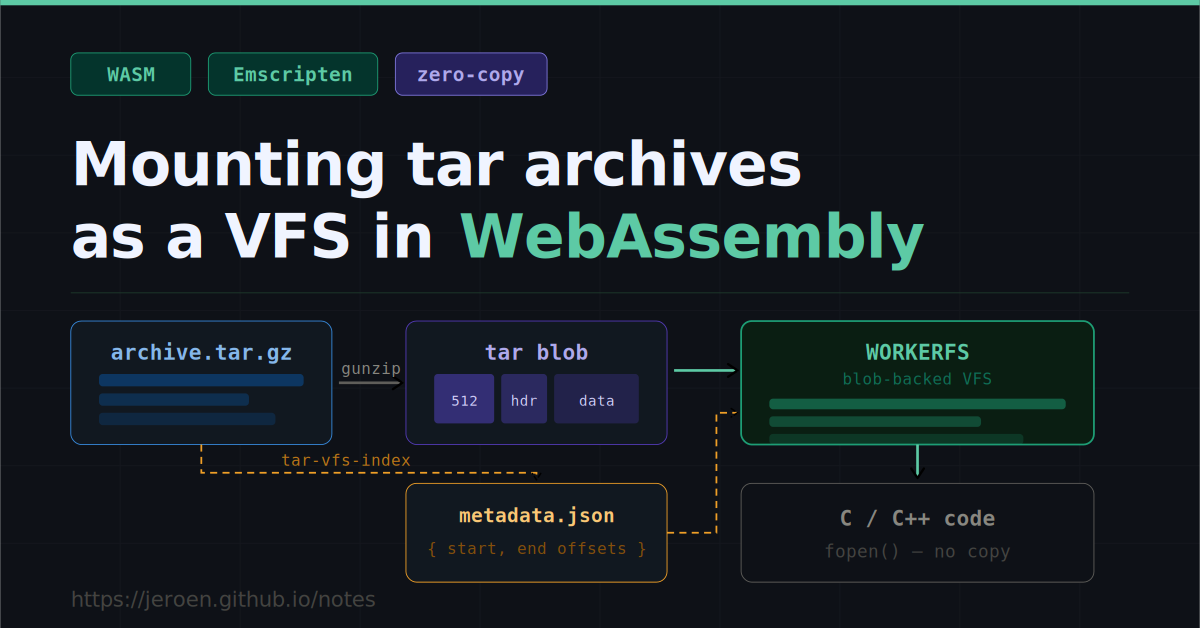
A new WebAssembly technique allows developers to mount tar.gz archives directly into the Emscripten virtual filesystem without the need for prior extraction. By utilizing a file index for on-the-fly access, this method significantly reduces memory overhead and streamlines resource management for browser-based applications.
CommentsA new open-source project named Gova was recently introduced on Hacker News as a declarative graphical user interface framework for the Go programming language. It aims to streamline the process of building applications for Go developers. The source code is publicly available on GitHub for the community to explore and contribute to.
CommentsHear your agent suffer through your code
2026-04-24Developer AndrewVos has released a new GitHub project named endless-toil that lets programmers hear their AI coding agent audibly suffer while reviewing their code. The tool adds a humorous auditory element to software development by broadcasting the automated assistant's digital frustration.
Comments2026-04-23
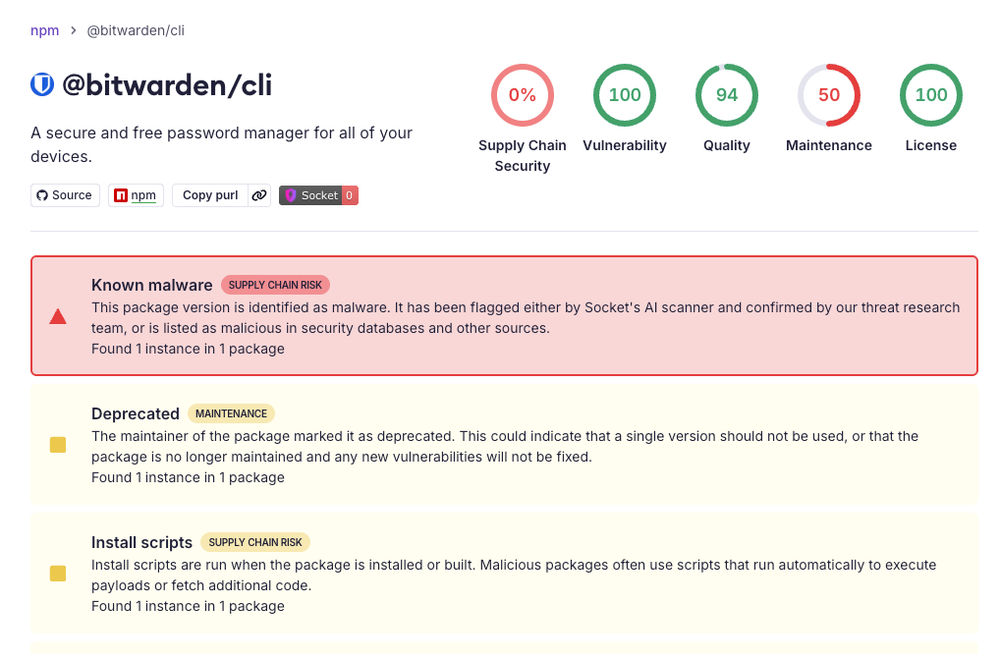
Bitwarden CLI version 2026.4.0 was compromised after attackers abused a GitHub Action within Bitwarden's CI/CD pipeline. This breach is part of the ongoing Checkmarx supply chain campaign.
Comments
Anthropic has released an update addressing recent reports regarding the quality of its Claude Code tool. Reaffirming its core mission to build reliable and steerable AI systems, the company detailed ongoing efforts to improve the platform's performance and overall dependability.
Comments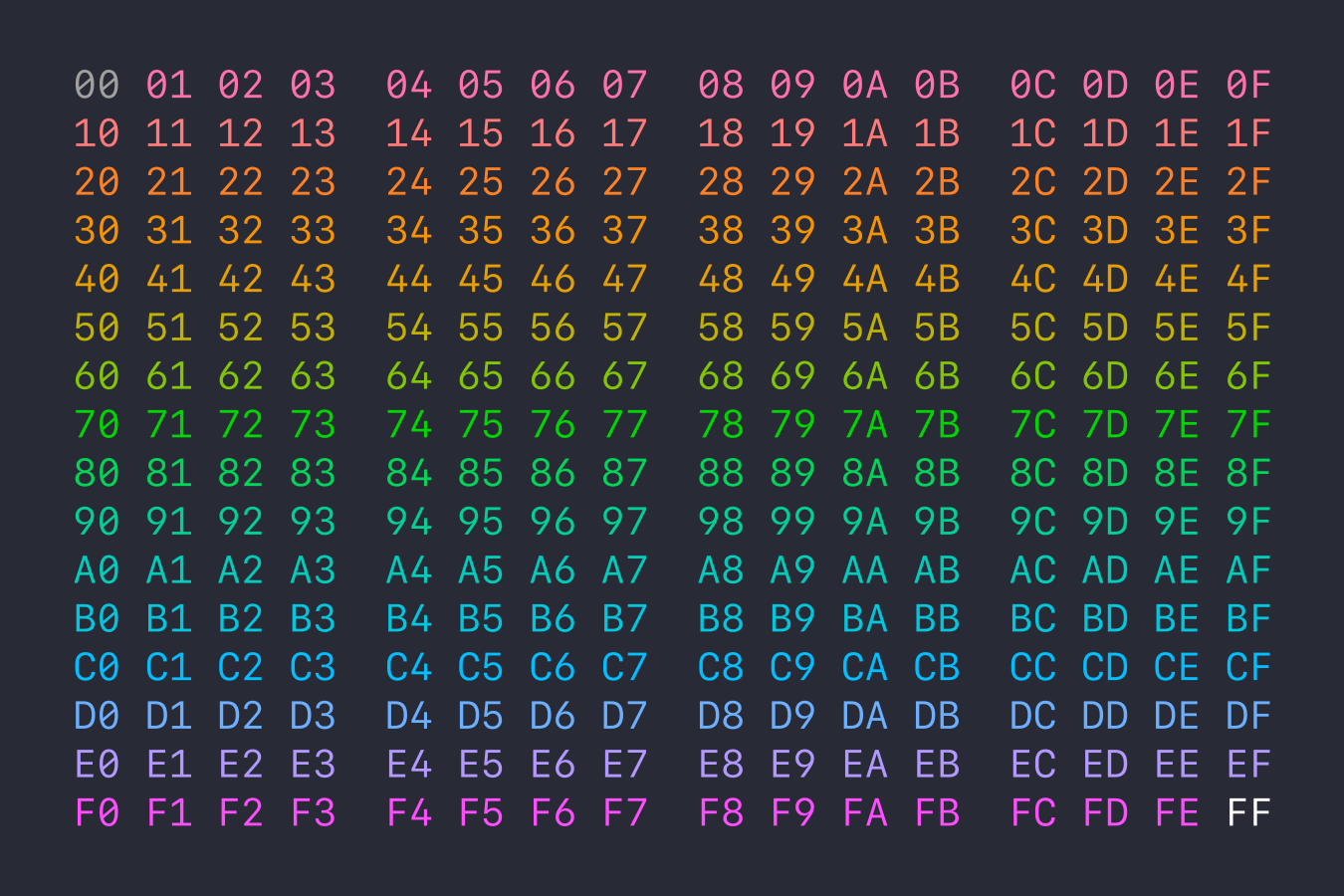
Your hex editor should color-code bytes
2026-04-23A recent discussion advocates for hex editors to implement basic color-coding to improve byte readability without overwhelming the user interface. While a subtle splash of color helps differentiate data, developers must ensure the feature is fully customizable for colorblind users. Additionally, all visual enhancements must be additive, ensuring no critical meaning is lost when using screen readers.
Comments
The development team behind MeshCore has fractured due to internal disagreements over a trademark dispute and the use of AI-generated code. Amidst this split, the project is also migrating its infrastructure to the new meshcore.io website.
CommentsThe new open-source extension Honker brings PostgreSQL-style NOTIFY/LISTEN messaging semantics directly to SQLite databases. It equips developers with durable queues, event streams, pub/sub functionality, and a built-in scheduler. This significantly expands the lightweight database system's capabilities for building real-time, event-driven applications.
Comments
Writing a C Compiler, in Zig (2025)
2026-04-23A developer is building a C compiler from scratch as their first major project in the Zig programming language. This 2025 endeavor serves as a practical introduction to the systems language while tackling the complex challenge of compiler design.
Comments