Programming Tech News
Writing software is a craft that keeps reinventing itself. This section gathers news and articles for people who program, covering language releases, compilers and runtimes, frameworks, development workflows, and the ideas that change how code gets written and reviewed.
Typical stories include new versions of Rust, Python, Java, JavaScript, and TypeScript, performance and debugging investigations, essays on architecture and code quality, and discussions of how AI coding assistants are changing day-to-day development. Hands-on tutorials and lessons from long-running projects show up often.
The tools and practices developers choose affect how fast teams ship and how well their software holds up over time. Working engineers, students learning to code, and engineering leaders follow this coverage to sharpen their skills and make better technical decisions.
2026-04-22

Qwen has introduced the Qwen3.6-27B, a 27-billion parameter dense model that delivers flagship-level coding performance. Complementing this release, the Qwen Studio platform offers a comprehensive suite of multimodal features, ranging from image and video generation to document processing and web search integration.
Comments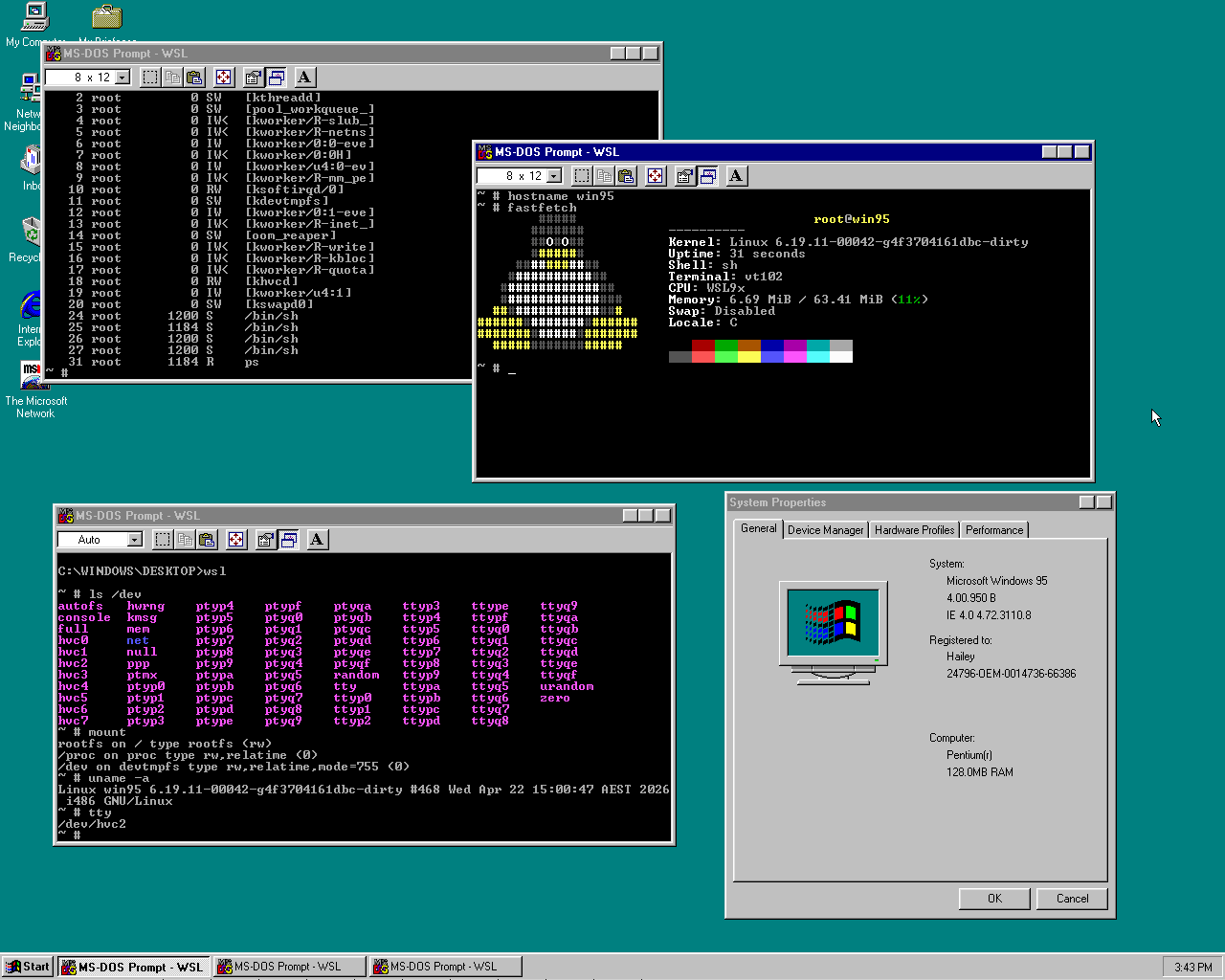
Windows 9x Subsystem for Linux
2026-04-22A developer has created the Windows 9x Subsystem for Linux, a novel hack that allows Windows and Linux applications to run side-by-side by operating a modern Linux kernel cooperatively with the Windows 9x kernel in ring 0. Unlike Microsoft's modern WSL, this project bypasses hardware virtualization entirely, making it lightweight enough to run on vintage hardware like a 486 processor.
Comments

SpaceX has reportedly agreed to acquire AI coding platform Cursor for $60 billion to build the world's leading software engineering and knowledge work AI. The deal will combine Cursor's popular developer tools with SpaceX's massive Colossus supercomputer, which features a million H100-equivalent chips.
CommentsDevelopers are increasingly relying on AI coding agents like Claude Code to write the majority of their software, overcoming issues like model over-editing through clear, iterative feedback. While some users create project-specific skill files to guide the AI, the consensus is that simply providing detailed instructions and treating the tool as an iterative collaborator yields the best results. This straightforward approach has drastically increased productivity, allowing users to commit significantly more code with fewer tokens than traditional methods.
Comments
Technical, cognitive, and intent debt
2026-04-22This article explores the compounding challenges of technical, cognitive, and intent debt in modern software engineering. It details how neglected code quality, overwhelming system complexity, and misaligned product goals silently degrade team productivity and innovation over time.
Comments
A new project introduces a scoring system to detect and analyze artificial intelligence design patterns across Show HN submissions. The tool examines these user-generated posts to identify common architectural trends and development methodologies. This initiative provides valuable insights for developers and researchers tracking the rapid evolution of AI application design.
Comments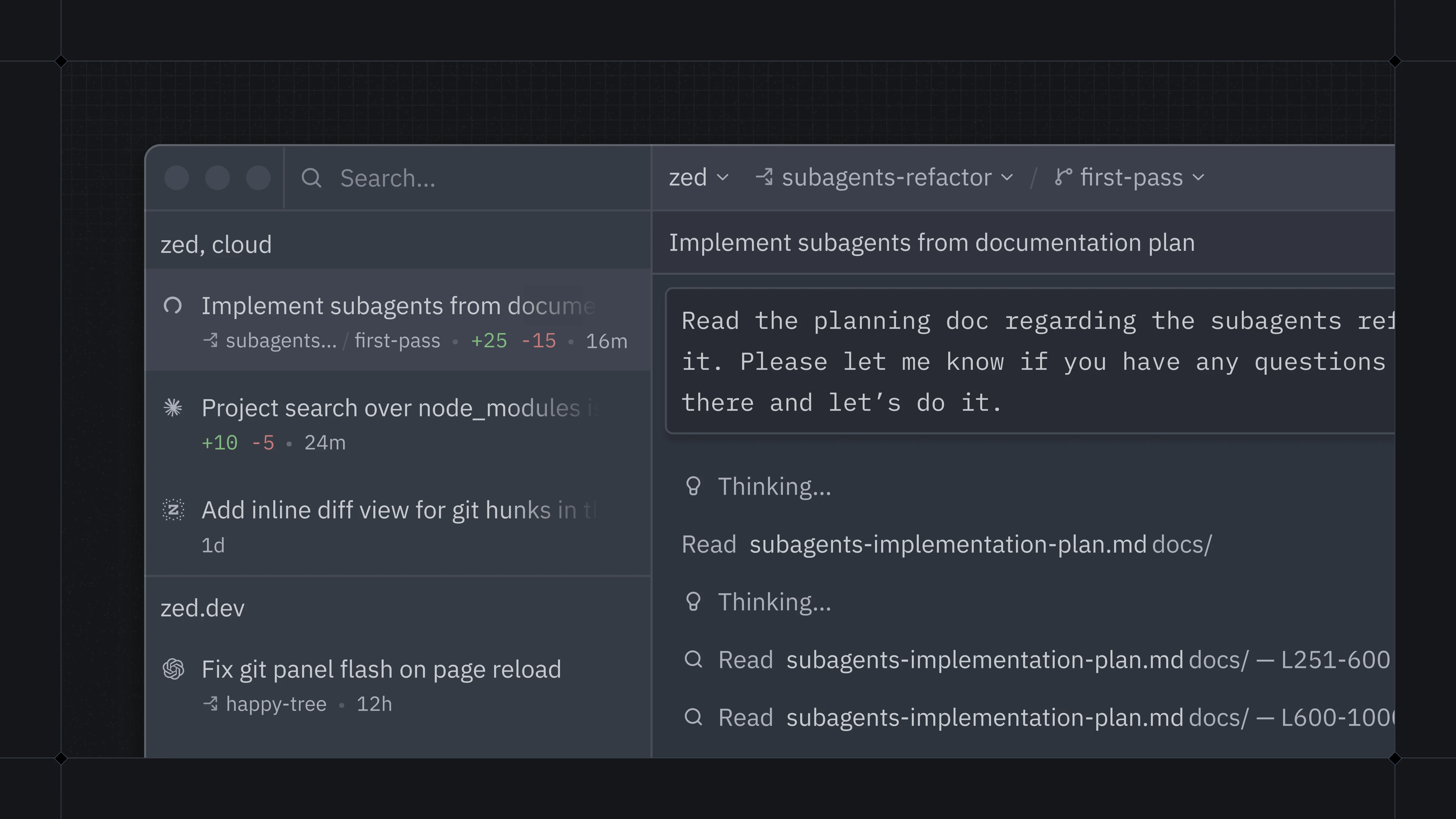
Parallel agents in Zed
2026-04-22The Zed code editor has introduced a new feature allowing users to run multiple agents simultaneously within a single window. This parallel execution enables developers to multitask more efficiently and manage complex workflows without needing to switch contexts.
CommentsGitHub has begun collecting pseudoanonymous telemetry from its command-line interface to better understand feature usage, sparking a debate among developers about the role of analytics in software design. While proponents argue that data collection is essential for understanding actual user behavior, critics warn that large organizations often over-rely on quantitative metrics at the expense of qualitative feedback and thoughtful product craftsmanship.
Comments
A candid 2021 post by a senior software engineer offers developers brutally honest and unfiltered career advice. The author shares hard-earned industry lessons and blunt mentorship insights that are typically too controversial for standard corporate guidelines.
Comments
A recent tech piece explores the enduring programming idiom of using the XOR instruction to zero out a register instead of relying on subtraction. It investigates the technical and historical factors that ultimately made XOR the overwhelmingly popular and preferred method for this operation.
CommentsCrabTrap is a newly released HTTP proxy that secures production AI agents by intercepting and auditing their requests in real time using an LLM-as-a-judge framework. The open-source tool is currently available for developers to download and test on GitHub.
CommentsGarbage collection without unsafe code
2026-04-22A recent article explores the implementation of garbage collection in Rust using exclusively safe code, building upon previous surveys of the language's memory management ecosystem. By demonstrating that robust garbage collection is achievable without relying on unsafe features, this approach provides developers with a highly secure alternative for automatic memory management.
Comments2026-04-21

Laws of Software Engineering
2026-04-21The article outlines the fundamental principles and recurring patterns that govern the development and maintenance of complex software systems. It highlights how these established rules directly influence team dynamics, architectural choices, and critical project decision-making.
Comments
A recent OAuth supply chain compromise at Vercel highlights how trusted third-party applications and platform environment variables can bypass traditional defenses to significantly amplify a breach's impact. This incident underscores the critical need for developers to reassess software supply chain risks and the underlying design tradeoffs of modern PaaS environments.
Comments
Anthropic has reinstated support for OpenClaw-style usage of its Claude AI model, allowing developers to once again access the system via API keys or the Claude CLI. This policy reversal restores essential functionality for users integrating the AI into their OpenClaw workflows.
Comments
GitHub is updating its Copilot individual subscription plans to improve overall service stability. The company stated that these modifications are specifically designed to ensure a more reliable and predictable experience for existing users.
CommentsThe MNT Reform is an open hardware laptop designed and assembled in Germany that has earned high praise from programmers and tinkerers. Users love its modular, highly repairable design and unique mechanical ortholinear keyboard, though they note a slight learning curve and some minor rough edges. Thanks to its extensive upgradeability and supportive community, it remains a beloved device for those willing to embrace a customizable, hands-on computing experience.
CommentsCal.com has launched cal.diy, an open-source community edition of its platform designed to provide scheduling infrastructure for absolutely everyone. This new release gives users a self-hosted alternative to manage and customize their own booking systems.
CommentsDiscussions on optimizing dynamic language interpreters highlight how inherent language design choices heavily dictate performance and JIT optimization potential. While languages like Lua and Wren achieve high speeds by limiting extreme runtime dynamism, Python's complex features and extension compatibility have historically hindered its default CPython implementation. However, driven by AI workloads and modern hardware, new JIT efforts and alternative runtimes like PyPy are steadily improving the execution speed of highly dynamic languages.
CommentsCodemix has released an open-source TypeScript property graph database that leverages CRDTs for type-safe, realtime collaboration. This new tool enables developers to seamlessly manage and edit complex graph data concurrently without encountering merge conflicts. It offers a robust solution for building modern applications that require reliably synchronized, multi-user data environments.
Comments
Vercel suffered a significant data breach after an employee at the AI startup Context AI inadvertently installed malware from a Roblox cheat, enabling attackers to exploit an OAuth integration and access internal systems. The incident led to the exfiltration of non-sensitive environment variables and has forced thousands of developers to undertake massive credential rotation efforts. Ultimately, the attack underscores the severe security vulnerabilities introduced by granting broad access permissions to third-party AI productivity tools.
CommentsGoModel is a new open-source AI gateway written in Go that provides a unified, OpenAI-compatible API for multiple major AI providers. Positioned as a lightweight alternative to LiteLLM, it equips developers with essential features including observability, guardrails, streaming, and comprehensive cost and usage tracking.
Comments
Anthropic appears to have removed Claude Code from its $20 monthly Pro subscription based on recent updates to its pricing page. Users are currently investigating whether this change affects existing subscribers or if the coding tool remains accessible on that tier.
Comments2026-04-20

ggsql: A Grammar of Graphics for SQL
2026-04-20The alpha release of ggsql brings the grammar of graphics directly to SQL syntax, enabling rich data visualization. The new tool is compatible with popular development environments including Jupyter notebooks, Quarto, Positron, and VS Code. The announcement post details the project's motivations and provides practical usage examples for developers.
Comments
GitHub's fake star economy
2026-04-20An investigation into GitHub's ecosystem has revealed a widespread fake star economy, with an estimated six million illegitimate stars purchased for just $0.06 each. Founders are exploiting this underground market to artificially inflate their repository's popularity and deceive venture capitalists into funding projects based on fabricated traction.
CommentsWebUSB Extension for Firefox
2026-04-20A new open-source project named awawausb is bringing WebUSB functionality to the Firefox browser through a dedicated extension. The creator has published the code on GitHub and is inviting the community to contribute to its ongoing development.
CommentsKimi K2.6: Advancing open-source coding
2026-04-20Kimi K2.6 advances open-source coding by introducing innovative features such as long-horizon coding and coding-driven design. The release also enhances collaborative AI capabilities through proactive agents, agent swarms, and the newly introduced Claw Groups research preview.
Comments
Tech teams often attempt to solve workplace communication breakdowns with engineering solutions instead of addressing the root issues of poor dialogue. The author argues that failing to listen and talk to one another is the primary driver of these software development problems. Ultimately, designers and product leaders must prioritize genuine human conversation over technical workarounds to improve collaboration.
CommentsA decade ago, a developer added a unit test to the Servo project with a hardcoded cookie expiry date of April 2026. The project's continuous integration pipeline is currently broken and will remain unresolved until another maintainer merges a pull request to address the issue.
Comments
Modern Rendering Culling Techniques
2026-04-20Modern rendering culling techniques optimize graphics performance by identifying and excluding unseen objects, such as obscured trees or buildings, from the rendering pipeline. This process prevents GPUs from wasting computational resources on drawing invisible geometry that falls outside the camera's field of view. Implementing these advanced culling methods is essential for maintaining high frame rates and ensuring smooth visual experiences in complex 3D environments.
Comments