Programming Tech News
SubmitWriting software is a craft that keeps reinventing itself. This section gathers news and articles for people who program, covering language releases, compilers and runtimes, frameworks, development workflows, and the ideas that change how code gets written and reviewed.
Typical stories include new versions of Rust, Python, Java, JavaScript, and TypeScript, performance and debugging investigations, essays on architecture and code quality, and discussions of how AI coding assistants are changing day-to-day development. Hands-on tutorials and lessons from long-running projects show up often.
The tools and practices developers choose affect how fast teams ship and how well their software holds up over time. Working engineers, students learning to code, and engineering leaders follow this coverage to sharpen their skills and make better technical decisions.
2026-11-15
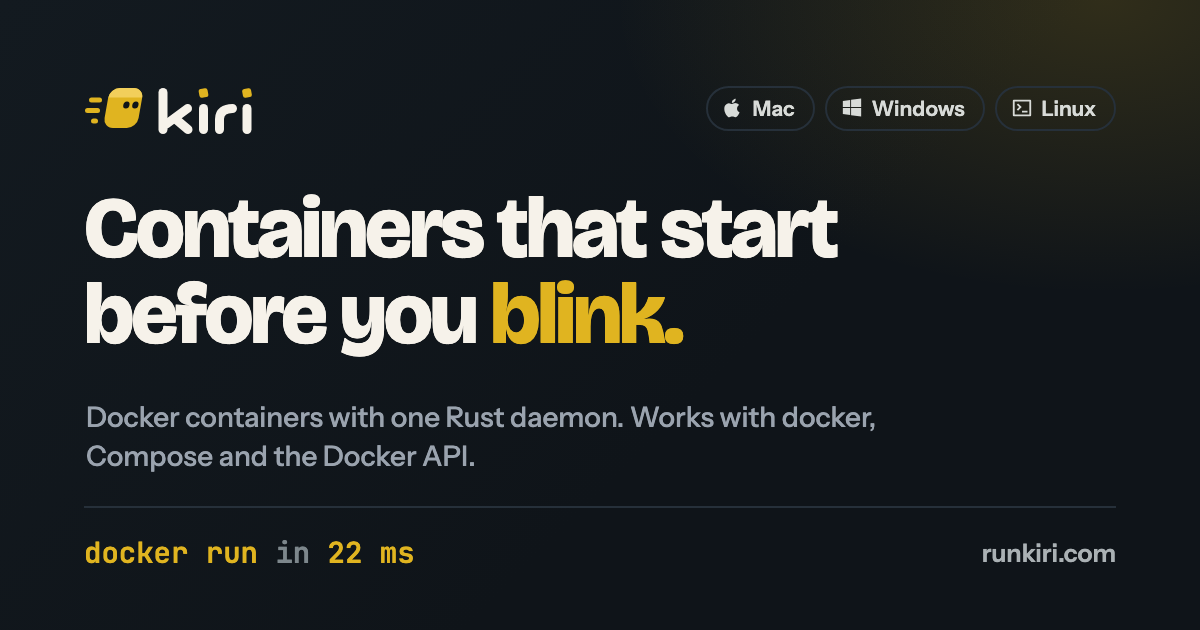
Kiri – The Modern Container Runtime
2026-11-15Kiri is a fast, free container runtime and Docker Desktop alternative for Mac, Windows, and Linux. Built as a small Rust daemon, it works with the Docker CLI and Compose and can run `docker run` in 22 ms on a Mac.
CommentsA new Show HN project called Gawain scans Python codebases in milliseconds to flag every missing variable type hint. It aims to enforce type hints on all Python variables and is available on GitHub.
Comments
500 Lines or Less A 3D Modeller
2026-11-15A new installment in the 500 Lines or Less series explores building a 3D modeller in under 500 lines of code. It likely walks through the core design and implementation choices behind a compact 3D modeling tool.
CommentsMy favourite modern NES games
2026-11-15The piece highlights a selection of modern games made for the NES, celebrating new releases that run on Nintendo’s classic 8-bit console. It offers the author’s personal favorites from this contemporary homebrew scene.
CommentsTurbo-Browser-MCP is a new high-speed Playwright MCP server designed for faster browser automation. It adds multi-tab batching, compact delta DOM snapshots, React/Shadow DOM/iframe form filling, disk file uploads, and submit guards.
CommentsA Show HN project introduces a custom font whose letterforms are based on the design of the Jamaican flag. The font reimagines the flag’s visual elements as an alphabet.
Comments
A review of Rust's standard library identified three recurring patterns behind memory safety bugs, showing that unsafe code can still undermine the language's guarantees. Despite these imperfections, the findings reinforce that Rust's safety model remains valuable rather than absolute.
Comments2026-11-14
Ggml v1.0.0
2026-11-14The GGML project has released version 1.0.0 of its tensor library for machine learning. The open-source library is hosted on GitHub under ggml-org/ggml and invites developers to contribute.
Comments
PyPI’s redesigned project pages are now live, adding clearer security signals so users can more easily check where release files come from. The update includes a dedicated security tab, a rebuilt release files tab, and refreshed documentation.
CommentsA Family Tree of Software Job Titles
2026-11-14A discussion around a family tree of software job titles argues that labels such as Scrum Master, Product Owner, and DevOps Engineer have become inconsistent and often meaningless across companies, with expectations varying widely even within the same organization. Commenters say DevOps especially suffers from unrealistic expectations and burnout because development and operations require different skills and lifestyles, including on-call and incident pressure. The broader takeaway is that titles will keep evolving, and roles like SRE or Cloud Infrastructure Engineer show how software careers mutate over time.
Comments
The Claude Delusion
2026-11-14The Claude Delusion’s critique of Bill Gates as an overconfident judge of AI coding progress drew pushback from readers, who argue his decades of software experience make him a credible authority even if his 1970s programming background is less relevant to modern systems. Commenters also suggest the author’s skepticism toward LLM engineering may be shaping a selective argument that dismisses Gates as a biology nonexpert while downplaying his software credentials.
Comments
Formalizing US Tax Code (Using Lean)
2026-11-14Researchers have formalized the U.S. tax code in Lean, allowing formal search across encoded rules. The approach surfaced previously unidentified loopholes by systematically exploring legal interpretations. It highlights formal methods as a potential tool for auditing complex regulations.
CommentsReaders discussing the Ask HN thread suggest the most useful concrete AI skills are engineering fundamentals—especially scaling verification through testing practices, clear problem framing, and knowing when an LLM is stuck—rather than generic prompt tricks. Others recommend hands-on experience building models or harnesses around completion models to understand how LLMs actually behave. Some argue the core skill is management-style communication and requirements structuring, especially when working with cheaper or less capable models.
Comments
Anthropic has upgraded Claude Code Projects so it can run parallel AI workers hands-free. The Projects coordinator is now proactive, answering questions and posting thread status updates directly in chat.
CommentsLet's Write a PostScript Interpreter
2026-11-14A discussion around writing a PostScript interpreter notes that the language’s stack-machine design is simple enough for hobby projects—including a PostScript Deflate decompressor—but that real implementations are made complex by graphics and font rendering, with Ghostscript’s speed drawing admiration. Commenters also share practical uses like editing PDFs and generating puzzles, while lamenting that PostScript expertise is often treated as just another embedded/software skill.
Comments
A new guide explains how to build a decentralized messenger protocol without central servers by using federation, similar to email. It walks through designing a simple protocol from scratch, covering server discovery via .well-known files and end-to-end encryption.
CommentsA Show HN project presents a model zoo of 15 blood glucose forecasting models trained and tested on the creator’s own data. The T1DMAI repository shares these personal-data-trained forecasters for blood glucose prediction.
CommentsCreating a self booting ZIP archive
2026-11-14A new article explores how to create a self-booting ZIP archive, with readers praising uncompressed ZIPs as an underappreciated container format. The discussion notes that individual files in a large ZIP can be fetched over HTTP when the server supports range requests, while one longtime developer jokes the topic makes their computing knowledge feel close to zero.
CommentsReaders note that writing assembly language programs on paper before entering and testing them on the target machine was standard practice for 8-bit hobbyists who couldn't afford a second computer. With simple instruction sets and careful, slow programming, many could get most code right by hand, a practice some recall nostalgically and compare to hand-assembling machine code. The discussion frames Woz’s pre-hardware BASIC work as part of that painstaking but familiar 8-bit development culture.
Comments
A developer got Zed’s remote development feature working with a FreeBSD machine by tricking the editor into accepting the unsupported setup. The workaround hinged on a 768-byte buffer, highlighting the quirks of running Zed’s remote server outside its officially supported platforms.
CommentsA developer has implemented DeepSeek V3—including MLA, DeepSeekMoE, aux-loss-free balancing, and MTP—in about 190 lines of pure JAX, training it on a MacBook Air. The project includes a write-up and GitHub repository detailing the approach.
Comments
Antigravity's /teamwork is highlighted as a way to advance science and engineering. The title points to the platform or initiative supporting progress in these technical fields, though no further details are available.
Comments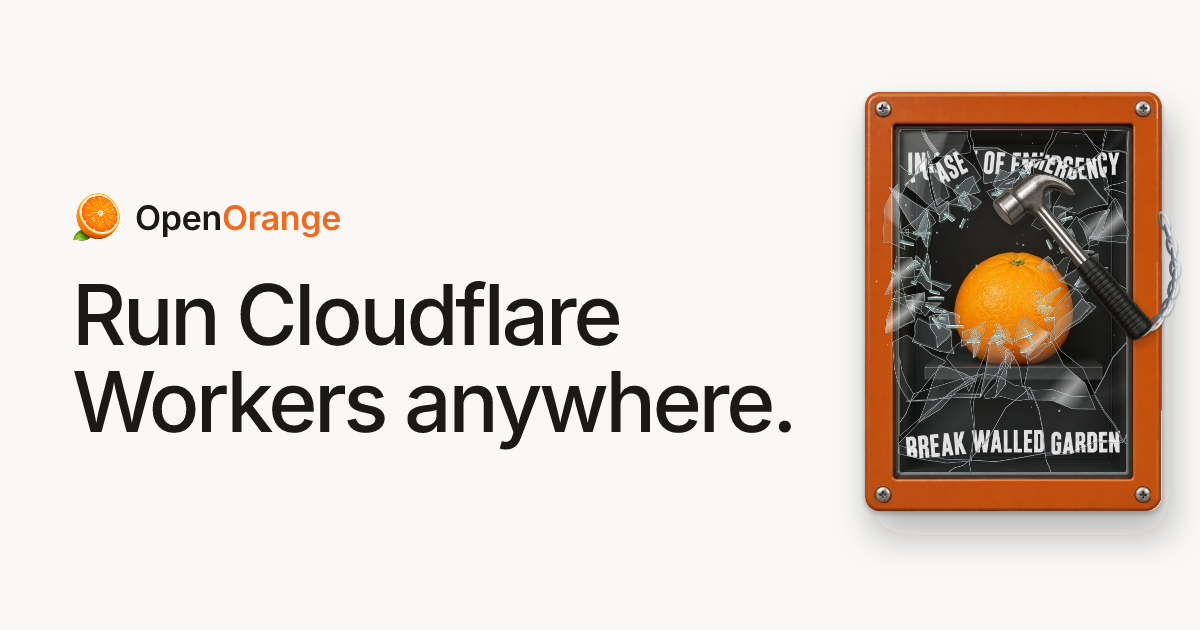
Run Cloudflare Workers Anywhere
2026-11-14OpenOrange lets you run Cloudflare Workers, Durable Objects, KV, Queues, and Workflows unchanged on AWS, GCP, Azure, or your own servers. The project is open source under Apache 2.0.
Comments
C3 0.8.6 has been released with library fetching, safe-mode binaries that are 30% smaller, and stricter type rules. The language positions itself as an ergonomic, safe evolution of C with familiar syntax, full ABI compatibility, optionals, slices, contracts, and zero-cost abstractions.
Comments
LLDB has been extended with a vendor-neutral accelerator plugin architecture in lldb-server for debugging applications that span CPUs and GPUs. The design separates shared debugger infrastructure from hardware-specific device support.
Comments
The Myth of Neutral Code
2026-11-14The piece argues that open source software is not apolitical or neutral: it is shaped by corporate funding, governance, and power dynamics. It critiques companies that promote the myth of neutral code while wielding influence over projects and communities, and calls for recognizing the politics embedded in open-source development.
Comments
A new Show HN project introduces a terminal-native idle factory game built in Rust with the ratatui library. The game is hosted on GitLab and targets players who want an idle factory experience directly in the terminal.
CommentsAgweb is a new browser built for agents that avoids stealing focus and keeps a tiny footprint. It shows all tabs in a single view. The project is available on GitHub as paul-nameless/agweb.
CommentsFursoy is a new 64-bit out-of-order superscalar RISC-V core written in SystemVerilog, supporting RV64IMAFDV plus Zba/Zbb. It boots Linux 6.6.50 with BusyBox under Sv39 virtual memory and meets 500 MHz timing in Nangate 45nm.
Comments
Write your own kernel optimiser
2026-11-14The article explains how to build a custom kernel optimiser, focusing on scheduling as the key to reliable performance. It argues that well-scheduled kernels are hard to get wrong, with a noted caveat.
Comments