Programming News
SubmitProgramming keeps evolving as languages mature, tooling improves, and teams rethink how software should be written. This section follows that change, gathering news and articles about programming languages, compilers, development practices, and the craft of writing reliable, maintainable code.
Typical stories include language releases and proposals, deep dives into compiler and runtime internals, performance investigations, debates about coding style and architecture, and essays from experienced engineers on lessons learned. Popular ecosystems such as Rust, Python, JavaScript, and TypeScript appear regularly.
Keeping up with these topics helps developers choose the right tools, avoid known pitfalls, and grow their skills. Working engineers, students, and technical leaders follow this coverage to stay current with the ideas shaping how software gets built.
2026-11-15

A 1994 Jeep Cherokee owner bypassed the vehicle’s lack of an OBD2 port and compatible scan tool by wiring a $3 Arduino to its engine computer. They then used Claude Code and Codex to reverse engineer the ECU, showing how AI coding assistants can help with legacy hardware hacking.
Comments
Kiri – The Modern Container Runtime
2026-11-15Kiri is a fast, free container runtime and Docker Desktop alternative for Mac, Windows, and Linux. Built as a small Rust daemon, it works with the Docker CLI and Compose and can run `docker run` in 22 ms on a Mac.
Comments
The piece notes that Turbo Pascal was smaller than many contemporary images and PDFs, highlighting how compact early development tools were. Readers use the comparison to question whether today’s larger software stacks are worth their productivity gains and to speculate about leaner, simpler OSes and programming systems.
Comments
A reader critiques the “streetfighting computer scientists” book list as really a programmer’s reading list, noting that aside from Knuth it omits core theoretical computer science such as automata, formal languages, complexity, logic, category theory, and type theory. The commenter questions why streetfighting computer scientists would not need that theory, warning they would fare badly against someone who knows finite-state and pushdown automata.
CommentsA new Show HN project called Gawain scans Python codebases in milliseconds to flag every missing variable type hint. It aims to enforce type hints on all Python variables and is available on GitHub.
CommentsA NES emulator written in Odin
2026-11-15A developer has built a NES emulator in the Odin programming language, working on it in their spare time since late June 2024. The project is shared on GitHub.
Comments
tsoracle is a new distributed oracle for Rust that provides strictly monotonic timestamps and gapless, dense ID sequences. It is Raft-replicated, crash-safe, and embeddable, positioning it as a drop-in solution for MVCC, snapshot isolation, cross-shard ordering, and gapless surrogate keys.
Comments
A review of Rust's standard library identified three recurring patterns behind memory safety bugs, showing that unsafe code can still undermine the language's guarantees. Despite these imperfections, the findings reinforce that Rust's safety model remains valuable rather than absolute.
Comments2026-11-14

The Claude Delusion
2026-11-14The Claude Delusion’s critique of Bill Gates as an overconfident judge of AI coding progress drew pushback from readers, who argue his decades of software experience make him a credible authority even if his 1970s programming background is less relevant to modern systems. Commenters also suggest the author’s skepticism toward LLM engineering may be shaping a selective argument that dismisses Gates as a biology nonexpert while downplaying his software credentials.
CommentsReaders note that writing assembly language programs on paper before entering and testing them on the target machine was standard practice for 8-bit hobbyists who couldn't afford a second computer. With simple instruction sets and careful, slow programming, many could get most code right by hand, a practice some recall nostalgically and compare to hand-assembling machine code. The discussion frames Woz’s pre-hardware BASIC work as part of that painstaking but familiar 8-bit development culture.
Comments
A new Show HN project introduces a terminal-native idle factory game built in Rust with the ratatui library. The game is hosted on GitLab and targets players who want an idle factory experience directly in the terminal.
Comments2026-11-13

Jonathan Blow and Wolf Tivy discuss the explosion of complexity in software and why today’s AI cannot produce better code than people. They also explore what the world would look like if AI actually solved coding.
Comments
Edge0-145B is a new open-source 145B model designed to bring frontier AI capabilities to local machines for coding, reasoning, and agent tasks. It enables local inference without cloud-model token fees.
CommentsLonewolf 0.3 has been released, a standalone XMPP server written in Rust. Hosted on GitHub under lonewolf-im/lonewolf, the project is pitched as “XMPP with teeth.”
CommentsWhy Zig over C for Systems Programming
2026-11-13A new article examines why Zig might be preferable to C for systems programming, noting that both languages are small, garbage-collector-free, and close to the machine, but Zig addresses parts of C that cost developers time. It follows an earlier Zig-vs-Rust comparison and uses code compiled with Zig 0.17 and clang on macOS.
Comments2026-11-12
Humble Bundle’s apparent “vibe coding” revamp has users reporting broken security and login flows, including delayed email verification codes and repeated code requests at every login. Readers also cite frustrating access problems for purchased downloads and ebooks, apparent one-click payment concerns, and say the issues are pushing long-time subscribers to cancel.
CommentsRelax is a new live compiler and JIT runtime for Rust, itself written in Rust, that runs a Cargo package directly from source without invoking rustc, LLVM, or a linker. It aims to cut Rust build times by removing those traditional compilation steps from the loop.
Comments
Rust 1.100
2026-11-12The Rust project has released Rust 1.100, the latest update to the language and toolchain. The release continues Rust’s mission of empowering everyone to build reliable and efficient software.
Comments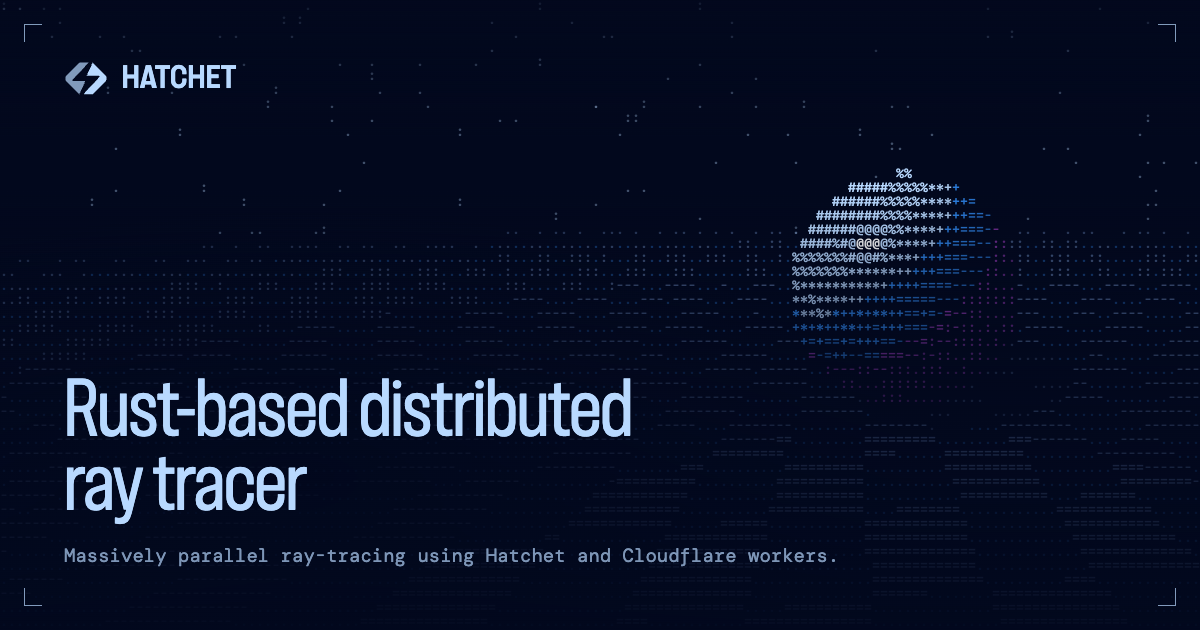
Distributed Ray Tracer
2026-11-12A new Rust-based distributed ray tracer lets users describe a scene and have every tile rendered in parallel on Cloudflare Workers. The work is orchestrated by Hatchet, highlighting a serverless approach to distributed rendering.
CommentsA developer is building a free and open-source Linux pinball simulation engine based on the Pascal Tiny.Sim library, with tables designed in CAD, imported as 3D meshes, and scripted in TypeScript. The engine will let users play, edit, and share custom tables, and the initial source release is planned with three tables and a creation guide; the developer is also seeking artists to help with table artwork.
Comments
Lean Grimoire
2026-11-12The author recounts experimenting since July with modern coding agents to build mathematical visualization applets, a project that had to be set aside during a hectic few months. The piece reflects on that agent-assisted development work and what it suggests for building small interactive math tools.
Comments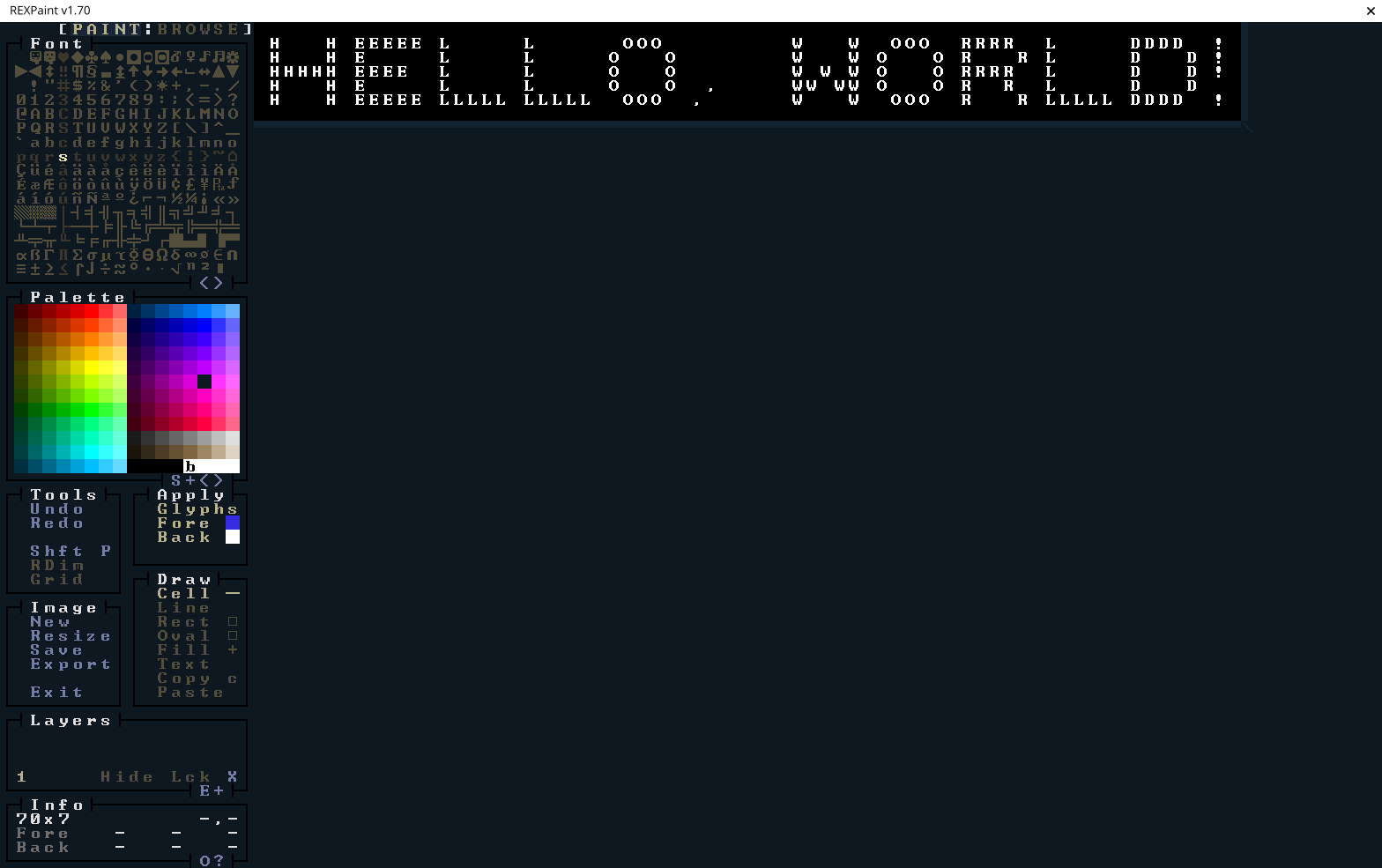
Decoding REXPaint Files in Odin
2026-11-12REXPaint is Kyzrati’s ASCII art tool, known for designing UI, full-screen art, and level prefabs for games like Cogmind. The piece explains how to decode REXPaint files using the Odin programming language.
CommentsAdapting CPython for Yk
2026-11-12The news covers efforts to adapt CPython, the reference Python implementation, for the Yk environment. Details of the implementation and its implications are not provided in the title alone.
Comments
The article explores efforts to go beyond the compiler and run modified native code on IBM i, focusing on the platform’s exotic architecture. It highlights the obscure world of OS/400 and its successors, where specialists work on a system most people neither understand nor know exists.
Comments2026-11-11

Hyper-Realistic Sand with WebGL2
2026-11-11A new browser-based sand simulator delivers hyper-realistic sand physics using WebGL2 and JavaScript. It supports touch controls and device motion on phones and tablets, letting users play directly in their browser.
CommentsEmacs in the Age of Magic
2026-11-11A group of Emacs users and developers is pushing for an LLM-free version of Emacs, vowing to continue it even if GNU adopts a different policy and urging GNU to reject LLM-generated contributions. The debate around the effort highlights broader concerns about AI dependency, software freedom, and whether coding agents make programming more accessible or undermine understanding.
CommentsMIT CSAIL’s recent “Sparks of Weight-Space Programming” paper showed that GPT-6 Astra could identify which game a small network had been trained on directly from its raw weights. The new piece asks whether a linear program can perform comparable weight-space programming, probing whether such capabilities require large models or can be replicated with simpler linear methods.
CommentsA new Show HN project introduces Micron, a programming language described as Oberon with the power of C. It includes a compiler and IDE, with source available in the rochus-keller/Micron repository.
Comments$30M Raised to Redo the CPU
2026-11-11A startup has raised $30M to develop a parallel-first CPU with thousands of cores that abandons shared mutable memory and linear instruction sequences, paired with its open-source Vine language. Commenters are skeptical, comparing the approach to GPUs and long-standing superscalar optimizations while stressing that the real challenge is building compilers and software for a new architecture.
Comments
Tim Peters has died
2026-11-11Tim Peters, a highly influential Python developer best known for writing the Zen of Python (PEP 20), died on July 15 earlier this year. His contributions had a profound impact on Python and its community.
Comments