Programming News
SubmitProgramming keeps evolving as languages mature, tooling improves, and teams rethink how software should be written. This section follows that change, gathering news and articles about programming languages, compilers, development practices, and the craft of writing reliable, maintainable code.
Typical stories include language releases and proposals, deep dives into compiler and runtime internals, performance investigations, debates about coding style and architecture, and essays from experienced engineers on lessons learned. Popular ecosystems such as Rust, Python, JavaScript, and TypeScript appear regularly.
Keeping up with these topics helps developers choose the right tools, avoid known pitfalls, and grow their skills. Working engineers, students, and technical leaders follow this coverage to stay current with the ideas shaping how software gets built.
2026-11-05

Discord is moving its apps off Electron and fully to Rust, with its new app using less RAM. The shift is aimed at improving performance and reducing memory use.
CommentsThe “Lisp curse” describes how Lisp’s extreme flexibility leads developers to build bespoke solutions instead of sharing reusable libraries, fragmenting its ecosystem. The article argues that this same pattern is now spreading to other software ecosystems.
Comments

Vibe Coding Keypad
2026-11-05Keychron has introduced the F4 HE 8K Vibe Coding Keypad, a four-key accessory designed to speed up AI workflows. Users can assign the keys to send prompts, accept edits, or start voice input with a single press.
Comments
The article examines the frustrations and reliability problems developers face when working with AI coding agents, focusing mainly on Cursor’s Composer 2.5. It notes that some issues may be model-specific but have also appeared in other models such as GPT-5.5 and Opus 4.6.
Comments
Nordstjernen is a minimalist web browser written from scratch in C, focused on supporting the HTML and CSS standards. It runs on Windows, macOS, Linux, Android, and Java, with the broader project also covering Northstar and Southstar as minimalist browser efforts in C and Rust.
Comments
Spreading Liquid with Three.js
2026-11-05The article demonstrates a spreading liquid effect built with Three.js, emphasizing expressive visuals and high-quality user experiences through code. It highlights how creative programming can turn web graphics into engaging, polished interactions.
CommentsTScert: A Sound Core for TypeScript
2026-11-05TScert is a new independent checker for a sound core of TypeScript that accepts a function only when accompanied by a proof. Its soundness has been formalized and proved in Lean, according to the project repository.
CommentsStroq is an open-source, telemetry-free tool that audits AI coding agent sessions from Claude Code, Codex, and Cursor for known secrets. It also uses local hooks to guard future sessions by tracing risky commands back to the content that prompted them.
Comments2026-11-04

Fernando Borretti argues that thinking, coding and research only last inside a community of other people, which gives you shared work to build on and the motivation of being useful to others. AI makes contributions like blog posts, open-source libraries and new programming languages superfluous, so those communities dry up. His examples are software engineering and now mathematics, and he expects individual intellectual work to fade with them.
Comments
Login code screens split a six-digit code into six boxes held together by JavaScript, which breaks paste, Backspace, SMS and email autofill, password managers and screen readers. The article shows these failures in live demos, including in react-otp-input, which hardcodes autocomplete off, and input-otp, which needs 767 lines to hide a single input. The fix is one plain input with autocomplete="one-time-code", inputmode="numeric", maxlength and a pattern, and no script.
CommentsREA is an open-source MCP server and CLI that lets AI coding agents like Claude Code, Codex and Cursor inspect apps without their source code. It works with native binaries through Hopper, Ghidra or IDA, and with JavaScript and Electron apps, .NET assemblies, Android apps and websites. The agent can then explain how a feature works, show the evidence behind each conclusion and build a similar version for your project. Analysis runs locally, and setup is a single npx command.
Comments
Turkish software engineer Bedirhan Yildirim used AI coding agents and free Polish public data to build an explorable 3D replica of Warsaw in two days. The free online map has almost 200,000 buildings, trams that follow real timetables, live weather and 45,000 streetlamps that light up at night, plus a flight simulator. He says AI did 90% of the job, and the last 10% of human work keeps it from being "AI slop".
Comments
ArtCraft Crafting Apps: 16 Open-Source Creative Tools Built to Replace Adobe Creative Cloud
2026-11-04The ArtCraft team is building sixteen free, open-source desktop apps from scratch in Rust, with familiar layouts and shortcuts. They cover image editing, vector illustration, video, raw photos, PDFs, motion graphics, page layout, interface design, 3D texture painting, word processing, audio, slides, CAD and spreadsheets. They run natively on macOS, Windows and Linux without Electron, most also run in the browser through WebAssembly, and every app can be driven by AI agents through a CLI or an MCP server. All of them are still in early alpha or in development.
CommentsRocky Linux founder Gregory Kurtzer had a single OpenAI Codex task (GPT-5.6 Sol) write Ginux in eleven days. The result is about 139,000 lines of Rust and test code for an x86-64 kernel that boots from UEFI without Linux and runs unmodified Linux programs, including Rocky Linux 10 with systemd. It's an experimental research project tested in QEMU, not a replacement for Linux, and it comes with a technical report on how he directed the agent.
CommentsTencent Hy4
2026-11-04Tencent’s Hy4 is a strong open-weight model that brings open models back to the cost/accuracy frontier, with a notable game-development focus including adaptations for Unreal, Unity, and Godot and gains on GameDev and GameLogic benchmarks, while acknowledging gaps to top proprietary models in research math, long-horizon coding, and advanced visual QA. Tencent is also open-sourcing HyCell for single-cell representation and HyPDE for physical field modeling. In data analytics tests Hy4 is competitive and cheap but overly thorough and slow, running many queries per question.
Comments
This Month in Ladybird – October 2026
2026-11-04Ladybird’s October 2026 update adds CSS animations and hover effects that keep working while JavaScript is busy, along with a JavaScript JIT and a new WebAssembly engine. The browser also receives a redesigned UI.
CommentsThe lost malloc()
2026-11-04A discussion around the lost malloc() focuses on the historical design choice that free() does not receive the allocation size, with readers arguing that passing size on deallocation could eliminate redundant allocator bookkeeping across every allocation since the 1970s. Commenters also weigh the tradeoffs of arena and bump allocators and reflect on how earlier programmers worked closer to the metal.
CommentsEvergreen is a new systems programming language designed to be provably safe by making invariants part of the code. Its real compiler can be tried directly in the browser via WebAssembly.
Comments
Ripple-65B Preview is being positioned as a U.S. open-weight state-of-the-art model for agentic coding. It comes from a team developing frontier AI methods to reinvent chip development, shorten design timelines, and accelerate custom silicon.
Comments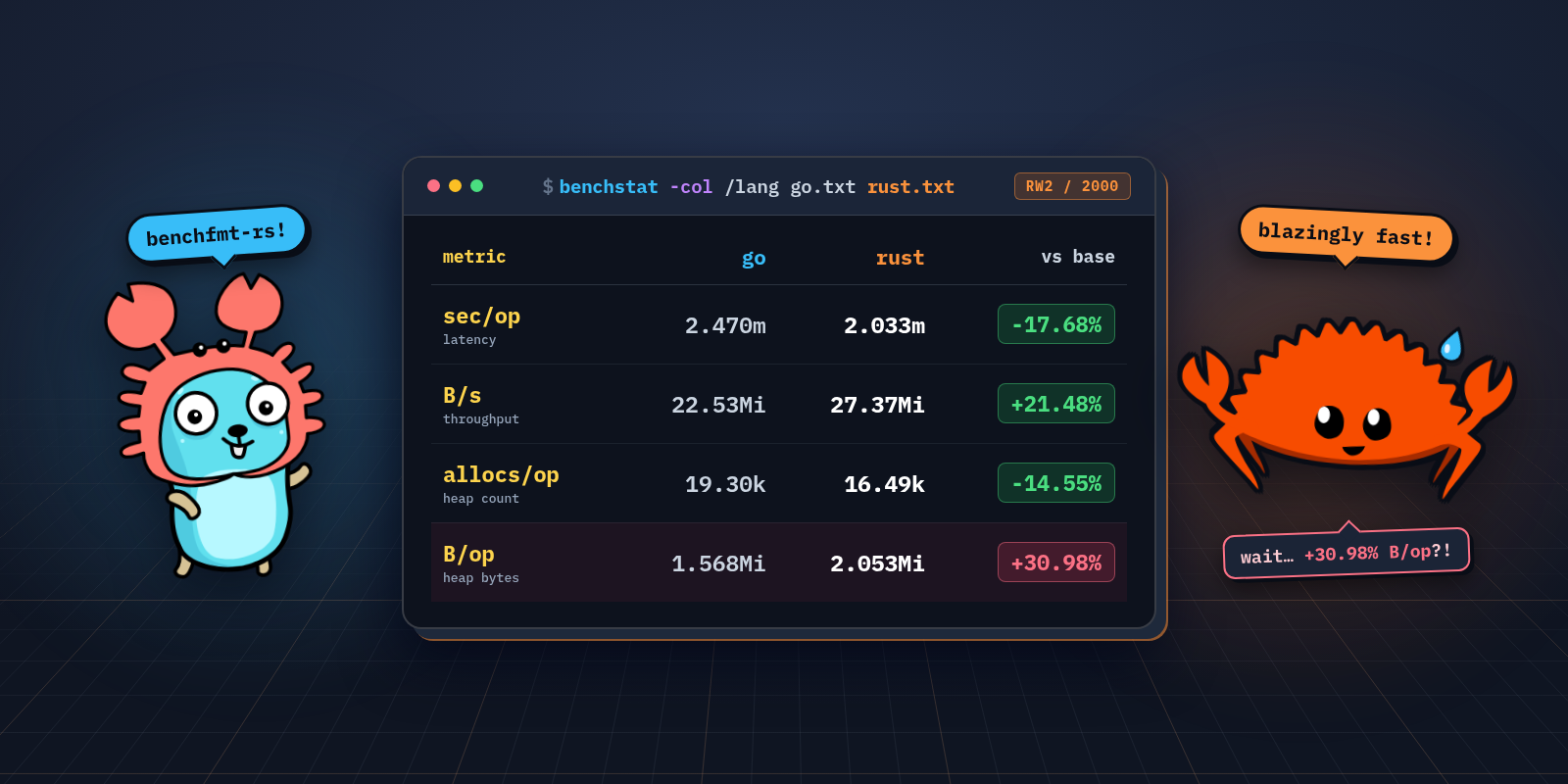
A developer has released benchfmt.rs, a zero-dependency Rust benchmark runner and Criterion converter that brings Go’s benchstat-style workflow to Rust, adding /key=value projections, per-op heap allocation tracking, and pprof profiling. The accompanying post benchmarks varint and Prometheus Remote Write 2.0 decoding across Go and Rust to show the workflow’s benefits, with Rust coming out faster.
Comments2026-11-03

Revolut moves to self-hosted GLM
2026-11-03Revolut has moved roughly 2,000 engineers onto self-hosted GLM for coding, making Claude Code and Codex exceptions rather than defaults. According to AI ops lead David Abitbol, the setup uses 56 Nvidia B200s at a blended 30 cents per million tokens—about a tenth of what Revolut previously paid Anthropic and OpenAI.
CommentsA reported issue alleges that Postman silently auto-installs AI plugins and attempts to share all API data, raising privacy and security concerns. Users described unexpected changes to their coding agents after opening Postman on macOS. The report has been filed in the issue tracker, where duplicate submissions are expected to be closed.
CommentsA new paper argues that LLMs can natively read and write neural network weights, enabling “weight-space programming.” The news piece reports that Qwen 3.8 27B running on a laptop can also interpret model weights, suggesting the capability may be accessible on local hardware.
Comments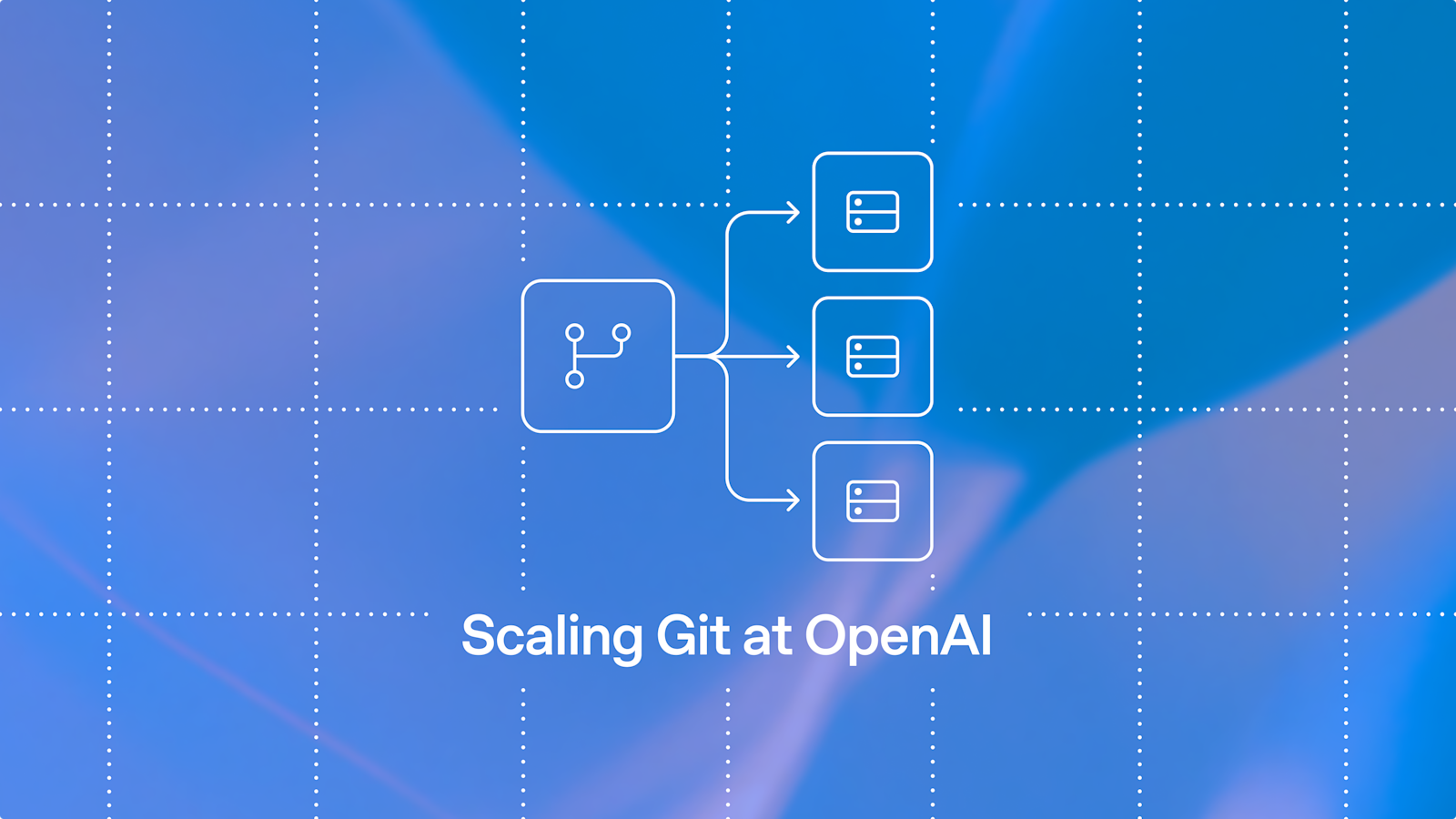
Scaling Git at OpenAI
2026-11-03OpenAI has built Pando, a Git-compatible backend designed to handle the development scale made possible by its Codex coding tools. The system aims to overcome Git’s scaling limits as AI-assisted coding increases repository activity and development throughput.
CommentsMuvon has released Octomind, an open-source AI coding agent and runtime built as a single static Rust binary. It is model-agnostic and MCP-native, aims to save tokens, and can run in the terminal, CI, or as a daemon.
CommentsA CC1101 radio module connected to an FT232H board with six jumper wires and driven by a Python script turns a laptop into a 433 MHz scanner. The setup offers spectrum sweeps and a listen mode that decodes fixed-code remotes, with no microcontroller or soldering required and receive-only operation.
Comments
In an interview, Tantivy creator and Quickwit co-founder Paul Masurel discusses building a search engine in Rust, following Lucene’s competitive happy path, and maintaining open-source software. He also shares lessons learned from the project’s development.
CommentsIntroduction to Programming in ATS
2026-11-03A reader discussion around an introduction to ATS points to the language’s actively developed implementation on GitHub. The key takeaway is that ATS-Postiats remains an active project for users interested in the programming language.
Comments
Rustable is a new open-source, native database client written in Rust. The project is highlighted on Show HN as a Rust-built alternative for database management.
Comments
The piece outlines ten harness patterns for applying AI testing to real repositories, emphasizing how AI testing differs from traditional software testing. It highlights golden sets, RAG and agent evaluation, and monitoring as key practices for building reliable production AI systems.
Comments