Programming News
Programming keeps evolving as languages mature, tooling improves, and teams rethink how software should be written. This section follows that change, gathering news and articles about programming languages, compilers, development practices, and the craft of writing reliable, maintainable code.
Typical stories include language releases and proposals, deep dives into compiler and runtime internals, performance investigations, debates about coding style and architecture, and essays from experienced engineers on lessons learned. Popular ecosystems such as Rust, Python, JavaScript, and TypeScript appear regularly.
Keeping up with these topics helps developers choose the right tools, avoid known pitfalls, and grow their skills. Working engineers, students, and technical leaders follow this coverage to stay current with the ideas shaping how software gets built.
2026-09-09
A new experimental syntax highlighter powered by WebGPU has been introduced to provide fast, language-agnostic code highlighting. Weighing in at just 27.5KB, this lightweight tool offers developers a highly efficient and versatile solution for working across multiple programming languages.
CommentsA new GitHub repository called i-have-adhd introduces a specialized skill for AI coding agents to prevent them from burying the final answer in verbose explanations. The tool is specifically designed to provide an ADHD-friendly output by keeping responses direct and concise. This helps developers quickly locate and use the generated code without getting lost in unnecessary text.
Comments
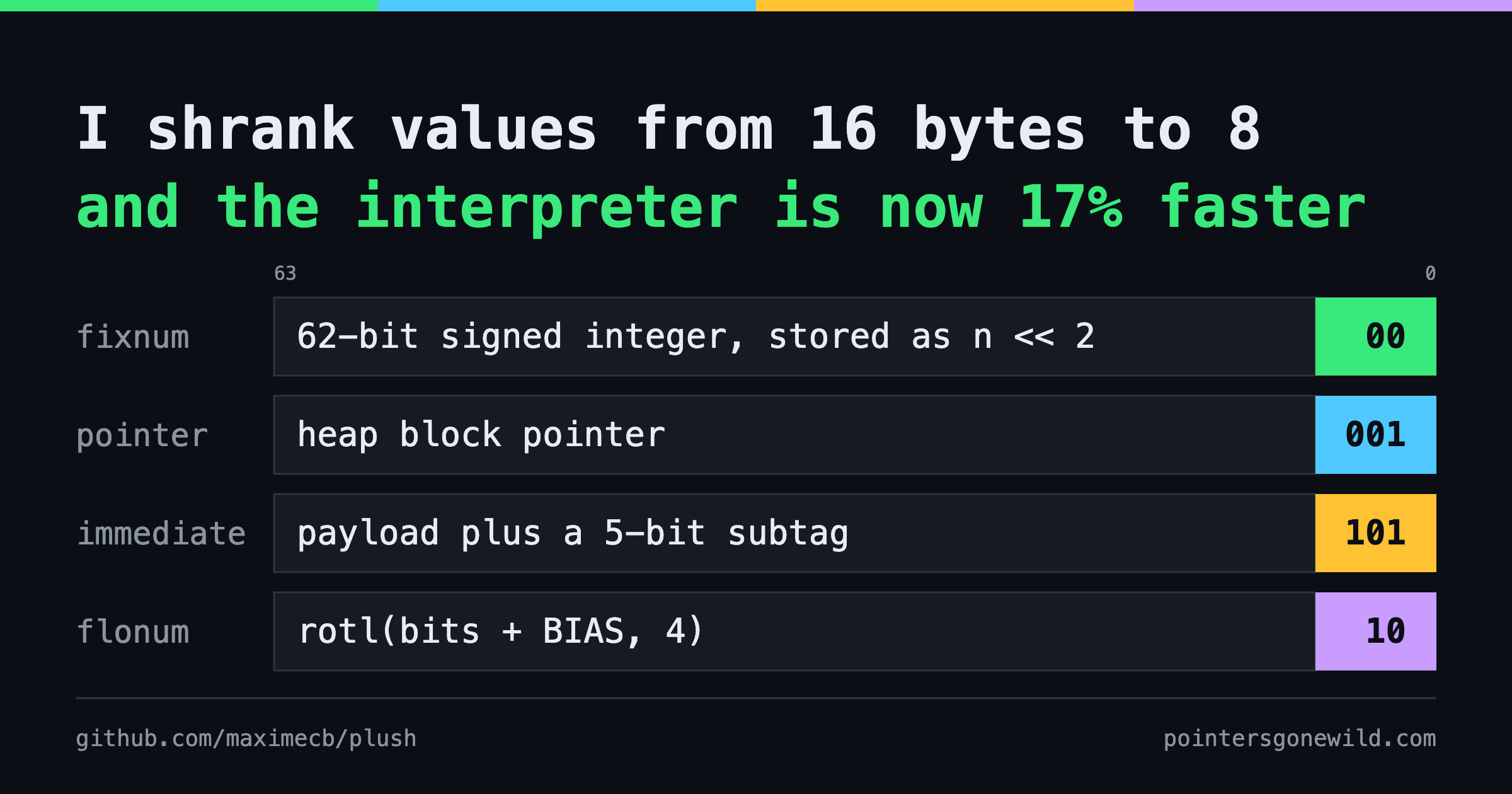
A developer optimized a Rust-based interpreter by replacing a standard enum with a compact 64-bit word representation. This low-level structural change reduced memory overhead and improved data locality during execution. Consequently, the interpreter achieved a 17% overall increase in processing speed.
CommentsDiscussions surrounding an article comparing GCC's nested functions and C++ lambdas highlight significant implementation complexities, particularly the need for trampolines to cast nested functions to bare function pointers. Critics argue the original author overlooks these semantic differences and the resulting compiler optimization challenges, suggesting that modern closure models remain more practical than adding nested functions to the C standard.
Comments2026-09-08

A newly published arXiv paper demonstrates how a classic Trusting-Trust compiler attack can be scaled to compromise an entire Linux distribution through binary manipulation. The research highlights a critical software supply chain vulnerability where malicious code can be hidden within pre-compiled binaries, completely bypassing traditional source code audits. These findings underscore the persistent risks of relying on unverified binary packages in modern computing environments.
Comments
This Month in Ladybird – August 2026
2026-09-08The August 2026 Ladybird browser update introduces CSS scroll snap, JavaScript debugging, and session restore features. The development team is also making a serious push to improve engine performance by implementing a new style engine. Video updates detailing these changes are available on Twitch and YouTube.
Comments2026-09-07
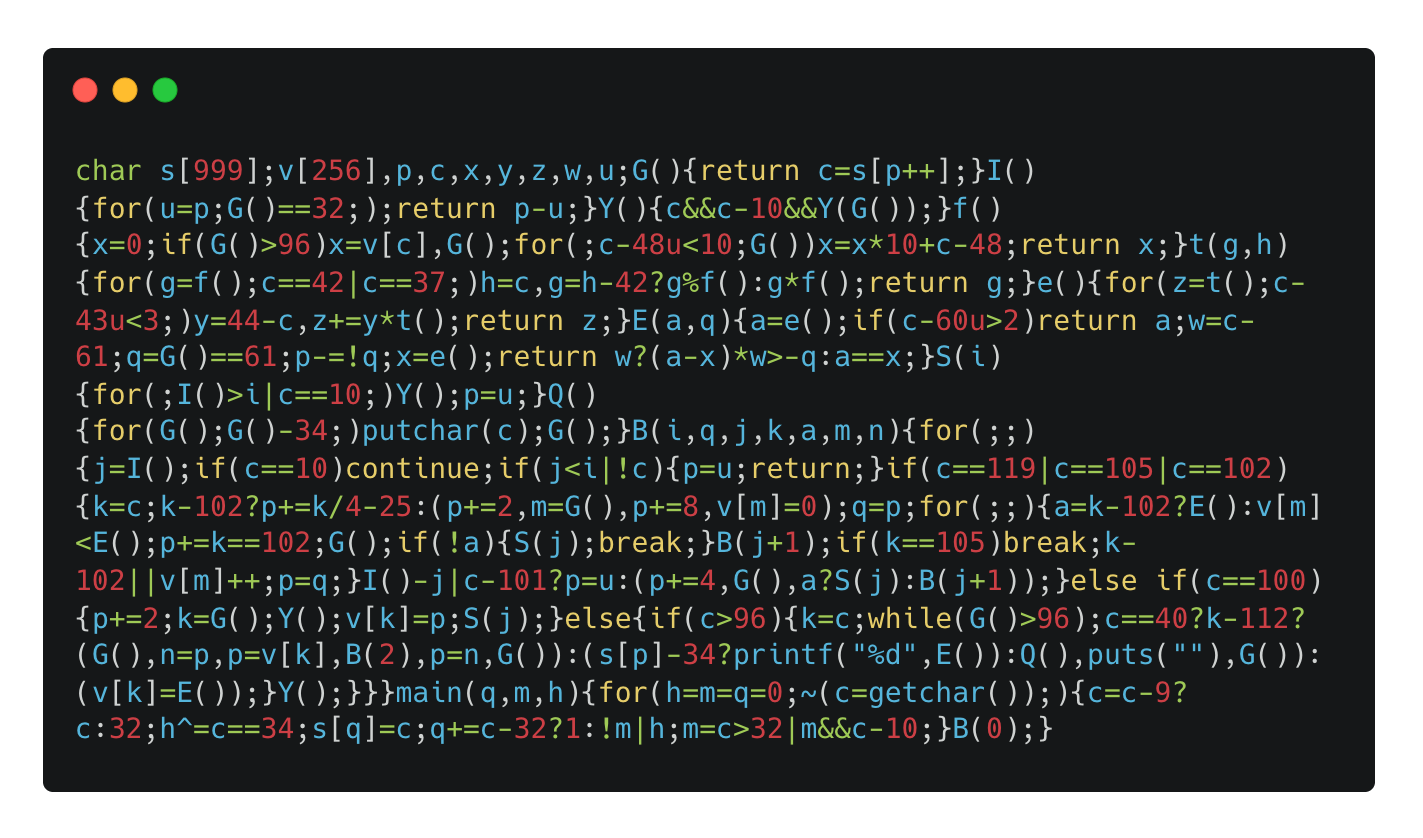
A developer challenged themselves to write a minimal Python interpreter in C that fits within a strict 1024-byte size limit. The resulting program executes a tiny subset of Python, demonstrating impressive code optimization and low-level programming skills.
Comments
After a year of overcoming technical hurdles and partially rewriting the project in Rust, the next version of Anubis will ship with WebAssembly-based proof of work checks. Administrators will be able to enable these new checks within their thresholds or bot rules to better manage system traffic.
CommentsAsk HN: How do you manage skills files?
2026-09-07In a recent discussion on managing AI agent skill files, developers shared strategies for centralizing and distributing custom prompts to improve coding workflows. While participants debated whether advancing AI models will eventually make general-purpose skills obsolete, there is consensus that context-specific skills remain vital for efficient task execution. Consequently, developers are adopting various organizational methods, including personal repositories, dotfile managers, and shared team directories, to keep their skill collections streamlined and accessible.
CommentsVidact is a new compiler that transforms React components into direct DOM operations. By eliminating the need for both the Virtual DOM and the React runtime, it allows developers to write standard React code while executing direct DOM manipulation.
Comments2026-09-06
The revolt of the reader
2026-09-06In his essay The revolt of the reader, author Bryan critiques the proliferation of AI-generated content and the flawed detection tools policing it. Sparked by an LLM-written guest post from the Rust Foundation, the piece argues that these technologies threaten both the decentralized nature of internet infrastructure and the human provenance of writing.
CommentsLearn Programming with OCaml
2026-09-06A discussion surrounding a book on learning OCaml highlights the ongoing debate over whether functional ML languages should be taught as a first programming language. While commenters note that adapting to OCaml's strict functional paradigm can be initially painful for beginners, many agree the experience ultimately creates better programmers by instilling strong habits in abstraction and immutability.
Comments
This technical deep dive visualizes how Rust's dynamic trait dispatch and virtual tables operate in memory. Through a series of hands-on coding experiments, the author explores the language's unique memory management peculiarities. Written from a C++ developer's perspective, the guide helps programmers understand the underlying mechanics of the dyn Trait syntax.
CommentsAn actively exploited remote code execution vulnerability affecting all Chromium versions has sparked debate among security researchers regarding the adequacy of Google's $1,000 bug bounty payout for critical, in-the-wild flaws. Although the vulnerability currently only escapes the JavaScript sandbox and requires chaining with a second flaw for full system compromise, critics argue that major tech companies significantly undervalue ethical disclosures compared to the lucrative exploit grey market.
CommentsOKF Agent Memory is a new pure Go tool that provides Git-native persistent memory for AI coding agents without relying on external databases. By utilizing Google OKF v0.2 for ultra-fast in-memory search and an embedded MCP server, the lightweight architecture reduces token bloat by 80% to optimize development workflows.
CommentsSteffen's Polyhedron
2026-09-06Science fiction author and mathematician Greg Egan has published a detailed interactive exploration of Steffen's polyhedron, a unique flexible polyhedron that changes shape without altering its faces. The project utilizes custom web programming to provide a hands-on visualization of this complex geometric concept, making advanced topology accessible to a broader audience.
Comments2026-09-05
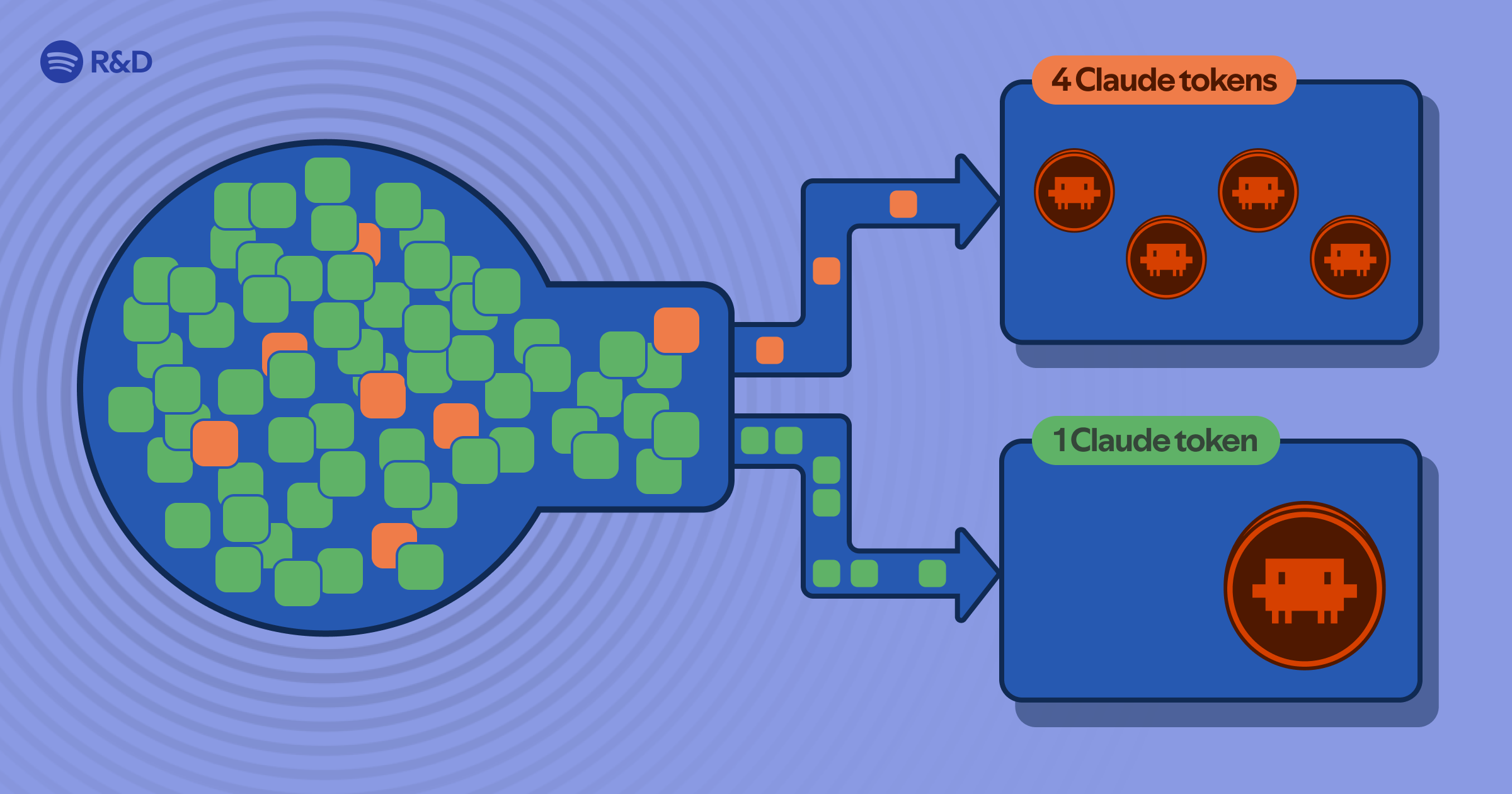
Spotify's new Portal tool has reduced token usage for the Claude Code AI agent by 90% by optimizing input and output operations. Because AI coding agents typically spend the majority of their resources on I/O rather than actual reasoning, this efficiency gain significantly lowers processing costs.
Comments
Can guitar frets perform multiplication?
2026-09-05Programming author Charles Petzold explores the intersection of mathematics and music by demonstrating how the physical layout of guitar frets can be used to perform multiplication. The article uses the instrument's fretboard as an intuitive physical model to explain complex computational concepts.
Comments
Vite now natively integrates the Rust-based React Compiler, reducing build times from 14.3 seconds to just 0.81 seconds in large codebases like React Router. This update delivers massive performance gains while resolving previous limitations to ensure faster, more consistent build management across the toolchain.
Comments
IBM Bob
2026-09-05IBM has introduced Bob, a new artificial intelligence partner designed to assist developers throughout the entire software development lifecycle. The tool aims to streamline various stages of software creation, from initial coding to final deployment. By integrating directly into the SDLC, IBM Bob seeks to significantly enhance developer productivity and accelerate project delivery.
Comments
Decompiler Explorer
2026-09-05Decompiler Explorer is a new interactive online tool that allows developers to easily compare the C-like output generated by multiple popular decompilers. This browser-based platform provides a convenient way for programmers to analyze and reverse-engineer compiled programs directly online.
CommentsGoogle has published an update on HEIR, a homomorphic encryption compiler that transforms standard programs to operate directly on encrypted data. The official Google Security blog announcement is accompanied by a candid, highly technical companion article that explores the project's progress in depth.
Comments2026-09-04

GPT-6 Astra
2026-09-04GPT-6 Astra has been introduced as the most intelligent and aligned model to date. It features state-of-the-art capabilities across computer use, coding, cybersecurity, and science.
Comments
Originally developed as an MIT research project, Julia has evolved into a widely used open-source programming language with over one million global users. The language has cultivated a dedicated following among scientists, engineers, and mathematicians at thousands of companies and universities worldwide.
Comments
A comprehensive study analyzed nearly 17,000 sessions to evaluate how coding agents like Claude Code, Codex, and Cursor select and implement development tools. The research tested 1,163 prompt variations across 75 repositories to observe the agents' actual behaviors. By focusing on real implementation rather than just recommendations, the findings provide deep insights into the practical decision-making processes of AI assistants.
Comments
IFM has launched K2 Horizon, an open-source fleet of six frontier AI models designed to handle reasoning, coding, and agentic workflows. This connected ecosystem also provides specialized solutions for edge devices and enterprise deployment, offering developers a comprehensive suite of advanced tools.
Comments2026-09-03

Muse Spark 1.3
2026-09-03Muse Spark 1.3 has been released with specialized training for autonomous agentic workflows and complex task execution. The latest version also introduces targeted optimizations to significantly improve its competitive coding performance.
Comments
Embedded Rust RTOS vs. C RTOS
2026-09-03A new technical blog post compares the Embassy async Rust framework against the traditional C-based FreeRTOS. The evaluation is conducted on an STM32F446 microcontroller to assess the viability and performance of Rust for embedded real-time operating systems.
Comments2026-09-02

Claude Fable 5.1 and Claude Mythos 5.1
2026-09-02Anthropic has released Claude Fable 5.1 and Claude Mythos 5.1, their most advanced AI models optimized for coding and knowledge work. These new models also introduce powerful research capabilities, offering an early look at how artificial intelligence will accelerate future scientific progress.
Comments
This article outlines strategies for building autonomous goal loops that enable AI coding agents to successfully tackle complex feature development. It explains how to equip these agents with real-world demands, protected metrics, and sufficient memory to ensure reliable and effective code improvements.
Comments