Programming News
Programming keeps evolving as languages mature, tooling improves, and teams rethink how software should be written. This section follows that change, gathering news and articles about programming languages, compilers, development practices, and the craft of writing reliable, maintainable code.
Typical stories include language releases and proposals, deep dives into compiler and runtime internals, performance investigations, debates about coding style and architecture, and essays from experienced engineers on lessons learned. Popular ecosystems such as Rust, Python, JavaScript, and TypeScript appear regularly.
Keeping up with these topics helps developers choose the right tools, avoid known pitfalls, and grow their skills. Working engineers, students, and technical leaders follow this coverage to stay current with the ideas shaping how software gets built.
2026-09-01
Reader discussions surrounding an article on developing cross-platform tools with Tcl/Tk reveal a mix of nostalgia and practical appreciation for the classic toolkit. While some developers find its traditional design patterns outdated compared to modern reactive frameworks, others praise its simplicity and reliable cross-platform performance. Additionally, commenters highlighted the toolkit's broad language interoperability, noting it can easily integrate with languages like Python, Scheme, and COBOL via sockets or native bindings.
Comments
Visualizing Combos in Judo in R
2026-09-01A new data science project uses the R programming language to visualize Judo attack combinations as complex networks ahead of the Judo World Championship in Budapest. By applying advanced statistical modeling to martial arts, the analysis reveals the underlying dynamics and strategic connections of the sport's techniques.
Comments
2026-08-31
CobaltC – The Successor to C?
2026-08-31The official 1.0 specification for CobaltC has been released, introducing a new programming language billed as a potential successor to C. This foundational document outlines the core design, syntax, and features of the language for the developer community. Programmers can now review the specification to evaluate its capabilities and potential impact on systems development.
CommentsA community discussion on losing passion for software development reveals that the influx of AI-generated code is shifting the focus from craftsmanship to mass production, leaving maintainers burned out by a tsunami of low-quality pull requests. Commenters argue that AI disrupts the gradual learning curve of coding and advise developers to ruthlessly protect their time from poor submissions while focusing on rediscovering a love for the actual programming process.
CommentsRelm4 is a new Rust library that simplifies building cross-platform graphical applications by wrapping the GTK4 framework with an Elm-like architecture for state management. While developers appreciate its idiomatic approach to handling widget updates and message dispatching, some point out that its heavy reliance on GTK makes it more of a Linux-first solution than a truly native cross-platform toolkit.
CommentsZig: Pointer Stability for ArrayLists
2026-08-31Community discussions regarding Zig's pointer stability for ArrayLists criticize the manual locking mechanism as error-prone and lacking the compile-time safety found in languages like Rust. Developers note that the current API requires tedious manual lock management and suffers from poor documentation, which increases the risk of memory bugs. Commenters suggest that alternative designs, such as pre-allocating capacity or utilizing relative pointers and indices, could provide safer and more ergonomic solutions for dynamic arrays.
Comments2026-08-30
CPython has officially added support for RISC-V platforms, expanding the popular programming language's compatibility with open-source hardware architectures. This milestone allows developers to run the reference implementation of Python natively on RISC-V processors. The update represents a significant step forward for the growing RISC-V ecosystem by ensuring seamless software development and deployment.
CommentsA developer has released Defragger, a new Linux filesystem defragmenter built with Rust and a user interface powered by Qt Quick and Kirigami. The project was inspired by the creator's nostalgia for the classic visual of moving blocks seen in older disk optimization tools. It offers a modern, open-source alternative for maintaining Linux storage performance.
CommentsA recent article exploring the safety of calling print in Python signal handlers has sparked debate over the language's notoriously complex shutdown and cleanup processes. Readers argue that because Python signal handlers execute slower than their C counterparts, using print is more prone to causing crashes, especially when combined with threads and event loops across different operating systems.
Comments
A recent article on Rust's typestate and newtype patterns sparked reader discussions about leveraging the language's strict type system to make invalid states unrepresentable. Developers debated the practical trade-offs of implementing these functional state machines, comparing the use of generic ticketing and wrapper types to enforce strict function call orders against simpler trait-based approaches. The conversation highlighted the ongoing challenge of balancing compile-time safety with code verbosity in complex Rust applications.
Comments
EVE Online moves to Python 3
2026-08-30The developers of EVE Online have successfully completed a massive technical migration, moving its 2.4 million lines of code to Python 3. This monumental update modernizes the software's underlying architecture and ensures long-term stability for the platform.
Comments2026-08-29

Htmx 4.0
2026-08-29The htmx 4.0 release is now available, bringing major performance enhancements and new attributes to the popular library for building modern web interfaces directly in HTML. This update significantly improves server-driven UI capabilities, allowing developers to create complex, dynamic applications with minimal client-side JavaScript. Teams looking to upgrade should consult the official documentation for breaking changes and migration steps.
Comments
Following Cursor's acquisition by SpaceX, OpenAI is ending its contract to supply AI models to the coding platform. The decision to wind down the partnership is a direct result of the recent corporate buyout.
CommentsTurboKV is a newly released, high-performance embedded key-value store designed specifically for the Rust programming language. Developed by kingroryg, this lightweight library prioritizes speed and simplicity to provide developers with an efficient data storage solution for their applications.
CommentsVisual Analysis of Binary Files
2026-08-29A recent community discussion highlights the use of binary file visualizers to analyze code size, identify bloated dependencies, and uncover hidden embedded assets within executables. Beyond their practical utility for optimization and debugging, these visual tools spark nostalgia for older computing eras where programmers relied on auditory cues and physical hardware feedback to interpret machine behavior.
Comments2026-08-28

Cloudflare implemented five Rust-level memory optimizations to the DNS cache layout of its 1.1.1.1 service, reducing per-entry memory usage by 56 percent. This efficiency improvement freed up approximately 100 terabytes of memory across the company's global server fleet.
CommentsIndexFlow is a new open-source search engine indexing infrastructure built with the Rust programming language. The platform introduces advanced features such as inline SEO quality gates, fair multi-site scheduling, and a rolling quota circuit breaker. These capabilities aim to provide developers with a highly efficient and equitable solution for managing large-scale web indexing tasks.
Comments2026-08-27
GLM-5.3-Flash
2026-08-27The weights for the GLM-5.3-Flash model have been released on Hugging Face, leading local AI users to evaluate its performance for complex technical workflows. Community members report strong results when using the model for tasks like reverse engineering and C++ coding, particularly when integrated with tools like Ghidra via MCP. Although some users note its reasoning limits compared to top-tier proprietary models, many find it highly capable and effective for replacing paid AI subscriptions.
Comments2026-08-26

Python core developer Seth Larson warns that the built-in str.lower() method can introduce unexpected security vulnerabilities in networking and URL parsing due to its handling of Unicode edge cases. He advises open-source developers to use safer alternatives like casefold() or strict ASCII lowering to prevent malicious bypasses in internet-facing applications. This serves as a vital reminder to carefully evaluate language-specific quirks when building secure web infrastructure.
CommentsFirefox 157 will enable JPEG XL support by default across all platforms using jxl-rs, a new Rust-based decoder developed by Google Research that prioritizes memory safety and outperforms the legacy C++ library. While the Rust version handles decoding, the older C++ implementation will remain in use for image encoding until a dedicated Rust encoder is completed.
CommentsVisualizing Binary Files
2026-08-26A community discussion highlights various tools and techniques for visualizing binary files, including Ufex, Rizin, and Binvis, which utilize color-coding, entropy mapping, and 3D rendering to analyze underlying file structures. Developers also shared insights on open-source projects for generating treemap visualizations of executable formats while debating the practical benefits of spatial mapping techniques like Hilbert curves compared to traditional linear views.
Comments2026-08-25
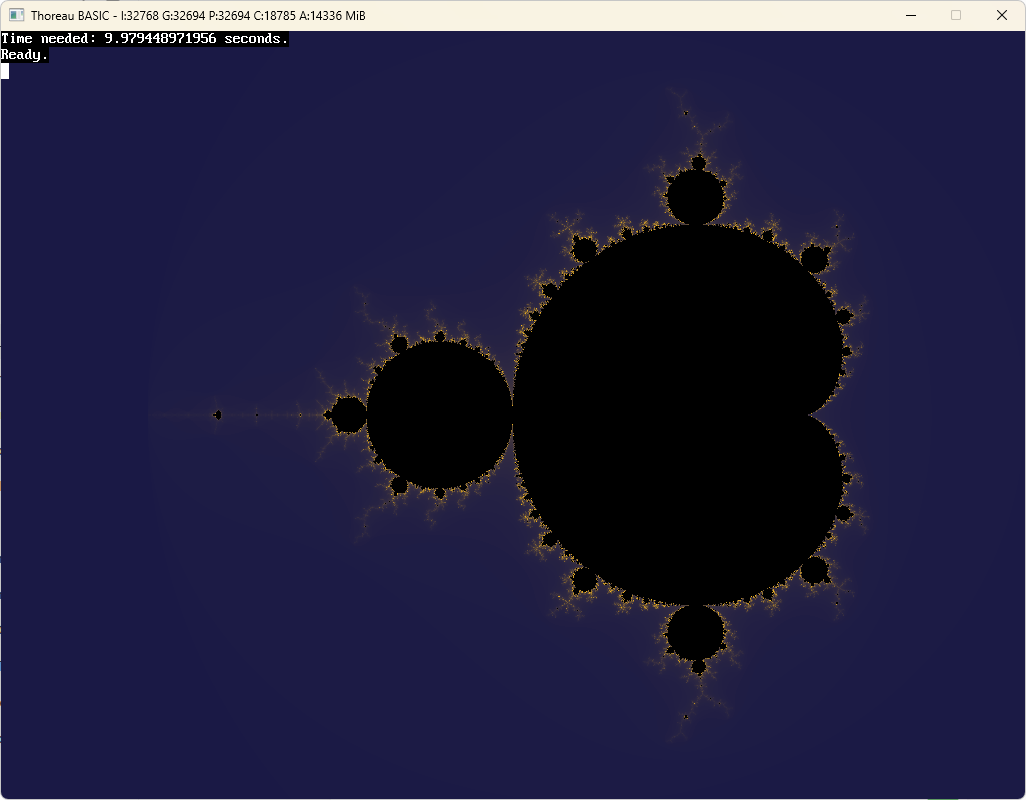
A developer has created a standalone BASIC interpreter that boots directly on modern UEFI machines without requiring a traditional operating system. This bare-metal environment revives classic programming by providing users with 27 GB of space to experiment and write code.
CommentsA new graphical user interface library named adi2 has been released for the Ada programming language. It brings modern web-like development features to the ecosystem by utilizing SDL3 for rendering and allowing developers to define and style interfaces with XML and CSS.
Comments2026-08-24
Developers are sharing strategies for configuring AI coding agents to improve generated code quality and prevent verbose, unhelpful comments. Community discussions emphasize enforcing strict linting rules and utilizing secondary language models in continuous integration pipelines to automatically reject fluffy AI-generated explanations. Ultimately, experts recommend forbidding AI from writing comments entirely to ensure the resulting code remains clean, readable, and easily debuggable by humans.
Comments2026-08-23

A Friendly Introduction to Racket
2026-08-23A newly published tutorial titled A Friendly Introduction to Racket offers developers an accessible entry point into the multi-paradigm Lisp dialect. The guide breaks down the core concepts of the language and highlights its unique features. This provides a practical foundation for programmers looking to explore functional programming and language-oriented design.
CommentsThinking in Python
2026-08-23Bruce Eckel, renowned for "Thinking in Java", has created a new free book titled "Thinking in Python" targeting the upcoming Python 3.15 release. The author leveraged AI tools to write and format the text, allowing him to implement advanced features and achieve a higher quality result than in his past publications. Readers are exploring how this AI-driven approach might allow the book to be automatically updated alongside future Python releases.
Comments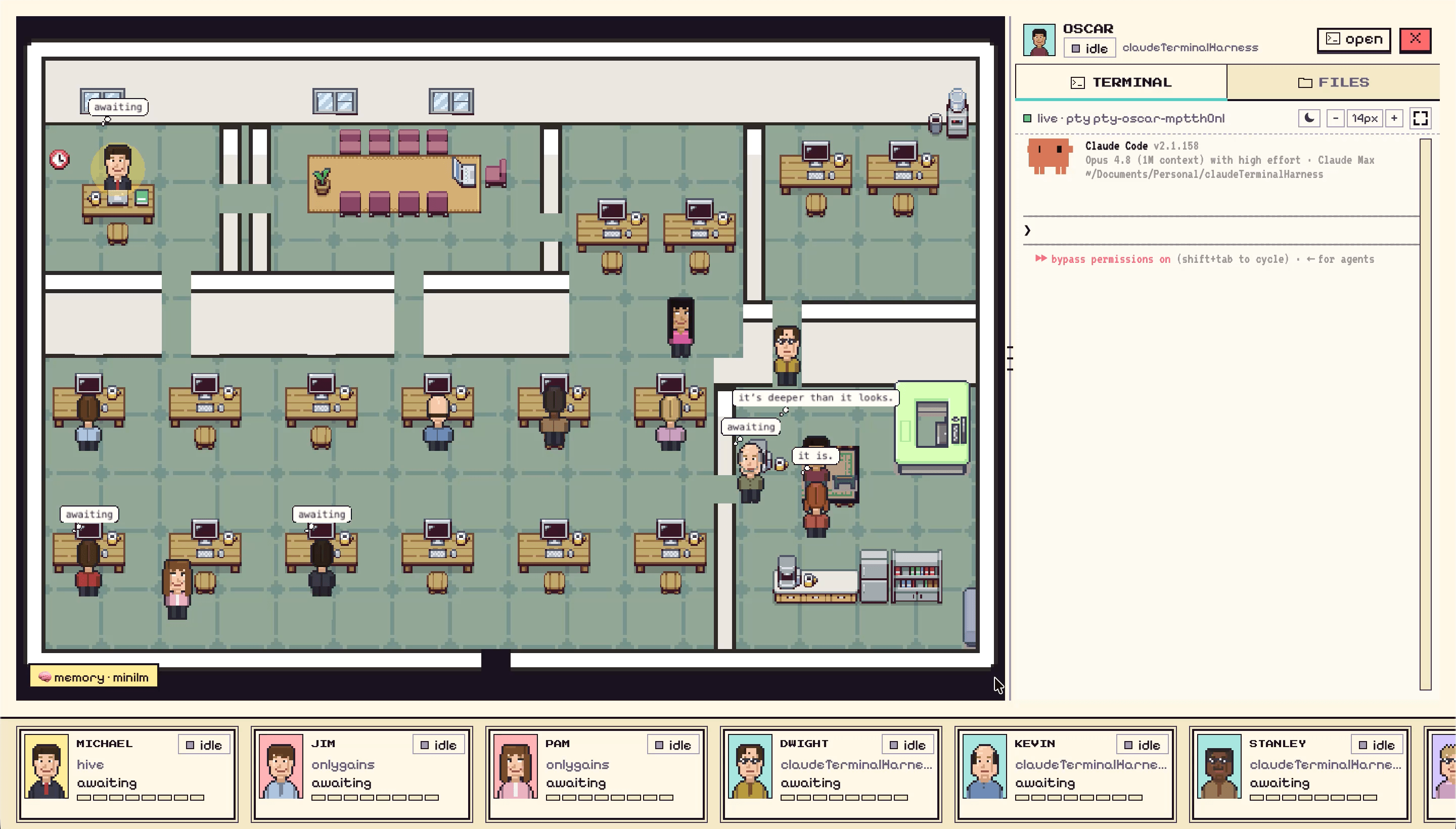
Munder Difflin is a free, open-source multi-agent harness that allows users to run multiple AI clones locally on their own machines. By wrapping popular CLI agents like Claude Code, Codex, and Copilot, it enables developers to leverage their existing subscriptions to power a virtual office of autonomous coding assistants.
Comments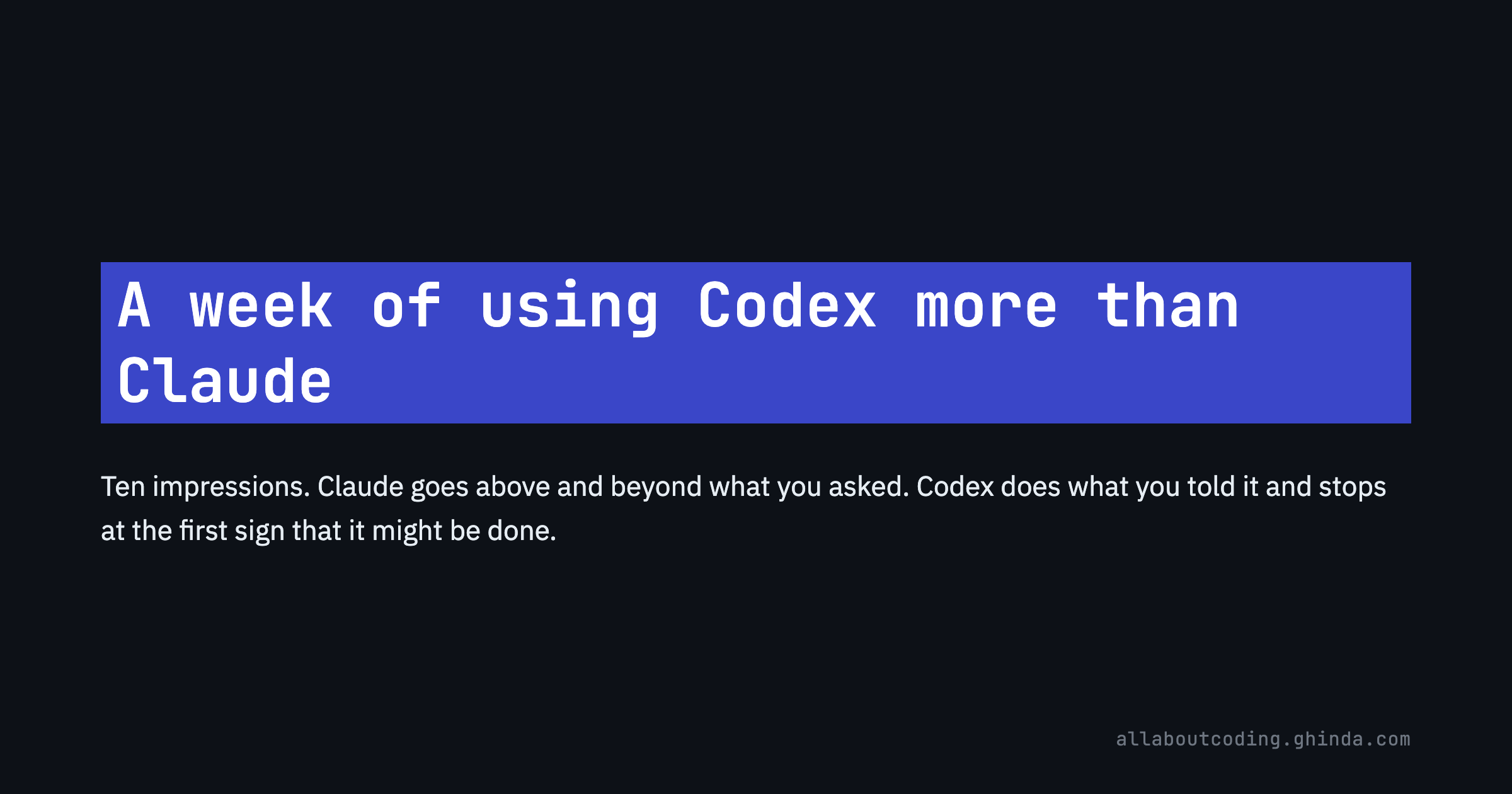
A week of using Codex more than Claude
2026-08-23After spending a week using Codex more than Claude, the author highlights the distinct behavioral differences between the two AI coding assistants. Unlike Claude, which proactively anticipates user needs, Codex strictly follows explicit instructions and stops as soon as a task is completed, providing the foundation for ten key impressions from the hands-on experience.
Comments
Autolith is a terminal programming agent that works directly within your repository to analyze corpora larger than standard model context windows. It runs inside a live SBCL image, which uniquely allows the agent to actively modify and recover its own runtime environment.
CommentsThe 1970s Z80 microprocessor remains highly relevant today, with tech enthusiasts building modern DIY computers and emulations to celebrate the classic chip. Despite its messy instruction set architecture resulting from backward compatibility requirements with the Intel 8080, programmers continue to enjoy hacking on the Z80 in assembly as a refreshing contrast to the high abstraction of the modern LLM age.
Comments