Programming News
Programming keeps evolving as languages mature, tooling improves, and teams rethink how software should be written. This section follows that change, gathering news and articles about programming languages, compilers, development practices, and the craft of writing reliable, maintainable code.
Typical stories include language releases and proposals, deep dives into compiler and runtime internals, performance investigations, debates about coding style and architecture, and essays from experienced engineers on lessons learned. Popular ecosystems such as Rust, Python, JavaScript, and TypeScript appear regularly.
Keeping up with these topics helps developers choose the right tools, avoid known pitfalls, and grow their skills. Working engineers, students, and technical leaders follow this coverage to stay current with the ideas shaping how software gets built.
2026-08-26

Python core developer Seth Larson warns that the built-in str.lower() method can introduce unexpected security vulnerabilities in networking and URL parsing due to its handling of Unicode edge cases. He advises open-source developers to use safer alternatives like casefold() or strict ASCII lowering to prevent malicious bypasses in internet-facing applications. This serves as a vital reminder to carefully evaluate language-specific quirks when building secure web infrastructure.
CommentsFirefox 157 will enable JPEG XL support by default across all platforms using jxl-rs, a new Rust-based decoder developed by Google Research that prioritizes memory safety and outperforms the legacy C++ library. While the Rust version handles decoding, the older C++ implementation will remain in use for image encoding until a dedicated Rust encoder is completed.
Comments
Visualizing Binary Files
2026-08-26A community discussion highlights various tools and techniques for visualizing binary files, including Ufex, Rizin, and Binvis, which utilize color-coding, entropy mapping, and 3D rendering to analyze underlying file structures. Developers also shared insights on open-source projects for generating treemap visualizations of executable formats while debating the practical benefits of spatial mapping techniques like Hilbert curves compared to traditional linear views.
Comments2026-08-25
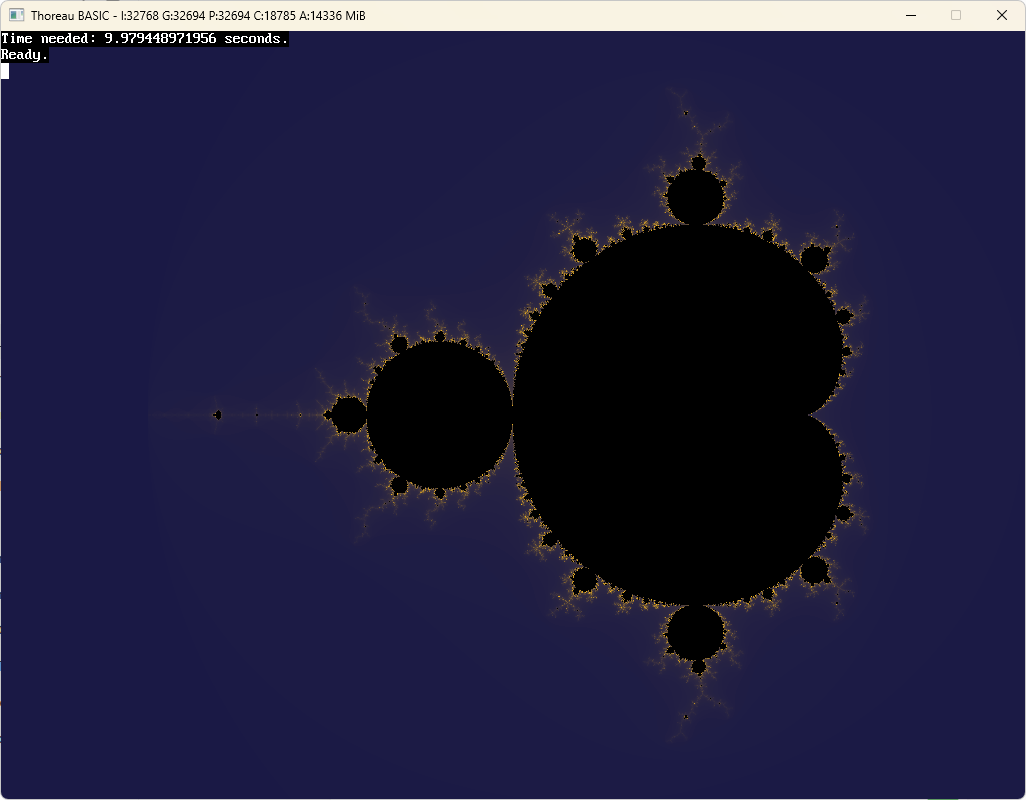
A developer has created a standalone BASIC interpreter that boots directly on modern UEFI machines without requiring a traditional operating system. This bare-metal environment revives classic programming by providing users with 27 GB of space to experiment and write code.
CommentsA new graphical user interface library named adi2 has been released for the Ada programming language. It brings modern web-like development features to the ecosystem by utilizing SDL3 for rendering and allowing developers to define and style interfaces with XML and CSS.
Comments2026-08-24
Developers are sharing strategies for configuring AI coding agents to improve generated code quality and prevent verbose, unhelpful comments. Community discussions emphasize enforcing strict linting rules and utilizing secondary language models in continuous integration pipelines to automatically reject fluffy AI-generated explanations. Ultimately, experts recommend forbidding AI from writing comments entirely to ensure the resulting code remains clean, readable, and easily debuggable by humans.
Comments2026-08-23

A Friendly Introduction to Racket
2026-08-23A newly published tutorial titled A Friendly Introduction to Racket offers developers an accessible entry point into the multi-paradigm Lisp dialect. The guide breaks down the core concepts of the language and highlights its unique features. This provides a practical foundation for programmers looking to explore functional programming and language-oriented design.
CommentsThinking in Python
2026-08-23Bruce Eckel, renowned for "Thinking in Java", has created a new free book titled "Thinking in Python" targeting the upcoming Python 3.15 release. The author leveraged AI tools to write and format the text, allowing him to implement advanced features and achieve a higher quality result than in his past publications. Readers are exploring how this AI-driven approach might allow the book to be automatically updated alongside future Python releases.
Comments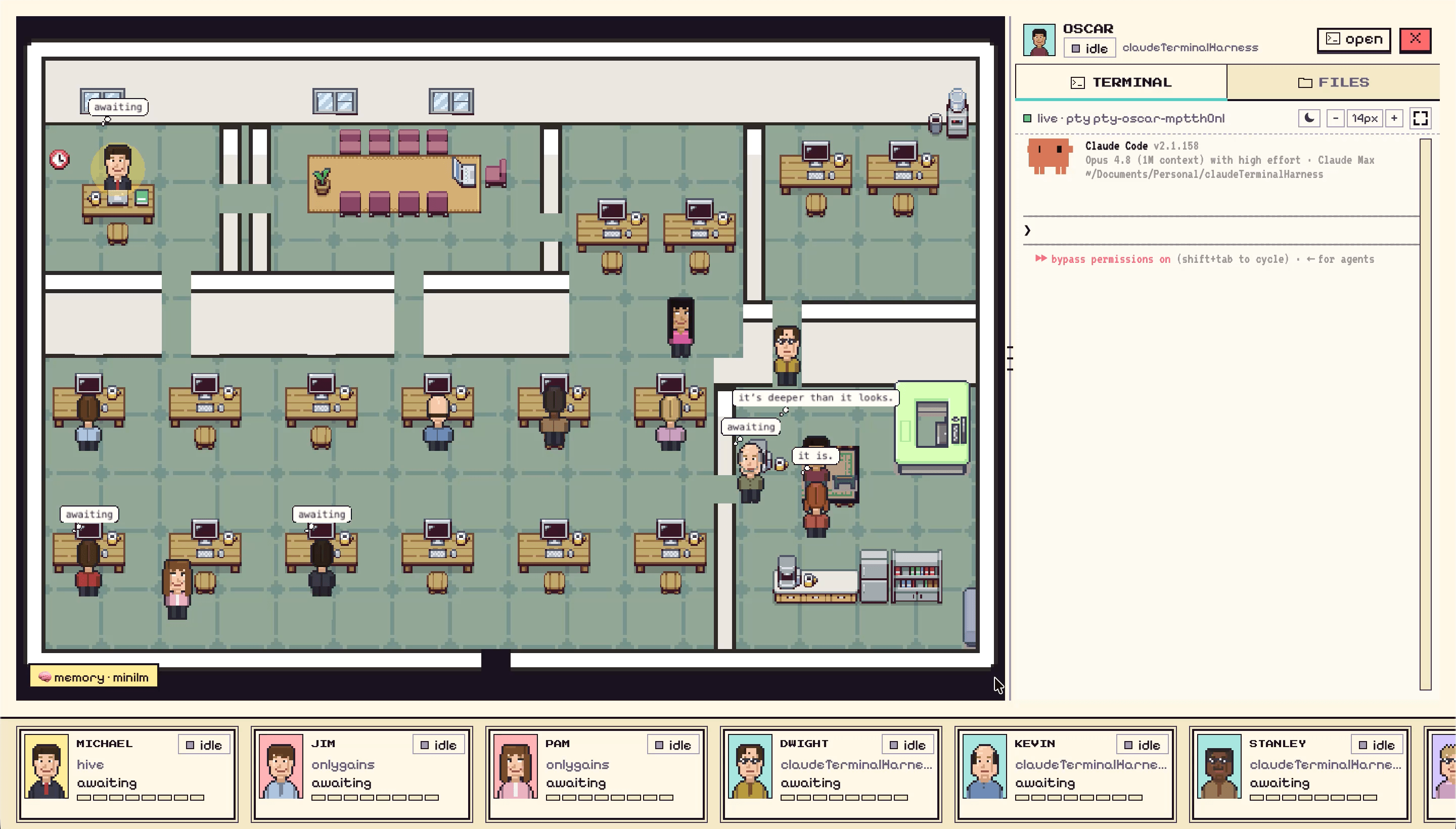
Munder Difflin is a free, open-source multi-agent harness that allows users to run multiple AI clones locally on their own machines. By wrapping popular CLI agents like Claude Code, Codex, and Copilot, it enables developers to leverage their existing subscriptions to power a virtual office of autonomous coding assistants.
Comments
A week of using Codex more than Claude
2026-08-23After spending a week using Codex more than Claude, the author highlights the distinct behavioral differences between the two AI coding assistants. Unlike Claude, which proactively anticipates user needs, Codex strictly follows explicit instructions and stops as soon as a task is completed, providing the foundation for ten key impressions from the hands-on experience.
Comments
Autolith is a terminal programming agent that works directly within your repository to analyze corpora larger than standard model context windows. It runs inside a live SBCL image, which uniquely allows the agent to actively modify and recover its own runtime environment.
CommentsThe 1970s Z80 microprocessor remains highly relevant today, with tech enthusiasts building modern DIY computers and emulations to celebrate the classic chip. Despite its messy instruction set architecture resulting from backward compatibility requirements with the Intel 8080, programmers continue to enjoy hacking on the Z80 in assembly as a refreshing contrast to the high abstraction of the modern LLM age.
CommentsA newly released tool named Rust Glancer offers a highly efficient Language Server Protocol for the Rust programming language. By consuming up to 100 times less RAM than traditional alternatives, this lightweight LSP solves the common issue of heavy memory consumption and provides developers with a much smoother coding experience.
Comments2026-08-22

Kobo can run apps now
2026-08-22Kobo e-readers can now run third-party applications thanks to Cobalt, a new open-source app platform. The system includes a signed App Store and a Rust SDK, allowing users to download new apps over Wi-Fi after a single initial USB setup.
CommentsA new tool called Rust Glancer provides a highly efficient Language Server Protocol implementation for the Rust programming language. It addresses common resource constraints by consuming up to 100 times less RAM than standard LSPs, offering developers a lightweight and memory-friendly alternative.
Comments
OzBrain is a new shared knowledge platform that acts as a unified brain for human teams and various AI and coding agents to read and write data. It provides a single, structured source of truth that seamlessly integrates with popular tools like Claude, ChatGPT, and Cursor to keep your entire workflow in sync.
CommentsPeople of ACM – Russ Cox
2026-08-22The latest People of ACM profile highlights Russ Cox's extensive contributions to the Go programming language, his leadership at the OEIS Foundation, and his insights from co-authoring Software Engineering at Google. Readers discussing the piece praised his recent floating-point performance optimizations and reflected on his famous definition of software engineering as programming scaled across time and teams.
CommentsA new open-source project called Rex was recently showcased on Hacker News as a parallel functional programming language tailored for scientific workflows. Developers can explore the source code and contribute to its ongoing development via its official GitHub repository.
CommentsAutolith is a new terminal-based programming agent for Linux that operates directly within your repository to maintain continuous project context. By executing its tasks inside a live SBCL image, it provides developers with a seamless and highly responsive coding assistant right in the command line.
CommentsA recent article argues that Odin's inline assembly is superior to implementations in languages like Rust and Go because it challenges the assumption that assembly is inherently untyped. By organizing assembly into callable templates with a unified syntax across all instruction set architectures, Odin allows inline code to integrate seamlessly with the rest of the codebase while maintaining strict type safety.
CommentsTumble Forth is an educational project that builds a bare-metal operating system and a C compiler from scratch, starting from assembly and utilizing the Forth programming language. The project aims to demystify complex computing by implementing these systems from the simplest possible foundational components. Readers in the discussion praise this audacious approach and share their own related experiences with bare-metal programming and Forth interpreters.
Comments2026-08-21
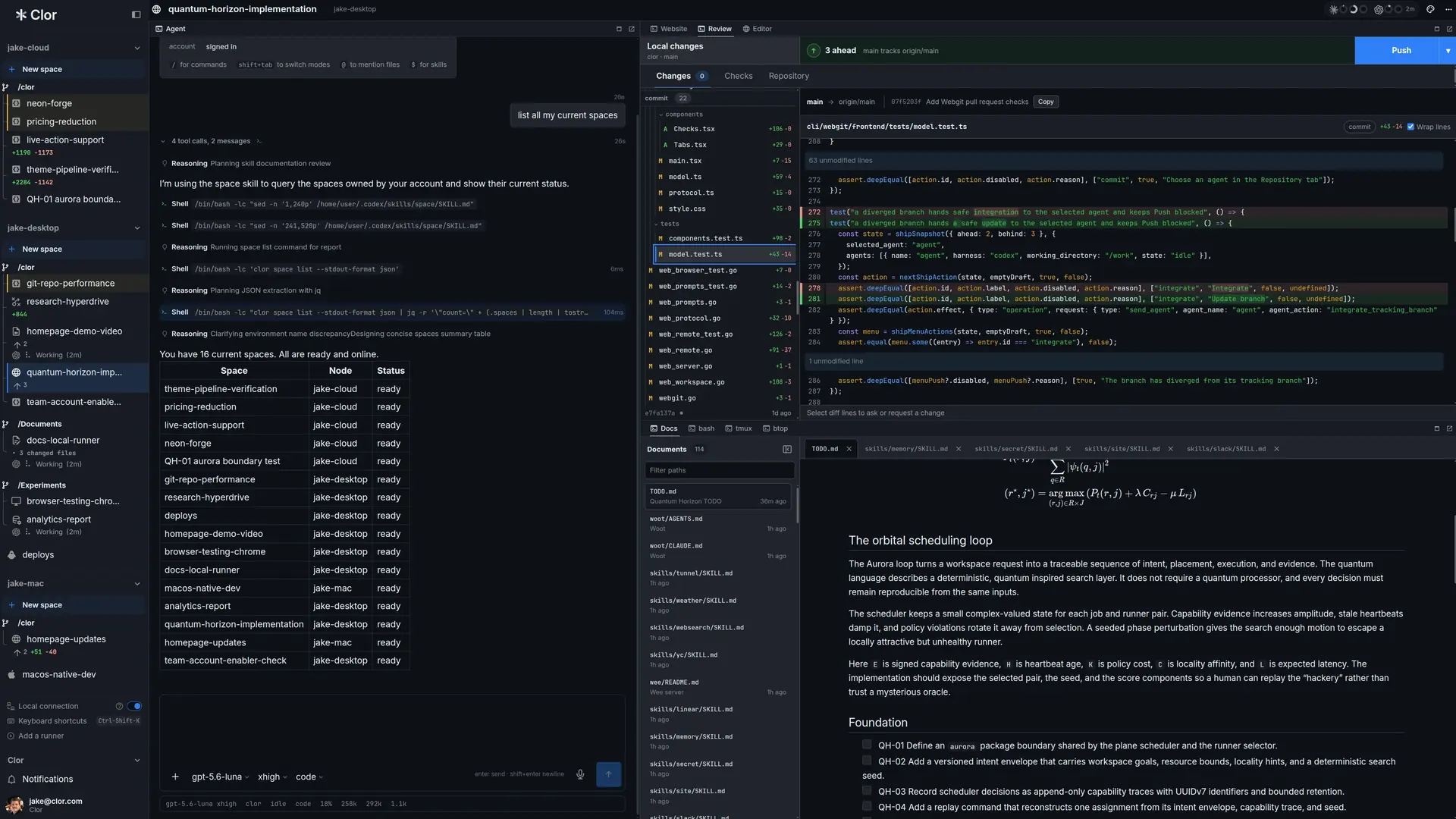
Small software teams are leveraging parallel AI coding agents to generate hundreds of daily commits, drastically outpacing historical productivity norms. This exponential surge in output means small groups of developers are now operating at the scale of much larger organizations. Consequently, they must navigate the same complex architectural and deployment challenges as tech giants like Uber.
Comments
HTML Can Do That
2026-08-21A new resource highlights how HTML is rapidly absorbing dynamic functionalities that previously required JavaScript by showcasing interactive features achievable with pure HTML. This shift underscores the growing power of native web standards in simplifying modern web development.
Comments
A compromised release of the popular Rust crate arrayref was discovered pulling in a typosquatted version of the proc-macro1 dependency. The malicious build script for this fake package downloads and executes a remote binary during the compilation process.
Comments
Linux 7.2
2026-08-21Igalia is an open-source consulting firm specializing in the development of web technologies, graphics pipelines, and compilers. The company leverages its extensive expertise in major projects like WebKit, Chromium, and Mesa 3D to deliver specialized engineering services. Igalia also designs and optimizes custom GNU/Linux-based solutions for clients across the globe.
Comments
A new experimental tool named Huzzah has been shared on Hacker News, introducing a novel approach to coding with artificial intelligence. The project aims to rethink the software development process by offering developers a completely new way to interact with AI.
Comments
Discussions surrounding the detection of scraper bots via scroll behavior highlight a growing divide between e-commerce sites embracing automated agents and content platforms blocking scrapers to protect bandwidth. Commenters share experiences of programming complex bots that mimic human scrolling and mouse movements to bypass these detection systems. Additionally, users note that aggressive bot filtering can sometimes alienate legitimate visitors or simply shift advertising costs without resolving underlying economic issues.
Comments
Mojo is now open source
2026-08-21The Mojo programming language has officially become open source under the Apache 2.0 license with LLVM extensions. This change grants developers the flexibility to freely build, distribute, and integrate Mojo into a wide range of applications.
Comments2026-08-20

Turns are Better than Radians
2026-08-20A new programming perspective suggests that developers should replace radians with turns for angular measurements. Advocates argue that making this switch results in simpler codebases, faster execution speeds, and more precise calculations.
Comments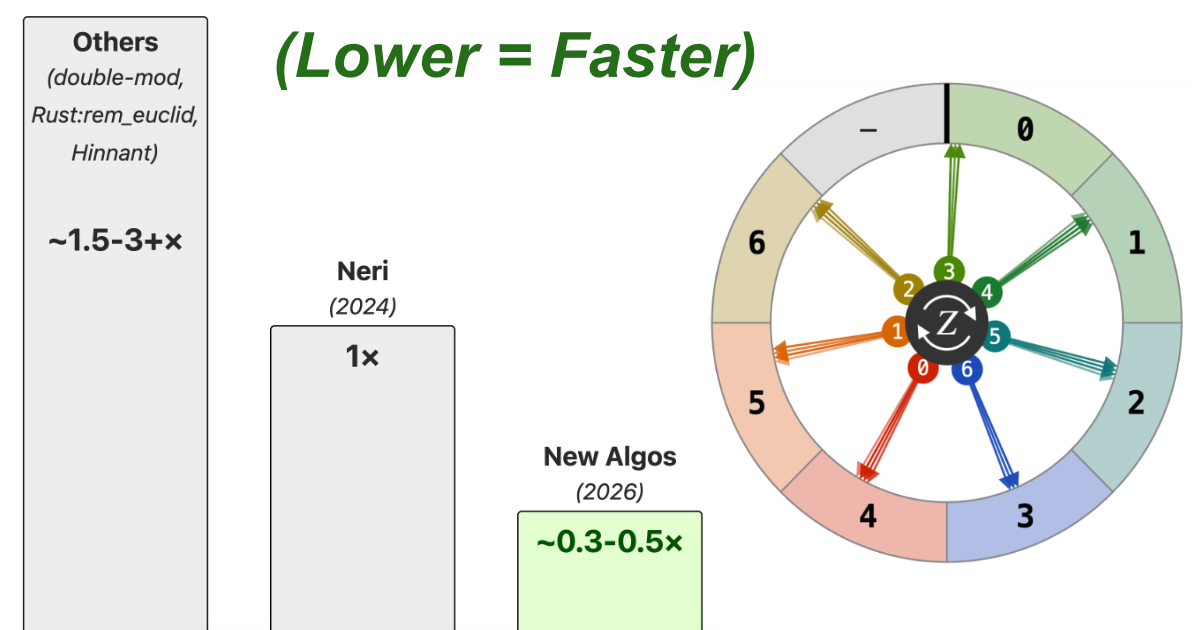
A new programming method offers a faster way to calculate the day of the week by utilizing a range of optimized modulus techniques. These custom mathematical approaches consistently outperform the default code generated by standard compilers. The discovery provides developers with a highly efficient alternative for handling date computations in performance-critical applications.
Comments