Programming News
Programming keeps evolving as languages mature, tooling improves, and teams rethink how software should be written. This section follows that change, gathering news and articles about programming languages, compilers, development practices, and the craft of writing reliable, maintainable code.
Typical stories include language releases and proposals, deep dives into compiler and runtime internals, performance investigations, debates about coding style and architecture, and essays from experienced engineers on lessons learned. Popular ecosystems such as Rust, Python, JavaScript, and TypeScript appear regularly.
Keeping up with these topics helps developers choose the right tools, avoid known pitfalls, and grow their skills. Working engineers, students, and technical leaders follow this coverage to stay current with the ideas shaping how software gets built.
2026-08-13
This blog post explores the strategic advantages of using Common Lisp as a target language for code generation. It highlights how the language's functional programming features and robust ecosystem benefit developers working within the broader Lisp and Scheme communities.
Comments

Traditional single-page applications rely on complex JavaScript frameworks and JSON APIs, but a new approach simplifies development by using HTML over WebSockets. By rendering views on the server and pushing updates directly to the browser, developers can build highly interactive, real-time applications with minimal client-side JavaScript and significantly reduced frontend complexity.
Comments
A Tale of Dynamic Programming (2022)
2026-08-13This article explores the mechanics and widespread applications of dynamic programming, ranging from text parsing to robotics control. It provides a detailed breakdown of how the algorithm works, the specific computational problems it solves, and its core techniques.
CommentsArtificial intelligence is potentially hollowing out the middle class of software engineering by rapidly accelerating the failure of projects built on weak engineering cultures. Rather than masking poor development practices, AI tools quickly amplify these flaws, forcing the industry to increasingly prioritize strong foundational skills over basic coding abilities.
Comments2026-08-12

Mojo 1.0
2026-08-12The Mojo programming language has officially reached version 1.0, evolving into a stable, production-ready general-purpose language. This milestone provides developers with a solid foundation for building long-term applications, backed by a growing community creating new libraries and tools.
Comments
Retire the Abstractions
2026-08-12Although a recent article suggests developers should retire software abstractions in the age of AI, readers strongly disagree, arguing that well-designed abstractions are more crucial than ever to provide precise constraints for AI coding agents. Without these human-defined boundaries, AI will inevitably generate its own poor structural choices, resulting in messy and unmaintainable code.
Comments
As AI shifts the focus of software engineering from writing to reviewing code, the Go programming language has emerged as an ideal choice for developers. Its strict compiler and unified toolchain provide the necessary safeguards to ensure that AI-generated code remains reliable and consistent.
CommentsJolt is a new Clojure implementation built on Scheme that runs natively via Chez Scheme and targets JavaScript through Gambit. By eliminating the need for the Java Virtual Machine, it utilizes a self-hosted compiler alongside a fully compatible Clojure standard library.
Comments2026-08-11
Chicken Scheme 6.0
2026-08-11Chicken Scheme 6.0 has been released, introducing full Unicode support and compatibility with Crunch, a compiler for a statically typed subset of the language. The system translates Scheme source code into C to generate highly portable standalone binaries. Developers continue to praise the update for its robust compiler and lively ecosystem.
CommentsRust SIMD on the GPU
2026-08-11Rust's portable SIMD is now available for GPU programming, enabling more efficient parallel processing on graphics hardware. The latest update details the technical implementation of this feature and highlights the new performance capabilities it unlocks for developers.
CommentsSonic Pi v5
2026-08-11Sonic Pi v5 has officially launched, introducing a major update designed to make the music programming tool more accessible, powerful, and user-friendly. This comprehensive release brings extensive improvements to the platform to provide a more enjoyable and intuitive experience for creators.
CommentsFollowing increased interest in choreographic programming on Hacker News, the developers of Choral have shared the compiler they have been building for Java. The team has been working on the project for several years and is inviting the community to ask questions about their work.
CommentsDevelopers debating the best programming language for AI agents are increasingly favoring strongly typed, compiled languages like Go and Rust over Python's vast but often unreliable ecosystem. Many programmers report that LLMs generate more stable, crash-free code in languages with strict typing and fast tooling, making them superior for building reliable AI agent harnesses.
Comments2026-08-10

OpenChamber is a new agentic development environment that enables AI coding across desktop, browser, mobile, and VS Code platforms. The tool allows developers to actively monitor AI agents, review code diffs, and manage branching sessions while keeping the entire project board visible.
Comments2026-08-09
A recent article by Derek Lowe explores how preventing protein folding can effectively stop misfolding, offering a compelling new explanation for the function of non-coding junk DNA. The piece highlights that while biological systems are highly complex, they are becoming increasingly comprehensible as researchers uncover the right ways to study them.
CommentsTinySol, a tiny solitaire game for DOS
2026-08-09TinySol is a highly optimized, minimalist solitaire game designed to run on vintage DOS systems as old as the 8086 processor. The retro computing community is praising the project for its impressive hardware compatibility and nostalgic appeal on classic gas-plasma displays. Readers are also sharing links to similar text-based and highly compressed solitaire games while discussing emulator compatibility and the desire for a browser-based version.
Comments
As the software development profession faces significant upheaval from the AI revolution, a new article pushes back against the dismissive claim that writing code was never the hard part. The piece defends the complex problem-solving and architectural skills that truly define a programmer's work beyond just typing out syntax.
Comments2026-08-08
Assembly Hall of Shame
2026-08-08A new GitHub repository called the Assembly Hall of Shame is crowdsourcing examples of notoriously inefficient assembly language code. The project highlights programming practices that severely degrade CPU performance and invites developers to submit their own poorly optimized instructions.
Comments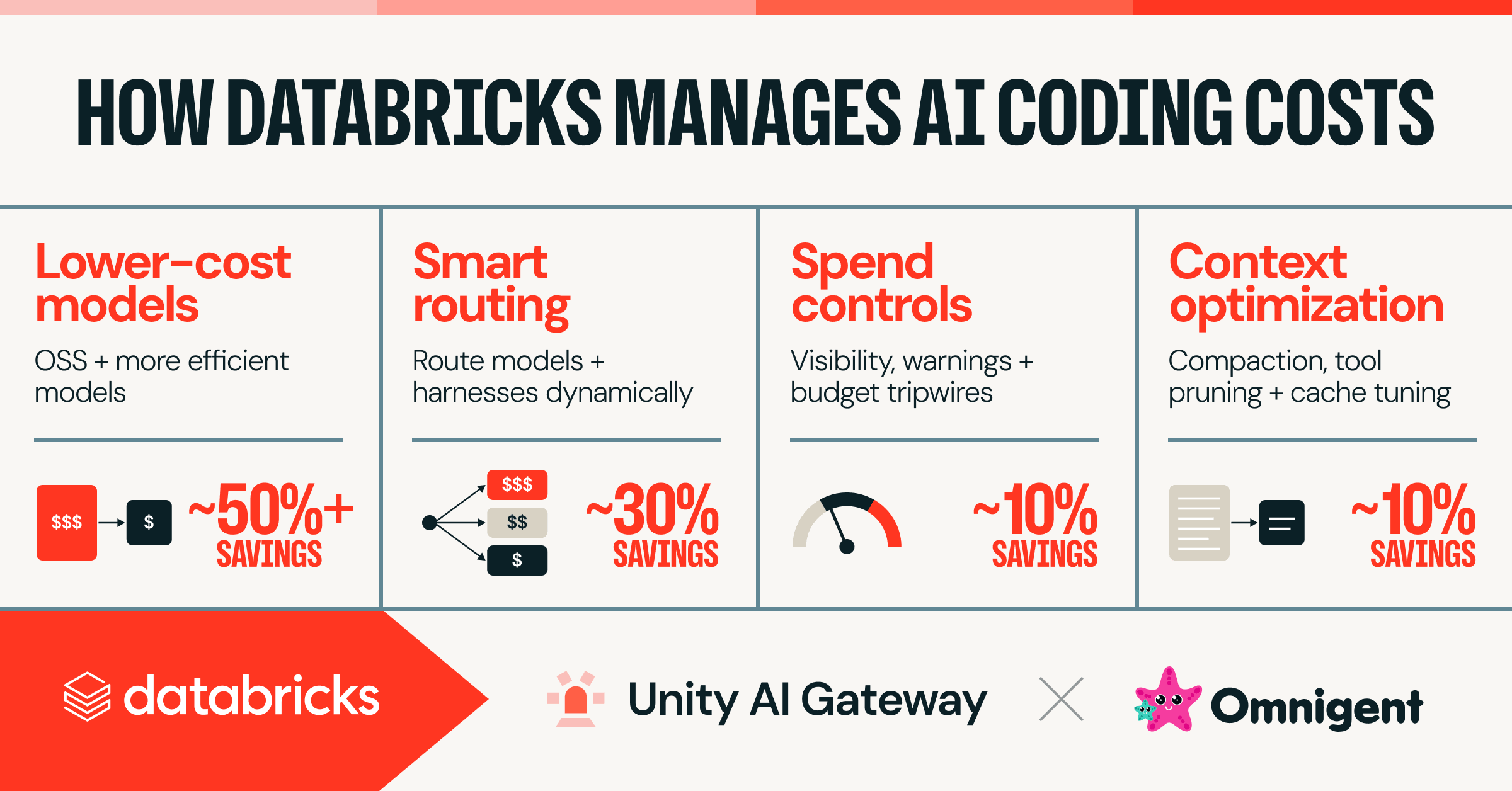
Managing AI Coding Costs at Scale
2026-08-08While AI coding assistants significantly boost developer productivity, scaling these tools across large engineering teams introduces substantial financial challenges. To address this, companies are implementing strict usage monitoring, tiered access models, and cost-optimization strategies to manage rising expenses without sacrificing efficiency.
Comments
Carl's Required Reading
2026-08-08Carl Kolon has compiled and shared a curated list of his favorite programming articles for the tech community. This handpicked collection offers developers a focused selection of essential reading material to expand their technical knowledge and industry insights.
Comments
A new open-source microblogging platform called textlog has launched to provide a quiet, distraction-free space for sharing thoughts. The minimalist project is strictly text-only and operates entirely without JavaScript.
CommentsShow HN: Wyzer Programming Language
2026-08-08A new open-source programming language named Wyzer was recently introduced to the developer community on Hacker News. The creators are actively inviting developers to contribute to the project's ongoing development via its GitHub repository.
Comments2026-08-07
Almost no skill required to cook a steak
2026-08-07While AI can significantly speed up the mechanical aspects of software development, it cannot replace the human judgment needed to build high-quality applications. Much like automated tools that can cook a steak without culinary expertise, AI handles the heavy lifting of coding but still relies on experienced developers to ensure the final product is consistently good.
CommentsThis article provides a practical guide on building progressively enhanced web forms using the htmx library. It demonstrates how developers can create robust, server-driven forms that function seamlessly even when JavaScript is disabled. The tutorial highlights htmx as an effective tool for improving web accessibility and reducing reliance on heavy frontend frameworks.
Comments2026-08-06

Muse Code and Muse Spark 1.2
2026-08-06Muse has launched Muse Code, a terminal coding agent powered by the newly released Muse Spark 1.2 model. The tool features persistent background agents, repository-scale execution, and built-in verification to streamline developer workflows.
CommentsHobbyist programmers are rejecting LLM usage because they value the intrinsic joy of coding, similar to how athletes reject automated performance aids. This pushback is further fueled by recent controversies where developers allegedly used LLMs to obfuscate and rewrite code derived from open-source projects to bypass licensing restrictions. Consequently, the community is actively debating the legal and ethical implications of using AI to generate derivative works under the guise of clean room design.
Comments
Prime Agent: A self-improving RLM agent
2026-08-06Prime Agent is an open-source, self-improving coding harness built on Recursive Language Model and Continual Harness abstractions. Powered by Opus 5, the system achieved a 95.5% score on the ARC-AGI-3 benchmark, successfully surpassing the previously reported human expert baseline.
Comments
A new blog post explores how developers can achieve a fourfold performance increase in Rust by applying branchless programming techniques. By removing an if statement from a filter function, the author demonstrates how to optimize execution speed and avoid costly CPU branch mispredictions.
CommentsPosition: LLMs Can't Jump
2026-08-06A recent discussion highlights the limitations of large language models, arguing that AI is inherently constrained because human language is a fundamentally lossy encoding of the human experience. While LLMs excel at low-ambiguity tasks like coding, they lack physical qualia and true contextual understanding. Consequently, the actual significance of their outputs ultimately relies on the human receiver to bridge the semantic gaps.
Comments