Programming News
Programming keeps evolving as languages mature, tooling improves, and teams rethink how software should be written. This section follows that change, gathering news and articles about programming languages, compilers, development practices, and the craft of writing reliable, maintainable code.
Typical stories include language releases and proposals, deep dives into compiler and runtime internals, performance investigations, debates about coding style and architecture, and essays from experienced engineers on lessons learned. Popular ecosystems such as Rust, Python, JavaScript, and TypeScript appear regularly.
Keeping up with these topics helps developers choose the right tools, avoid known pitfalls, and grow their skills. Working engineers, students, and technical leaders follow this coverage to stay current with the ideas shaping how software gets built.
2026-08-08
Assembly Hall of Shame
2026-08-08A new GitHub repository called the Assembly Hall of Shame is crowdsourcing examples of notoriously inefficient assembly language code. The project highlights programming practices that severely degrade CPU performance and invites developers to submit their own poorly optimized instructions.
Comments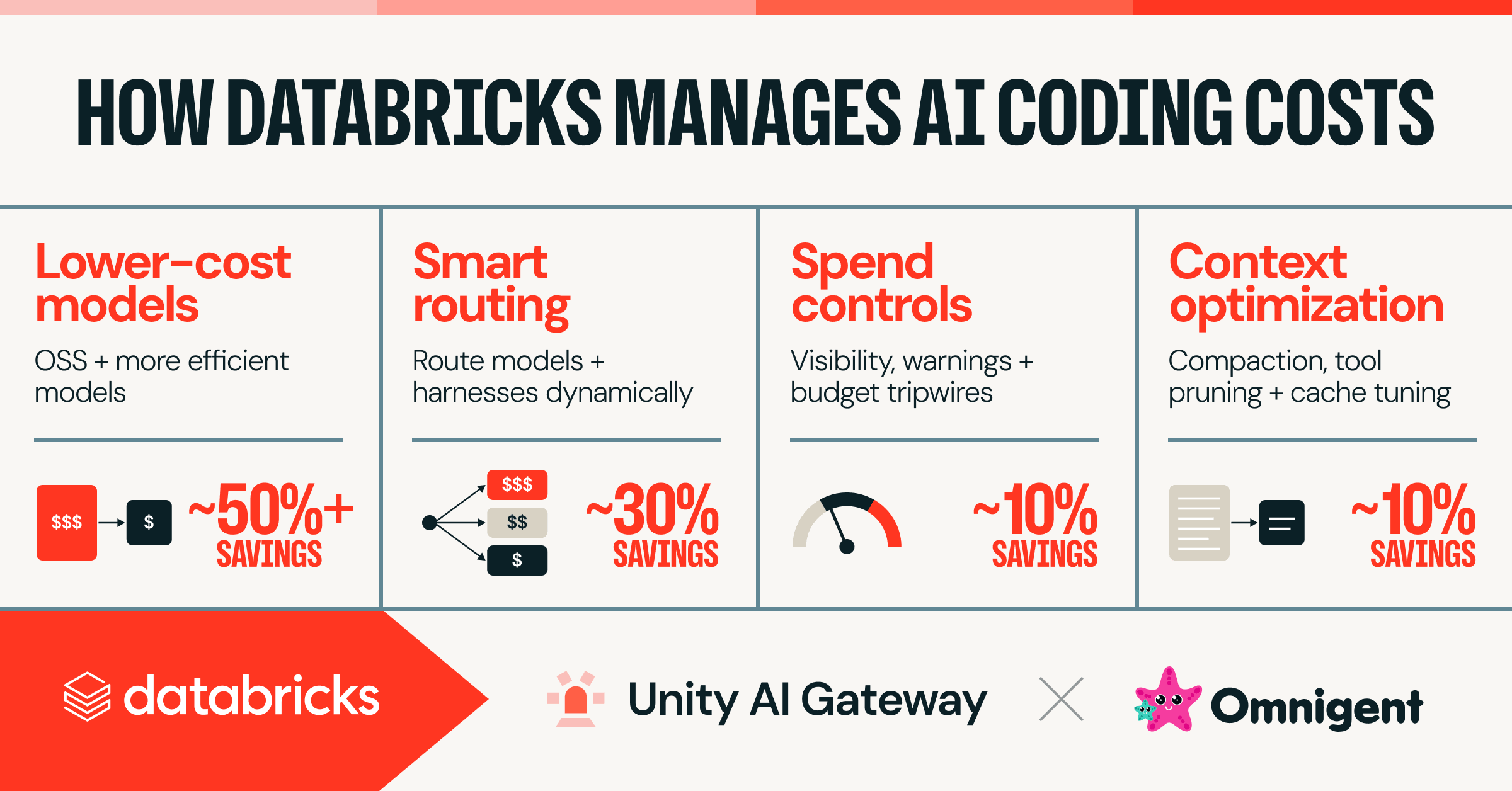
Managing AI Coding Costs at Scale
2026-08-08While AI coding assistants significantly boost developer productivity, scaling these tools across large engineering teams introduces substantial financial challenges. To address this, companies are implementing strict usage monitoring, tiered access models, and cost-optimization strategies to manage rising expenses without sacrificing efficiency.
Comments

Carl's Required Reading
2026-08-08Carl Kolon has compiled and shared a curated list of his favorite programming articles for the tech community. This handpicked collection offers developers a focused selection of essential reading material to expand their technical knowledge and industry insights.
Comments
A new open-source microblogging platform called textlog has launched to provide a quiet, distraction-free space for sharing thoughts. The minimalist project is strictly text-only and operates entirely without JavaScript.
CommentsShow HN: Wyzer Programming Language
2026-08-08A new open-source programming language named Wyzer was recently introduced to the developer community on Hacker News. The creators are actively inviting developers to contribute to the project's ongoing development via its GitHub repository.
Comments2026-08-07
Almost no skill required to cook a steak
2026-08-07While AI can significantly speed up the mechanical aspects of software development, it cannot replace the human judgment needed to build high-quality applications. Much like automated tools that can cook a steak without culinary expertise, AI handles the heavy lifting of coding but still relies on experienced developers to ensure the final product is consistently good.
CommentsThis article provides a practical guide on building progressively enhanced web forms using the htmx library. It demonstrates how developers can create robust, server-driven forms that function seamlessly even when JavaScript is disabled. The tutorial highlights htmx as an effective tool for improving web accessibility and reducing reliance on heavy frontend frameworks.
Comments2026-08-06

Muse Code and Muse Spark 1.2
2026-08-06Muse has launched Muse Code, a terminal coding agent powered by the newly released Muse Spark 1.2 model. The tool features persistent background agents, repository-scale execution, and built-in verification to streamline developer workflows.
CommentsHobbyist programmers are rejecting LLM usage because they value the intrinsic joy of coding, similar to how athletes reject automated performance aids. This pushback is further fueled by recent controversies where developers allegedly used LLMs to obfuscate and rewrite code derived from open-source projects to bypass licensing restrictions. Consequently, the community is actively debating the legal and ethical implications of using AI to generate derivative works under the guise of clean room design.
Comments
Prime Agent: A self-improving RLM agent
2026-08-06Prime Agent is an open-source, self-improving coding harness built on Recursive Language Model and Continual Harness abstractions. Powered by Opus 5, the system achieved a 95.5% score on the ARC-AGI-3 benchmark, successfully surpassing the previously reported human expert baseline.
Comments
A new blog post explores how developers can achieve a fourfold performance increase in Rust by applying branchless programming techniques. By removing an if statement from a filter function, the author demonstrates how to optimize execution speed and avoid costly CPU branch mispredictions.
CommentsPosition: LLMs Can't Jump
2026-08-06A recent discussion highlights the limitations of large language models, arguing that AI is inherently constrained because human language is a fundamentally lossy encoding of the human experience. While LLMs excel at low-ambiguity tasks like coding, they lack physical qualia and true contextual understanding. Consequently, the actual significance of their outputs ultimately relies on the human receiver to bridge the semantic gaps.
Comments2026-08-05
Pi's Minimalism Is Its Advantage
2026-08-05Pi's minimalist harness design is significantly improving the cost and performance of modern coding agents. By focusing strictly on essential functionality, the streamlined approach eliminates unnecessary overhead. Real-world applications from Databricks and Shopify's pi-autoresearch extension demonstrate the practical advantages of this highly efficient system.
CommentsShow HN: SIMD Viterbi Decoder in Rust
2026-08-05A developer has shared a new open-source Rust crate that implements a SIMD-optimized Viterbi decoder for forward error correction. The project offers high-performance error correction capabilities and is now available for community contribution on GitHub.
Comments2026-08-04

LLMs reward expertise
2026-08-04Recent reader discussions highlight that large language models heavily favor users with existing technical expertise, as novices often lack the specific vocabulary needed to prompt effective code generation. While programming experts can build simple applications in a single prompt, non-technical users frequently get trapped in endless brainstorming loops or struggle with basic developer interfaces. This reveals a significant gap between the promised democratization of software creation and the reality of using AI tools without foundational domain knowledge.
Comments
A developer reflects on their unsuccessful 2015 Microsoft internship interview, which they pursued during their computer science degree after gaining confidence from open-source contributions. The author recalls targeting the tech giant specifically because of its impressive work on TypeScript and the open-source rewrite of the C# compiler.
CommentsThe August 2026 Hacker News hiring thread features numerous software engineers and infrastructure specialists showcasing their technical expertise to potential employers. Candidates highlight extensive backgrounds in AI infrastructure, distributed computing, and full-stack development using languages like Rust, Go, and TypeScript. While the majority of applicants are seeking remote opportunities, several remain open to relocation for the right roles.
CommentsDevelopers are debating the practice of manually retyping LLM-generated code to prevent cognitive debt and ensure a deeper understanding of the software being built. While some argue this meticulous workflow negates AI efficiency gains and reduces engineers to mindless typists, others find value in using AI as a collaborative design tool rather than a direct code generator. The discussion reflects broader industry anxieties about the future of software engineering, with many anticipating a shift away from manual coding toward high-level visual architecture.
Comments
Y Combinator S26 startup Hoplite has launched to offer developers an effortless way to deploy cloud coding agents. The platform focuses on streamlining the setup process while delivering a highly intuitive and enjoyable user experience.
CommentsBonsai: Janestreet's UI Library
2026-08-04Jane Street has introduced Bonsai, a new UI library designed for building dynamic web applications using the OCaml programming language and the Js_of_ocaml compiler. This release provides a robust framework that allows developers to seamlessly translate their front-end code into JavaScript for efficient browser execution.
Comments2026-08-03

Qwen3.8-Max establishes a new benchmark for coding and collaborative work through the comprehensive capabilities of Qwen Studio. The platform delivers a diverse suite of features, including chatbot interactions, multimodal understanding, and image generation. Additionally, it enhances user productivity with advanced tools for document processing, web search integration, and artifact creation.
CommentsA new Show HN project named creakwork12 lets users make their Framework 12 laptop hinge sound like a rusty, creaky door. Fittingly, the novelty software created by developer ArcaEge is written entirely in the Rust programming language.
CommentsTwenty Years of RISC OS Open
2026-08-03The tech community is marking the twentieth anniversary of RISC OS Open by reflecting on the enduring legacy of the Acorn operating system and the dedicated developers who kept it alive. Long-time users and programmers shared nostalgic memories of the platform's unique ARM assembly environment and its historical significance as the original home for notable software like the Sibelius music notation program.
CommentsAn article introducing the proof-oriented programming language F* has sparked a community discussion focused more on general language design than the specific tool. Readers debated the importance of showcasing syntax on project homepages and argued over the practical benefits and drawbacks of using indentation-based code formatting.
CommentsA new open-source tool named pytest-leak-finder helps developers pinpoint the root causes of unstable Python tests by detecting state leaks. Created by mgaitan, the utility identifies the specific test that leaks before the actual failure occurs. This approach significantly simplifies the debugging process for flaky test suites across Python projects.
Comments2026-08-02
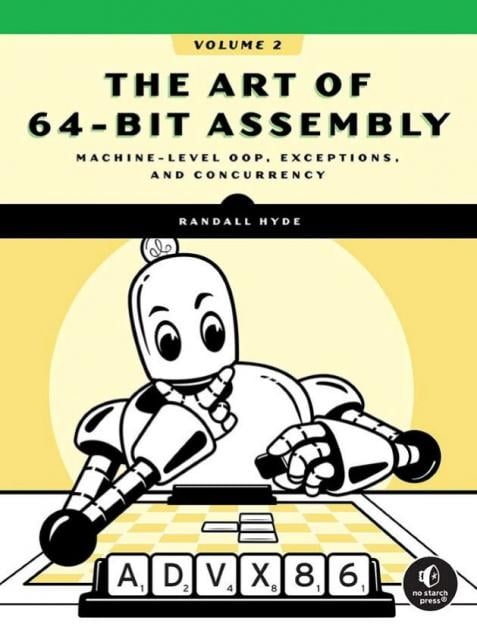
The Art of 64-bit Assembly
2026-08-02The article explores the rigorous discipline of 64-bit assembly programming, emphasizing the need for a deep, foundational understanding of hardware. It highlights that working at this low level leaves developers with no high-level abstractions, shortcuts, or runtime environments to hide behind when debugging.
Comments
While developing a quantum compiler named Catalyst, a software team accidentally created an LLVM compiler for the Jax machine learning framework. This unexpected tool emerged as a byproduct of extensive problem-solving and provides a novel way to optimize Jax programs.
Comments2026-08-01

Let's make the worst Htmx
2026-08-01A developer is demystifying the popular web library htmx by building a deliberately flawed clone from scratch. This humorous, hands-on project allows programmers to deeply understand the framework's core mechanics through unconventional reverse-engineering.
Comments
Python lacks a built-in method to display floating-point numbers in binary format. However, developers can work around this limitation by converting the language's native hexadecimal representation of floats into binary. This article details the steps to easily achieve this conversion for debugging and analysis.
Comments2026-07-31
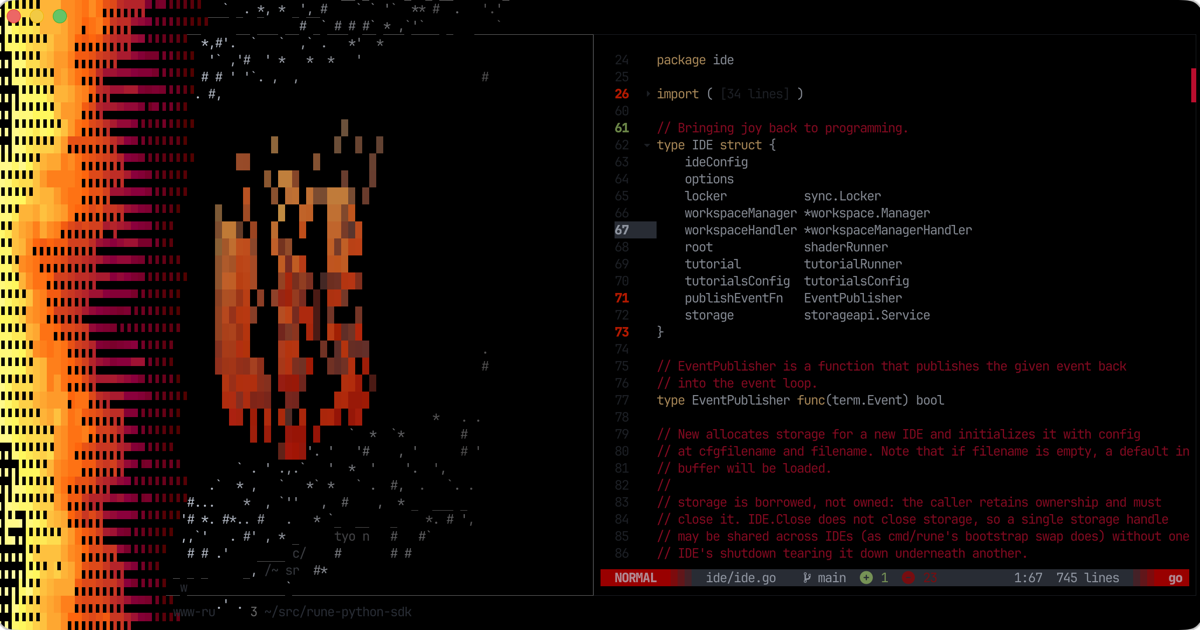
The latest Rune update makes the software free for personal use and introduces a perpetual commercial license alongside significant SSH workspace improvements. This release also adds first-class Python support, an integrated Emacs editor, and a new workspace symbol index.
Comments