Programming News
Programming keeps evolving as languages mature, tooling improves, and teams rethink how software should be written. This section follows that change, gathering news and articles about programming languages, compilers, development practices, and the craft of writing reliable, maintainable code.
Typical stories include language releases and proposals, deep dives into compiler and runtime internals, performance investigations, debates about coding style and architecture, and essays from experienced engineers on lessons learned. Popular ecosystems such as Rust, Python, JavaScript, and TypeScript appear regularly.
Keeping up with these topics helps developers choose the right tools, avoid known pitfalls, and grow their skills. Working engineers, students, and technical leaders follow this coverage to stay current with the ideas shaping how software gets built.
2026-07-09
A new project called pgrust has successfully rewritten the PostgreSQL database engine using the Rust programming language. The Rust-based implementation recently achieved a major milestone by passing 100% of the standard Postgres regression tests. This accomplishment demonstrates the viability of leveraging Rust for complex, enterprise-grade database systems.
CommentsHy3
2026-07-09Simon Willison's recent blog post evaluates AI image generation using his pelican test, prompting readers to question the benchmark's validity as models may be over-trained on his specific SVG examples. The community discussion also reflects on the broader impact of AI on software development, with some developers expressing a preference for hand-coding despite the industry's rapid shifts. Additionally, readers debated the current capabilities of local models, noting that Gemma4 and Deepseek 4 currently outperform GPT-OSS for coding tasks.
Comments
A recent interview with Mitchell Hashimoto explores his pragmatic engineering decisions behind the Ghostty terminal emulator and his use of the Zig programming language. The ensuing discussion highlights his stance on open-source forking, where he argues that maintaining a custom fork to remove unwanted features is comparable in effort to maintaining a feature flag. This perspective sparked broader debates among readers regarding the synchronization burdens of forks, the open source project as a product mentality, and the potential for AI to automate downstream customizations.
Comments
A road to Lisp: Why Lisp
2026-07-09This article explores the enduring appeal and unique advantages of the Lisp programming language for modern software development. It highlights Lisp's powerful macro system, code-as-data philosophy, and significant historical influence on contemporary functional programming paradigms. Ultimately, the piece serves as a comprehensive guide for developers looking to understand why Lisp remains a highly respected and influential language today.
Comments
Developers can now streamline their workflow by using a new one-command setup for the Pi platform that provides a fully curated coding agent experience. This opinionated package comes pre-loaded with over 60 skills, 67 themes, sub-agents, and a Claude Code CLI provider to deliver a comprehensive, ready-to-use solution right out of the box.
Comments
Cargo-nextest is a next-generation test runner for Rust designed to execute tests up to three times faster than the standard cargo test command. It improves development workflows by introducing per-test isolation and offering first-class support for continuous integration environments.
CommentsMy thoughts on the Bun Rust rewrite
2026-07-09A blog post by Zig founder Andrew Kelley regarding Bun's decision to rewrite its codebase in Rust has sparked a fierce debate over professional conduct in open-source leadership. While some readers defend Kelley's post as authentic personal expression, critics argue that relying on gossip and hostile language reflects poorly on his leadership and could ultimately damage the Zig community.
Comments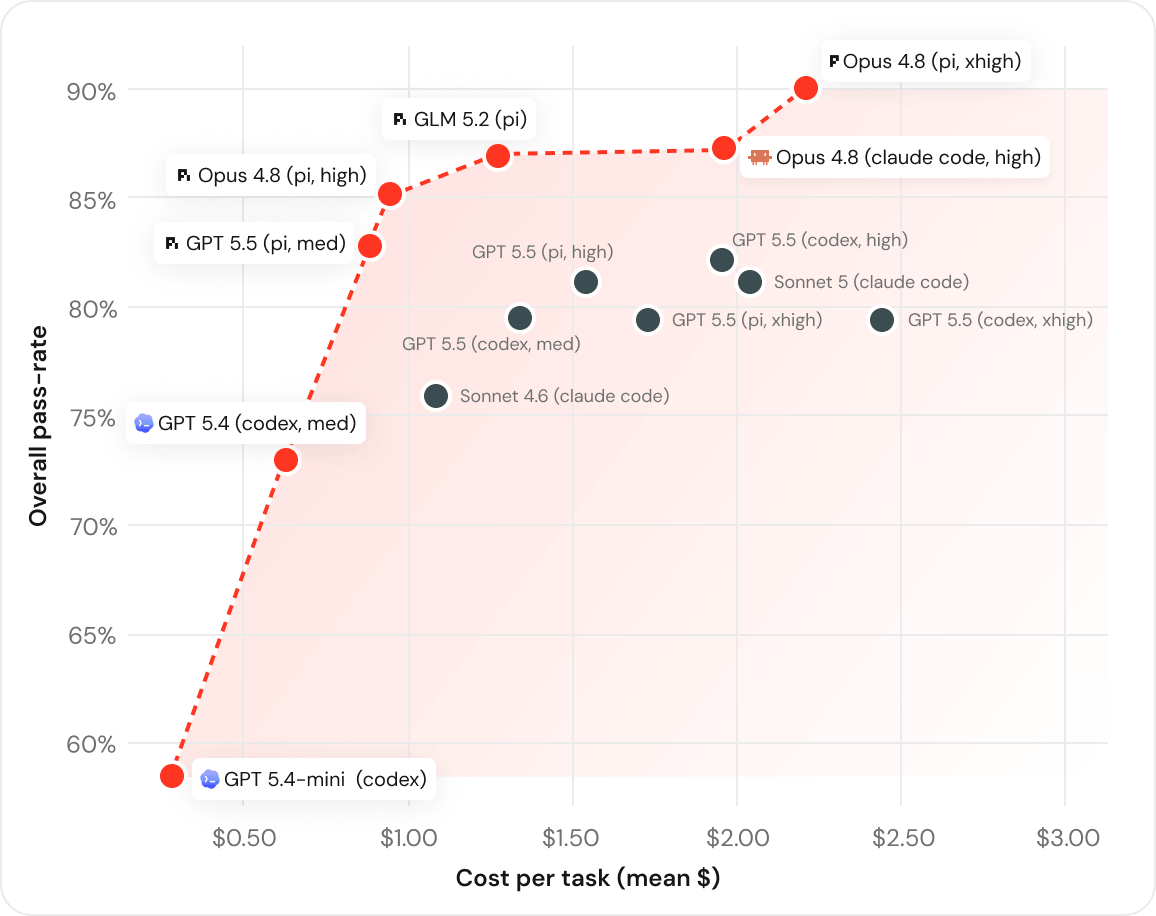
Databricks has published the results of an internal benchmark evaluating coding agents on its massive multi-million line codebase. The company conducted this extensive testing to determine how these tools can best optimize engineering costs and improve overall development performance.
Comments2026-07-08
A recently discovered obfuscated bash script printed on a novelty Uniqlo t-shirt has been decoded by the tech community, turning the apparel into a wearable piece of programming art. In response, legal experts are analyzing the garment to explore the intellectual property, technology, and commercial law implications of printing executable code on clothing.
Comments
Grok 4.5
2026-07-08Grok 4.5 has been introduced as SpaceXAI's most advanced model, specifically engineered to excel in coding, agentic tasks, and knowledge work. This latest release is designed to enhance professional productivity by executing complex, autonomous workflows with significantly improved intelligence.
CommentsRewriting Bun in Rust
2026-07-08The developers behind the Bun JavaScript runtime are rewriting the project's core codebase from Zig to Rust. A new article explores the strategic motivations driving this major transition and provides a technical breakdown of the migration process.
Comments
TypeScript 7
2026-07-08TypeScript 7 is now available, marking a major milestone as the language transitions to a native port. This complete architectural overhaul delivers a massive performance upgrade, offering developers compilation speeds that are 10 times faster than previous versions.
Comments
Fenris Creations has open-sourced EVE Online's Carbon engine to foster community collaboration and shared technological advancement. According to Ben Hunter, this decision will improve overall security and integrate modern tools like LLM coding and support from the Godot engine to benefit the broader developer ecosystem.
Comments
OpenAI has published a new analysis exposing critical flaws in SWE-Bench Pro, a widely used benchmark for assessing AI coding capabilities. These reliability issues cast significant doubt on the accuracy of how top artificial intelligence models are currently being tested and ranked.
Comments2026-07-07
Herdr: One terminal to rule them all
2026-07-07Herdr is a new agent multiplexer specifically designed for managing coding agents. It functions similarly to tmux by providing real panes to monitor multiple agent states at a glance. Additionally, it allows developers to access these agents via SSH from anywhere without needing a dedicated application.
Comments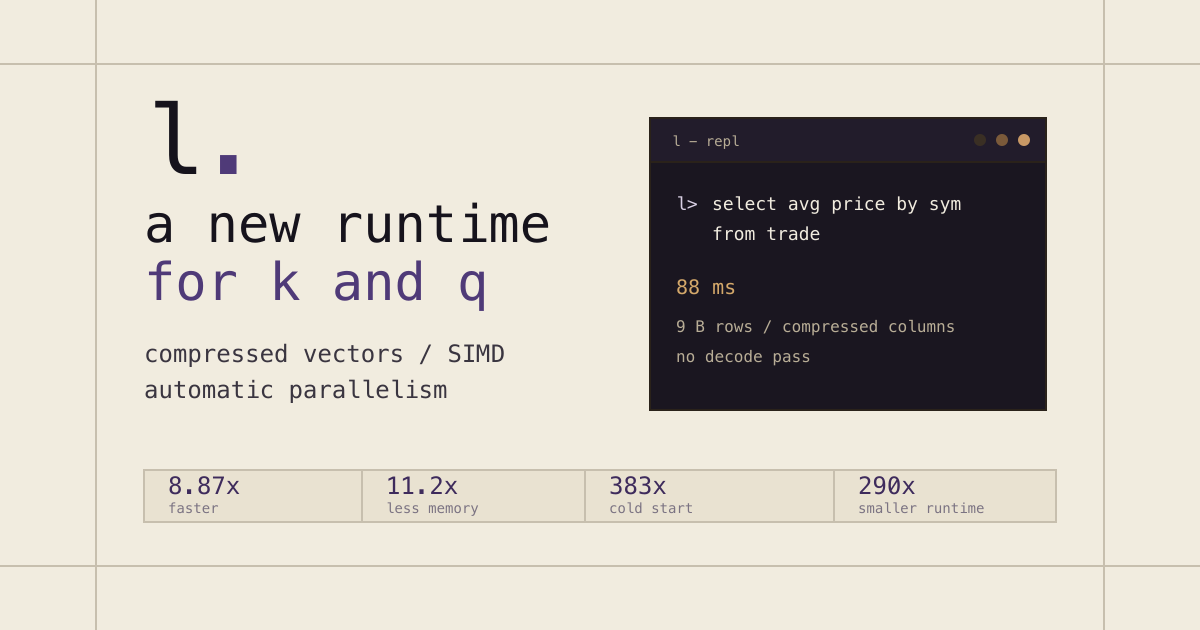
l: A new runtime for k and q
2026-07-07A new runtime named l has been introduced for the k family of programming languages. This release provides dedicated support for both k and q, offering developers a fresh execution platform within the ecosystem.
Comments
IEEE has launched a new virtual training course focused on large language models for professionals entering the AI space. The program provides comprehensive instruction on the core skills needed to effectively design, secure, and deploy LLMs.
CommentsComputer science pioneer Donald Knuth has published new preprints revealing his embrace of generative AI for creative problem-solving and mathematical deduction. Meanwhile, readers are discussing his ongoing work and expressing hope that he remains healthy enough to eventually complete the highly anticipated seventh volume of The Art of Computer Programming.
Comments2026-07-06
Mark Zuckerberg stated that the development of fully autonomous AI agents is progressing slower than expected. Although AI tools significantly increase the raw volume of code generated, engineers still require extensive human oversight and code review to ensure stability, demonstrating that unsupervised autonomous coding agents are not yet a reality.
CommentsRoad to Elm 1.0
2026-07-06The Elm programming language is on the path to its 1.0 release, bringing a suite of developer-friendly features to web development. The language offers excellent performance and small asset sizes alongside highly readable error messages. Additionally, it ensures a stable coding experience by guaranteeing zero runtime exceptions.
CommentsLearning to code is still worthwhile
2026-07-06Recent discussions regarding the ongoing value of learning to code have sparked a debate over whether programming is a creative art form akin to music and literature, or merely mundane problem-solving comparable to plumbing. While some argue that day-to-day coding is often standardized and tedious, others maintain that the underlying mechanics and complex problem-solving require significant creativity. Ultimately, the discourse highlights that despite the repetitive nature of the daily job, coding remains a deeply creative and worthwhile skill.
Comments
Kani: A Model Checker for Rust
2026-07-06Researchers have introduced Kani in a recent arXiv paper as a new model checker designed specifically to verify code safety and correctness in the Rust programming language. The tool helps developers identify complex bugs and prevent runtime errors by exhaustively exploring all possible execution paths within a program. By providing robust formal verification, Kani significantly enhances the Rust ecosystem and builds upon the language's existing memory safety guarantees.
CommentsA new arXiv paper investigates whether the cleanliness of source code directly impacts the performance of AI coding agents by utilizing a controlled minimal-pair study design. This research aims to isolate the specific effects of code quality, helping developers determine if maintaining pristine codebases is necessary for optimal collaboration with automated programming tools.
CommentsDNSGlobe is a new Rust-based terminal tool created by 514-labs that allows users to visually monitor global DNS propagation in real time. The application tracks record updates across 34 public resolvers worldwide, displaying the changes on an interactive map rendered directly inside the terminal.
Comments
M/PC – A Concatenative OS
2026-07-06Creator Devine Lu Linvega has introduced M/PC, an experimental operating system built on the concatenative programming paradigm. The project reimagines personal computing by replacing traditional user interfaces with a minimalist, stack-based architecture. This unique design requires users to interact with the entire operating environment strictly through continuous function composition.
Comments2026-07-05
Readers highly recommend the Introduction to Compilers and Language Design resource for its practical, step-by-step approach to building a working compiler. The accompanying community discussion explores the complexities of the field, highlighting a developer's successful transition from web development to compiler engineering through self-study and hands-on LLVM projects. Participants also debate the necessity of advanced degrees for entering the niche area and discuss strategies like starting with assembly generation to gradually master compiler construction.
Comments2026-07-04
The Zig programming language has restructured its toolchain by moving all package management functionality from the compiler to the build system. This architectural shift cleanly separates dependency handling from core compilation, requiring developers to rely entirely on the build system to manage packages.
CommentsApplied Category Theory Course (2018)
2026-07-04An online discussion regarding the 2018 Applied Category Theory course highlights its effectiveness in bridging abstract mathematical concepts with practical programming applications. Participants highly praise instructor John Baez for his dedication to building a comprehensive, tuition-free online learning experience. The community also shares numerous book recommendations to help programmers at various levels navigate the complexities of the subject.
CommentsOdin, Wikipedia and engagement farming
2026-07-04A debate over Wikipedia's strict notability and sourcing policies has erupted following disputes over the inclusion of articles for tech projects like the Odin programming language. While critics argue that firsthand confirmations from founders are sufficient for niche software, Wikipedia defenders maintain that enforcing independent secondary sources is crucial to prevent spam, fake personas, and AI-driven engagement farming in a low-trust internet environment.
CommentsAgentic coding notes
2026-07-04A recent discussion highlights how rigorous hardware testing methodologies, such as heavy fuzzing and property-based testing instead of traditional unit tests, can be successfully applied to modern software development. Participants emphasize that skills in measurement and experimental design, traditionally cultivated in chip companies, are becoming increasingly valuable for evaluating and guiding AI coding agents. The conversation also explores how integrating AI tools with robust feedback loops enables autonomous usability testing and self-correction in software projects.
Comments