Programming News
Programming keeps evolving as languages mature, tooling improves, and teams rethink how software should be written. This section follows that change, gathering news and articles about programming languages, compilers, development practices, and the craft of writing reliable, maintainable code.
Typical stories include language releases and proposals, deep dives into compiler and runtime internals, performance investigations, debates about coding style and architecture, and essays from experienced engineers on lessons learned. Popular ecosystems such as Rust, Python, JavaScript, and TypeScript appear regularly.
Keeping up with these topics helps developers choose the right tools, avoid known pitfalls, and grow their skills. Working engineers, students, and technical leaders follow this coverage to stay current with the ideas shaping how software gets built.
2026-07-06
Mark Zuckerberg stated that the development of fully autonomous AI agents is progressing slower than expected. Although AI tools significantly increase the raw volume of code generated, engineers still require extensive human oversight and code review to ensure stability, demonstrating that unsupervised autonomous coding agents are not yet a reality.
CommentsRoad to Elm 1.0
2026-07-06The Elm programming language is on the path to its 1.0 release, bringing a suite of developer-friendly features to web development. The language offers excellent performance and small asset sizes alongside highly readable error messages. Additionally, it ensures a stable coding experience by guaranteeing zero runtime exceptions.
Comments
Learning to code is still worthwhile
2026-07-06Recent discussions regarding the ongoing value of learning to code have sparked a debate over whether programming is a creative art form akin to music and literature, or merely mundane problem-solving comparable to plumbing. While some argue that day-to-day coding is often standardized and tedious, others maintain that the underlying mechanics and complex problem-solving require significant creativity. Ultimately, the discourse highlights that despite the repetitive nature of the daily job, coding remains a deeply creative and worthwhile skill.
Comments
Kani: A Model Checker for Rust
2026-07-06Researchers have introduced Kani in a recent arXiv paper as a new model checker designed specifically to verify code safety and correctness in the Rust programming language. The tool helps developers identify complex bugs and prevent runtime errors by exhaustively exploring all possible execution paths within a program. By providing robust formal verification, Kani significantly enhances the Rust ecosystem and builds upon the language's existing memory safety guarantees.
CommentsA new arXiv paper investigates whether the cleanliness of source code directly impacts the performance of AI coding agents by utilizing a controlled minimal-pair study design. This research aims to isolate the specific effects of code quality, helping developers determine if maintaining pristine codebases is necessary for optimal collaboration with automated programming tools.
CommentsDNSGlobe is a new Rust-based terminal tool created by 514-labs that allows users to visually monitor global DNS propagation in real time. The application tracks record updates across 34 public resolvers worldwide, displaying the changes on an interactive map rendered directly inside the terminal.
Comments
M/PC – A Concatenative OS
2026-07-06Creator Devine Lu Linvega has introduced M/PC, an experimental operating system built on the concatenative programming paradigm. The project reimagines personal computing by replacing traditional user interfaces with a minimalist, stack-based architecture. This unique design requires users to interact with the entire operating environment strictly through continuous function composition.
Comments2026-07-05
Readers highly recommend the Introduction to Compilers and Language Design resource for its practical, step-by-step approach to building a working compiler. The accompanying community discussion explores the complexities of the field, highlighting a developer's successful transition from web development to compiler engineering through self-study and hands-on LLVM projects. Participants also debate the necessity of advanced degrees for entering the niche area and discuss strategies like starting with assembly generation to gradually master compiler construction.
Comments2026-07-04
The Zig programming language has restructured its toolchain by moving all package management functionality from the compiler to the build system. This architectural shift cleanly separates dependency handling from core compilation, requiring developers to rely entirely on the build system to manage packages.
CommentsApplied Category Theory Course (2018)
2026-07-04An online discussion regarding the 2018 Applied Category Theory course highlights its effectiveness in bridging abstract mathematical concepts with practical programming applications. Participants highly praise instructor John Baez for his dedication to building a comprehensive, tuition-free online learning experience. The community also shares numerous book recommendations to help programmers at various levels navigate the complexities of the subject.
CommentsOdin, Wikipedia and engagement farming
2026-07-04A debate over Wikipedia's strict notability and sourcing policies has erupted following disputes over the inclusion of articles for tech projects like the Odin programming language. While critics argue that firsthand confirmations from founders are sufficient for niche software, Wikipedia defenders maintain that enforcing independent secondary sources is crucial to prevent spam, fake personas, and AI-driven engagement farming in a low-trust internet environment.
CommentsAgentic coding notes
2026-07-04A recent discussion highlights how rigorous hardware testing methodologies, such as heavy fuzzing and property-based testing instead of traditional unit tests, can be successfully applied to modern software development. Participants emphasize that skills in measurement and experimental design, traditionally cultivated in chip companies, are becoming increasingly valuable for evaluating and guiding AI coding agents. The conversation also explores how integrating AI tools with robust feedback loops enables autonomous usability testing and self-correction in software projects.
Comments2026-07-03
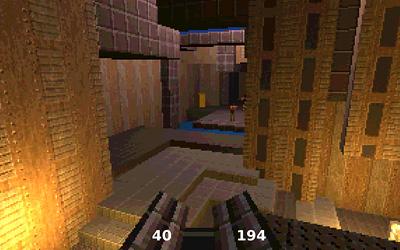
Quake in 13 Kilobytes (2021)
2026-07-03A developer has recreated the classic game Quake for the 2021 js13kGames competition, an annual event challenging programmers to build browser games in JavaScript under a strict 13-kilobyte size limit. This impressive feat of code optimization squeezes the iconic first-person shooter into an incredibly tiny web package. Players can now experience this remarkable technical achievement directly in their browser for free.
Comments2026-07-02
A new open-source project called crustc translates the entirety of the Rust compiler into the C programming language. This ambitious endeavor provides a unique C-based implementation of the core toolchain for developers to explore. The repository is currently hosted on GitHub and welcomes community contributions to its ongoing development.
CommentsReaders are debating the efficacy of a short leash micromanagement approach for AI coding, with some arguing that developers should instead engage in nuanced, high-level design discussions with advanced models. Critics of this collaborative approach counter that large language models lack true introspection and merely hallucinate post-hoc explanations for their outputs. Consequently, the conversation shifts into a broader philosophical debate comparing the AI's generated reasoning to human consciousness and our own evolutionary post-hoc justifications.
CommentsResearchers have introduced Senior SWE-Bench, a new open-source benchmark designed to evaluate AI coding agents using the complex, real-world tasks typically assigned to senior software engineers. By testing models on industry-level work rather than basic exercises, the benchmark aims to provide a more accurate assessment of their practical engineering capabilities.
Comments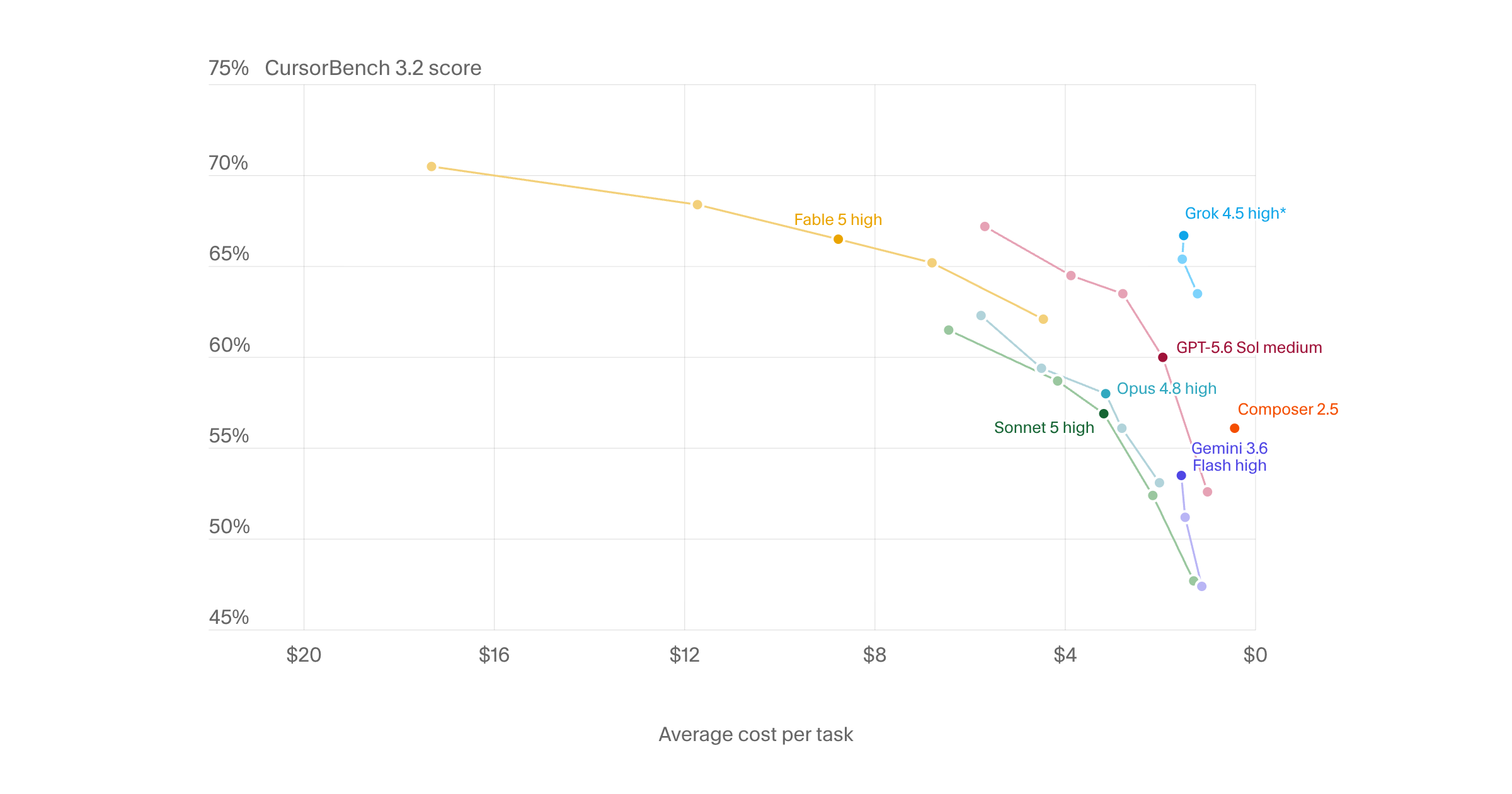
CursorBench 3.1
2026-07-02Cursor has published the latest evaluation results for CursorBench 3.2, comparing the coding performance of the various AI models evaluated within its platform. The benchmark offers developers a detailed look at how different underlying models handle real-world programming tasks.
Comments2026-07-01

Addressing frequent inquiries from aspiring developers, the author outlines the core technical skills required to become a hireable graphics programmer. The post also briefly addresses the current state of LLMs, expressing skepticism about whether modern machine learning will drastically change the foundational requirements of the role.
CommentsAsk HN: Who is hiring? (July 2026)
2026-07-01The July 2026 Hacker News hiring thread features St. Jude Children's Research Hospital recruiting senior Rust engineers to rebuild its genomics infrastructure. Additionally, a stealth YC S26 robotics startup in Palo Alto is seeking lead engineers to develop wearable robotic devices for human endurance. Finally, Talk Machine is hiring remote founding engineers to build a consumer voice and AI email product.
CommentsThe Underhanded C Contest
2026-07-01The Underhanded C Contest challenged programmers to write seemingly innocent code containing hidden, plausible bugs that only manifest under specific conditions, such as altering vote counts or failing image redactions. Readers fondly reminisce about the cleverness of past entries and speculate whether the beloved competition might return or evolve into an underhanded prompt contest for large language models.
Comments2026-06-30

A developer inspecting Claude Code for privacy reasons discovered that the tool secretly embeds hidden steganographic markers within its system prompts. These undisclosed tags are dynamically generated based on the API base URL and timezone, raising concerns about hidden tracking in AI coding assistants.
Comments
Claude Sonnet 5
2026-06-30Claude Sonnet 5 has been released as the most agentic model in the Sonnet lineup to date. The new iteration delivers top-tier intelligence specifically optimized for complex coding tasks and everyday professional workflows. This launch significantly advances autonomous capabilities for developers and everyday users alike.
CommentsKnoppix
2026-06-30Readers are sharing fond memories of the Knoppix Linux Live CD, recalling the pioneering distribution as a vital gateway into open-source operating systems during their youth. Many users relied on the bootable disc to safely explore programming and system tinkering without the risk of damaging their family's Windows partitions, highlighting its lasting impact on a generation of early tech enthusiasts.
CommentsLinux for the Sega MegaDrive
2026-06-30Developers have created an open-source port of the Linux operating system for the classic 16-bit Sega MegaDrive console. The new project is called LinuxMD and brings modern open-source software to retro gaming hardware. Enthusiasts and programmers can contribute to its ongoing development by visiting the repository on GitHub.
CommentsExploring PDP-1 Lisp (1960)
2026-06-30A newly published guide explores the foundational history of computer science by detailing the implementation of Lisp on the PDP-1. The tutorial provides a hands-on, practical introduction to programming in this classic language. Readers can follow the instructions to experience the unique computing environment of 1960.
CommentsThe programming language Ante introduces a novel approach to memory management by blending borrow checking with reference counting to safely allow shared mutability in single-threaded contexts. By enforcing shape stability and strict thread-safety constraints, the language aims to prevent data races and use-after-free errors without relying on exclusive ownership rules. Community discussions highlight potential tradeoffs such as lost compiler optimizations, challenges with recursive analysis, and concerns about its practical utility with complex data structures.
Comments
Stroustrup's Rule (2024)
2026-06-30Bjarne Stroustrup's updated rule for 2024 addresses a core challenge in programming language design regarding the differing needs of novice and expert developers. While beginners require explicit and readable syntax to understand code logic, experienced professionals prefer concise syntax to maximize their workflow efficiency.
Comments2026-06-29

The Qwen 3.6 27B model is emerging as the ideal choice for local software development due to its strong coding capabilities. Developers can now run this highly capable AI efficiently on consumer hardware like MacBooks and NVIDIA RTX GPUs using tools such as llama.cpp and OpenCode.
CommentsDeepreinforce AI has introduced Ornith-1.0, a new open-source model built specifically for agentic coding. This innovative system features self-improving capabilities designed to continuously enhance its autonomous programming skills. Developers can now access the repository on GitHub to contribute to its ongoing development.
CommentsA newly published arXiv paper provides an in-depth technical analysis of Apple's proprietary Neural Engine, detailing its underlying architecture, programming interfaces, and performance benchmarks. The study offers a comprehensive breakdown of the machine learning hardware found in Apple's custom silicon, providing valuable insights for developers and AI researchers.
Comments