Programming News
Programming keeps evolving as languages mature, tooling improves, and teams rethink how software should be written. This section follows that change, gathering news and articles about programming languages, compilers, development practices, and the craft of writing reliable, maintainable code.
Typical stories include language releases and proposals, deep dives into compiler and runtime internals, performance investigations, debates about coding style and architecture, and essays from experienced engineers on lessons learned. Popular ecosystems such as Rust, Python, JavaScript, and TypeScript appear regularly.
Keeping up with these topics helps developers choose the right tools, avoid known pitfalls, and grow their skills. Working engineers, students, and technical leaders follow this coverage to stay current with the ideas shaping how software gets built.
2026-06-27
The BBC is shutting down its Long Wave radio service due to financial constraints, ending a highly reliable broadcast network that provided uninterrupted coverage across Europe. The closure has sparked widespread nostalgia among listeners who relied on the analog signal for iconic programming like the Shipping Forecast and Test Match Special. Many mourn the loss of the accessible technology, which also served as a foundational electronics project for generations of hobbyists.
CommentsA developer thwarted a suspected nation-state attack that used a fake job interview to deliver a malicious TypeScript patch. The payload attempted to install the PinpinRAT backdoor, but the attack ultimately failed. The incident prompted a detailed public analysis of the attack vector, the malware, and its indicators of compromise.
Comments
DBOSify is a new open-source project introduced on Hacker News that serves as a drop-in replacement for Temporal. It is built entirely on PostgreSQL, allowing developers to leverage their existing database infrastructure for orchestration tasks. The Python-based library is currently available for testing and contribution on GitHub.
Comments2026-06-26
Record type inference for dummies
2026-06-26A newly published tutorial provides a beginner-friendly guide to understanding type inference for records. It breaks down complex compiler mechanics into easy-to-understand steps, offering an accessible resource for developers looking to master how modern programming languages automatically deduce data types.
Comments2026-06-25
The Zig programming language community is enthusiastically praising a comprehensive devlog detailing new bitCast semantics and LLVM back end improvements. Readers expressed strong appreciation for the rigorous technical depth and ongoing language refinements, contrasting the high-quality post favorably against the low-effort and AI-generated content often found on tech forums.
Comments
An oral history of Bank Python (2021)
2026-06-25This oral history explores the unconventional ecosystem of Python as utilized by major investment banks, detailing the custom distributions, strict security constraints, and legacy integrations required in the financial sector. It highlights how these specific institutional needs have created a distinct environment that differs significantly from the standard open-source community.
Comments
Mixing Visual and Textual Code
2026-06-25A new arXiv paper introduces a novel framework that combines visual and textual code to enhance software development and AI code generation. By integrating visual diagrams with traditional text-based programming, the approach leverages multimodal machine learning to improve code comprehension. This innovation could lead to more intuitive programming environments and significantly streamline the workflow for developers.
Comments2026-06-24
Qualcomm to Acquire Modular
2026-06-24Qualcomm is acquiring Modular, the AI compute company founded by Chris Lattner that is developing the Mojo programming language. While some in the developer community worry about the future of Mojo under Qualcomm and question its design choices, the company has confirmed that the language remains on track to be open-sourced later this year.
CommentsRhombus Language 1.0
2026-06-24Rhombus Language 1.0 has officially launched, providing developers with a newly available programming language to download and explore. The release is accompanied by comprehensive documentation, installation guides, and an FAQ detailing the project's unique design goals.
Comments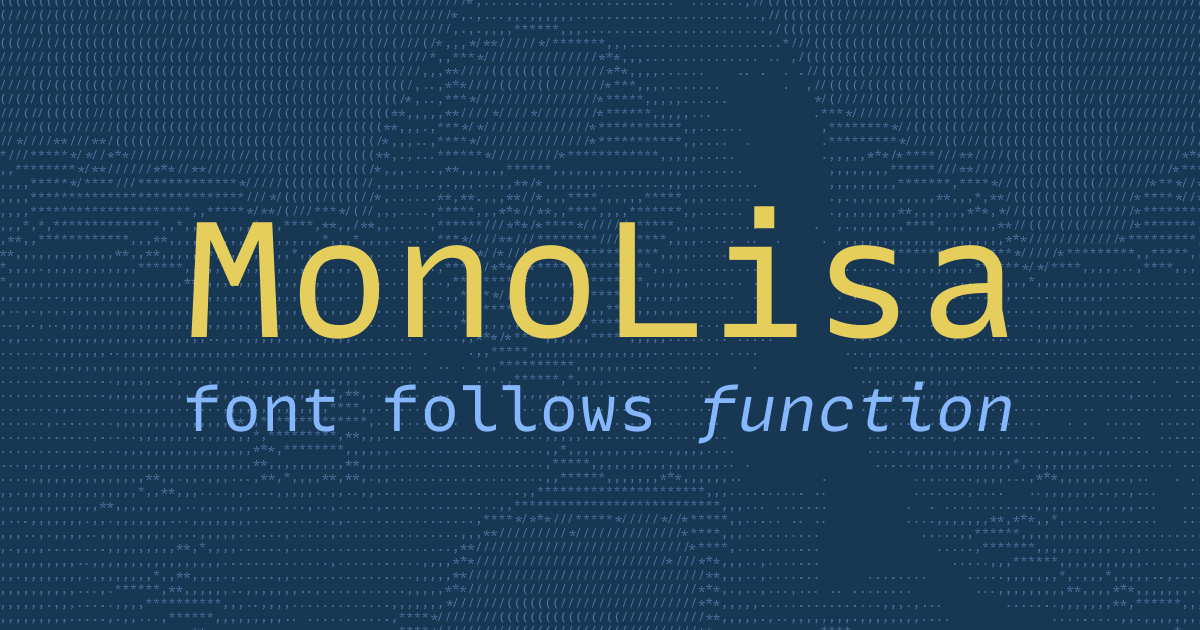
Monolisa v3 is a specialized typeface designed specifically for software developers and creative professionals. Guided by a font follows function philosophy, this updated font family prioritizes readability and practical utility for programming environments.
Comments2026-06-23
Plotnine
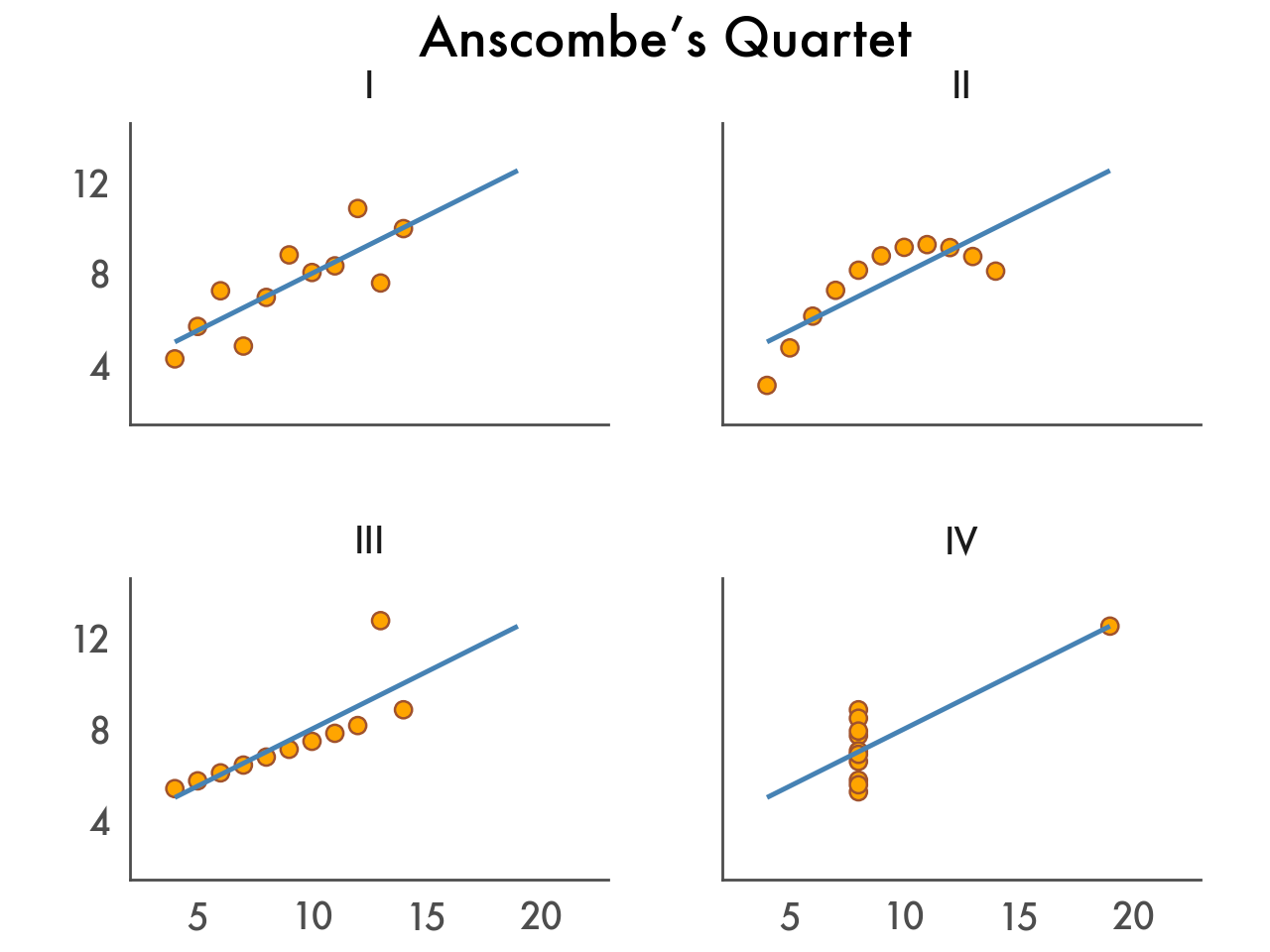
2026-06-23The Python data visualization library Plotnine is preparing for its upcoming 0.16 release, introducing new capabilities that are currently available via a pre-release build. The update prompted a lengthy community discussion regarding data visualization best practices, specifically focusing on the effectiveness of violin plots featured on the project homepage. Many participating developers criticized violin plots in favor of alternative distribution visualizations, advocating for the use of strip, swarm, and raincloud plots instead.
Comments2026-06-22
A new project called Oak was recently showcased on Hacker News as a Git alternative specifically built for AI agents. The tool provides a version control system tailored to machine-driven workflows, allowing autonomous coding agents to efficiently manage and track changes in codebases.
CommentsA blog post detailing an unconventional, linguistically rigorous approach to Japanese verb conjugation sparked a debate among readers regarding effective language pedagogy. Critics compared the author's mental model to flawed programming analogies that could hinder beginners, while the author defended the piece as a niche resource for those who appreciate unconventional explanations. The ensuing discussion highlighted the significant cultural and practical differences between learning human languages and programming languages.
Comments2026-06-21
The author reflects on a 2014 RailsConf presentation where they advised developers to prefer code duplication over creating incorrect abstractions. This specific piece of programming advice sparked surprisingly strong and mixed reactions within the development community, with some critics doubting the logic while many others strongly agreed.
CommentsPeter Norvig's classic 2010 tutorial on building a Lisp interpreter in Python remains a highly recommended foundational resource for developers interested in creating programming languages. Hacker News readers continue to revisit and praise the guide, often comparing it to other popular educational projects like Crafting Interpreters and the language-agnostic Make-A-Lisp. While some prefer Make-A-Lisp as a litmus test for learning new languages, many still consider Norvig's step-by-step approach the best starting point for understanding interpreter design.
CommentsReader discussions highlight the enduring appeal of Proportional-Integral-Derivative controllers among programmers due to their intuitive balance of conceptual cleverness and ease of implementation in robotics projects. Although PID remains a staple for educational applications like line-following robots, practitioners note that tuning it for complex real-world motor control is highly challenging, leading some developers to adopt advanced alternatives like Active Disturbance Rejection Control.
Comments
Guide to the TD4 4-bit DIY CPU
2026-06-21A new guide details the experience of building and programming the TD4, a compact 4-bit DIY CPU kit sourced from Aliexpress. The hardware is quite limited, featuring just two registers, some indicator LEDs, and 16 bytes of program ROM. However, it remains a highly rewarding project that effectively teaches the fundamental principles of computer architecture.
Comments2026-06-20
Bun has opened a pull request on the oven-sh/WebKit GitHub repository to add shared memory thread support to the JavaScriptCore engine. This proposed enhancement aims to improve the JavaScript runtime's multithreading performance and overall concurrency capabilities.
Comments2026-06-19
Amid a growing memory shortage, major tech companies are increasingly prioritizing code optimization to reduce RAM requirements, though developers emphasize that fixing basic inefficiencies remains more practical than algorithmic rewrites. Meanwhile, the discussion highlights the tech industry's heavy reliance on AI for code generation, sparking debate over the actual success and quality of these machine-written projects across major platforms.
Comments2026-06-18
Readers discussing the Advanced Compilers online course note that while trace compilation is conceptually interesting, it is largely impractical for general-purpose dynamic languages due to unpredictable control flow. They highlight the curriculum's focus on type feedback, deoptimization, and speculation as more universally applicable concepts for modern compiler design. However, they acknowledge that trace compilation remains highly effective in narrow, stable domains like numerical computing and machine learning frameworks where code behavior is highly predictable.
Comments
Modos has introduced the Flow, a color e-paper monitor that utilizes an open Enchanter controller to significantly reduce input lag. This innovation makes the display highly responsive for productivity tasks like coding and writing while maintaining the traditional eye-friendly benefits of e-ink technology.
CommentsClojure Hosted on Go
2026-06-18The Glojure project introduces a new Clojure interpreter hosted directly on the Go programming language. It provides developers with extensible interoperability support to seamlessly integrate Clojure code within Go-based ecosystems.
CommentsI hate compilers
2026-06-18This technical piece explores the frustrating complexities of software compilation and the challenge of achieving deterministic builds. It highlights why feeding identical bytes into a compiler often fails to produce the exact same output bytes. The author explains the hidden variables and non-deterministic behaviors that make compiler reproducibility much more complicated than developers might expect.
CommentsAlthough RTK promises significant token savings for coding agents via raw terminal compression, its actual benefits are misleading. The author argues that simply shrinking token counts creates an illusion of progress that fails to guarantee cheaper, safer, or more accurate software engineering.
Comments2026-06-17
Although the US has temporarily delayed blacklisting DeepSeek while flagging over 100 other firms as security risks, developers continue to praise the AI model for its unmatched cost-effectiveness for everyday coding tasks. In community discussions, users express apathy toward data privacy concerns and heavily debate the model's capabilities against other frontier systems. Many developers note that while DeepSeek excels at routine programming, a temporarily available model named Fable significantly outperformed both DeepSeek and Claude Opus in complex software engineering and reasoning tasks.
CommentsNVlabs has released cuTile Rust, a tile-based domain-specific language designed for writing safe, data-race-free GPU kernels in Rust. The new framework provides developers with a secure host-side API to efficiently pass tensors to asynchronously executed kernel functions.
Comments2026-06-16
Running local models is good now
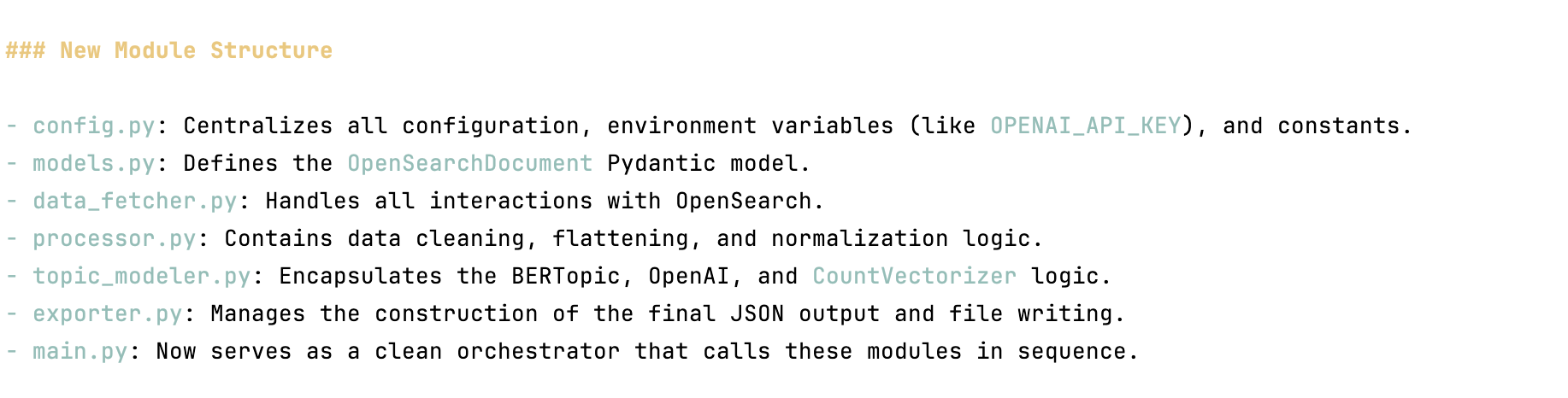
2026-06-16Running local AI models has seen significant performance improvements recently, making it a highly viable option for developers. Over the past few months, local agentic coding tools have become exceptionally capable, providing powerful on-device programming assistance without the need for cloud-based services.
CommentsSpaceX to buy Cursor for $60B
2026-06-16Discussions surrounding the reported $60 billion SpaceX acquisition of Cursor highlight ongoing developer debates over AI coding workflows using tools like Cursor, Claude, and Codex. Ultimately, the community agrees that these AI assistants are shifting the core value of software engineering away from writing syntax and toward systems thinking, domain modeling, and precise communication, effectively filtering out developers who struggle to contextualize complex logic.
Comments
The author expresses deep admiration for programmer Fabrice Bellard in a recent post. Reflecting on their own technical skills, the writer humbly concedes that Bellard is almost certainly a better overall developer.
Comments
For the past 25 years, Jane Street has publicly maintained that the organization had no interest in formal methods for software development. However, a new article exploring the future of programming suggests the trading firm may be rethinking this long-held stance. The piece examines the evolving landscape of mathematically verifying code and its potential impact on the company's future engineering practices.
Comments