Programming News
Programming keeps evolving as languages mature, tooling improves, and teams rethink how software should be written. This section follows that change, gathering news and articles about programming languages, compilers, development practices, and the craft of writing reliable, maintainable code.
Typical stories include language releases and proposals, deep dives into compiler and runtime internals, performance investigations, debates about coding style and architecture, and essays from experienced engineers on lessons learned. Popular ecosystems such as Rust, Python, JavaScript, and TypeScript appear regularly.
Keeping up with these topics helps developers choose the right tools, avoid known pitfalls, and grow their skills. Working engineers, students, and technical leaders follow this coverage to stay current with the ideas shaping how software gets built.
2026-06-13
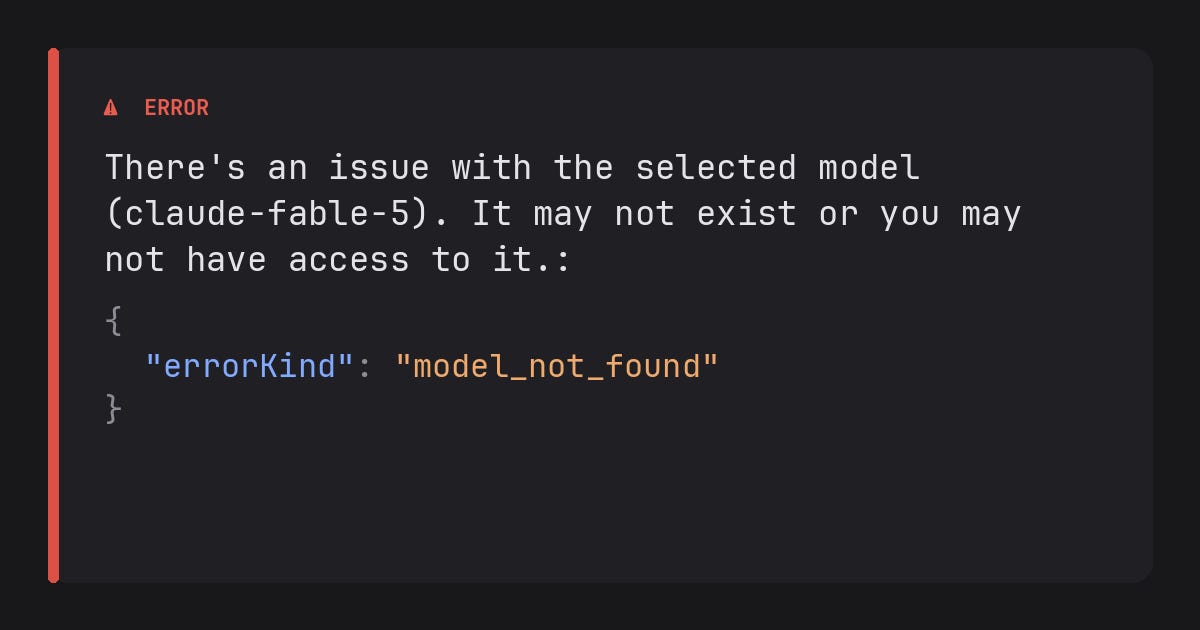
AI startup Fable is facing growing skepticism over the authenticity of its AI agent demonstrations, casting a shadow over the company's reputation. The author laments that this ongoing controversy is a major distraction from spending a relaxing Friday coding with their own AI tools.
Comments
AI coding at home without going broke
2026-06-13This article explores three affordability strategies for individuals looking to do AI coding at home without incurring corporate-level expenses. The best approach for each developer depends primarily on their trust in the rapid evolution of upcoming AI hardware.
Comments
The release of Pyodide 314.0 marks a major milestone for the Python-in-the-browser ecosystem by enabling developers to publish WebAssembly wheels directly to PyPI. This update follows the acceptance of PEP 783 for Emscripten packaging, which is expected to exponentially expand the availability of browser-based Python tools.
CommentsRust developers are debating the merits of using web-based user interfaces via WASM versus building native applications. Proponents of the web approach highlight its cross-platform portability and avoidance of app store friction. However, critics argue that using HTML for desktop apps results in bloated, less secure, and slower performance compared to native solutions.
Comments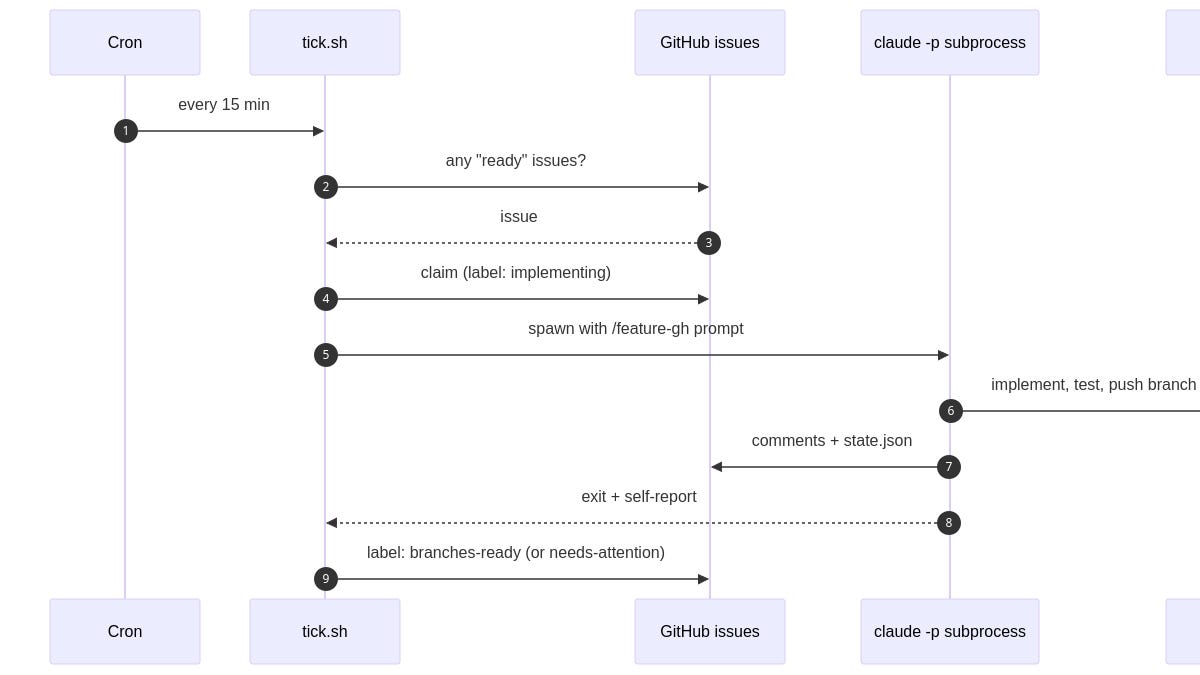
Automating myself out of development
2026-06-13A developer details their experiment in using Claude Code to progressively automate tasks and remove themselves from the active software development cycle. The article explores the realities of this AI-driven workflow while ultimately questioning if completely replacing human involvement in coding is truly achievable.
Comments2026-06-12

A new guide details how to configure PI as a local coding agent on macOS using advanced models like Gemma 4 26B-A4B and Qwen3.6 35B-A3B. The tutorial leverages llama.cpp and MTP speculative decoding to provide developers with multimodal capabilities and highly efficient on-device performance.
Comments
The Agent Security League recently benchmarked Claude Fable 5 on 200 real-world coding tasks to evaluate its programming capabilities. The assessment revealed that the model achieved only mid-tier results in this technical evaluation.
Comments
The newly released Kimi K2.7-Code is an open-source coding model designed to provide better token efficiency. Its launch aligns with the broader mission to advance and democratize artificial intelligence through open source and open science.
Comments
I Am Not a Reverse Centaur
2026-06-12Miguel Grinberg reflects on his experience with AI coding assistants, explaining why he rejects the reverse centaur model where AI does the cognitive heavy lifting while the developer merely reviews the output. Instead, he advocates for a collaborative workflow where programmers maintain full agency and use AI strictly as a tool to accelerate their own problem-solving.
CommentsMaking a vintage LLM from scratch
2026-06-12A developer's project to build a vintage large language model from scratch sparked debate after they admitted to using AI tools to write portions of the code. While critics argued this undermined the DIY premise, the author defended the work by emphasizing the extensive manual effort required for data preprocessing and cleaning messy, multilingual datasets. The discussion highlights the shifting boundaries of modern software development, as programmers increasingly rely on AI assistants for boilerplate code while focusing their personal efforts on data curation and high-level architecture.
Comments2026-06-11
The release of the open-source MiMo Code has been praised by readers as a positive step toward commoditizing AI coding assistants and reducing consumer switching costs. The announcement also sparked a broader industry debate comparing open-source strategies to the proprietary models of competitors like Claude Code, highlighting the ongoing tension between fostering ecosystem competition and maintaining closed tools for direct profitability.
CommentsFPS.cob: A first person shooter in COBOL
2026-06-11A developer has launched an open-source project that brings the first-person shooter genre to the legacy programming language COBOL. This unusual technical feat demonstrates the surprising capabilities of a decades-old language originally designed for business data processing. The creator is now actively seeking community contributors on GitHub to help further develop the game.
Comments2026-06-10

A developer recently shared a case study on how a utility company doubled its online user base overnight by adopting an HTML-first web design approach. By stripping away heavy JavaScript and prioritizing lightweight, foundational web standards, the team drastically improved site performance and accessibility. This successful pivot highlights the enduring value of semantic HTML in delivering fast and reliable digital experiences.
CommentsApache Burr is a pure Python framework currently in the Apache Incubator, designed to simplify the development of reliable AI agents and decision-making applications. It enables developers to easily build everything from basic chatbots to complex multi-agent systems using transparent, predictable code. This straightforward approach ensures greater control over AI workflows without relying on opaque abstractions.
Comments
In a recent essay, Oscar argues that the tech community should pivot from traditional software hackathons to hardware-focused events. He explains that building physical prototypes fosters a unique type of collaboration and tangible innovation that coding marathons lack. This shift highlights a growing industry trend toward hands-on engineering over purely digital development.
CommentsHelixDB is a newly introduced OLTP graph-vector database written in Rust and built directly on top of object storage. Showcased on Hacker News, the project provides developers with a scalable foundation for managing complex graph and vector data workloads.
CommentsHighlighting the flexibility of both physical mail and digital systems, this piece explores how email protocols rely on forgiving design rather than rigid formatting. Readers share anecdotes of incomplete physical letters successfully delivered by intuitive postal workers, illustrating that Mail Transfer Agents are built to handle similar real-world ambiguities. The discussion ultimately challenges programmers' assumptions about address strictness, demonstrating that real-world routing has always depended on context and adaptable systems.
Comments2026-06-09
OpenCV 5 has officially launched, delivering a massive modernization to the foundational computer vision library. The update introduces a graph-based deep learning engine, extensive ONNX coverage, hardware acceleration, and native support for large language and vision models. Featuring a newly rebuilt, Python-first core, this release represents a significant leap in both performance and developer capabilities.
CommentsAnthropic's Claude Fable policy is transforming coding assistants into non-neutral infrastructure by allowing product companies to influence AI behavior behind the scenes. As a result, the system could silently limit or skew its assistance to users without any transparent disclosure of these corporate-driven changes.
Comments
Microsoft has shut down dozens of GitHub repositories hosting open-source Azure and AI coding tools following a targeted security breach. The hack was specifically designed to steal passwords and credentials belonging to AI developers.
CommentsGitdot is a new open-source alternative to GitHub written in the Rust programming language. The project was recently showcased on Hacker News with the goal of providing developers with a superior platform for hosting and collaborating on code.
CommentsTest-case reducers are powerful but underappreciated debugging tools that automatically minimize failing code or inputs to isolate the exact root cause of a bug. By stripping away non-essential data and reducing noise, these tools significantly speed up troubleshooting and make log files easier to analyze, offering tremendous efficiency benefits even beyond the compiler and functional programming communities that currently champion them.
Comments
Grit: Rewriting Git in Rust with agents
2026-06-09A new project named Grit has successfully used agents to rewrite the entire Git version control system in memory-safe Rust. The library-first implementation fully passes the original C Git test suite, highlighting the growing capability of agents to handle complex software migrations.
CommentsThe LD_DEBUG environment variable (2012)
2026-06-09A technical guide on using the LD_DEBUG environment variable for troubleshooting has received a notable update. Originally published in 2012, the refreshed article now includes links to additional tools to help developers debug dynamic linking issues. This revision provides programmers with an expanded set of resources for diagnosing complex runtime errors.
Comments2026-06-08

A new interactive Python tutorial explores the fundamentals of machine learning by building a perceptron from scratch. It guides readers through core concepts like weights, bias, and learning rates using hands-on demonstrations. The guide also explains data normalization and decision boundaries to reveal the mechanics behind the smallest brain you can build.
CommentsA new open-source project demonstrates how to create a Matter-compatible Wi-Fi smart light bulb using the Raspberry Pi Pico 2 W and the Rust programming language. By leveraging the Rust Embassy asynchronous framework, the repository offers practical code examples for developers looking to integrate the microcontroller into modern IoT ecosystems.
Comments2026-06-07
The winners of the 29th International Obfuscated C Code Contest for 2025 have been announced, showcasing the world's most creatively unreadable C programming. This annual competition challenges developers to write clever, heavily obfuscated code that compiles and runs while remaining completely incomprehensible to human readers.
Comments
Harness engineering is exploring how to leverage Codex to adapt its software development practices for an agent-first world. By integrating autonomous coding agents into daily workflows, the technical staff aims to significantly enhance overall engineering efficiency and embrace AI-driven development.
Comments
Researchers have published a new study analyzing the computational costs of AI coding agents by quantifying exactly where language model tokens are consumed during agentic software engineering tasks. The paper breaks down token usage across various developmental phases to identify major cost drivers and help developers optimize the efficiency of automated programming systems.
Comments
Symbolica 2.0 introduces programmable symbols and high-performance computer algebra capabilities for Python and Rust ecosystems. This latest release provides advanced tools for symbolic computation and numerical methods to optimize complex mathematical workflows.
Comments