Programming News
Programming keeps evolving as languages mature, tooling improves, and teams rethink how software should be written. This section follows that change, gathering news and articles about programming languages, compilers, development practices, and the craft of writing reliable, maintainable code.
Typical stories include language releases and proposals, deep dives into compiler and runtime internals, performance investigations, debates about coding style and architecture, and essays from experienced engineers on lessons learned. Popular ecosystems such as Rust, Python, JavaScript, and TypeScript appear regularly.
Keeping up with these topics helps developers choose the right tools, avoid known pitfalls, and grow their skills. Working engineers, students, and technical leaders follow this coverage to stay current with the ideas shaping how software gets built.
2026-06-07
The winners of the 29th International Obfuscated C Code Contest for 2025 have been announced, showcasing the world's most creatively unreadable C programming. This annual competition challenges developers to write clever, heavily obfuscated code that compiles and runs while remaining completely incomprehensible to human readers.
Comments
Harness engineering is exploring how to leverage Codex to adapt its software development practices for an agent-first world. By integrating autonomous coding agents into daily workflows, the technical staff aims to significantly enhance overall engineering efficiency and embrace AI-driven development.
Comments

Researchers have published a new study analyzing the computational costs of AI coding agents by quantifying exactly where language model tokens are consumed during agentic software engineering tasks. The paper breaks down token usage across various developmental phases to identify major cost drivers and help developers optimize the efficiency of automated programming systems.
Comments
Symbolica 2.0 introduces programmable symbols and high-performance computer algebra capabilities for Python and Rust ecosystems. This latest release provides advanced tools for symbolic computation and numerical methods to optimize complex mathematical workflows.
Comments
My Software North Star
2026-06-07In a recent blog post, Loris Cro shares his guiding philosophy and core principles for software development, which he calls his software north star. The article details how these foundational beliefs influence his approach to building tools, contributing to the open-source community, and shaping the future of programming.
Comments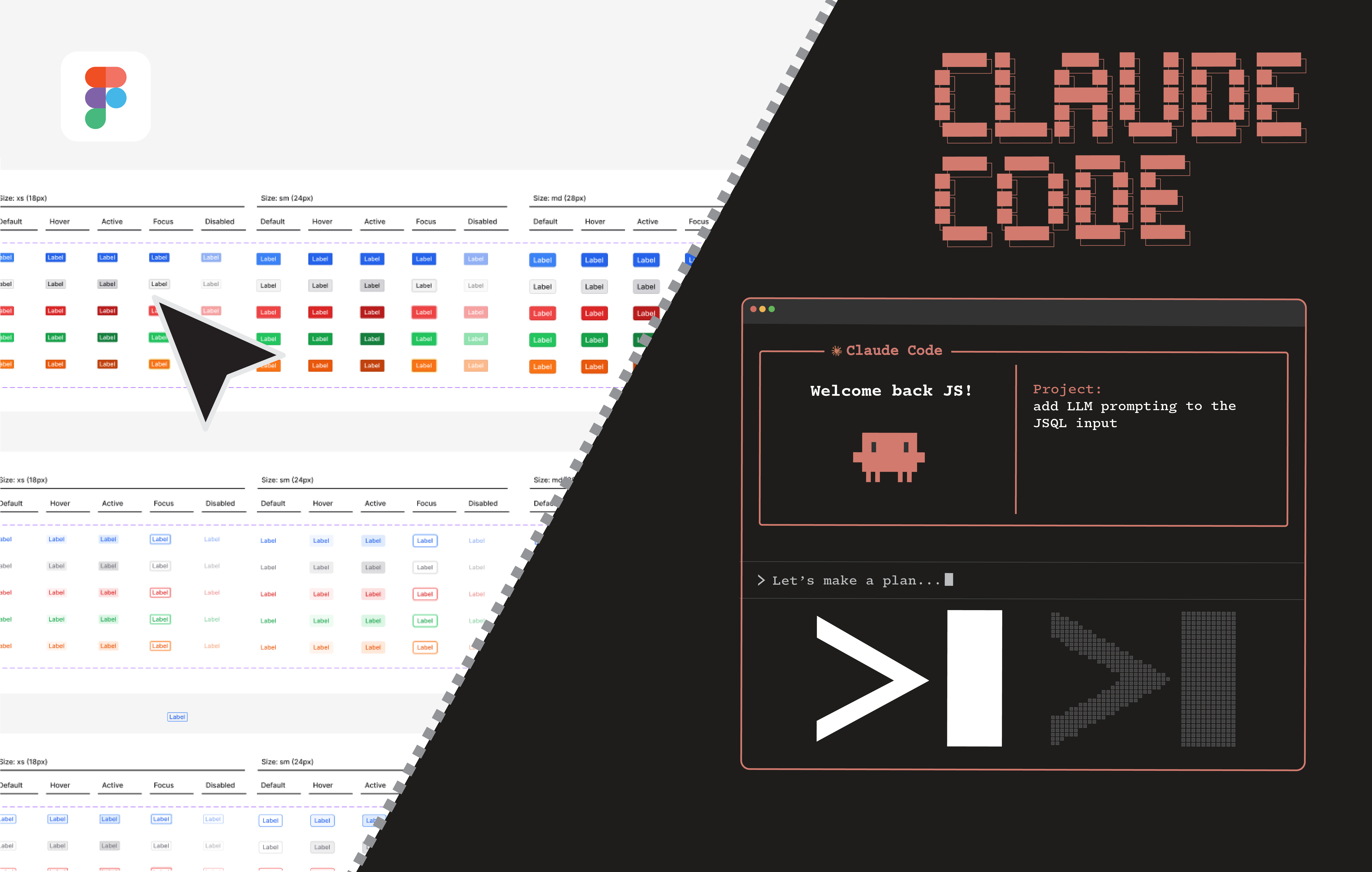
I design with Claude more than Figma now
2026-06-07A designer explains how their workflow has shifted from traditional tools like Figma to relying heavily on the AI model Claude for product design after initial skepticism toward large language models. Won over by the utility of AI coding assistants, the author now uses conversational AI to rapidly generate and iterate on user interfaces, highlighting a growing trend of generative AI disrupting conventional design software.
Comments
A new technique called Speculative KV coding enables the lossless compression of AI model KV caches by up to four times. By leveraging a cheaper predictor model to drive an arithmetic coder, the method significantly reduces memory overhead for large language models without sacrificing data integrity.
CommentsMy automated doubt development process
2026-06-07A new article details an automated doubt process that restores developer trust in AI-assisted coding by front-loading rigorous scrutiny through multi-agent validation. By proactively verifying AI-generated outputs with multiple validation agents, this methodology shifts the workflow from blind reliance to systematic error prevention.
Comments2026-06-06
Ask HN: Why is the HN crowd so anti-AI?
2026-06-06Hacker News users debate the perception that the community is anti-AI, concluding that the platform simply reflects broader societal divisions regarding the technology. While many developers appreciate the productivity benefits of generative AI, experienced engineers caution against the trend of vibe coding by emphasizing that generating raw code is not a substitute for proper software architecture. Ultimately, the discussion highlights a nuanced perspective where practitioners recognize the strengths of large language models but remain highly critical of their current limitations in handling complex, production-level projects.
Comments
A viral tech joke highlighting the notoriously steep learning curve of C++ has gained traction online after a user joked about abandoning the language's definitive book after just looking at the back cover. The punchline about skipping the required reading perfectly captures the intimidation many developers feel toward the language. This humorous observation continues to resonate with programmers who frequently struggle with the dense syntax and complex documentation of C++.
Comments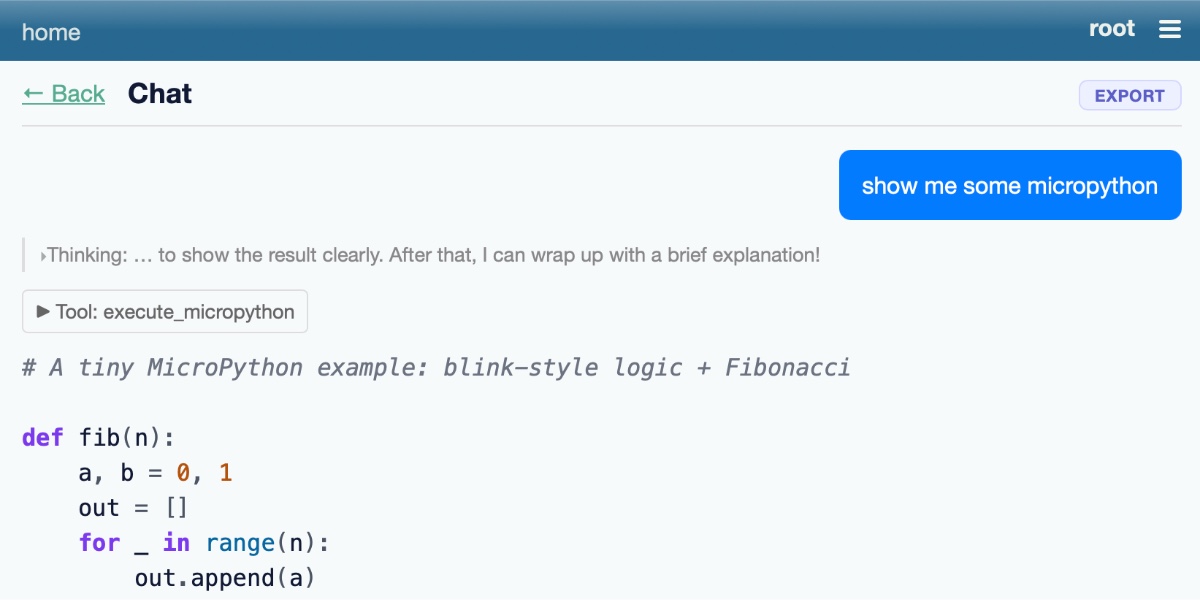
A developer has combined MicroPython and WebAssembly to create a robust sandbox environment for securely executing Python code. After years of experimenting with various isolation methods, this latest approach is believed to finally provide the ideal characteristics for safe and efficient script execution.
CommentsA reader discussion on building Rust procedural macros emphasizes the importance of choosing declarative macros to avoid significantly slowing down compilation times. While procedural macros remain necessary for complex tasks like parsing types and annotating structs, developers hope that upcoming improvements to the declarative macro system will reduce this reliance. Ultimately, the debate mirrors long-standing programming language design discussions about balancing metaprogramming power with compilation speed and code maintainability.
Comments2026-06-05
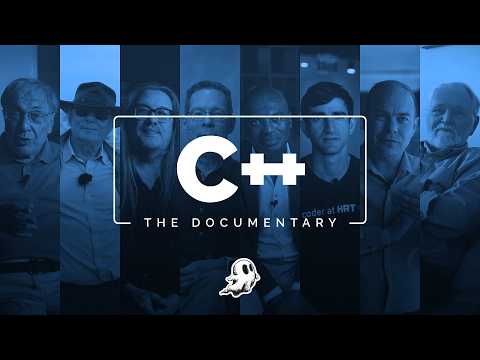
C++: The Documentary
2026-06-05A new documentary exploring the history of the C++ programming language has premiered on YouTube. The release featured a live chat with C++ creator Bjarne Stroustrup and other key figures involved in its development. The film celebrates the collaborative efforts of the hundreds of developers who have advanced the language over the years.
CommentsA newly introduced branchless quicksort implementation has demonstrated faster sorting performance than standard C++ algorithms like std::sort and pdqsort in recent benchmarks. The accompanying discussion highlights the original author's subsequent collaboration on ipnsort and driftsort, two high-performance sorting algorithms recently integrated into the Rust standard library. Additionally, the thread explores the design of the misfortunate Rust crate, which intentionally violates the expected social contract of standard traits to test edge cases in safe Rust implementations.
Comments2026-06-04

A decade of open-source experimentation in psychovisual modeling and compression has paved the way for JPEG XL, the next-generation image coding standard. These collaborative technical advancements shape the future of digital imaging by delivering superior visual quality and efficiency.
Comments2026-06-03
Mathematicians and technologists warn that the rapid advancement of AI threatens to erode fundamental human understanding by outsourcing critical cognitive work in mathematics and programming. Although some view this automation as inevitable technological progress, critics argue that delegating tasks to AI sacrifices essential knowledge and quality for mere efficiency. Ultimately, they fear that an overreliance on AI will sever vital human control over the foundational technologies shaping our society.
CommentsGooey is a new hybrid immediate and retained mode UI framework for the Zig programming language designed to build fast, GPU-rendered applications. It supports cross-platform development by leveraging graphics APIs such as Metal, WebGPU, and Vulkan across macOS, WebAssembly, and Wayland environments.
CommentsEvery Byte Matters
2026-06-03A recent article highlights how Java developers frequently add numerous fields to large classes without considering the resulting memory overhead. Instead of evaluating the byte-level impact of these additions, programmers typically rely on asymptotic algorithmic analysis to measure performance. The author argues that true optimization requires recognizing that the memory cost of every single field matters in class design.
Comments
Ableton Extensions SDK
2026-06-03Ableton has introduced the Extensions SDK, an open JavaScript toolkit designed to expand the capabilities of its Live 12 Suite. This framework empowers developers and users to build custom tools that introduce fresh functionalities directly into the music production software.
Comments2026-06-02

MAI-Code-1-Flash
2026-06-02Microsoft released MAI-Code-1-Flash, a 137B parameter mixture of experts model with 5B active parameters that the company claims significantly outperforms Claude Haiku on the SWE-bench Pro coding benchmark. Community critics accuse the company of cherry-picking weak opponents for comparison, arguing the model merely matches the performance of much smaller and more efficient open-source alternatives like Qwen. In defense of the release, some users highlight Microsoft's emphasis on decontaminated training data and clean licensing, which could offer better real-world generalization and reduced legal liability.
CommentsChipotlai Max
2026-06-02A new satirical GitHub repository named Chipotlai Max presents itself as an AI coding agent powered by stolen computing resources from Chipotle. The humorous project is a fork of OpenCode that utilizes a fictional default model called Pepper AI. Its community-driven roadmap jokingly aims to expand the network by adding unauthorized compute providers from other major retailers like Home Depot, Target, and Starbucks.
CommentsA discussion stemming from a developer's month-long Clojure experience highlights the Lisp community's tradition of building custom static site generators, alongside the challenges of integrating with broader web ecosystems. The conversation also explores Clojure's powerful portability, emphasizing how its various dialects enable the language to run seamlessly across multiple host environments like JavaScript, Python, and C++.
Comments
Why Janet? (2023)
2026-06-02After using the Lisp dialect Janet for personal projects, the developer wrote and published a free book to help grow the language's community. The article serves as a persuasive pitch outlining why other programmers should give the lesser-known language a chance.
Comments
HP is re-releasing its iconic HP-16C programmer calculator as a new Collector's Edition. The updated device merges the beloved classic design of the original with modern programming functions for today's computer scientists.
CommentsA new 2024 DOS demo called Pits has achieved native multicore processing and Full HD graphics in pure DOS without relying on external drivers. Since the legacy operating system lacks built-in multithreading, developers accomplished this by running standard DOS on one CPU core while executing custom code on additional cores. This workaround coordinates the cores via shared memory and requires programmers to manually implement synchronization, effectively writing a micro-kernel to manage the complex cross-core execution.
Comments
A developer's weekend project experimenting with encrypted reasoning blobs offered valuable insights into frontier LLM APIs and coding agents. While the exercise did not expose major cryptographic flaws, it provided practical, hands-on experience with advanced AI systems.
Comments2026-06-01
Stanford has introduced specific guidelines for AI agents assisting students in its CS336 Language Modeling From Scratch course. The newly added CLAUDE.md file in the first assignment outlines rules to ensure AI coding assistants are used appropriately while building foundational models. This update reflects a growing trend of academic institutions proactively regulating AI tools in advanced computer science curricula.
CommentsStepSecurity has identified multiple compromised npm packages within the Red Hat Cloud Services namespace that contain malicious code. Developers utilizing these affected dependencies are urged to immediately audit their environments and remove the compromised versions to mitigate supply chain risks.
CommentsAsk HN: Who is hiring? (June 2026)
2026-06-01In the June 2026 Hacker News hiring thread, startup Hotwash is seeking a founding engineer to transition its fire department review platform from a low-code stack to React Native, while open-source chat platform Zulip is hiring a senior backend infrastructure engineer. Additionally, community members debated the future viability of no-code tools like FlutterFlow amid the rise of AI-assisted coding.
Comments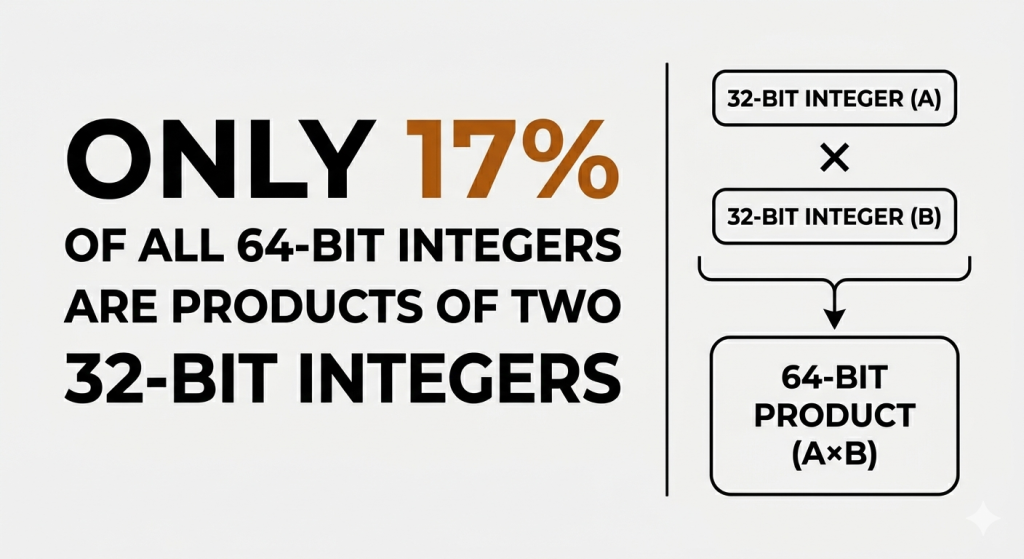
Multiplying two fixed-bit integers in software programming frequently results in overflow because the full product typically requires double the bit length for accurate representation. This mathematical limitation means that only 17% of all possible 64-bit integers can actually be formed by multiplying two 32-bit integers.
Comments