Programming News
Programming keeps evolving as languages mature, tooling improves, and teams rethink how software should be written. This section follows that change, gathering news and articles about programming languages, compilers, development practices, and the craft of writing reliable, maintainable code.
Typical stories include language releases and proposals, deep dives into compiler and runtime internals, performance investigations, debates about coding style and architecture, and essays from experienced engineers on lessons learned. Popular ecosystems such as Rust, Python, JavaScript, and TypeScript appear regularly.
Keeping up with these topics helps developers choose the right tools, avoid known pitfalls, and grow their skills. Working engineers, students, and technical leaders follow this coverage to stay current with the ideas shaping how software gets built.
2026-05-30
Zig ELF Linker Improvements Devlog
2026-05-30Community discussions surrounding the Zig ELF linker improvements highlight widespread excitement for the language's potential to serve as a modern C replacement. Developers are optimistic that upcoming linker enhancements and incremental compilation will deliver high performance alongside rapid iteration speeds and an improved developer experience. Participants also favor Zig's manual memory control and lack of garbage collection pauses over alternatives like Go and Rust for systems programming and UI development.
Comments
The Last Technical Interview
2026-05-30The traditional technical interview process is nearing its end as tech companies shift away from standard coding evaluations. This piece discusses the decline of this long-standing hiring practice and explores the emerging alternatives replacing it across the industry.
Comments
2026-05-29
The tech community is debating whether the rapid integration of AI in programming is repeating the lost decade of frontend development caused by an obsession with frameworks. Some worry this shift toward automated coding is actively deskilling software engineers. Others argue that AI simply enables developers to operate at a higher level of abstraction.
Comments
We should be more tired than the model
2026-05-29The increasing ease of AI-assisted coding has left developers less mentally fatigued than the very models they rely on, prompting concerns about intellectual complacency. To counter this trend, the article suggests reintroducing deliberate friction into software development workflows to ensure engineers maintain deep cognitive engagement and prevent skill atrophy.
Comments2026-05-28

Claude Opus 4.8
2026-05-28Claude Opus 4.8 has been released as an upgrade to the Opus class of models, delivering stronger performance across coding, agentic tasks, and professional work. The new iteration also features enhanced consistency to effectively manage long-running projects.
Comments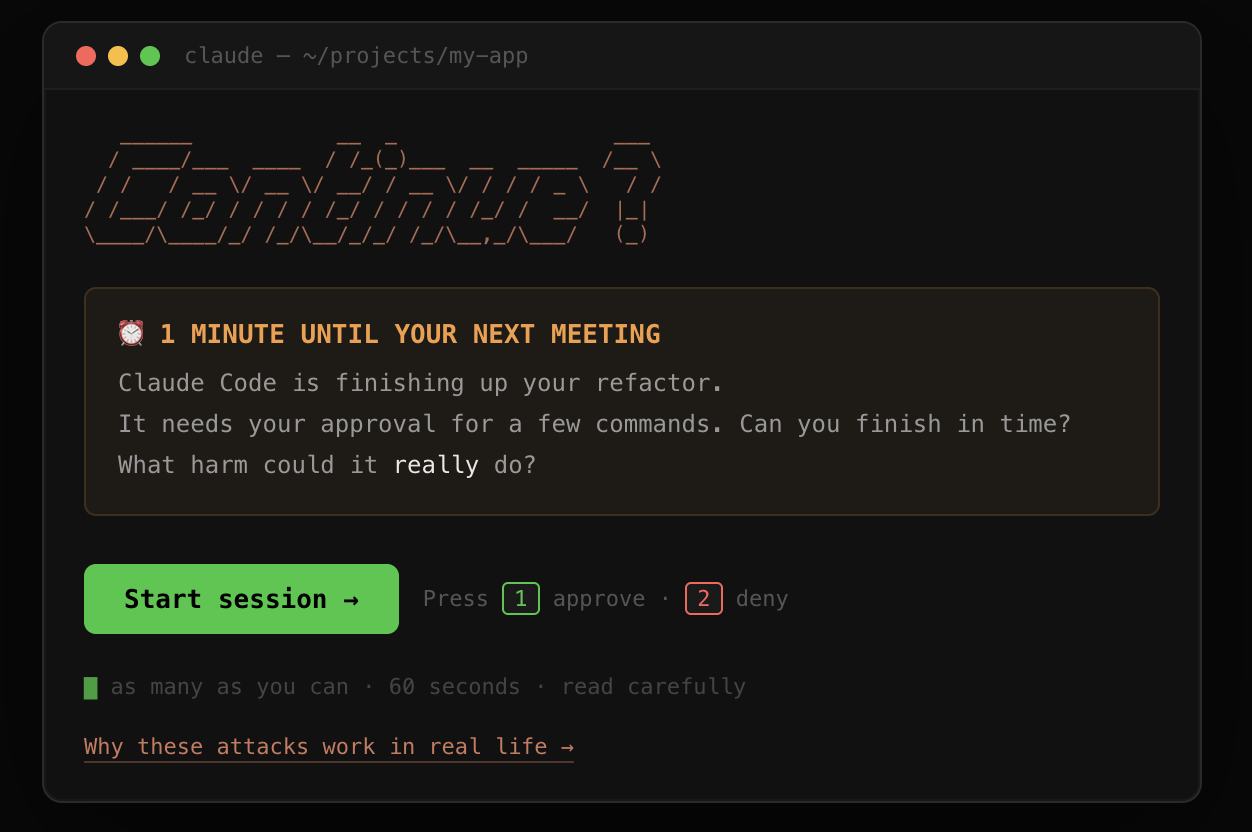
A new 60-second game highlights the growing issue of LLM permission fatigue among developers using AI coding assistants. The interactive experience challenges users to recognize how often they blindly approve automated commands from tools like Claude Code without actually reading the underlying instructions.
CommentsCoalton is a statically typed, functional programming language that compiles to Common Lisp for efficient execution. By incorporating design concepts from Haskell and OCaml, it brings modern functional paradigms and strong type systems to the Lisp ecosystem.
Comments2026-05-27
Go: Support for Generic Methods
2026-05-27A new proposal seeks to introduce support for generic methods in the Go programming language. The design document outlines a revised approach that clarifies the handling of concrete and interface methods to accommodate this new functionality.
CommentsRust (and Slint) on a Jailbroken Kindle
2026-05-27A recent project demonstrates running the Rust programming language and Slint GUI toolkit on jailbroken Kindles, prompting community discussions on repurposing e-ink devices for custom applications. Enthusiasts shared strategies for maintaining jailbreaks by blocking over-the-air updates and compared the experience to alternative Linux-based e-readers like Kobo and the PineNote. The conversation highlights a growing interest in lightweight, privacy-focused, and ad-free custom firmware for older e-ink hardware.
CommentsA developer shares technical insights from building Migo Games, a social arcade app featuring online mini games for iOS and Mac. The article explores the specific lessons learned during the project's development using the Elixir and Swift programming languages.
Comments2026-05-26
Rosalind is a new open-source genomics toolkit written in Rust that enables users to run complete whole-genome analysis pipelines directly on a standard laptop. It ensures highly reproducible and resource-governed results by utilizing transactional artifacts, reproducible sharding, and Arrow integration. This lightweight approach significantly lowers the hardware barrier for complex genomic research.
Comments
Use boring languages with LLMs
2026-05-26Coding agents powered by large language models achieve better results when using simpler, standardized programming languages like Go rather than highly fragmented ones like JavaScript or Python. The cohesive design of these boring languages provides the consistency needed to maximize AI coding efficiency.
CommentsPerformance of Rust Language [pdf]
2026-05-26A recently shared presentation hosted on GitHub explores the performance capabilities of the Rust programming language. The accompanying slides detail various benchmarks and profiling techniques used to evaluate the language. These resources provide developers with valuable insights to help maximize execution speed and efficiency in their applications.
CommentsWhat color is your function? (2015)
2026-05-26Readers discussing a classic 2015 article on function coloring argue that the concept extends beyond asynchronous programming to encompass exceptions, fallibility, and other paradigms. The discussion highlights that the primary friction caused by colored functions stems from a language's inability to abstract over different function types rather than the separation itself. Ultimately, commenters note that while the term has become an overused buzzword, resolving the underlying abstraction problem often requires implementing complex type system features like higher-kinded types.
CommentsThe user is visibly frustrated
2026-05-26A recent article explores why coding agents often infuriate users, attributing the issue to their conversational user experience. Because these tools mimic helpful colleagues without actually learning or taking responsibility for their mistakes, their repeated errors trigger social instincts that make the frustration feel exceptionally aggravating.
Comments
A recent programming guide details how to create an overhead, Ultima-style game map view using Commodore 64 BASIC. What starts as a simple map implementation unexpectedly evolves into a deep dive into C64 BASIC code optimization. This provides retro computing enthusiasts with valuable techniques for maximizing the performance of the classic 8-bit system.
CommentsC array types are weird
2026-05-26This article examines the peculiar design quirks and historical limitations of array types in the C programming language. The author breaks down what makes these constructs confusing and proposes alternative approaches for how they could have been implemented differently. The discussion also explores related programming concepts to provide broader context for these language design choices.
CommentsOpaque Types in Python
2026-05-26In a post on his blog Deciphering Glyph, Glyph Lefkowitz examines the use of opaque types in Python to improve API design. He discusses strategies for hiding implementation details from users, ensuring that public interfaces remain clean and maintainable. The article offers practical guidance for Python developers seeking to enforce better encapsulation in their codebases.
Comments2026-05-25
Discussions around C portability and alternative compilers reveal significant challenges in parsing non-standard, platform-specific code within header files. Developers continue to debate the trade-offs between strict POSIX compliance and leveraging OS-specific features like systemd, which frequently breaks compatibility for Windows and FreeBSD users. Ultimately, the discourse highlights that achieving true cross-platform compatibility in C remains difficult due to prevalent Linux-centric assumptions and inconsistent compiler support.
CommentsTraditional programming books are rapidly losing relevance as developers increasingly rely on digital documentation and online tutorials. This decline marks a melancholic shift in tech education, signaling the end of an era where programmers regularly cracked open physical coding manuals. Ultimately, the industry is moving away from static printed literature in favor of faster, dynamically updated online resources.
CommentsThe Eternal Sloptember
2026-05-25The article argues that adopting AI agents in software development will be a costly mistake because they are merely statistical models mimicking code rather than actual programmers. Consequently, the output they produce is fundamentally flawed, and these underlying errors are becoming increasingly difficult to detect as the models improve.
CommentsAI errno(2) values
2026-05-25A recent piece proposes updating classic Unix errno system error codes to address the unique challenges of the artificial intelligence era, such as model hallucinations and context limit overflows. This concept highlights the evolving intersection of low-level systems programming and modern AI development by demonstrating the need to rethink foundational error-handling standards for machine learning.
Comments2026-05-24
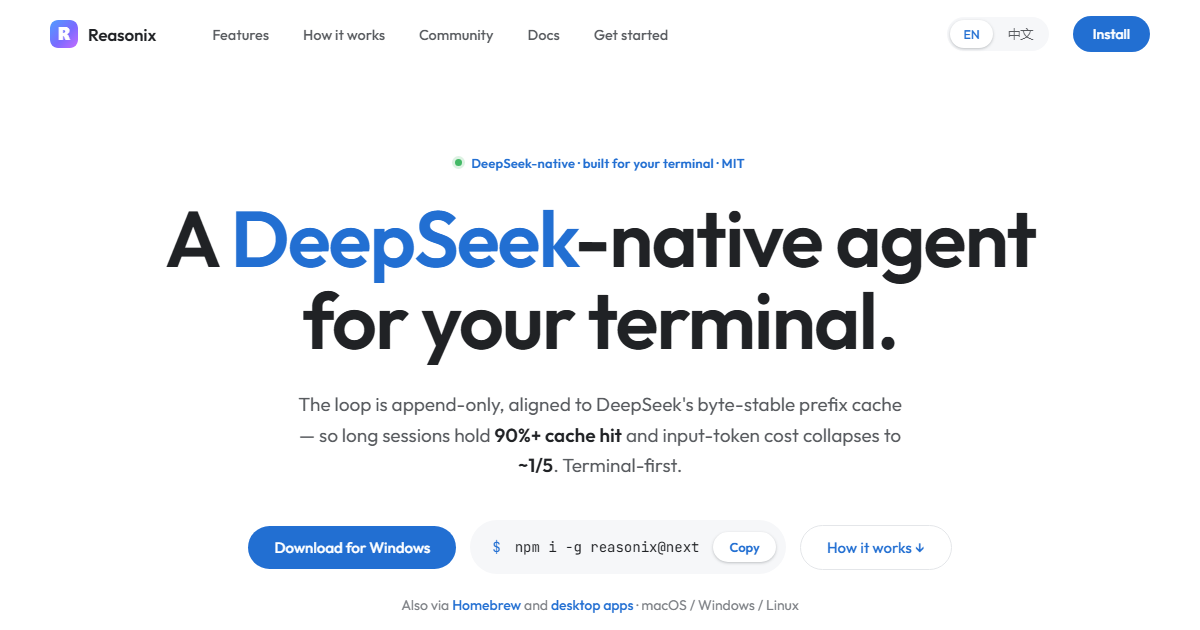
DeepSeek Reasonix is a new open-source AI coding agent designed for use across terminals, browsers, and compatible editors. By leveraging DeepSeek's byte-stable prefix cache, the tool maintains over a 90% cache hit rate during long sessions and reduces input-token costs to one fifth. The MIT-licensed project is distributed as a single Go binary, ensuring easy installation and seamless accessibility across desktop and web platforms.
Comments
Migrating from Go to Rust
2026-05-24Migrating from Go to Rust is considered a unique transition because it is not primarily driven by basic speed or static typing. Since Go already provides strong performance and type safety, teams adopting Rust are mainly motivated by its stricter correctness guarantees. This shift ultimately highlights a growing developer focus on runtime safety and absolute code reliability.
CommentsWake up! 16b
2026-05-24A newly released 16-byte computer demo titled Wake Up has captivated the size coding community with its remarkable visual effects and cellular automaton tricks. Although the title initially led some readers to mistake the project for a 16-billion parameter language model, the tiny binary actually achieves stunning graphical results within an extremely constrained memory limit. Programmers and viewers alike are praising the tiny file as a masterpiece of extreme small-scale technical achievement.
Comments
A recent study highlights the fragility of large language model agents in backend code generation by identifying a phenomenon termed constraint decay, where AI systems progressively forget or fail to adhere to initial instructions. This issue causes significant errors in longer code sequences, underscoring the critical need for improved methods to help models maintain strict operational constraints throughout complex programming tasks.
Comments
I keep bouncing off the Scheme language
2026-05-24Despite a deep appreciation for the Scheme programming language, a developer shares their ongoing struggle to successfully learn and remember its core concepts. The author highlights the irony of this difficulty, as they named their blog after the iconic Scheme textbook, using this post as a candid public admission of their inability to make the language stick.
Comments
A newly discovered exploit uses invisible text and Unicode tricks in legal contracts to manipulate large language models into providing incorrect advice to human reviewers. Although the attack targets AI systems rather than the humans signing the documents, legal experts warn it could constitute fraudulent misrepresentation, prompting discussions on mitigating the vulnerability using the Rust programming language.
Comments
Usborne 1980s Computer Books
2026-05-24Usborne Publishing is reviving its classic 1980s computer books to introduce a new generation of children to the fundamentals of coding. These updated educational guides aim to make programming accessible to modern kids while retaining the nostalgic appeal of the original manuals.
Comments2026-05-23
A revived 2022 article on deep learning performance highlights NVIDIA's sustained exponential hardware growth and the massive computational gap between modern GPUs and interpreted software. Readers heavily debated the author's comparison of raw GPU processing power to Python's execution speed, arguing over whether this accurately illustrates framework overhead or constitutes a flawed category error.
Comments