Programming News
Programming keeps evolving as languages mature, tooling improves, and teams rethink how software should be written. This section follows that change, gathering news and articles about programming languages, compilers, development practices, and the craft of writing reliable, maintainable code.
Typical stories include language releases and proposals, deep dives into compiler and runtime internals, performance investigations, debates about coding style and architecture, and essays from experienced engineers on lessons learned. Popular ecosystems such as Rust, Python, JavaScript, and TypeScript appear regularly.
Keeping up with these topics helps developers choose the right tools, avoid known pitfalls, and grow their skills. Working engineers, students, and technical leaders follow this coverage to stay current with the ideas shaping how software gets built.
2026-05-14
Rewrite Bun in Rust has been merged
2026-05-14The popular all-in-one JavaScript runtime and package manager Bun has officially merged its major rewrite in the Rust programming language. Spearheaded by creator Jarred Sumner, this architectural transition leverages Rust's performance and memory safety to further enhance the tool's speed and reliability.
CommentsA new open-source project introduces a specialized skill for AI coding assistants like Claude Code and OpenAI Codex to foster deliberate practice. The tool, named learning-opportunities, helps developers actively refine their programming abilities while working alongside AI. By prompting users to engage critically with the code, it prevents over-reliance on automated generation and promotes continuous learning.
Comments

Int a = 5; a = a++ + ++a; a =? (2011)
2026-05-14Developers are revisiting a notorious C programming interview question involving complex increment operators that triggers undefined behavior and sequence point violations. Commenters recall the frustration of interviewers mistakenly treating specific compiler outputs as the definitive answer rather than acknowledging the language rules. The community consensus emphasizes that the only appropriate response is to recognize such code as unmaintainable and refuse to write it.
Comments2026-05-13
The Emacsification of Software
2026-05-13As AI makes software production increasingly effortless, developers are retreating into highly personalized, isolated coding environments akin to custom Emacs configurations. While this trend maximizes individual productivity, it creates severe bottlenecks for collaboration and code sharing because these custom environments are nearly impossible for others to understand or integrate. This shift is now challenging traditional version control platforms like GitHub and forcing teams to rethink how they collaborate on highly fragmented, individually generated code.
Comments
Python 3.14 introduced a new incremental garbage collector that caused significant memory pressure in production environments. Consequently, developers have decided to revert this feature in both Python 3.14 and 3.15 to restore the previous garbage collection system.
CommentsTech enthusiasts recently dissected a classic chess puzzle requiring the placement of four queens and one bishop to attack every square on a chessboard. By utilizing Python scripts and constraint programming, the community discovered 388 possible solutions, explored alternative piece combinations, and highlighted the puzzle's counter-intuitive need for overlapping piece responsibilities.
Comments
My graduation cap runs Rust
2026-05-13Software developer Eric Park recently shared details about his custom graduation cap, which features a microcontroller programmed entirely in the Rust programming language. The project serves as a creative exploration of embedded systems, demonstrating the growing versatility of Rust in hardware and DIY maker communities.
CommentsS-100 Virtual Workbench
2026-05-13The S-100 Virtual Workbench provides an emulation environment for classic S-100 bus computers, sparking nostalgic conversations among veteran developers about their early programming experiences. Readers fondly recalled the hardware limitations and DIY ethos of the era, sharing memories of coding on Heathkit machines and early minicomputers. These discussions highlight how overcoming the technical constraints of early personal computing shaped a generation of hobbyists and programmers.
Comments
Y Combinator P26 startup Ardent has launched a tool that creates isolated Postgres database sandboxes in under six seconds with zero migration required. The platform enables coding agents and developers to safely test, clean, and migrate data on separate branches without risking production environments.
CommentsThe vi family
2026-05-13This article explores the enduring legacy of the vi text editor family and its popular modern variants like vim. It highlights why mastering vi remains a worthwhile investment for developers of all skill levels. Ultimately, the piece positions the software as the only text editor programmers will ever truly need to learn.
Comments2026-05-12

If AI writes your code, why use Python?
2026-05-12AI coding assistants are challenging the long-standing dominance of Python and TypeScript. These languages were historically favored because their rapid development speeds outweighed slower execution performance. However, as AI automates much of the programming process, developers may soon prioritize runtime efficiency over the sheer ease of writing code.
CommentsCERT has disclosed six critical security vulnerabilities in the widely used dnsmasq DNS and DHCP server. The announcement has reignited developer debates over the necessity of rewriting legacy C codebases in memory-safe languages like Rust to prevent future exploits. However, critics warn that while memory safety eliminates certain bugs, it is not a universal fix and rewritten projects can still suffer from other security flaws.
Comments2026-05-11
I'm going back to writing code by hand
2026-05-11In a piece about returning to manual coding, the author and readers criticize AI code generators for lacking the human judgment required to adapt architectural constraints over time. Without exhaustive, line-by-line human review, AI tools often contort software to fit outdated rules or hide catastrophic mistakes that eventually render the codebase unmaintainable. Consequently, developers are finding that the intense oversight needed to prevent hidden errors makes writing code by hand a more reliable and practical approach.
CommentsWhile some developers report that AI coding agents reduce maintenance costs by modernizing legacy code and automating testing, others warn that generating poorly understood code actually increases outages and technical debt. Consequently, participants emphasize that maintainability must remain a core engineering responsibility to ensure AI genuinely decreases rather than exacerbates long-term software maintenance burdens.
CommentsNvidia has introduced cuda-oxide, an official compiler that enables developers to write and compile GPU device code directly in Rust. Rather than replacing host-side libraries like cudarc, the new tool complements them by generating embedded PTX code from Rust source files for execution via existing CUDA APIs. Additionally, cuda-oxide leverages Rust's strict memory and type safety models to provide robust guardrails against common undefined behaviors in GPU kernel programming.
CommentsA developer built a static HTTP web server entirely from scratch using aarch64 assembly language, embracing the extreme challenge of bare-metal programming. The project serves as both a deep dive into low-level architecture and a humorous personal quest for meaning through code.
CommentsReaders are revisiting a highly praised 2010 blog post by Matt Might that demonstrates how to implement a programming language in just seven lines of code. Commenters celebrate the tutorial for demystifying computer science and argue that such foundational concepts should be taught to everyone, not just computer science majors. The discussion also compares this elegant Lisp-based implementation to other minimal language projects, highlighting the enduring beauty of concise code.
Comments2026-05-10
A developer has shared a MacOS web server written exclusively in ARM64 assembly language. The project, showcased on Hacker News, was built as a personal challenge to explore extreme low-level system programming. The resulting application operates natively without relying on higher-level abstractions or traditional software frameworks.
Comments
The first chapter of a new six-part history of Visual Basic has been published on the EvilGeniusLabs website, highlighting lesser-known aspects of the programming language's origins. This installment explores Microsoft's early BASIC dynasty, the acquisition of a California developer to front the project, and Bill Gates' strategic marketing pitch prior to the software's release.
Comments2026-05-09

A recent article examines how developers are finding surprising success using HTML as a structural and prompting tool alongside Anthropic's Claude AI for coding tasks. By leveraging this foundational markup language, users are achieving highly effective rapid prototyping and precise user interface generation within modern AI development workflows.
Comments
The experimental Rust rewrite of the Bun JavaScript runtime has reached a major milestone by passing 99.8% of its pre-existing test suite on Linux x64 glibc. This exceptionally high compatibility rate demonstrates that the transition to Rust is progressing smoothly and closely replicates the original codebase's behavior.
CommentsZed Editor Theme-Builder
2026-05-09The Zed code editor has introduced a new Theme-Builder tool that allows users to easily build and customize visual themes. This addition provides a streamlined way for developers to personalize their coding environments and improve their overall workflow.
CommentsA developer has released let-go, an open-source programming language written in Go that closely mimics Clojure and boasts a remarkably fast 7-millisecond boot time. The project's source code is now available on GitHub for community contributions and further development.
Comments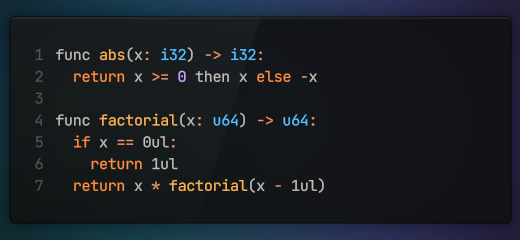
Creating your own programming language is surprisingly accessible when developers bypass complex traditional tools in favor of simple, hand-written recursive descent parsers or AI assistants. The true difficulty lies not in the technical execution of the compiler, but in managing severe scope creep and resisting the urge to endlessly add unnecessary features to the project.
CommentsShow HN: Rust but Lisp
2026-05-09A developer has released an open-source project called Rust but Lisp, which combines the syntax and paradigms of Lisp with the underlying capabilities of the Rust programming language. The source code is currently available on GitHub for community testing and collaborative development.
Comments2026-05-08
Mojo 1.0 Beta
2026-05-08The Mojo programming language has officially reached its 1.0 Beta milestone, advancing its mission to combine Python's ease of use with C-level performance for artificial intelligence. This release delivers increased stability and new capabilities to help developers efficiently build and deploy complex machine learning models. The update signals that Mojo is rapidly maturing and preparing for widespread adoption in the competitive AI landscape.
CommentsFalse rumors regarding the death or severe illness of the author, Cliff, recently circulated online, only to be debunked as a bizarre misunderstanding. The situation sparked a wave of humorous and bewildered reactions in the community discussion thread. Readers playfully compared the false alarm to a Monty Python sketch and joked about artificial intelligence generating the fake condolences.
CommentsClojureScript Gets Async/Await
2026-05-08ClojureScript has officially integrated native async/await support into its core compiler, overcoming previous community skepticism regarding implementation complexity. Spearheaded by developer borkdude after prototyping the feature in his Squint project, this update provides a modern alternative to the older core.async library. The release has also sparked broader discussions within the community regarding asynchronous error handling and the shift toward minimal JavaScript frontends using server-sent events.
Comments2026-05-07

AlphaEvolve is a coding agent powered by Gemini that optimizes algorithms to accelerate scientific progress across multiple disciplines. By applying this technology to complex challenges in genomics, quantum physics, and global infrastructure, the tool aims to solve critical real-world problems at scale.
CommentsProgramming Still Sucks
2026-05-07A recent tech commentary highlights the tiresome, repetitive questions programmers face from non-tech individuals about AI replacing their jobs. Through a brief social anecdote, the author illustrates how this specific inquiry has become an exhausting cliché, proving that the social annoyances and public misconceptions surrounding the programming profession remain unchanged.
Comments