Programming News
Programming keeps evolving as languages mature, tooling improves, and teams rethink how software should be written. This section follows that change, gathering news and articles about programming languages, compilers, development practices, and the craft of writing reliable, maintainable code.
Typical stories include language releases and proposals, deep dives into compiler and runtime internals, performance investigations, debates about coding style and architecture, and essays from experienced engineers on lessons learned. Popular ecosystems such as Rust, Python, JavaScript, and TypeScript appear regularly.
Keeping up with these topics helps developers choose the right tools, avoid known pitfalls, and grow their skills. Working engineers, students, and technical leaders follow this coverage to stay current with the ideas shaping how software gets built.
2026-04-16

Qwen has released Qwen3.6-35B-A3B, an openly available model designed to deliver advanced agentic coding capabilities to developers. This release enhances the broader Qwen Studio ecosystem, which offers a comprehensive suite of multimodal features including image and video understanding, document processing, and web search integration.
Comments
Tree-sitter integration is significantly enhancing the R programming experience by introducing modern development tooling. This upgrade provides R developers with advanced capabilities for parsing, searching, formatting, and editing their code. As a result, R now offers the same high-quality development environment previously limited to other mainstream programming languages.
Comments
AI cybersecurity is not proof of work
2026-04-16Tech community debates are questioning the validity of Anthropic's claims regarding its closed Mythos model and its advanced cybersecurity capabilities compared to open-source alternatives. Skeptics argue that without transparent testing setups, these assertions serve as marketing rather than proof, raising concerns about whether artificial intelligence genuinely discovers complex vulnerabilities or merely games benchmarks. The discussion also highlights broader disagreements over whether strong coding proficiency naturally translates to identifying arbitrary security flaws, emphasizing the need for practical and reproducible verification.
CommentsA new technique leverages a modified LLVM fork to retrofit JIT compilation directly into C-based interpreters by optimizing the interpreter's underlying execution loop. By manually annotating the interpreter's C code, developers can significantly boost performance, such as doubling execution speed for Lua, without altering the actual programs being interpreted. While the approach currently requires specialized knowledge and manual modifications, it offers a promising method for accelerating language interpreters that could potentially be automated in the future.
CommentsA recently discussed article introduces the mathematical foundations of spherical harmonics specifically tailored for graphics programmers. Readers in the accompanying discussion explain how these orthogonal functions efficiently compress and integrate complex lighting data while outlining the necessary mathematical prerequisites like calculus and linear algebra. The conversation also highlights the mathematics' broader utility beyond computer graphics, noting its applications in spatial audio, optics, and quantum mechanics.
CommentsCodeBurn is a free local tool that tracks and analyzes AI coding token usage and costs across 31 different tools and agents like Claude Code, Cursor, and Gemini. Developers can break down these metrics by model, project, and task simply by running the npx codeburn command locally.
Comments2026-04-15
Although the original 2008 article recommended two specific papers for compiler design, the accompanying reader discussion focuses heavily on alternative, beginner-friendly book recommendations. Contributors criticize the theoretical Dragon Book and instead advocate for practical guides like Niklaus Wirth's Compilers, alongside simpler techniques like recursive descent parsers over complex parser generators.
CommentsDo you even need a database?
2026-04-15A recent benchmarking study challenges the necessity of traditional databases by comparing simple file-based and in-memory storage strategies across Go, Bun, and Rust HTTP servers. The real-world performance tests on these lightweight alternatives uncovered unexpected results that question modern architectural assumptions.
Comments2026-04-14

Claude Code Routines
2026-04-14Anthropic has introduced Claude Code Routines, an automation feature that allows developers to put its coding assistant on autopilot. The new tool runs on Anthropic-managed cloud infrastructure, letting users define custom routines that execute on a set schedule, trigger via API calls, or react automatically to GitHub events.
Comments
Write less code, be more responsible
2026-04-14This opinion piece examines the dual impact of AI-assisted programming, highlighting how automated tools allow developers to write less code while increasing their accountability for the final product. The author emphasizes that engineers must maintain strict oversight over code quality, security, and system architecture to responsibly manage AI-generated outputs.
Comments
A comprehensive look into DuckDB's architecture reveals the design and implementation of this in-process SQL database optimized for analytical query processing. Built with zero external dependencies, it offers seamless integration and easy installation across multiple programming languages like Python, C++, and Java. This overview highlights how its streamlined internals enable high-performance data analysis directly within host applications.
CommentsA new open-source, full-stack Python web framework called Plain has been introduced on Hacker News to streamline application development. Uniquely designed to support both human developers and AI agents, the project is now available for community contribution via GitHub.
CommentsPractitioners treating multi-agent software development as a distributed systems problem emphasize using sequential pipelines with strict verification gates to ensure overall reliability. By applying deterministic checks and quality boundaries between planning, designing, and coding stages, developers can effectively manage the inherent unpredictability of large language models. This approach transforms unreliable individual agents into a coordinated protocol that consistently preserves user intent across different artifact representations.
CommentsGAIA is a new open-source framework that enables developers to build and run AI agents directly on local hardware. Supporting both Python and C++, the tool provides a flexible foundation for creating localized artificial intelligence applications specifically optimized for AMD systems.
Comments2026-04-13

AMD is challenging Nvidia's dominant CUDA ecosystem by leveraging its fully open-source ROCm stack and integrating the Triton compiler. By embracing a software-first culture, the company aims to steadily erode Nvidia's competitive moat in the accelerated computing market.
Comments
Servo is now available on crates.io
2026-04-13The Servo web engine is now available on crates.io, marking its first official release on the Rust package registry. This milestone introduces a Long-Term Support version, providing developers with a stable and reliable foundation for future integration.
CommentsA perfectable programming language
2026-04-13A recent discussion surrounding the perfectable programming language Lean explores the balance of language power, contrasting math-focused tools like Lean and Agda with general-purpose dependently typed languages like Idris. Participants also debate the true semantic value of homoiconicity in enabling advanced meta-programming, highlighting the ongoing challenge of designing dependently typed languages that are powerful enough for formal proofs without falling victim to unproductive complexity.
CommentsReaders testing Gemma 4 locally report that while the model delivers exceptional inference speed and impressive one-shot coding performance rivaling top-tier proprietary AI, it struggles significantly with agentic tasks, tool use, and large context windows. Although early benchmarks were skewed by tokenizer and tool invocation bugs, corrected tests show the dense 31B variant actually outperforms the faster MoE model in overall quality. Ultimately, users praise its capabilities for specific local coding tasks on Apple Silicon but note that its limitations in iterative reasoning and context scaling prevent it from being a flawless autonomous coding assistant.
Comments
A newly published arXiv paper introduces advanced compiler optimization techniques for performing 32-bit unsigned division by constants on 64-bit processor architectures. The research focuses on improving computational efficiency and reducing execution overhead for these specific arithmetic operations. These optimizations are expected to benefit modern software development by streamlining low-level mathematical computations.
Comments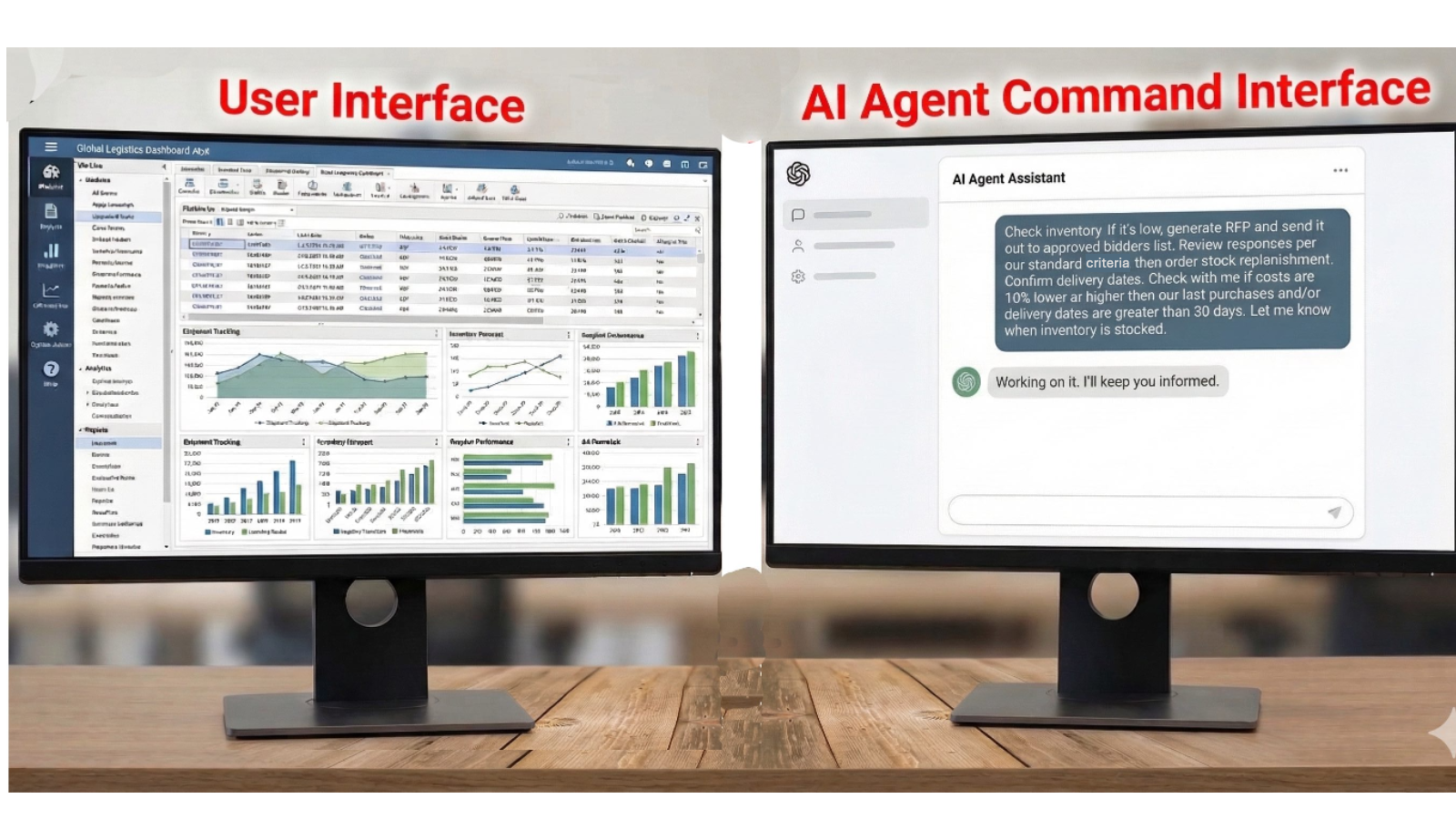
Tech startups founded more than two years ago are likely operating on outdated assumptions in a rapidly shifting market. To avoid failure, founders must pause their daily coding and fundraising efforts to reassess their core business strategies.
Comments2025-10-20
RapDv is a modern JavaScript framework, built with intention for a rapid, scalable and repeatable development. This article describes its architecture, and how to develop and deploy web apps with it.
Comments2021-05-01

Spaghetti code doesn't just look bad, it makes code brittle and prone to bugs. A modular programming architecture decouples interdependency and makes your code more robust.
Comments2021-03-01

Git Flow vs. Trunk-based Development
2021-03-01Version control systems helped transform the way we execute and manage software projects. Should we use GitFlow or trunk-based development method? This guide lists the pros and cons of both, and looks at various use cases.
Comments2020-02-10

Shopping online is more popular than ever. Let's explore marketplace business models and payment methods for both regional and global services.
Comments