Military Tech News
Modern armed forces depend on technology as much as on troops and equipment. This section follows military technology across land, sea, air, space, and cyberspace, covering the systems armies, navies, and air forces deploy and the companies racing to supply them.
Typical stories include drone and counter-drone warfare, missile defense, autonomous vehicles, battlefield networks and software, Pentagon and NATO procurement decisions, and lessons drawn from ongoing conflicts. Ethical debates over autonomous weapons and export controls on sensitive technology also feature regularly.
Military spending drives research that often reaches civilian products later, while conflicts reveal which technologies work under pressure. Engineers, investors, policy analysts, and readers following geopolitics use this coverage to understand how technology is reshaping security.
2026-08-15

Egypt's 1962 missile development program relied heavily on former Nazi scientists to advance its aerospace technology. The initiative suffered a major disruption when its key coordinator, Heinz Krug, mysteriously disappeared from Munich and was never seen again.
Comments
Coin-sized device can hack a Boeing 737
2026-08-15Security researchers demonstrated that a coin-sized device can hijack a Boeing 737's autopilot or sabotage its flight plan in under 60 seconds. The exploit requires brief physical access to an exterior hatch, highlighting a critical physical security vulnerability in commercial aircraft.
Comments
2026-08-14

The Department of Homeland Security launched a mass surveillance campaign against leftwing and anti-ICE protesters opposing the Trump administration's immigration policies. Undercover agents infiltrated both physical meetings and private digital chat platforms to monitor and track the activists' communications.
Comments2026-08-11

Amid an Iranian threat, the US President used an elaborate security ruse to secretly depart from a NATO meeting in Turkey. The president was hidden inside a catering cart to avoid public exposure while transferring from Air Force One to a secondary military flight for the return journey.
Comments2026-08-09
The US military's cyberwarfare unit is investigating an unusually high cluster of suicides among its personnel this summer. Government officials report that the deaths occurred over a month-long period, prompting a close scrutiny of the circumstances surrounding the incidents.
Comments2026-08-08

A former NSA chief is urging cybersecurity defenders to secure critical infrastructure by keeping water system controllers completely off the internet. He warns that connecting these essential public utilities to the web exposes them to severe and potentially devastating cyber threats. This call to action highlights the urgent need to prioritize the protection of vital national systems.
Comments2026-08-06
Researchers have identified a unique seven-metal alloy forged by the extreme conditions of the Hiroshima atomic blast. This discovery suggests that similar complex multicomponent materials could potentially be synthesized in the future using non-nuclear intense heat sources. The finding has also prompted discussions regarding historical mid-century proposals to harness nuclear explosions for industrial manufacturing and civilian engineering.
Comments2026-08-04
Battle of the Beams
2026-08-04Discussions surrounding the article Battle of the Beams highlight the pivotal World War II advancements in radar and radio navigation pioneered by scientists like Reginald Victor Jones. These historic breakthroughs in electronic countermeasures and beam navigation not only altered the course of the war but also established the technological foundation for modern aviation, GPS, and contemporary radar systems.
Comments2026-08-02
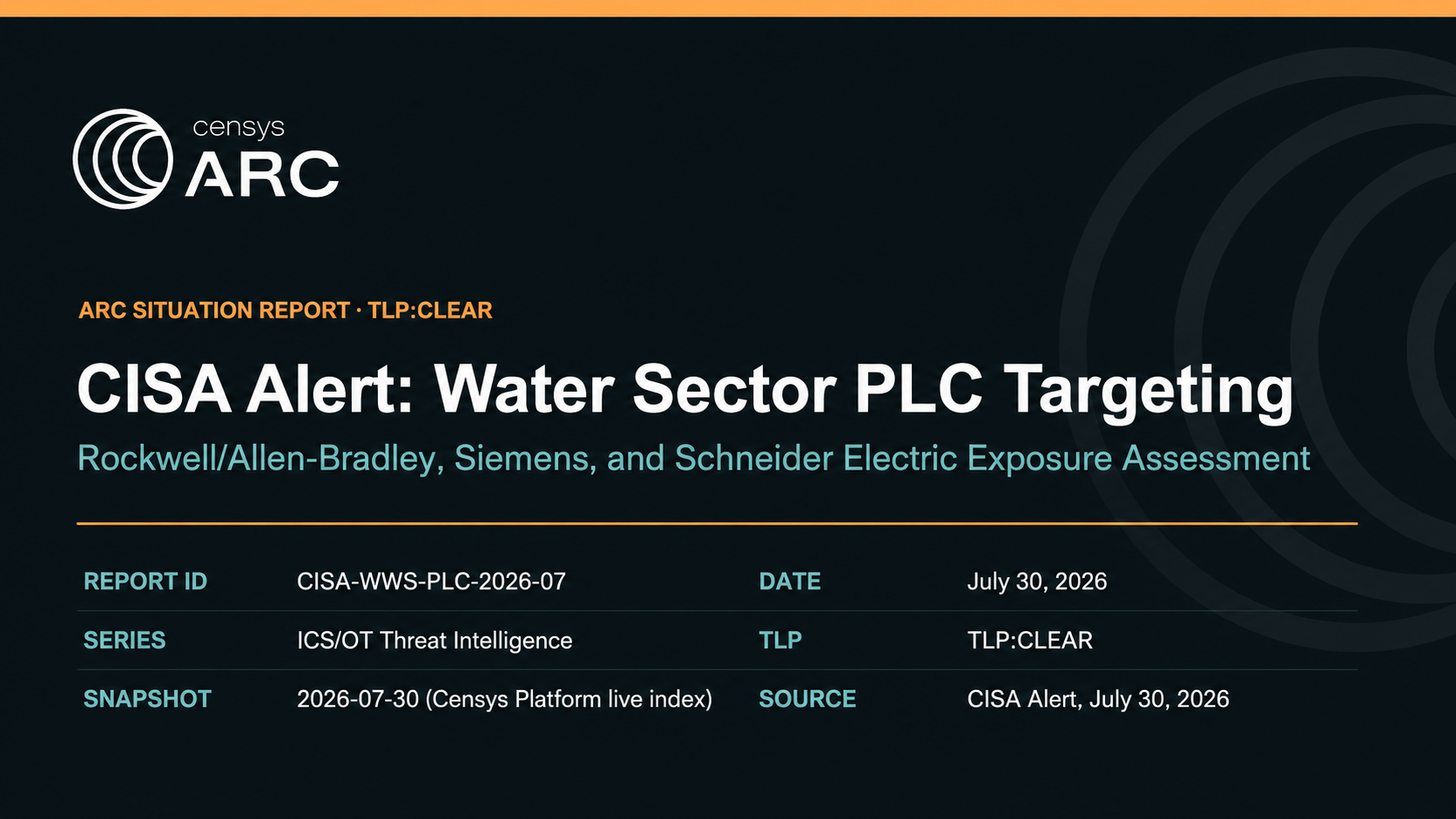
CISA Alert: Water Sector PLC Targeting
2026-08-02The Cybersecurity and Infrastructure Security Agency has issued a new alert regarding threat actors targeting Programmable Logic Controllers in the water and wastewater sectors. This advisory highlights the ongoing cyber threats faced by critical infrastructure systems. The accompanying report also includes current internet exposure data for each affected vendor, as observed by Censys.
Comments2026-07-30

SalesPatriot (YC W25) Is Hiring FDEs
2026-07-30YC W25 startup SalesPatriot is building an AI-native platform to automate and modernize legacy defense, aerospace, and industrial supply chain operations. The company, which has raised over $10 million and processes $50 million weekly, is hiring Founding Full-Stack Engineers to relocate to San Francisco and work directly onsite with clients to implement and scale the technology.
Comments2026-07-28

Covertly installed residential proxies pose a significant national security threat by routing malicious traffic through legitimate home internet connections via hidden apps, malware, or compromised smart devices. To combat this growing vulnerability, tech manufacturers like LG are banning proxy applications from their smart TVs to prevent consumers from unknowingly facilitating spam and social media manipulation.
Comments
Colossus, recognized as the world's first large-scale programmable electronic digital computer, has officially been designated an IEEE Milestone. During World War II, this groundbreaking machine played a pivotal role in the Allied victory by successfully decrypting Germany's secret communications.
Comments2026-07-25
A simulation modeling the closure of the Strait of Hormuz using real oil trade data has sparked a detailed discussion regarding the hidden vulnerabilities of the US Strategic Petroleum Reserve. Readers highlight that the actual usable capacity of the reserve is significantly lower than officially reported due to specific refining dependencies on sour crude and structural limits of the underground storage. Consequently, commenters warn that a major supply disruption could trigger a severe domestic energy crisis much sooner than projected.
Comments
The Islamic Revolutionary Guard Corps claims a cruise missile strike destroyed an Amazon Web Services data center in Bahrain, marking the third attack on the facility since March. The group cited the Darkhovin nuclear plant as justification for this latest action in its 24th wave of strikes.
Comments2026-07-24
DARPA and the U.S. Air Force successfully flew an F-16 fighter jet controlled by artificial intelligence. This historic VENOM program milestone demonstrates that AI development capabilities can be effectively scaled for the military's operational fleet.
Comments2026-07-17

More Bounce to the Ounce
2026-07-17A recent opinion piece affectionately champions a highly ambitious rocket design that the broader aerospace industry is currently too risk-averse to develop. The author argues that this unconventional engineering approach offers superior performance, criticizing mainstream manufacturers for playing it safe rather than pushing the boundaries of spaceflight.
Comments2026-07-13
TFTP Honey Pot Results
2026-07-13Researchers deployed a TFTP honeypot to analyze internet background radiation, capturing automated requests for specific Cisco and Polycom IP phone configuration files. The results help differentiate between widespread credential-harvesting bots and more targeted network reconnaissance originating from distinct IP sources.
Comments2026-07-11
How to hide from killer drones
2026-07-11Online discussions about hiding military assets from killer drones reveal that visual countermeasures like dazzle camouflage and strobe lights fail against multi-sensor machine vision. Instead, readers argue that attempting to confuse AI targeting simply makes vehicles more visible to secondary systems, making a 360-degree close-in weapon system the only viable defense against swarming drones.
Comments2026-07-10
The open-source QuadRF is a Raspberry Pi 5-powered phased-array radio that utilizes advanced beamforming to track drones and detect WiFi signals through walls. Functioning as a wireless equivalent to network sniffers like Wireshark, this device highlights the advanced remote surveillance capabilities currently available to both the open-source community and government agencies.
Comments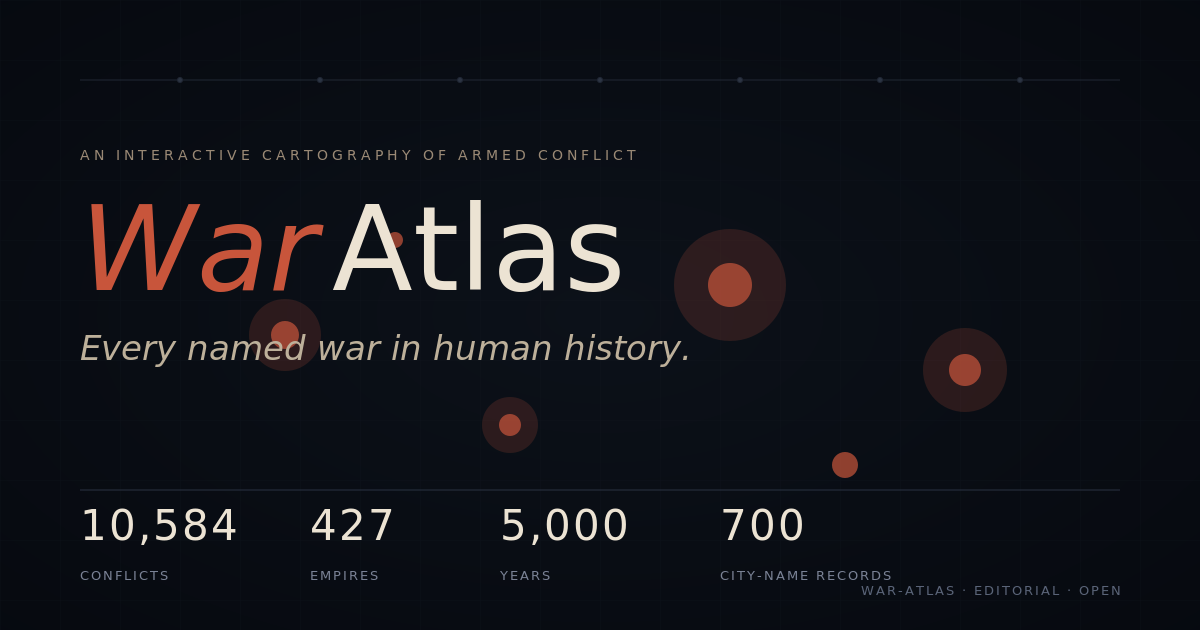
War Atlas is an interactive mapping tool that visualizes 10,584 recorded military conflicts spanning 5,000 years of human history. Users can navigate through different historical eras to explore changing empire borders and view estimated casualty ranges for each event. This comprehensive digital archive provides a unique geographical and temporal perspective on the evolution of global warfare.
Comments
A new report from the Cambridge Programme on AI Science and Policy examines how the terrorist group Boko Haram is leveraging frontier artificial intelligence. The research highlights an emerging security threat as extremist organizations increasingly gain access to advanced AI tools to enhance their operations.
Comments2026-07-09

The United States Army's logistics network, optimized over the last two decades for uncontested environments and static bases, has become a critical vulnerability in modern warfare. As the military shifts toward large-scale multidomain combat, this fragile and efficiency-driven supply chain must now prioritize resilience to avoid collapsing in future conflicts.
Comments2026-07-04

Drone Physics
2026-07-04A newly released technical resource details the complex mathematical equations governing the dynamics and control of multirotor unmanned aerial vehicles. By breaking down the core physics of drone flight, this guide provides engineers with the essential formulas needed to design and optimize UAV navigation.
Comments2026-07-02
Spain has blacklisted U.S. data analytics firm Palantir Technologies from working with public entities and state-controlled private companies. The government implemented the ban due to national security concerns over the potential misuse of classified information. This decision highlights growing international scrutiny over how foreign tech giants handle sensitive state data.
Comments2026-06-27
During World War II, the US Army surprisingly issued small ocarinas to soldiers serving on the front lines. These simple acoustic devices were distributed primarily to boost troop morale and provide a brief psychological escape from the intense stresses of combat. This unique historical artifact highlights the unconventional tools and low-tech solutions the military utilized to support soldier well-being during the war.
CommentsA developer thwarted a suspected nation-state attack that used a fake job interview to deliver a malicious TypeScript patch. The payload attempted to install the PinpinRAT backdoor, but the attack ultimately failed. The incident prompted a detailed public analysis of the attack vector, the malware, and its indicators of compromise.
Comments2026-06-24
Readers discussing an article about the War on Terror argue that post-9/11 security measures permanently sacrificed American freedoms and centralized government power. The conversation heavily features historical analogies, comparing the expanding American security apparatus to the Roman Republic's transition into an empire. Commentators also debate whether current political leadership and recent military setbacks signal the beginning of a similar imperial decline.
Comments2026-06-20
South Korea's defense industry is rapidly capturing global market share by offering highly effective weapon systems at nearly half the cost of American and European alternatives. A primary driver of this success is Seoul's willingness to transfer intellectual property, allowing client nations to establish domestic manufacturing and avoid the political restrictions often attached to US military exports. As a result, countries are increasingly turning to South Korean contractors to secure reliable, sovereign supply chains amid shifting geopolitical alliances.
Comments
An experimental satellite has successfully mapped the unprecedented scale of GPS signal jamming across Europe and the Middle East from space. This first-of-its-kind orbital observation highlights the immense and previously unquantified extent of GPS signal tampering in these regions.
Comments2026-06-17

U.S. science is in chaos
2026-06-17This report investigates the compounding political, funding, and structural challenges that have destabilized the United States scientific enterprise. It traces the historical and policy decisions that led to the current crisis. Ultimately, the piece warns that this ongoing turmoil threatens the nation's future global leadership in research and technological innovation.
Comments