Military Tech News
Modern armed forces depend on technology as much as on troops and equipment. This section follows military technology across land, sea, air, space, and cyberspace, covering the systems armies, navies, and air forces deploy and the companies racing to supply them.
Typical stories include drone and counter-drone warfare, missile defense, autonomous vehicles, battlefield networks and software, Pentagon and NATO procurement decisions, and lessons drawn from ongoing conflicts. Ethical debates over autonomous weapons and export controls on sensitive technology also feature regularly.
Military spending drives research that often reaches civilian products later, while conflicts reveal which technologies work under pressure. Engineers, investors, policy analysts, and readers following geopolitics use this coverage to understand how technology is reshaping security.
2026-05-17

Recent trials on veterans indicate that the potent hallucinogen ibogaine may offer a promising new treatment for post-traumatic stress disorder. However, researchers caution that the exact biological mechanisms driving these therapeutic benefits remain poorly understood.
Comments
Two Navy EA-18 fighter jets collided and crashed on Sunday during an air show at the Mountain Home Air Force Base. All four crew members safely ejected from the aircraft following the collision.
Comments
2026-05-12

Extremely Low Frequencies
2026-05-12Originally developed for classified military and submarine communications, extremely low frequency radio technology relies on massive, highly power-intensive antenna arrays. Today, the foundational principles of these historical communication systems have been repurposed for modern industrial applications, such as transmitting telemetry data from miles underground during drilling operations.
Comments2026-05-08
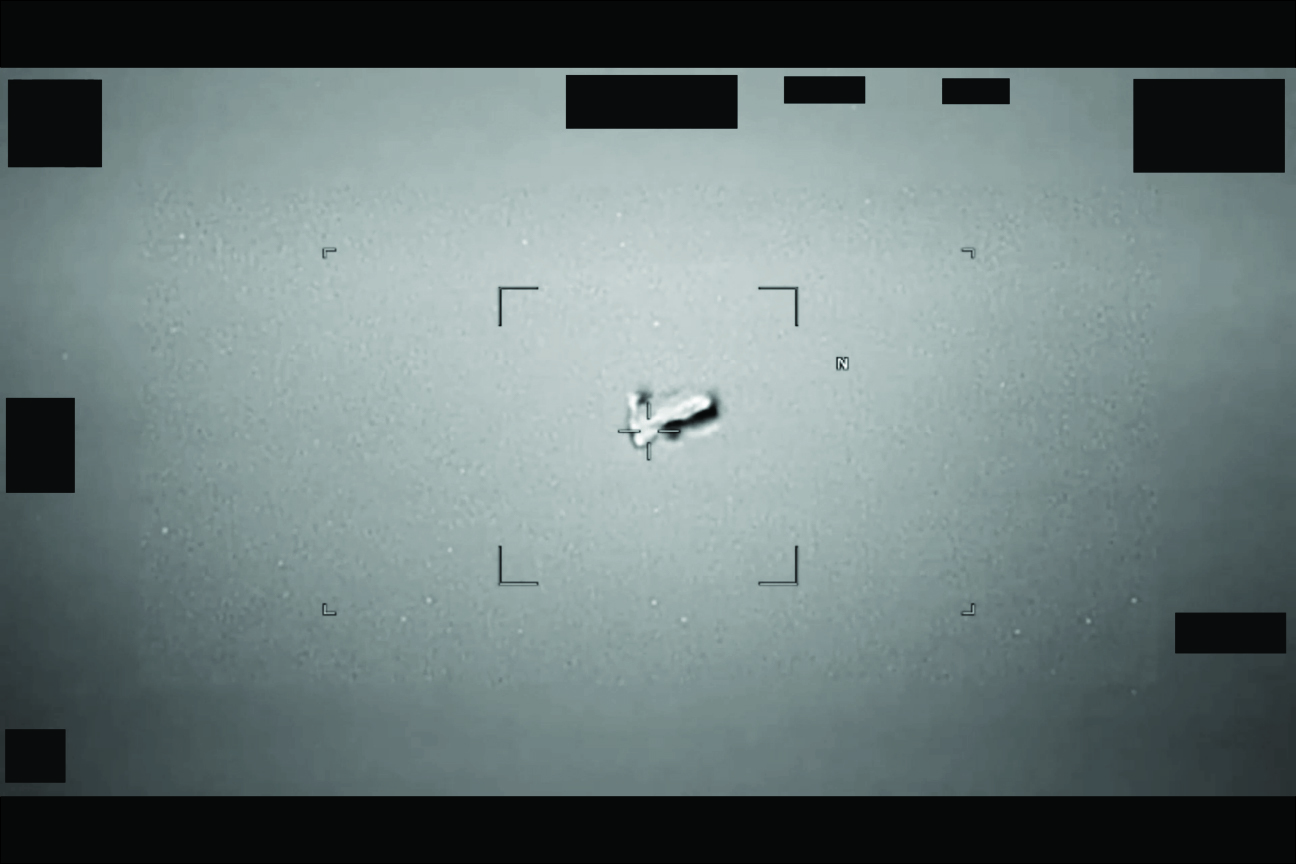
The US government has released its first batch of official documents and videos regarding Unidentified Anomalous Phenomena, commonly known as UAP. This declassification effort supports the military's ongoing mission to investigate unidentified aerial incidents and ensure national security. The newly disclosed materials provide researchers and the public with unprecedented access to data surrounding these unexplained events.
Comments2026-05-06

Outgoing Stars and Stripes ombudsman Jacqueline Smith alleges that the Pentagon is attempting to silence her. She claims military leadership is also exerting improper editorial control over the newspaper. Smith has spent months publicly raising concerns about these ongoing efforts to restrict independent reporting.
Comments2026-05-04

A critical multi-tenant authorization vulnerability lacking basic tenant isolation was discovered in a Department of Defense contractor's system, leading to the exposure of sensitive military training data. The issue was resolved following a five-month responsible disclosure timeline.
Comments2026-05-03

A new investigation has uncovered two sophisticated surveillance campaigns that link real-world attack traffic directly to mobile operator signaling infrastructure. The findings reveal how commercial surveillance vendors exploit the global telecom interconnect ecosystem and leverage private networks to conduct covert location tracking that persists undetected for years.
Comments2026-05-01
Apocalypse Early Warning System
2026-05-01A new local dashboard humorously named the Apocalypse Early Warning System allows users to monitor unusual patterns in tracked aircraft activity. By analyzing concurrent-activity anomaly signals, the tool helps identify sudden changes in flight operations to spot real-time airspace irregularities.
Comments2026-04-30

A retired AT&T technician named Mark Klein provided the Electronic Frontier Foundation with internal documents exposing a secret government eavesdropping facility known as Room 641A. His unexpected visit supplied the definitive evidence needed to prove that the United States government was conducting mass, warrantless wiretapping of American citizens. This historic whistleblowing event exposed the reality of domestic surveillance and sparked major legal battles over digital privacy.
Comments2026-04-26

A newly identified cyber sabotage framework called Fast16 was patching high-precision calculation software in memory to silently corrupt computational results. Operating as early as 2005, this sophisticated digital attack predates the widely known Stuxnet worm by five years. The discovery highlights the early evolution of stealthy, targeted industrial software sabotage.
Comments
Historian Jon Peterson traces the historical evolution of modern tabletop role-playing games. His research maps the fascinating journey of these interactive mechanics from their origins in Prussian military wargaming to their ultimate realization in Gary Gygax's basement.
Comments2026-04-24

A US special forces soldier involved in the capture of Venezuelan President Nicolás Maduro has been arrested and charged. Authorities allege the service member illegally bet on the classified military operation, ultimately netting $400,000 in profits.
Comments2026-04-23

A new WIRED investigation reveals that Palantir's workforce is in deep turmoil, with many employees questioning the morality of their work. Based on internal Slack messages and interviews with current and former staff, the software company is facing a severe internal crisis over the ethical implications of its projects.
Comments
Researchers at the Citizen Lab have discovered two sophisticated surveillance campaigns that exploit the backbone of global cellular networks to spy on targets worldwide. The investigation revealed that separate commercial surveillance vendors are abusing this critical telecom infrastructure to conduct their monitoring operations.
Comments2026-04-20
The NSA is adopting Anthropic's Mythos AI model, reversing a previous Pentagon decision to blacklist the company as a supply chain risk. This integration marks a major shift in government procurement after officials initially attempted to penalize the firm.
Comments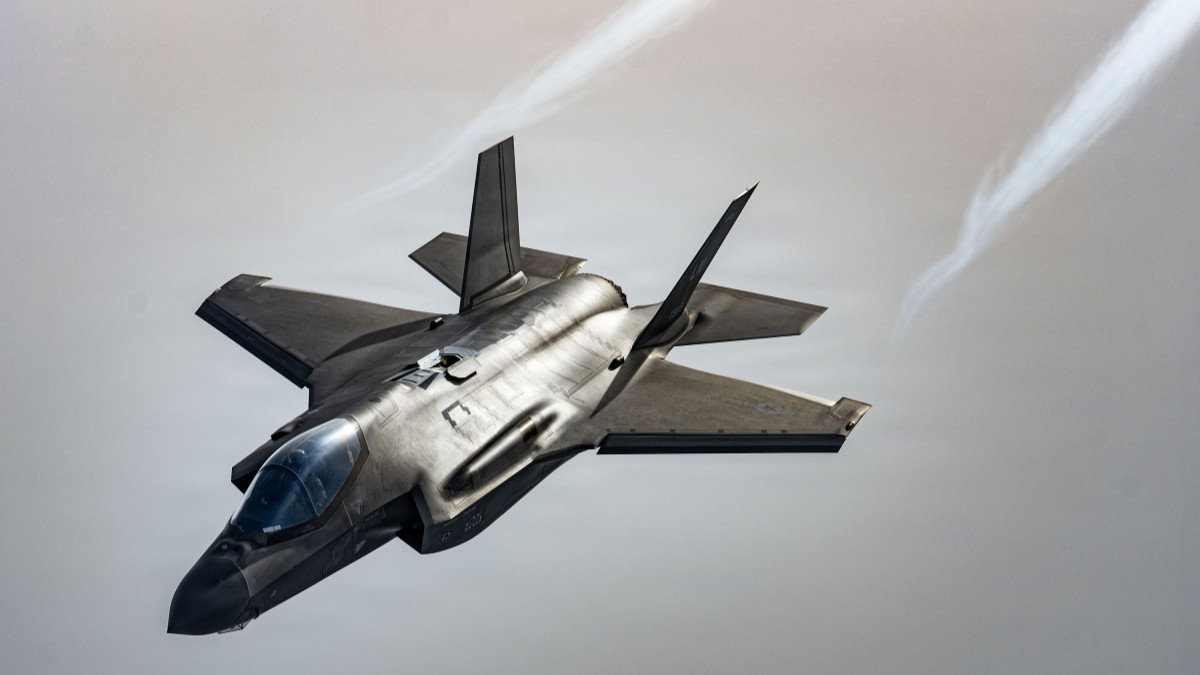
F-35 is built for the wrong war
2026-04-20The F-35 fighter jet is an aerospace marvel, but its extreme complexity makes it too expensive and slow to manufacture for modern attrition warfare. Unlike mass-producible military assets, it requires immense time and resources to build each individual unit. Critics argue this prioritization of precision over scalability leaves the aircraft fundamentally mismatched for current large-scale conflicts.
Comments2026-04-19

The Bromine Chokepoint
2026-04-19The ongoing U.S.-Israeli war with Iran has exposed a critical vulnerability in the global semiconductor memory supply chain regarding the availability of bromine. Because bromine is an essential chemical in chip manufacturing, this geopolitical disruption has created a severe production chokepoint that threatens the tech industry with widespread memory shortages.
Comments2026-04-18

Before the advent of GPS, B-52 bombers relied on celestial navigation to guide their long-range missions. This was made possible by a sophisticated electromechanical angle computer housed within the aircraft's star tracker, which calculated precise flight trajectories based on the positions of stars and planets.
Comments2026-04-14

OpenAI is expanding its Trusted Access for Cyber program by granting vetted defenders access to its newly introduced GPT-5.4-Cyber model. The initiative also includes strengthened safety protocols to address the rapidly evolving capabilities of artificial intelligence in the cybersecurity landscape.
Comments