Military Tech News
Modern armed forces depend on technology as much as on troops and equipment. This section follows military technology across land, sea, air, space, and cyberspace, covering the systems armies, navies, and air forces deploy and the companies racing to supply them.
Typical stories include drone and counter-drone warfare, missile defense, autonomous vehicles, battlefield networks and software, Pentagon and NATO procurement decisions, and lessons drawn from ongoing conflicts. Ethical debates over autonomous weapons and export controls on sensitive technology also feature regularly.
Military spending drives research that often reaches civilian products later, while conflicts reveal which technologies work under pressure. Engineers, investors, policy analysts, and readers following geopolitics use this coverage to understand how technology is reshaping security.
2026-04-23

A new WIRED investigation reveals that Palantir's workforce is in deep turmoil, with many employees questioning the morality of their work. Based on internal Slack messages and interviews with current and former staff, the software company is facing a severe internal crisis over the ethical implications of its projects.
Comments
Researchers at the Citizen Lab have discovered two sophisticated surveillance campaigns that exploit the backbone of global cellular networks to spy on targets worldwide. The investigation revealed that separate commercial surveillance vendors are abusing this critical telecom infrastructure to conduct their monitoring operations.
Comments
2026-04-20
The NSA is adopting Anthropic's Mythos AI model, reversing a previous Pentagon decision to blacklist the company as a supply chain risk. This integration marks a major shift in government procurement after officials initially attempted to penalize the firm.
Comments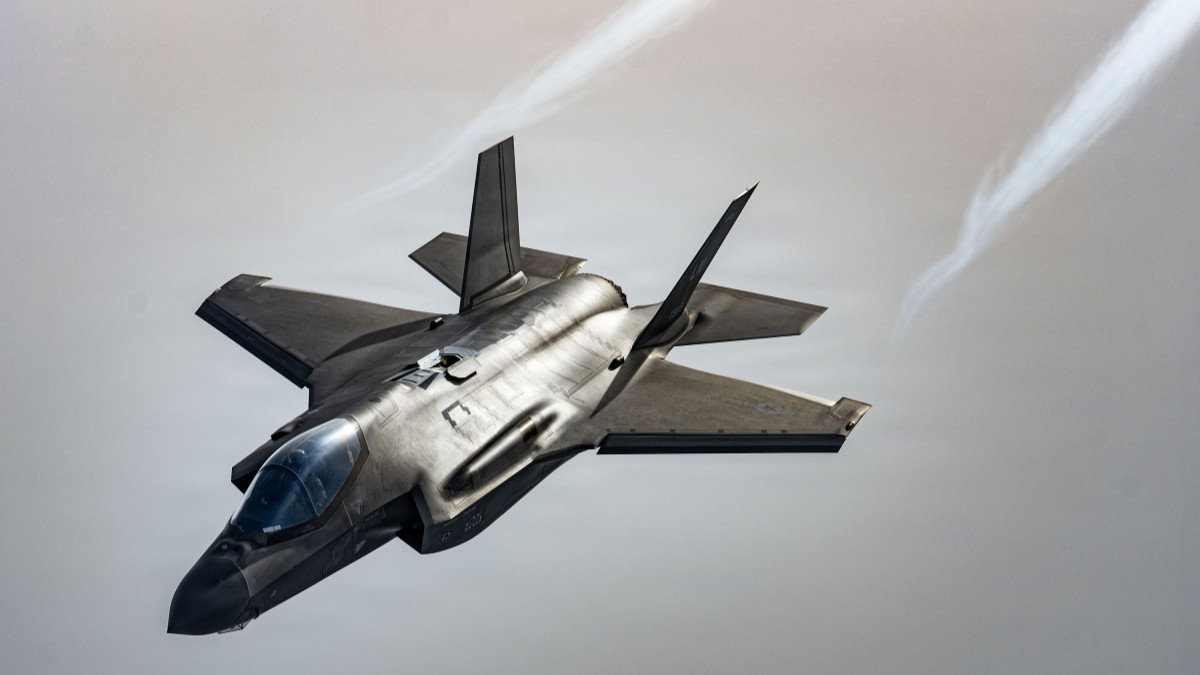
F-35 is built for the wrong war
2026-04-20The F-35 fighter jet is an aerospace marvel, but its extreme complexity makes it too expensive and slow to manufacture for modern attrition warfare. Unlike mass-producible military assets, it requires immense time and resources to build each individual unit. Critics argue this prioritization of precision over scalability leaves the aircraft fundamentally mismatched for current large-scale conflicts.
Comments2026-04-19

The Bromine Chokepoint
2026-04-19The ongoing U.S.-Israeli war with Iran has exposed a critical vulnerability in the global semiconductor memory supply chain regarding the availability of bromine. Because bromine is an essential chemical in chip manufacturing, this geopolitical disruption has created a severe production chokepoint that threatens the tech industry with widespread memory shortages.
Comments2026-04-18

Before the advent of GPS, B-52 bombers relied on celestial navigation to guide their long-range missions. This was made possible by a sophisticated electromechanical angle computer housed within the aircraft's star tracker, which calculated precise flight trajectories based on the positions of stars and planets.
Comments2026-04-14

OpenAI is expanding its Trusted Access for Cyber program by granting vetted defenders access to its newly introduced GPT-5.4-Cyber model. The initiative also includes strengthened safety protocols to address the rapidly evolving capabilities of artificial intelligence in the cybersecurity landscape.
Comments