Mental Health Tech News
SubmitTechnology is playing a growing and sometimes controversial role in mental health care. Read news here about therapy and meditation apps, AI-powered support tools, digital health startups and their funding, and the research and regulatory debates around treating minds with software.
Stories in this section cover teletherapy platforms expanding or consolidating, AI chatbots being tested as support tools and the safety questions they raise, clinical trials of digital therapeutics, and employer and insurer moves to cover mental health apps. Privacy concerns around sensitive health data come up often.
Demand for mental health care far exceeds the supply of clinicians, which makes the promise and the risks of these tools significant. Clinicians, health systems, investors, and people seeking care themselves follow this coverage to see which digital approaches earn evidence and trust.
2026-06-21

Developers don't understand CORS (2019)
2026-06-21Highlighting the recent Zoom vulnerability, an article argues that a significant number of developers still fundamentally misunderstand Cross-Origin Resource Sharing. This widespread knowledge gap frequently leads to improper web configurations that expose applications to severe security risks, underscoring the urgent need for better developer education on web security protocols.
Comments
Large language models have significantly reduced software development costs, but they have not made it entirely free. This reality is fundamentally altering the traditional buy-versus-build calculus for modern businesses. Consequently, small software companies must now navigate a new minimum pricing threshold to remain profitable and survive in the LLM era.
Comments

Guide to the TD4 4-bit DIY CPU
2026-06-21A new guide details the experience of building and programming the TD4, a compact 4-bit DIY CPU kit sourced from Aliexpress. The hardware is quite limited, featuring just two registers, some indicator LEDs, and 16 bytes of program ROM. However, it remains a highly rewarding project that effectively teaches the fundamental principles of computer architecture.
Comments2026-06-20

Can you see three trees?
2026-06-20A simple three-part test evaluates whether cities provide residents with adequate access to nature and green space. According to the assessment, the vast majority of urban areas currently fall short of these basic environmental standards.
Comments
UC Irvine neuroscientist Oswald Steward has been awarded the 2026 Kavli Prize in Neuroscience for his groundbreaking research on memory formation. His pioneering discoveries have fundamentally shifted the scientific understanding of how the brain processes and stores information.
CommentsIn response to a proposed mandate requiring real ID for all internet traffic, readers are discussing extreme technical countermeasures to avoid future censorship and surveillance. Suggested tactics include building decentralized underground radio mesh networks, using cash-purchased hardware with immutable operating systems, and relying on specific end-to-end encrypted protocols to defeat metadata tracking. The discussion highlights a growing desperation within the hacker community, framing the fight against internet identification as a critical battle for fundamental civil rights.
Comments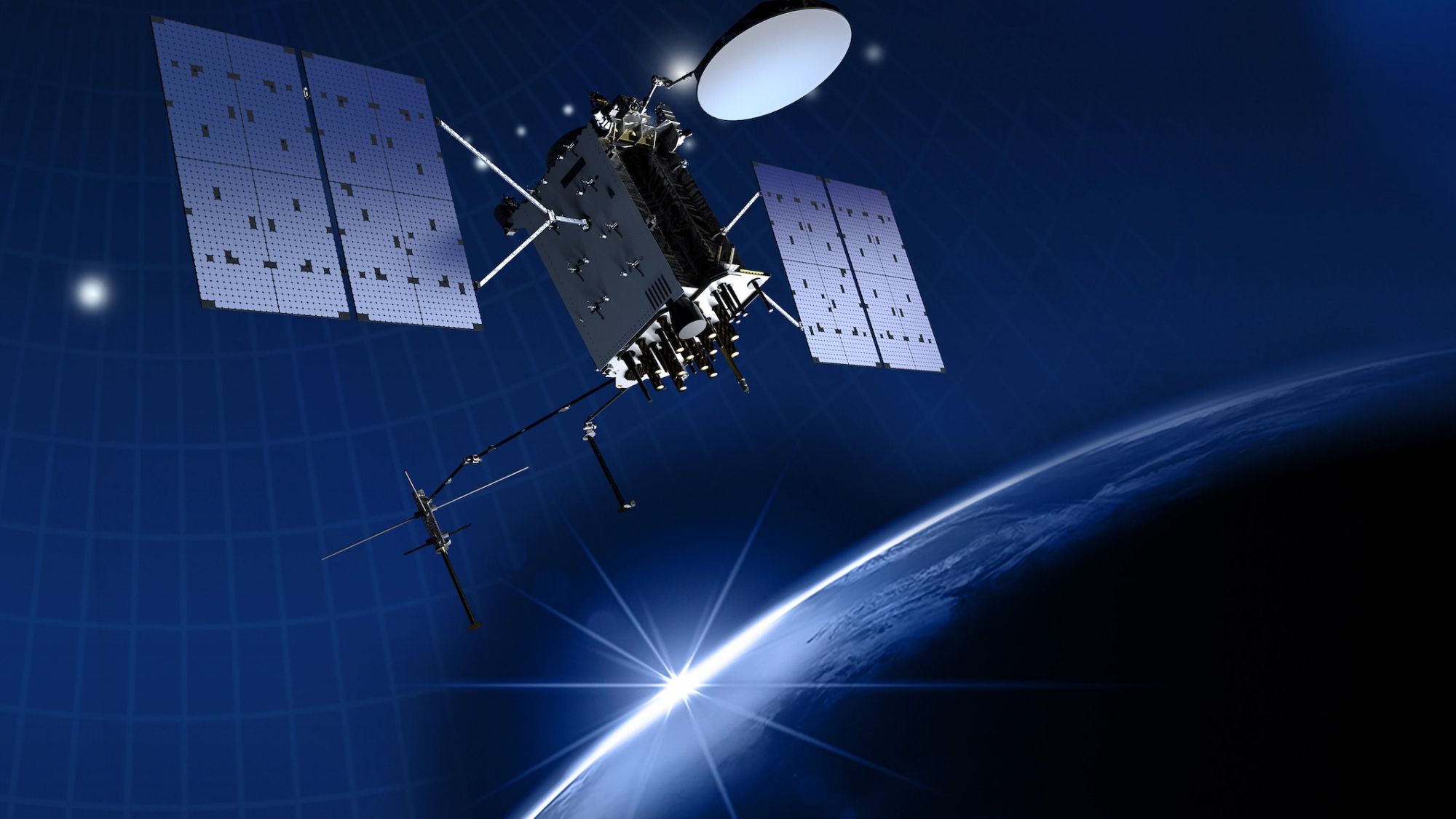
An experimental satellite has successfully mapped the unprecedented scale of GPS signal jamming across Europe and the Middle East from space. This first-of-its-kind orbital observation highlights the immense and previously unquantified extent of GPS signal tampering in these regions.
Comments2026-06-19

A 1976 experimental wind turbine project at the University of Massachusetts Amherst, directed by Navy veteran William Heronemus, laid the foundation for the modern United States wind energy industry. This pioneering university initiative successfully demonstrated the viability of large-scale wind power and ultimately catalyzed the widespread development of commercial wind energy across the country.
Comments2026-06-18
A recent analysis challenges the popular narrative that the local Qwen model is merely an inferior alternative to Claude 3 Opus. The author presents new evidence to demonstrate that Qwen is not just a weaker substitute, but a fundamentally different tool with its own distinct capabilities.
Comments2026-06-17
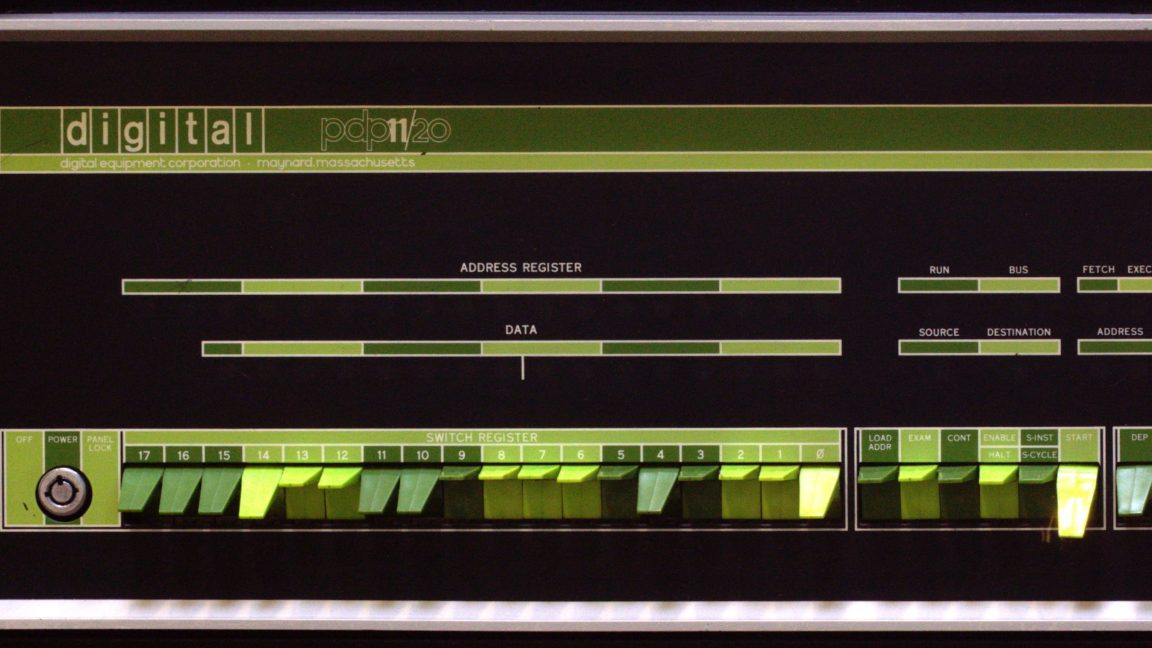
A 2022 retrospective examines the enduring legacy of the PDP-11, celebrating it as the most influential minicomputer ever created. The groundbreaking machine fundamentally shaped the evolution of modern computing. By popularizing the interactive computing paradigm, it laid the foundation for the seamless digital experiences we rely on today.
Comments2026-06-16

Researchers clarified that the federal government's recent panic over a Fable 5 security research paper was based on a fundamental misunderstanding. Officials initially believed the paper detailed a system jailbreak, prompting widespread concern. However, a closer review revealed the study was actually focused on routine code fixes rather than bypassing security measures.
Comments2026-06-15
John Novak's widely read 2016 blog post breaks down the complex mathematics and history of gamma correction in digital imaging. The article explains why a fundamental understanding of gamma is crucial for programmers to ensure accurate color blending, rendering, and overall visual fidelity in their software.
Comments2026-06-14
Perlisisms (1982)
2026-06-14A recent discussion highlights the enduring relevance of Alan Perlis's classic 1982 programming epigrams in the modern era of large language models, emphasizing how programming languages fundamentally shape human thought. The conversation also underscores his timeless warning that in human-computer symbiosis, it is ultimately the human who must adapt to the machine, rather than expecting the machine to adapt to natural language.
CommentsDon't trust large context windows
2026-06-14Discussions surrounding large context windows highlight widespread frustration among traditional software engineers over the inherent non-determinism and anecdotal troubleshooting culture of Large Language Models. While developers struggle with the lack of repeatability and the difficulty of translating vague human prompts into reliable tool calls, many still embrace the transformative power of AI agents. Ultimately, technologists are learning to leverage these unpredictable systems to fundamentally reshape their workflows despite the underlying technical challenges.
Comments
Python 3.14.0 introduced a new incremental garbage collector that was reverted in version 3.14.5 following reports of increased memory usage. The accompanying investigation explores Python's memory management mechanics to determine which workloads perform best and worst under the experimental incremental garbage collection system.
Comments2026-06-13
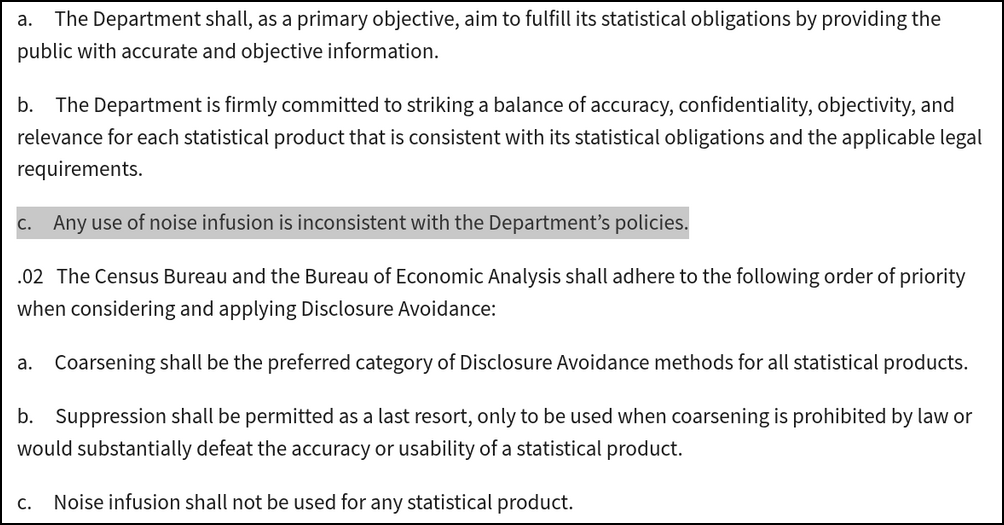
The Census Bureau has banned the use of noise infusion, a differential privacy technique, in its official statistical products. However, experts warn that removing this disclosure avoidance tool does not resolve the fundamental trade-offs between data accuracy and respondent confidentiality.
CommentsFollowing discussions between Amazon's CEO and U.S. officials, the White House has launched a regulatory crackdown on Anthropic's advanced Mythos AI models over national security concerns regarding their cybersecurity capabilities. While critics argue the intervention is arbitrary given the known vulnerabilities of all large language models, the administration maintains these specific models surpass previous safety thresholds and require mandatory government review. Tech industry observers are heavily criticizing this sudden, opaque regulatory approach as chaotic and detrimental to long-term market investments.
Comments2026-06-12

The House of Representatives passed H.R. 6028, officially framed as a minor technical reorganization of government agencies. Despite its modest presentation, the legislation would enact fundamental structural changes to the U.S. Copyright Office. This overhaul could significantly impact intellectual property administration and the broader technology sector.
Comments
While scientists previously believed Earth's oceans were formed by water delivered from space via comets and asteroids, new theories suggest our planet actually generated its own water internally. This homegrown origin theory fundamentally shifts our understanding of how Earth became a water-rich world.
Comments2026-06-10

A recent tech article argues that CEOs who view artificial intelligence as a direct replacement for human workers are demonstrating poor leadership. The author highlights several recent examples of executives sending company-wide emails praising large language models while suggesting headcount reductions. Ultimately, the piece suggests that relying on AI to eliminate staff stems from a fundamental misunderstanding of both the technology and effective management.
Comments
Rich Sutton has presented a controversial new perspective on artificial intelligence, arguing that generative models trained via supervised learning cannot make truly novel discoveries. In a recent video and speech, he explained the fundamental creative limitations inherent in current training methodologies.
Comments2026-06-08

A new interactive Python tutorial explores the fundamentals of machine learning by building a perceptron from scratch. It guides readers through core concepts like weights, bias, and learning rates using hands-on demonstrations. The guide also explains data normalization and decision boundaries to reveal the mechanics behind the smallest brain you can build.
Comments
Why are cells small?
2026-06-08A recent report highlights the physical constraints that keep biological cells microscopic, specifically pointing to surface area limitations and diffusion rates. These two fundamental factors dictate the tiny scale of cells and govern the basic physical rules of cellular life.
Comments
Richard Scolyer Has Died
2026-06-08Renowned melanoma doctor Richard Scolyer has died while participating in an experimental brain cancer treatment. Despite his passing, the innovative therapy he underwent has sparked significant hope for a major breakthrough in oncology and advanced medical technology.
Comments2026-06-07

Researchers have published a new study analyzing the computational costs of AI coding agents by quantifying exactly where language model tokens are consumed during agentic software engineering tasks. The paper breaks down token usage across various developmental phases to identify major cost drivers and help developers optimize the efficiency of automated programming systems.
Comments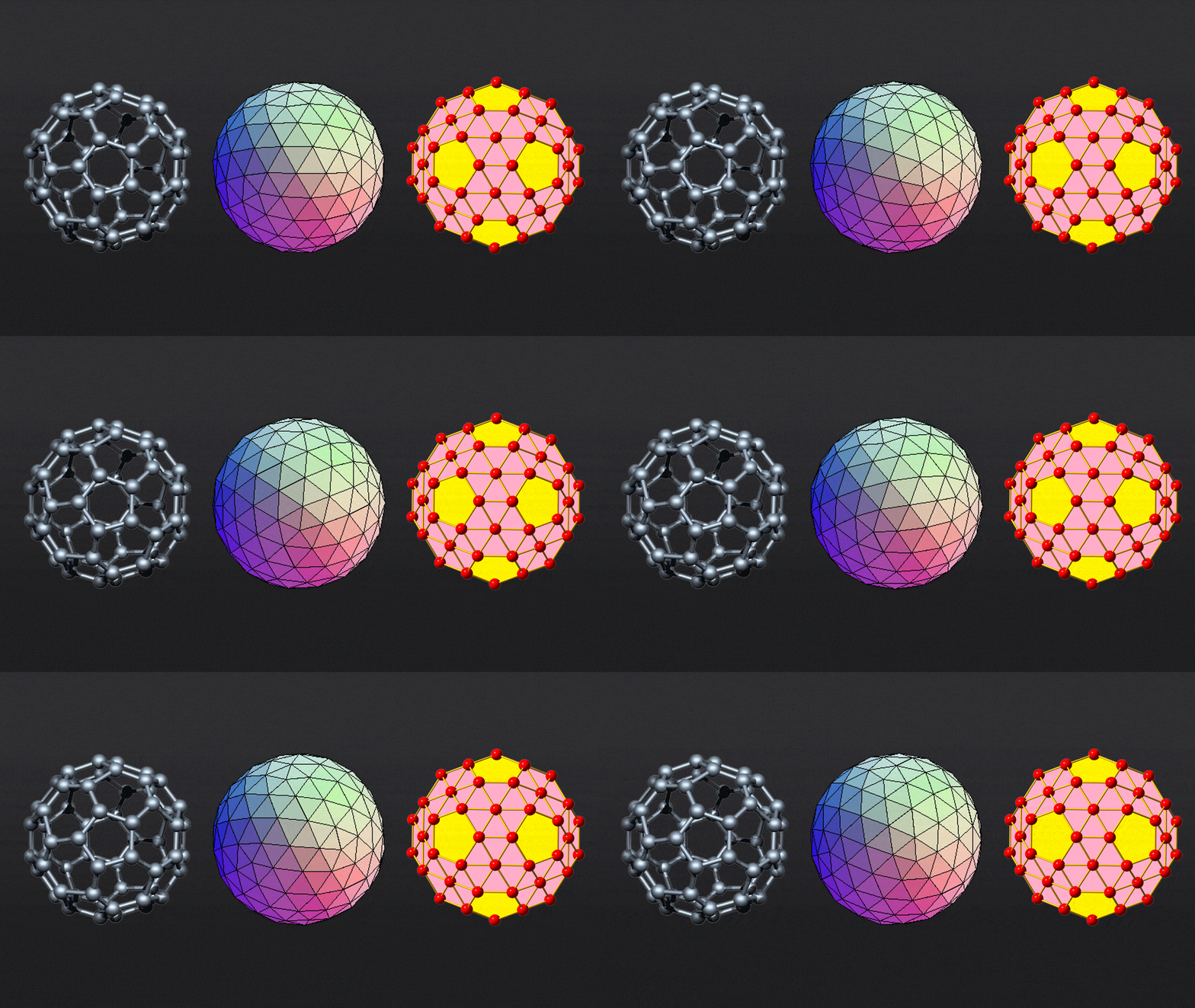
Boron Buckyballs: B80 cages in the lab
2026-06-07Experimental researchers have successfully synthesized B80 boron cages in the laboratory, disproving previous theoretical models that predicted their creation was impossible. The successful formation of these boron buckyballs marks a significant breakthrough in nanotechnology and advanced materials science.
Comments
A recent analysis explores the internal mechanics of large language models, revealing how they execute mathematical calculations by manipulating high-dimensional matrices rather than traditional numerical processing. By translating arithmetic into complex pattern recognition, the piece highlights the fundamentally different way AI systems approach computation.
Comments2026-06-06
Hacker News users shared remarkable examples of using generative AI to reverse-engineer undocumented hardware protocols and recover bricked digital pianos by decompiling an app to decrypt firmware. These technical feats sparked a broader discussion on whether AI will make technology feel like incomprehensible magic, though others argued that everyday users have long treated complex digital systems as black boxes without understanding basic computing fundamentals.
Comments2026-06-05

Despite its widespread adoption in the open-source community, the Conventional Commits standard is facing backlash from developers who consider it an actively detrimental practice. The author argues that enforcing this strict commit format misdirects developer focus and ultimately fails to deliver on its core promises.
Comments2026-06-04
They’re made out of weights
2026-06-04This creative piece offers a literary homage to Terry Bisson's classic science fiction story, adapted to explore the underlying mechanics of modern artificial intelligence. Through a humorous narrative, the author illustrates the surprising realization that today's advanced large language models are not truly conscious entities. Instead, the story highlights that these seemingly intelligent systems are fundamentally constructed from complex mathematical weights.
Comments