Mental Health Tech News
SubmitTechnology is playing a growing and sometimes controversial role in mental health care. Read news here about therapy and meditation apps, AI-powered support tools, digital health startups and their funding, and the research and regulatory debates around treating minds with software.
Stories in this section cover teletherapy platforms expanding or consolidating, AI chatbots being tested as support tools and the safety questions they raise, clinical trials of digital therapeutics, and employer and insurer moves to cover mental health apps. Privacy concerns around sensitive health data come up often.
Demand for mental health care far exceeds the supply of clinicians, which makes the promise and the risks of these tools significant. Clinicians, health systems, investors, and people seeking care themselves follow this coverage to see which digital approaches earn evidence and trust.
2026-06-14
Perlisisms (1982)
2026-06-14A recent discussion highlights the enduring relevance of Alan Perlis's classic 1982 programming epigrams in the modern era of large language models, emphasizing how programming languages fundamentally shape human thought. The conversation also underscores his timeless warning that in human-computer symbiosis, it is ultimately the human who must adapt to the machine, rather than expecting the machine to adapt to natural language.
CommentsDon't trust large context windows
2026-06-14Discussions surrounding large context windows highlight widespread frustration among traditional software engineers over the inherent non-determinism and anecdotal troubleshooting culture of Large Language Models. While developers struggle with the lack of repeatability and the difficulty of translating vague human prompts into reliable tool calls, many still embrace the transformative power of AI agents. Ultimately, technologists are learning to leverage these unpredictable systems to fundamentally reshape their workflows despite the underlying technical challenges.
Comments

Python 3.14.0 introduced a new incremental garbage collector that was reverted in version 3.14.5 following reports of increased memory usage. The accompanying investigation explores Python's memory management mechanics to determine which workloads perform best and worst under the experimental incremental garbage collection system.
Comments2026-06-13
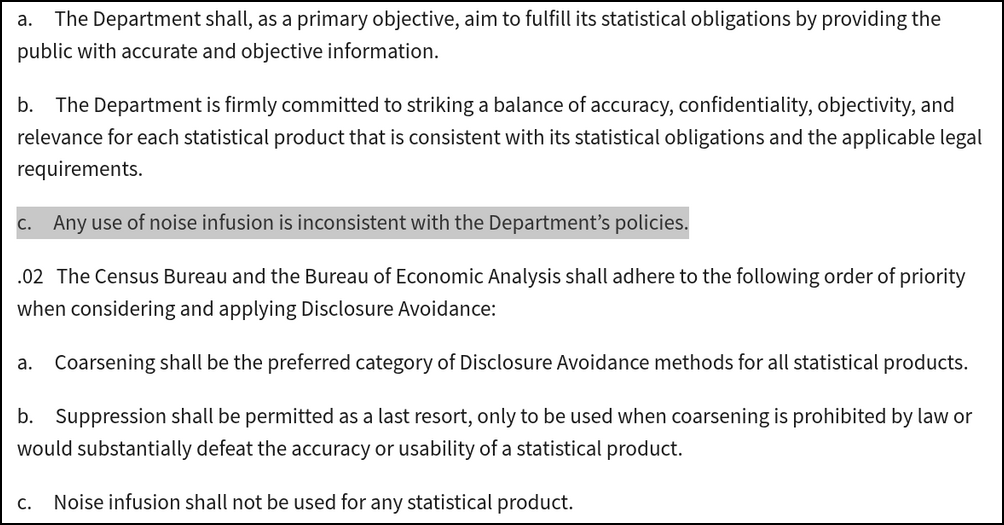
The Census Bureau has banned the use of noise infusion, a differential privacy technique, in its official statistical products. However, experts warn that removing this disclosure avoidance tool does not resolve the fundamental trade-offs between data accuracy and respondent confidentiality.
CommentsFollowing discussions between Amazon's CEO and U.S. officials, the White House has launched a regulatory crackdown on Anthropic's advanced Mythos AI models over national security concerns regarding their cybersecurity capabilities. While critics argue the intervention is arbitrary given the known vulnerabilities of all large language models, the administration maintains these specific models surpass previous safety thresholds and require mandatory government review. Tech industry observers are heavily criticizing this sudden, opaque regulatory approach as chaotic and detrimental to long-term market investments.
Comments2026-06-12

The House of Representatives passed H.R. 6028, officially framed as a minor technical reorganization of government agencies. Despite its modest presentation, the legislation would enact fundamental structural changes to the U.S. Copyright Office. This overhaul could significantly impact intellectual property administration and the broader technology sector.
Comments
While scientists previously believed Earth's oceans were formed by water delivered from space via comets and asteroids, new theories suggest our planet actually generated its own water internally. This homegrown origin theory fundamentally shifts our understanding of how Earth became a water-rich world.
Comments2026-06-10

A recent tech article argues that CEOs who view artificial intelligence as a direct replacement for human workers are demonstrating poor leadership. The author highlights several recent examples of executives sending company-wide emails praising large language models while suggesting headcount reductions. Ultimately, the piece suggests that relying on AI to eliminate staff stems from a fundamental misunderstanding of both the technology and effective management.
Comments
Rich Sutton has presented a controversial new perspective on artificial intelligence, arguing that generative models trained via supervised learning cannot make truly novel discoveries. In a recent video and speech, he explained the fundamental creative limitations inherent in current training methodologies.
Comments2026-06-08

A new interactive Python tutorial explores the fundamentals of machine learning by building a perceptron from scratch. It guides readers through core concepts like weights, bias, and learning rates using hands-on demonstrations. The guide also explains data normalization and decision boundaries to reveal the mechanics behind the smallest brain you can build.
Comments
Why are cells small?
2026-06-08A recent report highlights the physical constraints that keep biological cells microscopic, specifically pointing to surface area limitations and diffusion rates. These two fundamental factors dictate the tiny scale of cells and govern the basic physical rules of cellular life.
Comments
Richard Scolyer Has Died
2026-06-08Renowned melanoma doctor Richard Scolyer has died while participating in an experimental brain cancer treatment. Despite his passing, the innovative therapy he underwent has sparked significant hope for a major breakthrough in oncology and advanced medical technology.
Comments2026-06-07

Researchers have published a new study analyzing the computational costs of AI coding agents by quantifying exactly where language model tokens are consumed during agentic software engineering tasks. The paper breaks down token usage across various developmental phases to identify major cost drivers and help developers optimize the efficiency of automated programming systems.
Comments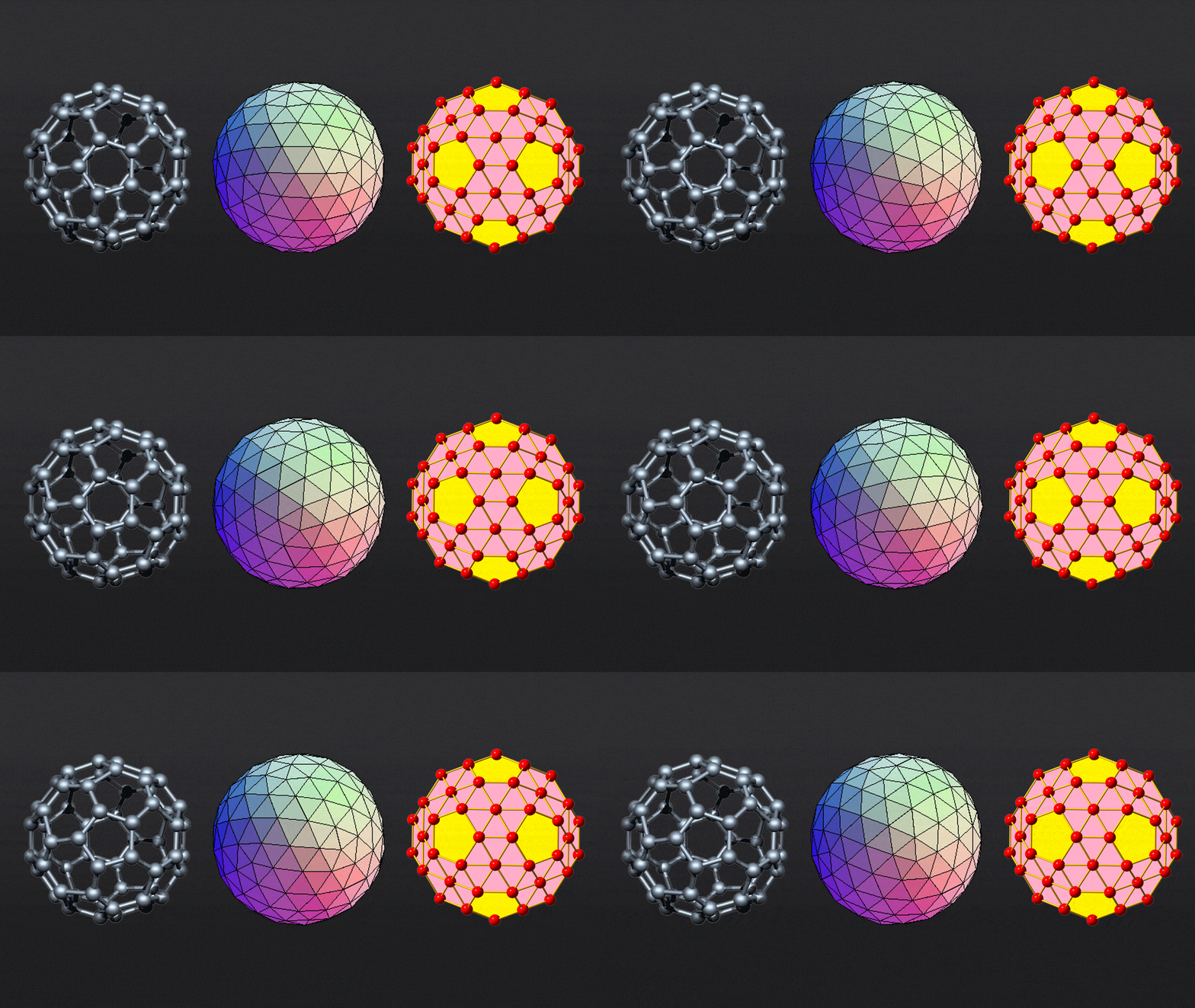
Boron Buckyballs: B80 cages in the lab
2026-06-07Experimental researchers have successfully synthesized B80 boron cages in the laboratory, disproving previous theoretical models that predicted their creation was impossible. The successful formation of these boron buckyballs marks a significant breakthrough in nanotechnology and advanced materials science.
Comments
A recent analysis explores the internal mechanics of large language models, revealing how they execute mathematical calculations by manipulating high-dimensional matrices rather than traditional numerical processing. By translating arithmetic into complex pattern recognition, the piece highlights the fundamentally different way AI systems approach computation.
Comments2026-06-06
Hacker News users shared remarkable examples of using generative AI to reverse-engineer undocumented hardware protocols and recover bricked digital pianos by decompiling an app to decrypt firmware. These technical feats sparked a broader discussion on whether AI will make technology feel like incomprehensible magic, though others argued that everyday users have long treated complex digital systems as black boxes without understanding basic computing fundamentals.
Comments2026-06-05

Despite its widespread adoption in the open-source community, the Conventional Commits standard is facing backlash from developers who consider it an actively detrimental practice. The author argues that enforcing this strict commit format misdirects developer focus and ultimately fails to deliver on its core promises.
Comments2026-06-04
They’re made out of weights
2026-06-04This creative piece offers a literary homage to Terry Bisson's classic science fiction story, adapted to explore the underlying mechanics of modern artificial intelligence. Through a humorous narrative, the author illustrates the surprising realization that today's advanced large language models are not truly conscious entities. Instead, the story highlights that these seemingly intelligent systems are fundamentally constructed from complex mathematical weights.
Comments
The U.S. government is launching an expensive operation to dismantle and retrieve a deep-ocean monitoring system tracking Atlantic currents, a move critics argue is driven by ideological posturing rather than budget constraints. Commenters suggest the administration is intentionally destroying this hardware to suppress climate data and appease fossil fuel donors as part of a broader anti-science agenda. Despite this governmental hostility toward basic science, readers note that everyday conservative voters are increasingly recognizing the real-world impacts of a changing climate through extreme weather and agricultural disruptions.
Comments
Learn SQL Once, Use It for 30 Years
2026-06-04SQL has maintained its industry relevance for decades because it is fundamentally built on mathematics rather than fleeting technological trends. This enduring stability makes learning the language a valuable, long-term investment for developers looking to future-proof their technical skill sets.
Comments
The developmental fate of honeybee larvae is determined by a combination of royal jelly and specialized royal wax. This unique wax is used to construct the special chambers from which fully developed queen bees eventually emerge.
Comments2026-06-03

Acclaimed author Ted Chiang argues in a new essay that current artificial intelligence systems are not conscious, warning that attributing human-like awareness to language models is an absurd premise. He emphasizes that taking this flawed line of thinking to its logical conclusion leads to damning consequences and a fundamental misunderstanding of the technology.
CommentsMathematicians and technologists warn that the rapid advancement of AI threatens to erode fundamental human understanding by outsourcing critical cognitive work in mathematics and programming. Although some view this automation as inevitable technological progress, critics argue that delegating tasks to AI sacrifices essential knowledge and quality for mere efficiency. Ultimately, they fear that an overreliance on AI will sever vital human control over the foundational technologies shaping our society.
Comments2026-06-02

SpaceX, Anthropic, and OpenAI are planning initial public offerings that could collectively raise $200 billion and add an estimated $4 trillion to the American stock market's capitalization. The unprecedented scale of these upcoming tech listings raises significant questions about whether the market can successfully absorb such a monumental influx of new equity.
Comments2026-05-31
Artificial intelligence is drastically accelerating the software development lifecycle, fundamentally changing how engineers prototype, plan, and ship new products. This rapid shift toward automation raises concerns about losing technical touch within the developer community. To counterbalance this trend, the author shares personal strategies for staying technically engaged and keeping their hands-on coding skills sharp.
Comments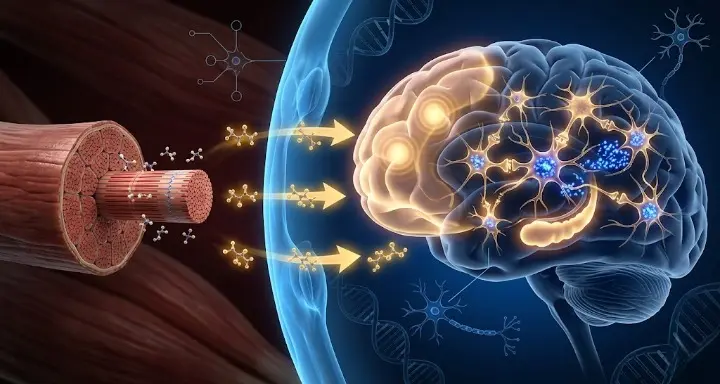
Recent clinical trials and comprehensive reviews reveal that creatine significantly enhances brain energy and cognitive function far beyond its well-known muscle-building effects. The supplement has been shown to slow cognitive decline in early Alzheimer's patients, improve mental stamina under sleep deprivation, and boost outcomes in depression therapy. Despite these profound neurological benefits, they are currently not listed on supplement labels.
CommentsA recently published PDF offers an accessible guide to lattice-based cryptography, a key mathematical framework proposed for securing data against future quantum computing threats. The document breaks down the complex fundamentals of lattice structures, providing tech professionals with a clear and approachable foundation in next-generation post-quantum encryption.
Comments2026-05-30
The true competitive moat in software development lies in deep domain expertise rather than the actual act of writing code. Developers must first understand the specific business context and build an accurate mental model of the problem before they can successfully build and ship a product.
CommentsZig ELF Linker Improvements Devlog
2026-05-30Community discussions surrounding the Zig ELF linker improvements highlight widespread excitement for the language's potential to serve as a modern C replacement. Developers are optimistic that upcoming linker enhancements and incremental compilation will deliver high performance alongside rapid iteration speeds and an improved developer experience. Participants also favor Zig's manual memory control and lack of garbage collection pauses over alternatives like Go and Rust for systems programming and UI development.
CommentsPope Leo's first encyclical critiques the tech industry's technological messianism, challenging AI leaders who frame the pursuit of artificial general intelligence as a religious endeavor to build a god. Prompting widespread debate, the ensuing discussion argues that despite the immense capabilities of modern language models, they are fundamentally just next-token predictors lacking true consciousness, subjective experience, or independent reasoning. Ultimately, critics maintain that AI will never achieve genuine aliveness or human-like understanding, serving as a highly powerful tool rather than a standalone superintelligence.
Comments