Mental Health Tech News Today
SubmitDigital tools are playing a growing role in mental health care. This section covers therapy and meditation apps, teletherapy services, AI-based support tools, and the research, funding, and regulatory questions surrounding technology built for psychological wellbeing.
Stories include clinical trials testing whether apps deliver measurable outcomes, teletherapy platforms expanding or facing scrutiny, AI chatbots being used for emotional support and the safety debates that follow, and employer and insurer moves to cover digital mental health benefits.
Demand for mental health care far exceeds the supply of clinicians, which is why technology's role here draws such intense interest. Therapists, health systems, investors, and people seeking help all follow this coverage, where questions of evidence, ethics, and access carry unusual weight.
2026-10-20
It's still ok to enjoy programming
2026-10-20A recent article serves as a refreshing reminder to developers that it is still perfectly okay to enjoy programming. The piece emphasizes that despite the pressures of the tech industry, coding remains a fundamentally fun and rewarding activity.
CommentsIn response to challenges with shipping AI-generated code, developers recommend that engineers design the core software architecture themselves while restricting LLMs to implementing specific units. This approach ensures long-term maintainability, though the discussion quickly shifted into a broader critique of the tech industry's declining emphasis on fundamental software design principles. Many engineers expressed frustration over misaligned corporate incentives that prioritize rapid output over internal code quality, leaving teams struggling to review and blindly approve massive AI-generated pull requests.
Comments
2026-10-18
A new article demystifies the transformer architecture by conceptualizing each of its layers as a fundamental memory store. By deriving the technology from first principles, the piece demonstrates how the foundational model behind modern artificial intelligence could be reinvented from scratch. This intuitive approach makes the complex mechanics of large language models highly accessible to everyday tech readers.
Comments2026-10-15

Cyber experts attribute recent alarming AI hacking incidents to containment and monitoring failures within AI labs, rather than autonomous agents acting on their own. Consequently, CISOs are urged to thoroughly vet their AI vendors and reinforce fundamental security safeguards.
Comments
AI lab TypeSafe AI has released version 1.14.0 of Jev, its first System One model designed for software automation and decision-making. This early access update introduces new experimental features known as dreamers to further advance the company's machine-native intelligence infrastructure.
Comments
Catch a Bird is a newly launched web app created by a developer to boost their own mental well-being through interactive positivity. Users simply catch a virtual bird to reveal a wholesome message detailing what made a stranger happy that day. The project offers a brief, uplifting digital escape designed to spread joy and improve daily moods.
CommentsThe Donaldson Futuro House in Idyllwild, California, is a tastefully restored, under 800 square foot retro-futuristic dwelling originally designed in the 1960s. While modern building codes and updated material regulations make constructing these iconic fiberglass structures nearly impossible today, this specific unit is gaining attention as a unique short-term rental. Online discussions highlight the architectural novelty of the space while debating the practical challenges of maintaining mid-century experimental homes compared to modern tiny houses.
Comments2026-10-13
A new open-source digital audio workstation named Blokkily has launched on Hacker News as an experimental, pattern-first music production tool. The project notably features integration with the Model Context Protocol and is actively seeking community contributions via GitHub.
CommentsThe article explores how applying neuroscience and psychological frameworks can help overcome the emotional hurdles of decluttering. Readers highlight practical cognitive strategies, such as setting a strict nostalgia budget for sentimental items or mentally evaluating whether they would repurchase an object today. By reframing how we assess our possessions, these techniques make it significantly easier to let go of unnecessary clutter.
Comments2026-10-12

Google has been issued an order at two data center construction sites after illegally clearing forested land. The enforcement action was taken because the tech giant failed to conduct mandatory environmental impact assessments before beginning development.
CommentsJohn Berger's 1972 book Ways of Seeing explores how the mass reproduction of art has fundamentally changed the way society encounters visual media by altering its original context and meaning. Drawing on Walter Benjamin's theories, this foundational perspective on mechanical replication remains highly relevant to understanding modern digital content distribution.
Comments2026-10-11

Unikernels were hard. key word: were
2026-10-11Former MirageOS developer Justin Cormack explains that unikernels are experiencing a resurgence because the historical friction that made them difficult to use has disappeared. With traditional operating systems now viewed as design debt, unikernels offer a compelling and highly secure alternative for modern software deployment.
Comments2026-10-09
This opinion piece explores the reasons behind the tech industry's surprisingly muted reaction to the release of DeepSeek 4.1 Flash. By offering unconventional perspectives, the author questions whether this lack of widespread hype signifies a maturing AI market or a fundamental misjudgment of the technology's capabilities.
Comments2026-10-08
A developer has created a minimal, proof-of-concept kernel written in Swift that runs within the QEMU emulator, sparking community discussions about the potential of Embedded Swift for low-level development. Enthusiasts praise the language's seamless C/C++ interoperability and ability to handle fundamental system tasks, suggesting these techniques could eventually be used to write drivers for established embedded operating systems like Zephyr or U-Boot.
Comments
Google Playground is a new platform that allows users to build and play custom games using simple text prompts. The tool requires no coding experience, enabling anyone to easily create their own playable experiences.
Comments2026-10-06
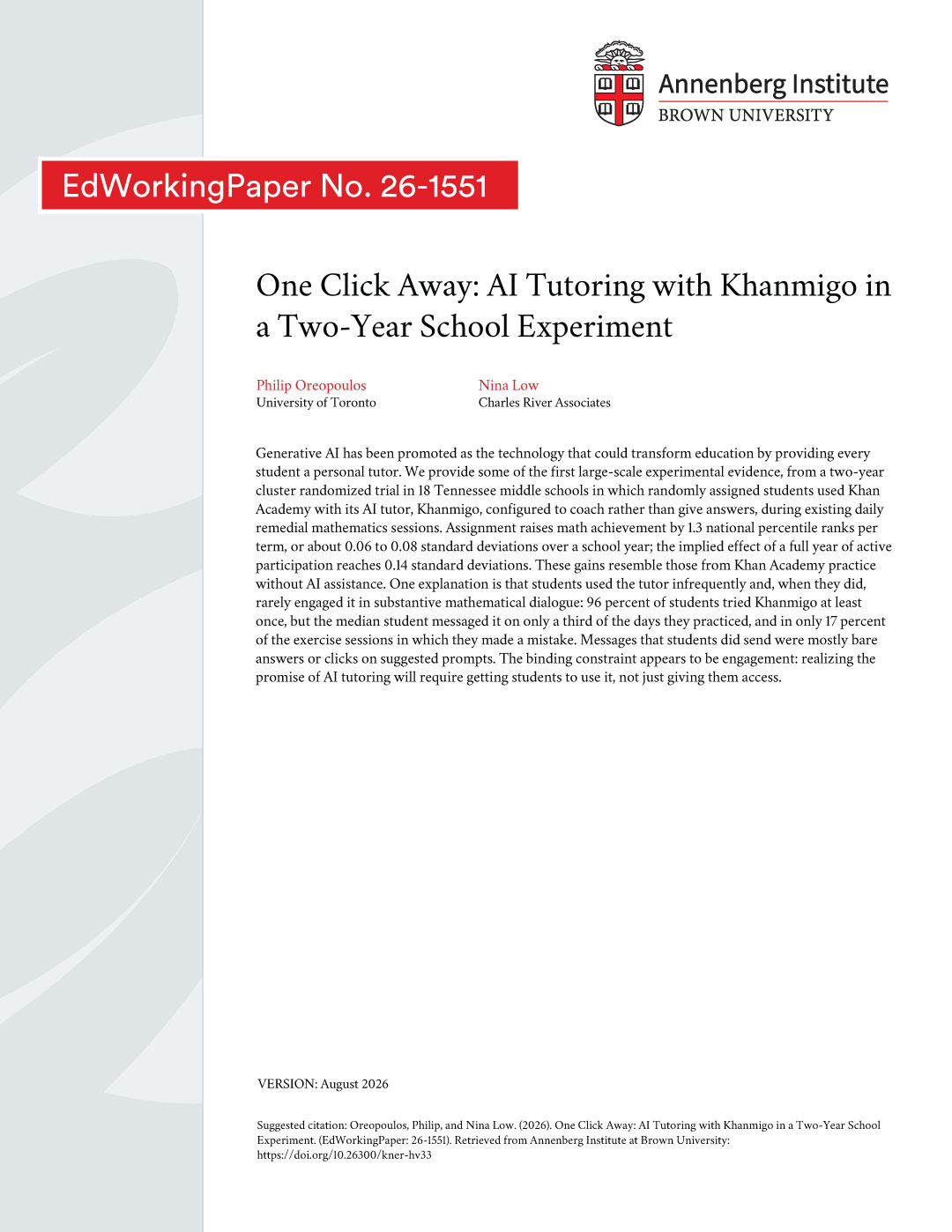
A two-year randomized trial across 18 Tennessee middle schools evaluated Khan Academy's AI tutor, Khanmigo, during daily remedial math sessions. The AI was specifically configured to coach students rather than simply giving answers. This large-scale experiment offers some of the first experimental evidence on whether generative AI can effectively deliver personalized educational tutoring.
CommentsA recent discussion on long-term data archival highlights the ongoing debate between using LTO tape drives and Blu-ray M-Disk optical media for cold storage. While LTO offers cost efficiency for large data volumes, users express concerns over its strict environmental requirements, high hardware costs, and maintenance needs. Consequently, many favor M-Disk as a more resilient and accessible backup of last resort for disaster recovery scenarios.
Comments2026-10-05

An improper redaction in a mandatory annual report has accidentally exposed the water and electricity usage of Google's data centers in Nebraska. While state statutes typically shield this resource consumption data from the public, the error provides a rare glimpse into the environmental footprint of the tech giant's facilities.
Comments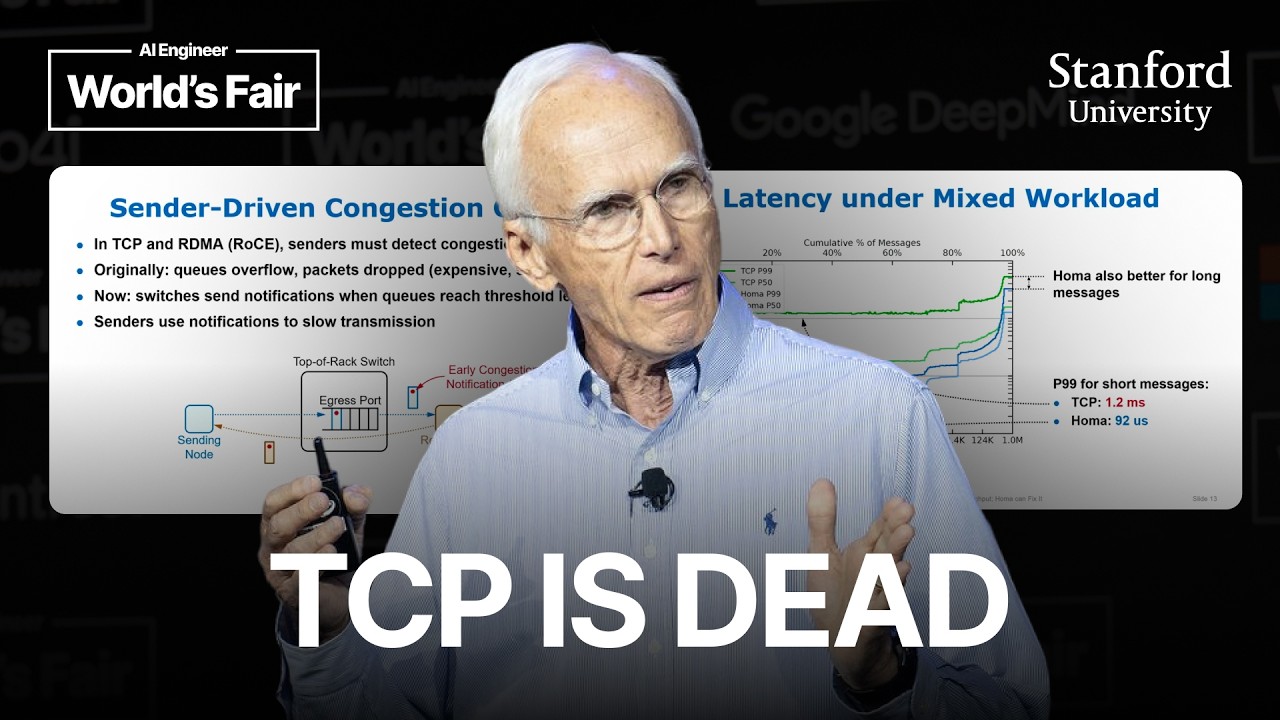
Stanford Professor John Ousterhout introduces Homa, a novel networking protocol designed to replace TCP within AI clusters. He explains that the unique and evolving demands of modern AI workloads require a fundamental departure from traditional networking approaches to optimize large-scale machine learning performance.
Comments2026-10-02


Pi Durable
2026-10-02Pi Durable is a new experimental package designed to support long-running, durable, and malleable agents across any computing environment. The project's creators provide an in-depth tour of the framework, detailing its technical capabilities and the core motivations behind its development.
Comments
RIP, vector database
2026-10-02Turbopuffer is signaling the end of the traditional vector database by fundamentally redesigning its storage architecture to advance search technology. By shifting the vector index from a primary to a secondary storage role, the company aims to push the boundaries of modern search capabilities.
Comments2026-10-01
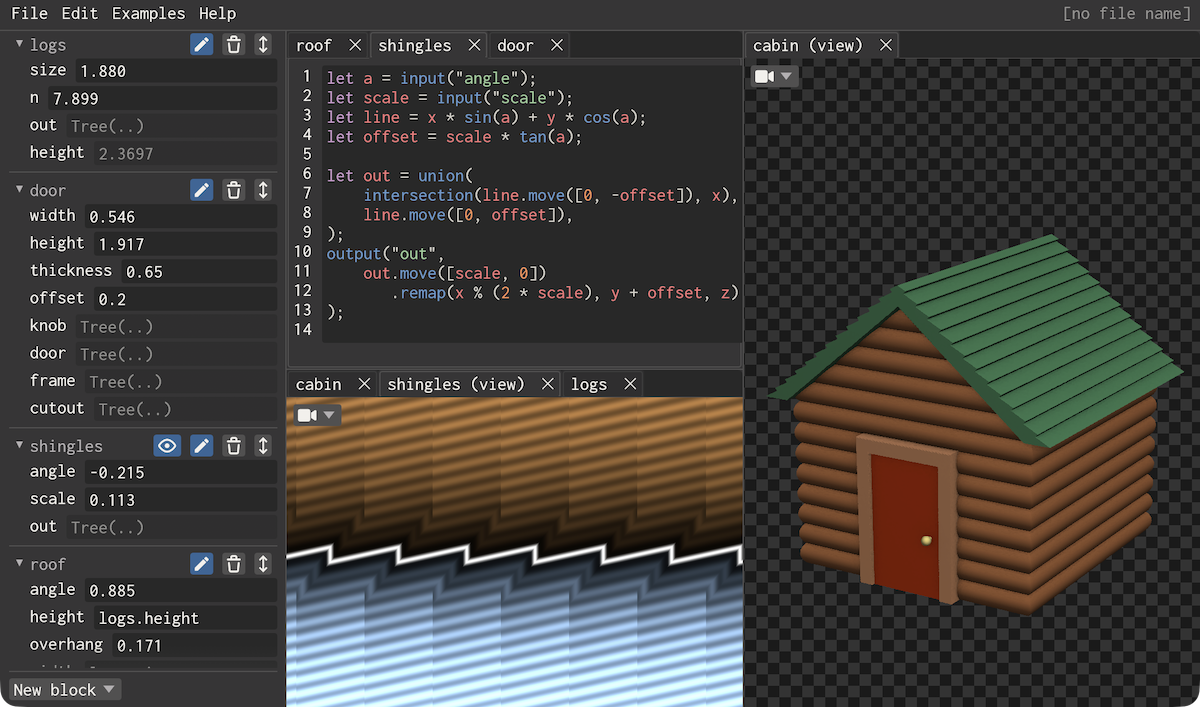
Halfspace is a new experimental integrated development environment designed specifically for solid modeling using distance fields. This specialized tool provides a dedicated workspace for creating complex 3D models through advanced mathematical representations.
Comments2026-09-30

As artificial light pollution continues to erase natural darkness, experts are urging cities to implement stricter regulations on outdoor lighting infrastructure. Reducing excessive nighttime illumination could significantly improve environmental conditions and protect local ecosystems for all living creatures.
Comments2026-09-29

Archaeologists have uncovered two intact burials at the 12,000-year-old Göbeklitepe site, shedding new light on ancient burial practices. This discovery finally explains the long-standing mystery of how human bones became scattered throughout the site's monumental buildings.
Comments2026-09-28
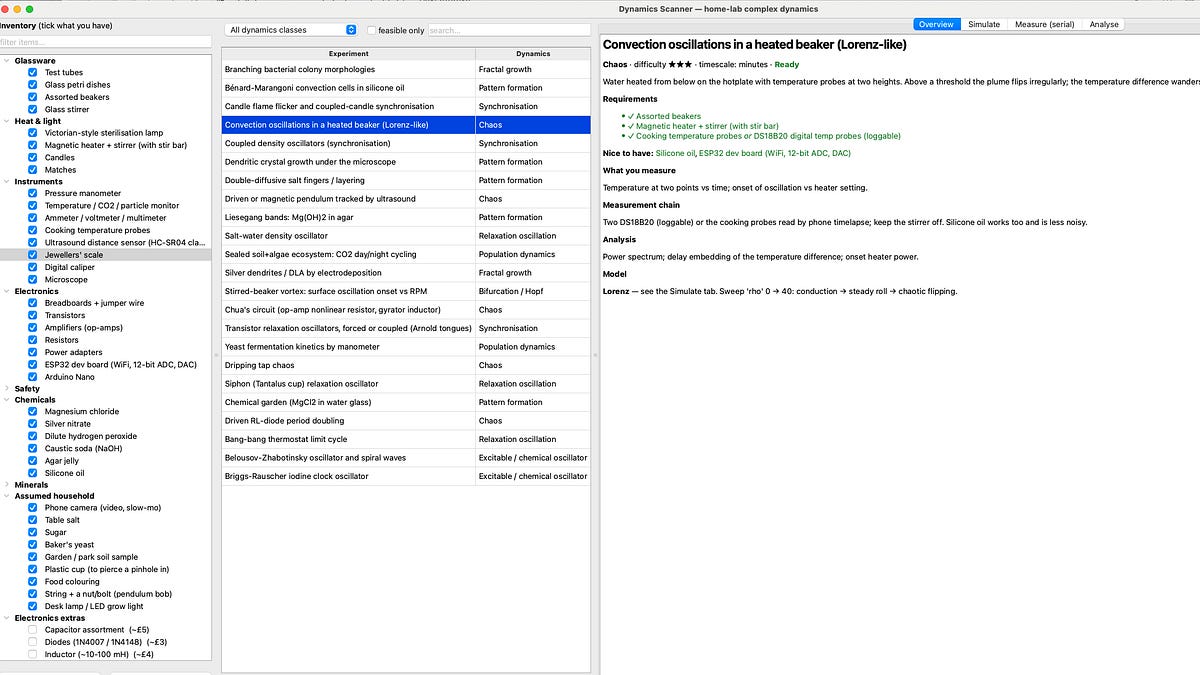
A New Experiment Meta-Strategy
2026-09-28A researcher has introduced a novel meta-strategy aimed at optimizing experimental workflows and development methodologies. The announcement also showcases their newly established laboratory space, which will serve as the central hub for these upcoming experiments.
Comments2026-09-27
The rise of AI-driven code generation is prompting a fundamental reevaluation of how programming languages are designed. As machines become the primary writers of code, future languages will likely evolve to prioritize machine efficiency and optimization over human readability. This transition will ultimately reshape the entire landscape of software development.
CommentsReaders discussing an article about modifying programming languages criticized the recurring trend of dismissing fundamental concepts just because LLMs can process them faster. However, the discussion highlights that the fear of language macros is largely overblown. While macro abuse can occur, features like the core.async library in Clojure show that macros often improve code readability and understanding when used properly.
Comments2026-09-26
Plan mode is dead
2026-09-26The author of a recent piece argues that plan mode is dead, reversing their earlier belief that planning would be the most critical aspect of building software with AI. This shift suggests a fundamental change in how developers should approach AI-assisted coding and software creation.
Comments
Platform-independent SIMD in Go
2026-09-26Go 1.27 introduces an experimental, platform-agnostic API to bring SIMD capabilities directly into the language. This addition allows developers to write high-performance, vectorized code that runs consistently across diverse hardware architectures without relying on platform-specific implementations.
Comments