Mental Health Tech News Today
SubmitDigital tools are playing a growing role in mental health care. This section covers therapy and meditation apps, teletherapy services, AI-based support tools, and the research, funding, and regulatory questions surrounding technology built for psychological wellbeing.
Stories include clinical trials testing whether apps deliver measurable outcomes, teletherapy platforms expanding or facing scrutiny, AI chatbots being used for emotional support and the safety debates that follow, and employer and insurer moves to cover digital mental health benefits.
Demand for mental health care far exceeds the supply of clinicians, which is why technology's role here draws such intense interest. Therapists, health systems, investors, and people seeking help all follow this coverage, where questions of evidence, ethics, and access carry unusual weight.
2026-04-24
Why I Write (1946)
2026-04-24George Orwell's 1946 essay Why I Write outlines his decade-long mission to elevate political writing into an art form. He explains that his creative process is fundamentally driven by a strong sense of partisanship and a reaction against social injustice.
CommentsA new study examines how habitual coffee consumption alters the gut microbiome, physiology, and cognition, prompting users to share their personal experiences with long-term caffeine dependence. While many report long-term benefits from quitting such as stabilized appetite and improved memory, the initial withdrawal frequently causes severe, months-long mental health crashes and dopamine dysregulation.
Comments
2026-04-23
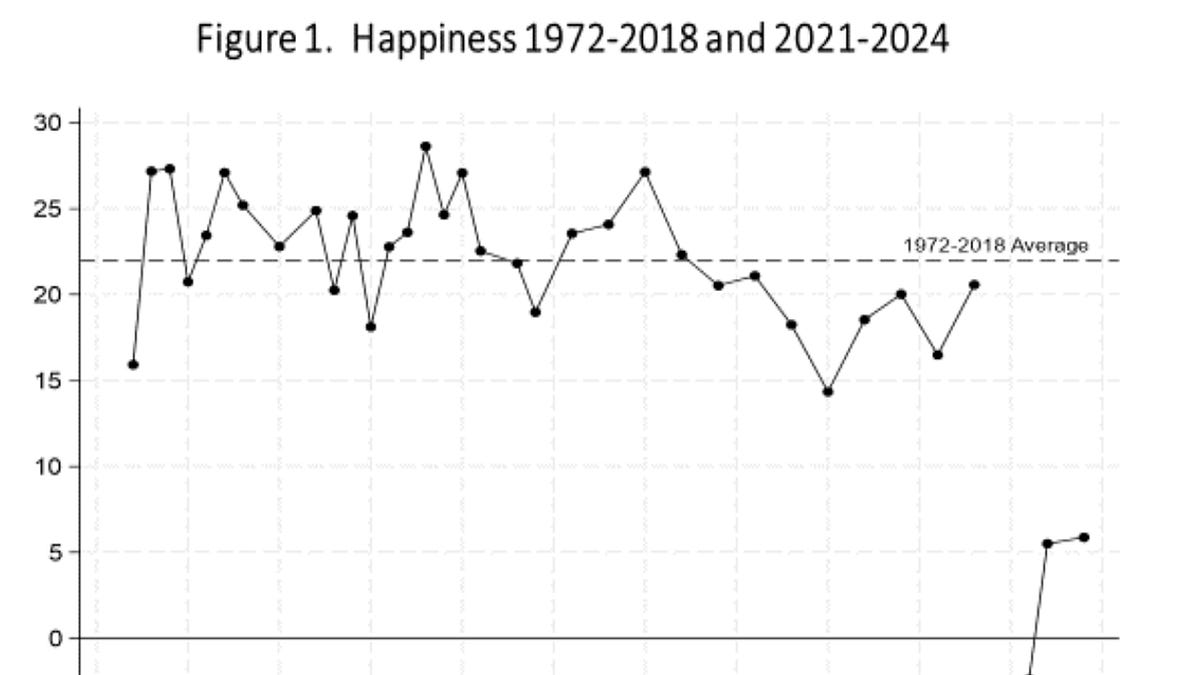
This article explores the paradox of declining national happiness in the United States despite unprecedented economic wealth during the 2020s. It examines how modern digital saturation and technological shifts have fractured collective mental health, leaving a materially rich population feeling increasingly disconnected and unhappy.
Comments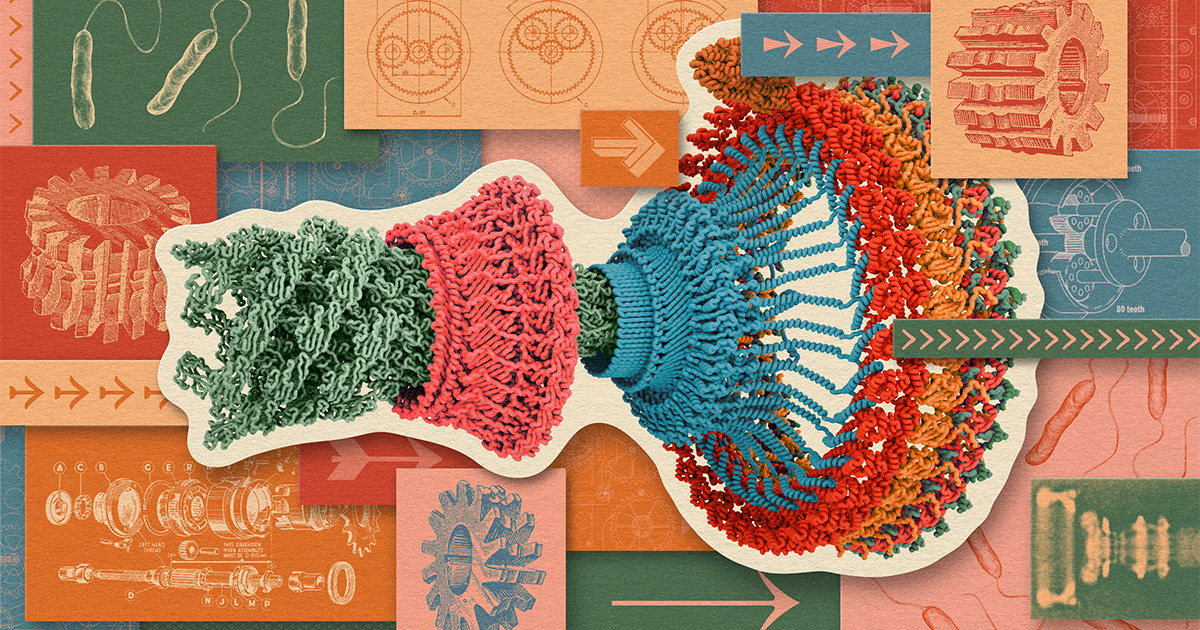
After five decades of research, scientists have finally deciphered the mechanical workings of the bacterial flagellar motor. Columnist Natalie Wolchover highlights how understanding this microscopic engine reveals the fundamental physical forces that drive all biological life.
Comments2026-04-22

A new experimental website bypasses traditional pre-rendered pages by streaming content live directly from an AI model. This approach creates an infinite visual browser where the interface and graphics are generated entirely on demand in real time.
Comments2026-04-21

Laws of Software Engineering
2026-04-21The article outlines the fundamental principles and recurring patterns that govern the development and maintenance of complex software systems. It highlights how these established rules directly influence team dynamics, architectural choices, and critical project decision-making.
CommentsAir is full of DNA
2026-04-21A recent article highlighting that human DNA is ubiquitous in the air has sparked reader debate regarding its implications for forensic science and criminal trials. Commenters warn that detecting a suspect's trace DNA at a crime scene does not definitively prove their guilt, citing risks of environmental transfer and the frequent misunderstanding of DNA statistics by juries. Consequently, they argue that environmental DNA evidence must always be corroborated by other investigative findings rather than being treated as absolute proof in court.
Comments2026-04-20

Starting in 2027, all smartphones and tablets sold in the European Union must feature user-replaceable batteries. This new mandate is part of a broader sustainability initiative aimed at slashing electronic waste and extending device lifespans. Consequently, tech manufacturers will need to adapt their hardware designs to comply with the upcoming environmental regulations.
Comments
F-35 is built for the wrong war
2026-04-20The F-35 fighter jet is an aerospace marvel, but its extreme complexity makes it too expensive and slow to manufacture for modern attrition warfare. Unlike mass-producible military assets, it requires immense time and resources to build each individual unit. Critics argue this prioritization of precision over scalability leaves the aircraft fundamentally mismatched for current large-scale conflicts.
Comments2026-04-19
A recent discussion on the seven fundamental programming ur-languages highlights academic initiatives like a Tufts university course that builds practical mini versions of core language paradigms. Readers also debate language taxonomy, specifically arguing that Ruby is deeply rooted in Smalltalk's object-oriented model rather than the traditional Algol lineage. Additionally, the conversation explores the fuzzy boundaries and varying definitions of object-oriented programming across modern languages like Python, Rust, and Common Lisp.
Comments2026-04-18

A recent article suggests that comparing floating-point numbers for equality is sometimes acceptable, but industry experts argue this view is overly reductive for computational geometry. Because geometric inputs are inherently inexact, exact floating-point comparisons are fundamentally unworkable for boundary representations, requiring geometry kernels to rely on fuzzy tolerances instead. While field-based representations can bypass these floating-point precision issues, developers note they introduce severe new complexities, such as the difficulty of implementing user-requested fillets in CAD software.
Comments2026-04-17

I’m spending months coding the old way
2026-04-17Despite the widespread integration of artificial intelligence in software development, one developer is deliberately spending the next three months coding without any AI assistance. This self-imposed return to traditional programming aims to reinforce fundamental skills and establish a baseline for evaluating the true impact of AI tools on the industry.
CommentsA recent analysis highlights how the Ada programming language successfully solved fundamental design challenges back in 1983. Its forward-thinking architecture addressed core software engineering needs long before they became industry standards. Today, modern systems languages like Rust, Go, and C++ are still independently converging on the pioneering solutions Ada established over four decades ago.
Comments2026-04-16

Scientists have made a significant breakthrough using CRISPR gene editing to silence the extra chromosome 21 responsible for Down syndrome. This development marks a crucial step toward a potential future therapy that could turn off the excess genetic material causing the condition's developmental and neurological issues.
Comments2026-04-15
Discussions surrounding the vital link between sleep, learning, and overall well-being reveal that mental stability and having a clear life purpose are foundational to maintaining healthy daily habits. Readers emphasize that understanding cognitive functions like ADHD is crucial for managing attention, emotional regulation, and executive dysfunction. Ultimately, adopting a process-focused rather than purely outcome-driven mindset helps prevent burnout and sustains long-term productivity.
Comments2026-04-14
jj – the CLI for Jujutsu
2026-04-14Jujutsu is a version control command line interface built on Git storage that offers a streamlined workflow by automatically incorporating changes into the current commit without a staging area. While some developers prefer the traditional Git mental model, advocates praise Jujutsu for its intuitive history rewriting, seamless conflict resolution, and undo capabilities that eliminate the need for stashing. Community discussions emphasize evaluating the tool based on its own unique affordances rather than strictly comparing it to Git.
Comments2026-04-13

GitHub Stacked PRs
2026-04-13GitHub Stacked PRs is a new workflow feature that allows developers to break down large code changes into smaller, more manageable pull requests. By stacking these incremental updates, teams can significantly streamline their code review process and handle complex changes more efficiently.
CommentsThe final installment of a tech series explores AI safety and alignment, arguing that trusting commercial or government entities to align AI systems with individual goals is inherently dangerous. Reader discussions highlight the adversarial nature of these power dynamics, emphasizing how concentrated institutional power actively undermines natural human cooperation to prioritize corporate and governmental interests.
Comments