Legal Tech News
SubmitTechnology and the law are now tightly intertwined. This section follows everything legal in the tech world, from new laws and regulations and the lawsuits they spark to contracts, licenses, and intellectual property disputes, along with the tools changing how legal work gets done.
Recurring stories include court rulings on platform liability and AI training data, copyright, patent, and trademark fights, privacy and data protection rules, changes to terms of service and licenses, law enforcement cases involving technology, and law firms adopting AI and contract automation.
Legal decisions set the boundaries that products, companies, and users must work within. Founders, developers, lawyers, compliance teams, and policy watchers follow this coverage to understand their rights, obligations, and risks.
2026-11-16

OpenAI announced new tools, practical guidance, and partnerships aimed at preventing, detecting, and responding to online child sexual exploitation and abuse. The effort is intended to strengthen the broader fight against this abuse online.
CommentsHacker News users report that emails posted in the “Who wants to be hired?” thread are being scraped and used for scams and spam, including fake job offers and unpaid data-labeling schemes. Commenters recommend using throwaway or unique per-site email addresses, with some setting up their own domains to track and limit exposure.
Comments

Michael Mann’s copyright fight over “Heat” hinges on whether he wrote the film for his own company, with New Regency arguing he cannot reclaim the rights and Mann saying he wrote early drafts independently. The dispute centers on the authorship and ownership history behind the 1995 crime drama.
Comments
The United States is set to reject a global ban on autonomous “killer robots,” even as the U.N. warns that such weapons pose growing risks to civilians and challenge compliance with international humanitarian law. The stance highlights Washington’s resistance to binding limits on AI-enabled military systems.
Comments2026-11-15

Commerce Secretary Howard Lutnick has pushed to weaken chip-related rules that would affect Southeast Asian data centers, some of which are clients of his former firm. The rulemaking has raised concerns because it overlaps with his family’s business interests.
Comments
A proposal argues that all code generated with AI assistance should be released as Open Source or under a Creative Commons Zero (CC0) license. It calls for AI-generated code to remain freely available rather than becoming proprietary.
Comments
A London trial in Mercuria v Baltic Exchange has offered a rare glimpse into the high-risk, high-reward business of moving crude oil through the Strait of Hormuz. The witness statement of Mercuria freight trader Renaud Hauspy sheds light on the logistics and risks of trading through the strategically vital waterway.
CommentsArkanum analyzed 8,941 stock trades disclosed by U.S. House members between November 2024 and November 2026, comparing their performance with the S&P 500. The test measured returns both from each trade date and from the day the trade became public.
CommentsSpeculation that Jensen Huang might return as Nvidia CEO appears unlikely after the US Treasury Secretary said the board should choose an external hire while Nvidia faces scrutiny over export-control violations. Reader discussion warned that a quick reversal under Silicon Valley pressure would raise serious questions about the board’s independence and competence.
Comments
A court denied a motion to dismiss a DRAM price-fixing case. Judge Noël Wise ruled that buyers plausibly alleged a conspiracy to restrict conventional memory chip supply, distinguishing the Ninth Circuit’s 2022 DRAM II decision.
Comments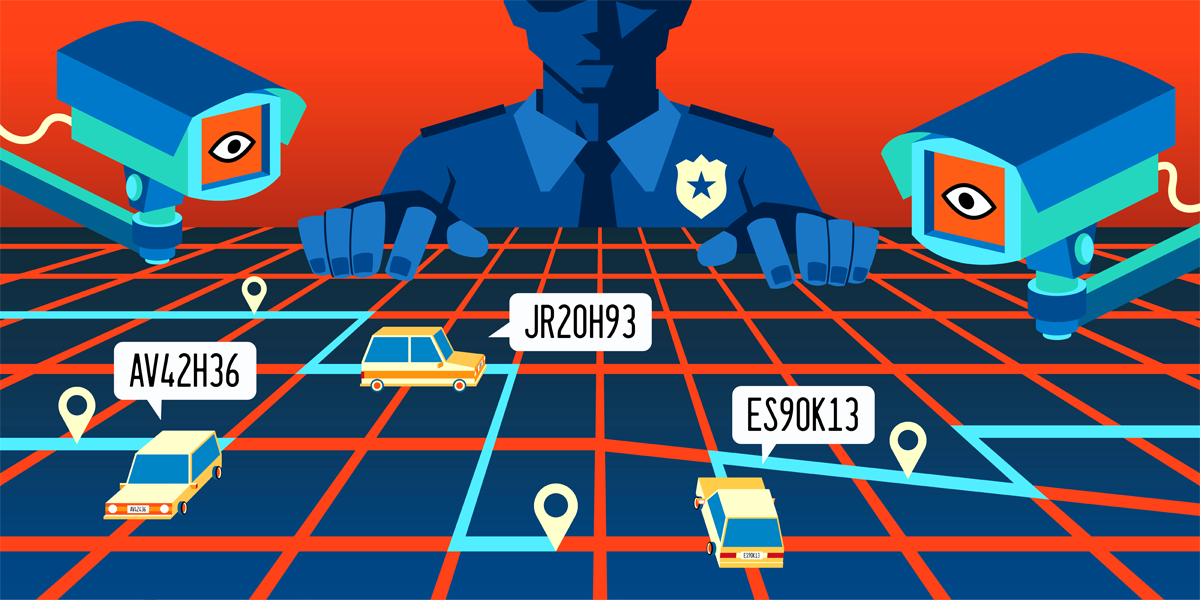
An advocacy group is asking an appeals court to require a warrant for automated license plate reader (ALPR) searches. It argues ALPRs are not comparable to observing a passing car because they give law enforcement a “virtual time machine” to review past movements with a click. The case seeks stronger privacy protections for ALPR data.
CommentsA chemical spill into a drainage ditch at SpaceXAI in Southaven involved propylene glycol, according to reader discussion. Commenters described it as a generally recognized as safe, water-soluble and biodegradable substance that is not bioaccumulative, unlike more toxic ethylene glycol. They characterized it as a relatively low-risk spill compared with worst-case chemicals.
Comments
Osint Case Studies
2026-11-15A piece examines OSINT case studies from real cybercrime investigations, showing how public-record emails and aliases are run through live searches. It details the method, distills six lessons from the cases, and outlines the ethics rules for responsible OSINT work.
CommentsThe Atheist Bible
2026-11-15The Atheist Bible is described in reader discussion as a massive Creative Commons-licensed monograph by Fabian M. Suchanek, with more than 700 pages, 300 illustrations, 500 inspirational quotes, and thousands of references and cross-references. Commenters note that it defines atheism, agnosticism, religion, and the supernatural and includes the Dawkins Scale, while questioning whether one “atheist perspective” can cover figures as varied as Dawkins, Russell, Mao, and Mussolini. The excerpt also uses the Persephone myth to illustrate explanations of natural phenomena that are obviously false but difficult to disprove.
Comments2026-11-14

An analysis of 159,041 Lovable projects found that many exposed sensitive data without requiring users to log in. The exposed information included passport details and more than 200,000 private messages.
CommentsThe IRS has published the source code for its Direct File free online tax filing service on GitHub in the IRS-Public/direct-file repository. The move opens the government-built tool to public review and contributions via GitHub.
Comments
Tech companies are again reshaping the notion of privacy, moving from a personal-choice framing to one where one person’s device can affect everyone nearby. Meta and Google’s smart glasses can record what the wearer sees or use AI to describe it, and similar AI-enabled audio features are raising new bystander-privacy concerns.
Comments
Italy’s privacy regulator fined Meta €805 million over photo privacy, saying the company failed to obtain users’ “specific” consent for handling their photos. The penalty adds to Meta’s mounting regulatory challenges in Europe.
Comments
LinkedIn and Monster have taken down more than 1,000 fake job postings following a CBC News investigation. The probe found that over 1,500 misleading listings on the platforms were connected to a multi-level marketing company.
Comments
Google’s Project Zero is switching to a straight 90-day vulnerability disclosure deadline, publishing details 90 days after a report. The change ends its since-2021 “90+30” policy, which gave vendors up to 90 days to remediate plus an additional 30-day window after a patch before disclosure.
Comments
Formalizing US Tax Code (Using Lean)
2026-11-14Researchers have formalized the U.S. tax code in Lean, allowing formal search across encoded rules. The approach surfaced previously unidentified loopholes by systematically exploring legal interpretations. It highlights formal methods as a potential tool for auditing complex regulations.
Comments
Bloomberg’s investigation into Penlink’s Webloc ad-based surveillance system has found that security agencies worldwide use it, building on prior Citizen Lab research. The reporting identifies additional customers of the system.
Comments
This technical overview explains how phone unlocking tools work, clarifying their mechanisms and the security or carrier locks they target. It aims to distinguish legitimate unlocking methods from risky or ineffective approaches so readers understand what these tools can and cannot do.
CommentsItaly has fined Meta $887 million over how Android users’ data, including gallery access, was handled. Discussion suggests the issue was not an exploit but Meta failing to clearly explain what users were consenting to when granting the app access to photos. Commenters criticized the article’s lack of detail and dismissed the penalty as another slap on the wrist for Meta.
Comments
The Other Nefertiti (2015)
2026-11-14In 2015, artists secretly scanned the bust of Nefertiti at Berlin’s Neues Museum using a hacked Kinect without the museum’s permission. The clandestine 3D scan, released as “The Other Nefertiti,” raised questions about cultural ownership and public access to museum artifacts.
Comments
The Myth of Neutral Code
2026-11-14The piece argues that open source software is not apolitical or neutral: it is shaped by corporate funding, governance, and power dynamics. It critiques companies that promote the myth of neutral code while wielding influence over projects and communities, and calls for recognizing the politics embedded in open-source development.
Comments2026-11-13
A breach at Caixa’s insurer exposed the names and tax IDs (CPFs) of all 7.6 million customers, though no other financial information was reportedly leaked. Commenters stressed that the customer list itself is sensitive financial data that could help scammers target victims, and that Brazil’s widespread use and repeated leaks of CPF numbers make such incidents especially hard to contain.
CommentsTSMC Hacked
2026-11-13TSMC says it has found no evidence that its own systems were compromised after reports that current and former employee data appeared on an external website. The company said the data matches information stored in a third-party cloud provider’s systems and is unrelated to TSMC’s operations or customer data, while hackers claim to hold 6.9GB covering about 46,000 employee records and are demanding 3 bitcoin. The incident appears to stem from a third-party provider rather than TSMC itself.
Comments
Oakland police are investigating the grand theft of a shipment of Nvidia hardware reportedly worth $11.4 million that vanished en route from California to Texas. The carrier’s identity and the circumstances surrounding the disappearance remain unclear.
Comments
A tech tinkerer reverse engineered a Coway Airmega air purifier to ditch its cloud dependency, motivated by wildfire smoke and poorly sealed Bay Area homes. The project highlights how owners can regain local control over smart home devices that otherwise rely on vendor servers.
Comments