Legal Tech News Today
Law and technology now evolve side by side. This section follows legal tech news day by day, covering both the tools transforming legal work and the legal questions raised by new technology.
Typical stories include AI assistants for law firms, contract management and e-discovery software, court rulings on technology companies, copyright disputes over AI training, and new rules for data and online platforms.
Legal technology affects how disputes are resolved and how products are built. Lawyers, compliance teams, founders, and developers follow this coverage to stay ahead of legal risks and opportunities.
2026-10-01

California has officially banned child marriage, a practice that remains legal in 32 other US states. Governor Gavin Newsom signed the legislation, calling it a long-overdue measure to protect young Californians.
Comments2026-09-28
Owed a billion dollars in Nvidia stock
2026-09-28A former employee recently discovered a vesting discrepancy in a 1993 Nvidia stock option grant that theoretically entitled them to a billion dollars. Despite the astronomical figure, the decades-old dispute was ultimately resolved in the company's favor due to the statute of limitations. This first-person account offers a fascinating glimpse into early tech equity and the complex legal hurdles of claiming forgotten stock.
Comments
As AI increases efficiency in the legal sector, clients are demanding lower prices instead of allowing firms to retain the savings from automated work. Meanwhile, reader discussions contrast this with the healthcare industry, where AI is frequently being used to upcode billing and charge patients extra out-of-pocket fees, raising concerns that technological advancements will simply create new ways for professionals to increase profit margins rather than reduce consumer costs.
Comments2026-09-27

The legal case Kansas versus Snap explores the unusual scenario of a private internet service being classified as a government actor. If the court determines Snap is a state actor, the company would be required to comply with Constitutional restrictions and extend free speech protections to its users.
Comments2026-09-26

An innocent woman was wrongfully jailed for 13 days after police relied on flawed Flock camera data to identify her as a suspect. Officers ignored obvious discrepancies, such as her vehicle being the wrong color and undamaged, choosing to trust the automated surveillance system instead. This incident highlights the significant risks of law enforcement's growing dependence on automated license plate reader networks.
Comments
A federal appeals court has upheld the Department of Defense's decision to blacklist Anthropic as a supply chain risk in a 2-1 ruling. This affirmation of the Pentagon's designation could significantly impact the technology company's ability to secure future government contracts.
Comments2026-09-20
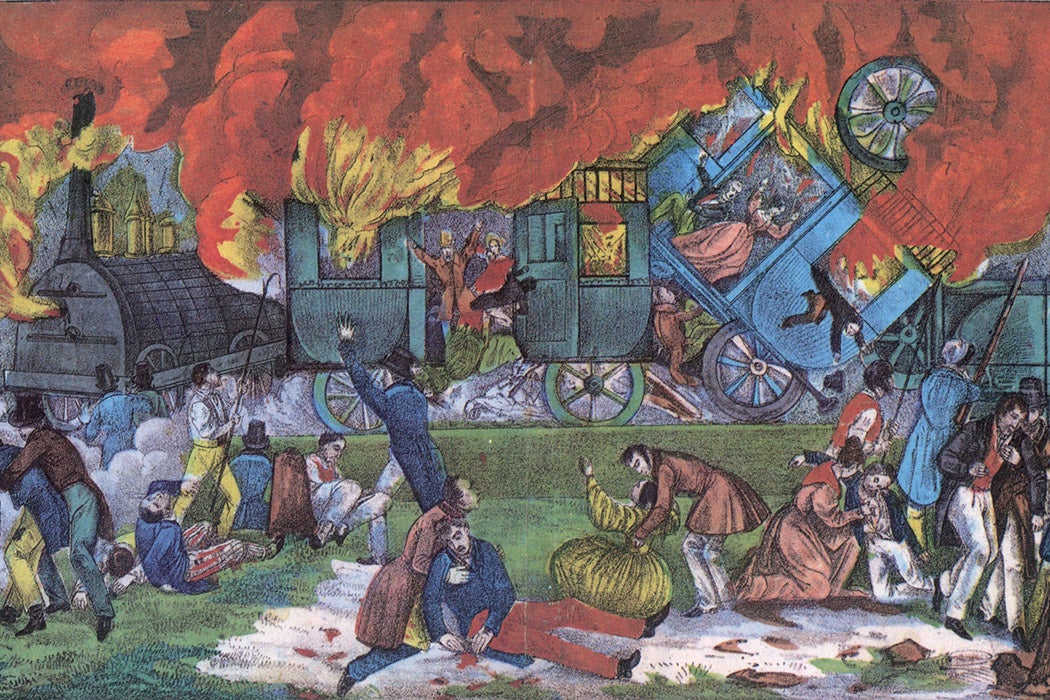
The historical legal practice of deodands involved assigning a monetary value to objects that caused a person's death. Under this system, the offending item was forfeited and appraised for its financial worth. This assessed value was then sometimes distributed as compensation to the bereaved families of the victims.
Comments2026-09-18

Astra for Law
2026-09-18OpenAI has launched Astra for Law, a specialized artificial intelligence platform designed to bring advanced intelligence and customizable workflows to the legal industry. The new tool integrates directly with legal data sources and features strict security controls to protect confidential client information.
Comments2026-09-15
The Ninth Circuit legal dispute between Amazon and Perplexity highlights growing industry concerns over how AI agents could disrupt traditional e-commerce. Commentators argue that AI-driven headless shopping threatens Amazon's lucrative advertising revenue by commoditizing the retail experience and allowing algorithms to route purchases to competing platforms. While Amazon's logistics network remains a strong competitive moat, observers warn that controlling the consumer interface is ultimately what secures long-term market dominance.
Comments
Former FTC Chair Lina Khan suggests that AI CEOs could face criminal charges by citing a 1934 legal precedent that allows for direct executive accountability. She asserts that regulators already have sufficient existing laws on the books to hold both technology companies and their leaders legally responsible.
Comments2026-09-14

The Fable 5.1 system has achieved a major historical breakthrough by successfully solving the Cyphral Distich, a complex 370-year-old cipher. Alongside this cryptographic milestone, the platform introduces private, domain-specific benchmarks tailored for the legal, tax, and finance sectors.
Comments2026-09-10

Blizzard Entertainment workers have secured a historic union contract that establishes crucial new protections, including strict guardrails for artificial intelligence usage. The landmark agreement also provides enhanced safeguards against future layoffs, setting a significant precedent for labor rights within the broader tech sector.
Comments2026-09-08
Keep Our Servers Running
2026-09-08The Internet Archive's Open Library is actively recruiting experienced technical volunteers to help optimize database performance, redesign the frontend, and migrate the backend to FastAPI. In the accompanying discussion, community members also debated the organization's controversial practices, weighing the legal risks of hosting pirated content and the pandemic-era Emergency Library against its broader archival mission.
Comments2026-09-07
Alternative Twitter front-ends Nitter and XCancel have resumed operations after temporarily suspending service to seek legal advice. The platforms are now back online, allowing users to access the alternative interfaces and developers to continue contributing to the projects via GitHub.
CommentsA Hacker News user is asking if they can publicly release reverse-engineered code used to hack a Fable smart piano. Commenters warn that publishing the software could violate the company's Terms of Service and invite DMCA takedowns or lawsuits. To mitigate these legal risks, the community suggests sharing technical details in a blog post rather than releasing the actual code.
Comments2026-09-05
How to Create a Tor Exit Node (2015)
2026-09-05Readers are strongly discouraging individuals from following a 2015 guide on setting up a Tor exit node, citing severe legal, technical, and ISP-related risks. Commenters warn that exit node operators face constant law enforcement scrutiny, malware infections, and IP blacklisting. Instead of running exit nodes, they suggest that network supporters run safer middle relays or donate to established organizations.
Comments2026-09-02
The FBI is investigating an online identity verification service after a massive data breach exposed over 153 million driver's licenses and other sensitive personal information. The incident has sparked renewed frustration over legal mandates that force companies to rely on vulnerable third-party vendors for identity checks instead of secure government APIs. In light of the breach, community members are urging the public to freeze their credit and enable mobile carrier protections against SIM swapping.
Comments2026-09-01

A former Crips gang leader has been found guilty in the 1996 murder of rapper Tupac Shakur. This verdict brings a legal conclusion to the high-profile case, finally ending decades of mystery surrounding the iconic artist's death.
Comments2026-08-30

Landlords using algorithmic rent-pricing software are facing a new wave of litigation under recently enacted state and local laws. These emerging municipal regulations offer a simpler legal pathway to establish liability and impose significant penalties compared to ongoing antitrust lawsuits targeting automated revenue management products.
Comments
The Department of Homeland Security is using an obscure law to surveil journalists, non-profits, and unions by directly demanding user data from social media and telecommunications companies. This approach allows the Trump administration to bypass the courts after judges previously rejected the same legal maneuver.
Comments2026-08-29
A federal appeals court has ruled in favor of state regulators in their legal battle against Kalshi, affirming that the company must comply with state-level gambling restrictions. The decision reinforces that Congress did not override existing state gambling regulations when amending the Commodity Exchange Act. The complex legal dispute over interstate betting is widely expected to be appealed to the Supreme Court.
Comments
Following Cursor's acquisition by SpaceX, OpenAI is ending its contract to supply AI models to the coding platform. The decision to wind down the partnership is a direct result of the recent corporate buyout.
CommentsA judge has ruled that the Trump administration's blacklisting of Anthropic was illegal because it was an unconstitutional retaliation against protected speech. The court rejected the government's weak national security justification, noting there was no reasonable belief that the action was anything but a political penalty. This decision highlights a broader pattern of the administration misusing national security claims to bypass legal scrutiny and enforce its agenda.
Comments2026-08-28
A judge has ruled that the Trump administration's blacklisting of Anthropic was illegal, prompting reader debate over the speed of the legal system and the true impact of the government's actions. While some argue the controversy provided free publicity without causing irreparable harm to the company, others warn that such political blacklisting results in lost government contracts and long-lasting industry damage. Furthermore, commentators suggest that these domestic political maneuvers may inadvertently accelerate global AI competition by boosting foreign adoption.
Comments2026-08-27

Stripe acquires Clerky
2026-08-27Stripe has acquired Clerky, a widely used online legal and incorporation platform for startups. This acquisition allows Stripe to expand its suite of business tools by integrating seamless company formation and legal services directly into its ecosystem. The move is designed to help entrepreneurs more easily launch and manage their new businesses.
Comments2026-08-26
Critics argue that C2PA image provenance technology fails to reliably distinguish real photographs from AI-generated fakes in practical scenarios. While some view the standard as a useful baseline deterrent, others warn it creates a dangerous false sense of security that could make the public more vulnerable to sophisticated manipulation. Consequently, many commentators suggest that legal mandates for labeling AI content are a more effective solution than these flawed technical fixes.
Comments2026-08-23
Figmimic is a new bookmarklet that captures any webpage, including authenticated internal dashboards, and converts it into editable Figma layers to save designers time. While users praise the tool for easily replicating complex interfaces using existing browser session tokens, some warn that applying it to proprietary corporate systems could violate terms of service and invite legal action.
Comments2026-08-22
A US citizen is facing felony charges for deleting phone data at the border, sparking debate over digital privacy and the legality of device searches. While some observers view the individual's actions as a deliberate act of activism to challenge these policies, others see it as an unplanned legal escalation. Many hope the case will result in an acquittal to establish a strong legal precedent protecting citizens' personal data.
Comments2026-08-21

Artificial Intelligence Policy
2026-08-21Starting in Summer 2026, a new artificial intelligence policy will mandate that future lawyers use AI fluently in their legal practice. Despite this push for technological adoption, the policy requires that AI usage remain coupled with human cognitive oversight to mitigate the current limitations of the technology.
CommentsUnder current European Union law, content generated entirely by artificial intelligence is not eligible for copyright protection because the legal framework requires a strictly human creative contribution. As a result, businesses cannot exclusively protect purely AI-generated assets like logos or text. However, individuals who attach their names to such AI-generated content may still assume legal liability for it.
Comments