Latest Tech News 2026
SubmitThis is the wide-angle view of what is happening in technology right now. Stories here span artificial intelligence, software, startups, consumer devices, and the major companies shaping the industry in 2026. It is a good starting point if you want the day's most notable tech developments in one place.
On a typical day you might see a major AI model release next to a startup funding round, a regulatory decision, and a product launch from one of the big platform companies. The mix reflects how broad the industry has become, with hardware, software, and policy stories all competing for attention.
A general feed like this suits readers who want breadth without maintaining a dozen separate subscriptions. Founders scanning for market signals, professionals keeping current for their work, and curious readers who simply like technology all use a roundup section as their daily entry point into the news.
2026-10-11

A developer spent 500 billion AI tokens to decompile and accurately recreate a popular first-person shooter game. Despite achieving a stable and feature-complete version, the project and its related blog posts were removed following legal intervention from the game's corporate publisher.
CommentsNix wrote half of my debugger
2026-10-11A developer details their experience using Rewind VM, a deterministic virtual machine that treats Nix builds as pure functions to effortlessly isolate and resolve race conditions. The tool has practically built its own advanced debugger features, rapidly expanding to include thread lanes, stack frames, and enhanced GDB support. Despite its powerful capabilities, the author questions why this deterministic approach to debugging complex build environments remains largely underutilized.
Comments

A developer has released a recurrent neural network designed to generate Korean handwriting strokes in celebration of Hangul Day 2026. The project adapts Alex Graves' architecture and features a newly published dataset compiled from 4,500 lines of smartpen handwriting.
Comments
Microsoft has released version 1.0.0 of its Execution Containers to address the security risks posed by AI agents requiring broad system access. Previously, organizations faced a difficult choice between maximizing agent productivity and maintaining strict security controls. This new tool resolves the dilemma by providing a secure, isolated environment for autonomous tasks.
Comments
Unikernels were hard. key word: were
2026-10-11Former MirageOS developer Justin Cormack explains that unikernels are experiencing a resurgence because the historical friction that made them difficult to use has disappeared. With traditional operating systems now viewed as design debt, unikernels offer a compelling and highly secure alternative for modern software deployment.
Comments
Researchers have introduced byteification, a novel method that retrofits existing subword-based large language models to operate directly on raw byte encoding with minimal extra training. This approach overcomes previous performance limitations, enabling byte-level models to match traditional systems while excelling at the fine-grained character-level reasoning required for complex scientific data like computer code and biological sequences.
Comments
C for Rust programmers
2026-10-11A new guide explores the unexpected details and nuanced differences Rust developers encounter when learning the C programming language. It highlights key challenges to help programmers transition more smoothly between the two systems languages.
Comments
Food processing significantly impacts both metabolism and brain activity in healthy adults, according to new research. Even when meals are strictly matched for calories and nutrients, different preparation methods result in distinct metabolic responses and altered activity in the brain's reward system. These findings suggest that the physical structure of food plays a crucial role in human health beyond its basic nutritional content.
Comments
Early results from the InnovationEval assessment indicate that current AI models are struggling to replicate a recent human algorithmic innovation. The findings highlight a persistent gap in artificial intelligence, demonstrating that these systems cannot yet match human-level algorithmic breakthroughs.
Comments
Researchers analyzing tiny radioactive fragments from the 1986 Chernobyl disaster have discovered that the nuclear fuel is far more stable than previously assumed. This unexpected finding regarding the material's degradation over the past four decades could enable scientists to make much more precise assessments of the long-term health risks posed by radioactive contamination.
Comments
The article explores the contradictory economic desires of homeowners, who want their own property values to rise to build wealth while hoping other housing prices fall to afford a better home. Additionally, these individuals expect their property taxes to decrease, highlighting the inherent inconsistencies in how people view personal financial gains versus broader market conditions.
Comments2026-10-10

A new research post explores the feasibility of applying autoregressive diffusion models to generate synthetic financial market data. This technical exploration is highlighted in a special series showcasing the innovative projects completed by 2026 summer interns.
Comments
A YouTuber reported that police visited his home after he built a Flock-style camera system designed to track law enforcement vehicles. The incident highlights the irony of authorities using automated surveillance to monitor the public while resisting when that same technology is turned back on them.
Comments
An analysis of 23 core open source projects reveals that 11 of them, including critical tools like sudo and bash, are maintained by only one or two individuals. The study highlights the heavy concentration of development efforts in the ecosystem by detailing the identities and funding sources of these key contributors.
Comments
The autonomous trucking sector is making significant technological strides, but experts are evaluating how close the industry truly is to a full-scale commercial revolution. Current developments highlight impressive progress in self-driving freight vehicles, though widespread deployment still faces substantial regulatory and operational hurdles.
Comments
100+ reactions to 100+ solutions
2026-10-10In response to OpenAI's October 6 announcement, a new community-driven resource has compiled over 100 reactions and proposed solutions. This collection provides an updating snapshot of the tech community's collective sentiment as developers grapple with the recent changes.
CommentsDiscussions surrounding the Lean Theorem Prover highlight growing concerns over the reliability of AI-generated mathematical proofs and the potential for underlying soundness bugs in the system's kernel. While automated proof checkers are necessary to mitigate AI hallucinations, experts emphasize that human oversight remains the ultimate backstop against theoretical flaws. Furthermore, current autoformalization tools struggle to accurately translate complex papers, often producing formally verified proofs that fail to capture the original mathematical intent.
Comments
Microsoft has introduced Microsoft-Decision-1, a new decision-scoring model designed to deliver rapid, high-quality results for structured decision tasks. By achieving top performance in both latency and accuracy, the new model successfully outperforms traditional large language models and other existing decision-making systems.
CommentsProgramming Isn't Special
2026-10-10In his latest blog post, software engineer Glyph Lefkowitz argues that programming is not a magical or unique discipline, but rather a standard trade like any other. He challenges the tech industry's culture of exceptionalism, encouraging developers to view their work as a practical craft rather than an elite calling.
Comments2026-10-09

What should we tell our students?
2026-10-09Mathematician Álvaro Lozano-Robledo addresses student concerns regarding the impact of artificial intelligence on their academic and professional futures. In a recent guest post, he advises learners to remain calm and continue studying mathematics. He emphasizes that despite rapid technological shifts, a strong foundation in math retains its enduring value.
Comments
A man discovered that his parents' smart coffee machine consumed an unexpected 1TB of data in just 10 days. He noted that the internet-connected appliance generated a massive amount of network traffic, far exceeding normal expectations. This unusual data usage highlights the hidden bandwidth demands and potential monitoring needs of modern smart home devices.
CommentsThis opinion piece explores the reasons behind the tech industry's surprisingly muted reaction to the release of DeepSeek 4.1 Flash. By offering unconventional perspectives, the author questions whether this lack of widespread hype signifies a maturing AI market or a fundamental misjudgment of the technology's capabilities.
Comments
A coalition of major tech companies and government agencies has committed $1.8 billion to expand the Virtual Biology Initiative. This collaborative investment from organizations including Google, Meta, the NIH, and the DOE will focus on creating open, AI-ready biological datasets to accelerate scientific research.
Comments
A maker on Hacker News shared a DIY project detailing the creation of a flexible neon t-shirt using LED filaments. The creator repurposed flexible lighting components from their personal parts bin to integrate customizable illumination directly into everyday wearable clothing.
Comments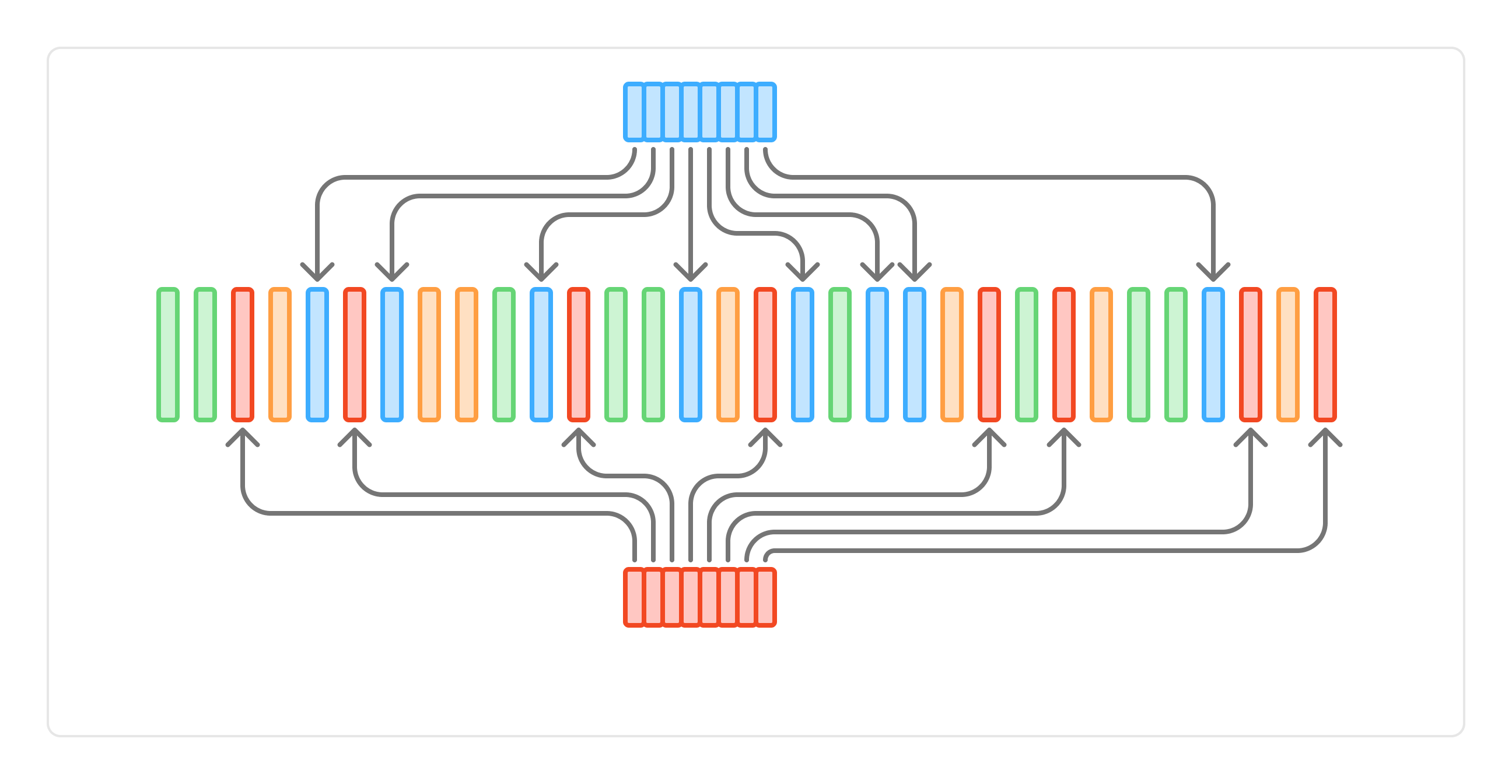
A recent blog post details a 2026 summer intern project focused on scaling and benchmarking a critical message bus using a new indexing strategy. This technical deep dive is featured in a special series highlighting the impactful contributions of the company's summer interns.
Comments
A North Carolina man has been sentenced to 18 months in prison for fraudulently collecting millions in music streaming royalties. Michael Smith used automated bots to artificially inflate the play counts of AI-generated songs. He was convicted of conspiracy to commit wire fraud by the US Justice Department for the scheme.
Comments2026-10-08

Margaret Hamilton has died
2026-10-08Margaret H. Hamilton, a profoundly influential computer scientist who led the software engineering team for NASA's Apollo program at MIT's Instrumentation Lab, has died at age 90. Her pioneering work on the missions cemented her legacy as a foundational figure in the history of computer science.
Comments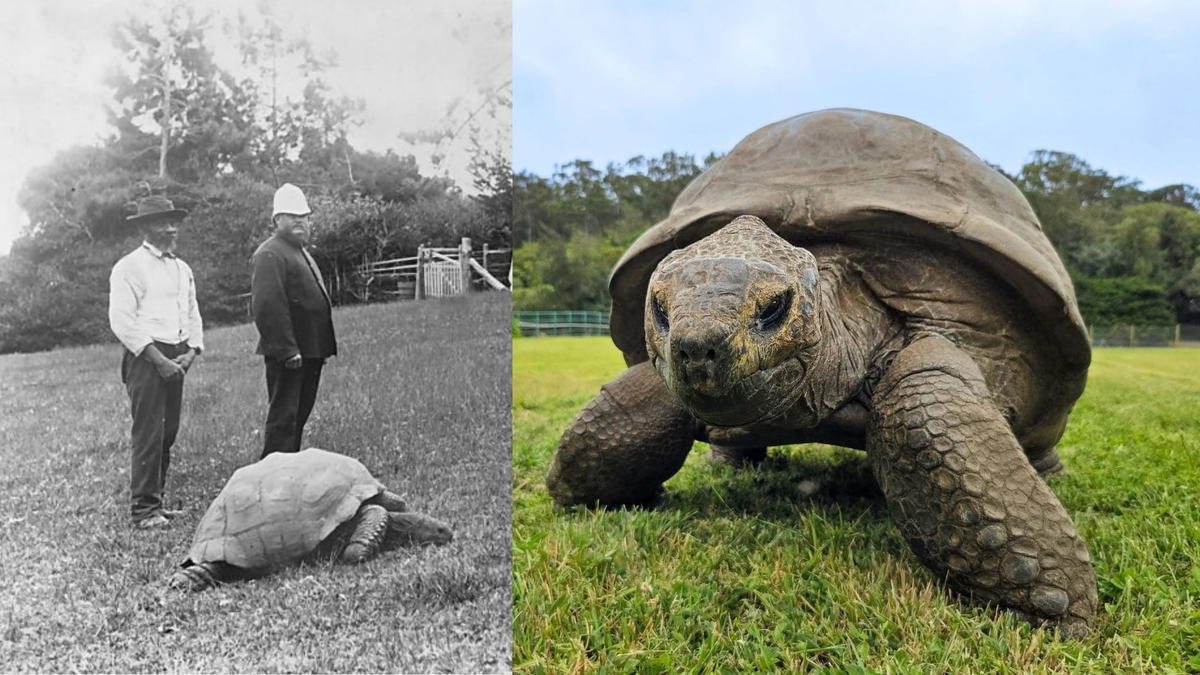
Scientists have sequenced the genome of Jonathan, a 194-year-old Aldabra giant tortoise and the world's oldest known land animal. By analyzing his DNA, researchers hope to uncover the genetic mechanisms behind his extreme longevity. These insights could eventually lead to breakthroughs in human aging and help people live longer.
CommentsResearchers in Vienna and Beijing have successfully activated the world's first thorium nuclear clocks, a breakthrough detailed in a new Nature journal article. Although thorium is one of the rarest elements in the galaxy, it is highly abundant in the Earth's crust and serves as a primary component of natural background radiation.
Comments
This piece examines the technical pitfalls of attempting to hot-patch a function that has already been hot-patched. It details the underlying complications of modifying an already modified function at the code level. The author concludes by warning developers that hot-patching is a Windows-specific operating system mechanism and should not be used in custom applications.
Comments