Health Tech Funding News
Investors continue to pour money into companies trying to modernize healthcare. This section follows funding news in health technology, covering digital health platforms, medical devices, biotech tools, and healthcare AI.
Typical stories include seed and growth rounds for health startups, acquisitions by large healthcare companies, IPOs, valuation resets, and the areas investors favor, from mental health apps to clinical AI.
Funding shows which health innovations are likely to reach patients next. Founders, investors, clinicians, and healthcare executives follow this coverage to track the market.
2026-05-15

The UK government has released new details and photographs of an airdrop mission to the remote island of Tristan da Cunha. Executed on 9 May 2026, the intrepid operation successfully delivered urgent medical support to the isolated territory. This logistical feat highlights the complex planning required to provide emergency aid to one of the world's most inaccessible locations.
Comments
Ontario auditors discovered that AI medical note-taking systems used by doctors frequently generate inaccurate patient records. Evaluations revealed that 60% of the tested AI scribe tools incorrectly mixed up prescribed medications in their notes. These errors raise significant concerns about the reliability and safety of deploying artificial intelligence in healthcare settings.
Comments
2026-05-11

Researchers at UCLA Health have discovered the first drug capable of fully replicating the brain-repairing effects of physical stroke rehabilitation in mice. By successfully mimicking physical therapy in animal models, this breakthrough treatment offers a promising pharmaceutical alternative that could eventually revolutionize human stroke recovery.
Comments
The rise and fall of snake oil
2026-05-11This article explores the 19th-century evolution of snake oil, tracing its transformation from a traditional folk remedy to a mass-produced industrial medicine. The piece details how the product eventually lost its public credibility and became universally recognized as a fraudulent medical scam.
Comments2026-05-10
Recent findings suggest that an involuntary decrease in walking speed may be an early indicator of hearing loss rather than musculoskeletal decline. Although reader discussions largely focused on the physical discomfort and philosophical benefits of different walking paces, the underlying study highlights an unexpected physiological connection between auditory health and mobility.
Comments2026-05-08
A new study reveals that nonprofit hospitals spent $7.8 billion on consulting services over the past decade. Despite this massive financial investment, researchers found no significant improvements in hospital finances, staffing, daily operations, or patient care outcomes. The findings suggest that this heavy reliance on external consultants has yielded little to no measurable value for the healthcare system.
Comments2026-05-04

A Bloomberg investigation revealed that health insurance marketplaces in Virginia and Washington, D.C., were sharing sensitive user data, including race and citizenship status, with advertising technology firms. In response to the findings, both jurisdictions have paused their data collection and sharing practices.
Comments2026-05-03

OpenAI's new o1 model correctly diagnosed 67 percent of emergency room patients in a recent study, substantially outperforming human triage doctors who achieved a 50 to 55 percent accuracy rate. Researchers describe these results as a profound technological shift that could fundamentally reshape the future of healthcare.
Comments2026-05-01
Ask HN: Who is hiring? (May 2026)
2026-05-01Biotech startup Project Debug is hiring a generalist engineer in Singapore to manage the automated rearing and sex-sorting of mosquitoes to combat dengue and other vector-borne diseases. The Hacker News discussion surrounding the job post reveals strong community fascination with the startup's use of the sterile insect technique and its unique blend of software, hardware, and real-world ecological impact.
Comments
An open letter addressed to NHS England technical leadership is urging the health service to embrace open-source software. The authors argue that any code paid for with public funds should be made freely accessible to the public by default.
Comments2026-04-28
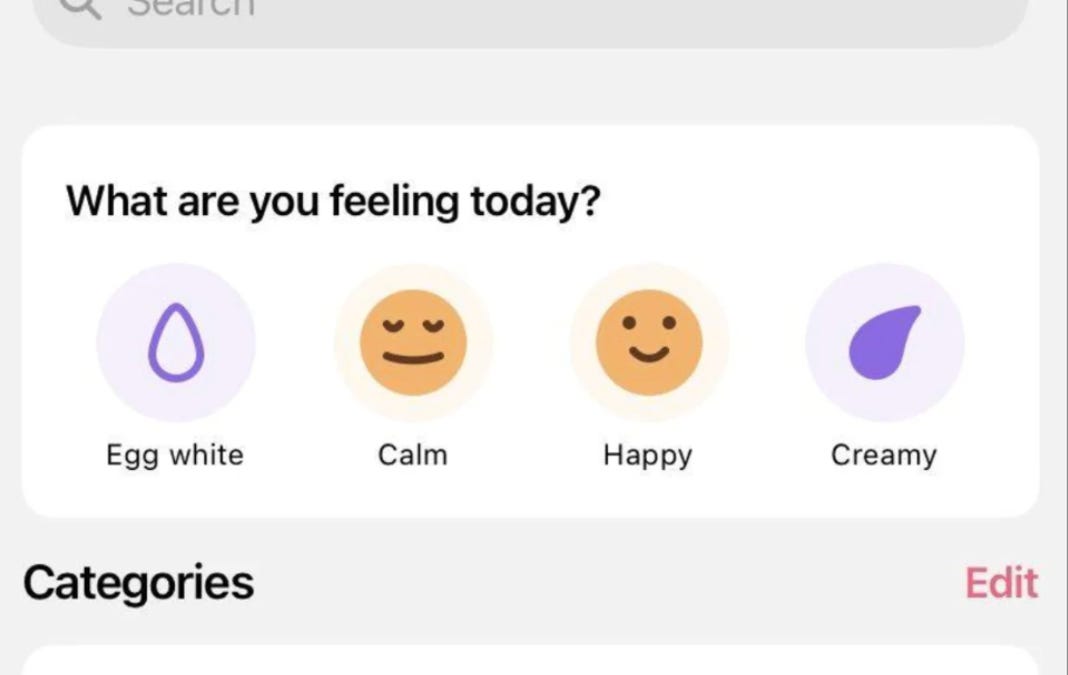
The popular period tracking app Flo has been found sharing sensitive user data with Meta, exposing the vulnerabilities in digital health monitoring. This revelation highlights the risks of vague data collection policies and raises critical concerns about the privacy of self-monitoring biological markers.
Comments2026-04-27

The U.S. Food and Drug Administration has approved Otarmeni, the first-ever dual adeno-associated virus (AAV) vector-based gene therapy, to treat genetic hearing loss. This landmark decision marks a significant breakthrough in utilizing advanced viral vector technology to address hereditary medical conditions.
Comments2026-04-24
A new study examines how habitual coffee consumption alters the gut microbiome, physiology, and cognition, prompting users to share their personal experiences with long-term caffeine dependence. While many report long-term benefits from quitting such as stabilized appetite and improved memory, the initial withdrawal frequently causes severe, months-long mental health crashes and dopamine dysregulation.
Comments2026-04-23

The UK Biobank is repeatedly issuing DMCA takedown notices to remove sensitive participant health data that researchers accidentally publish on GitHub. This recurring issue highlights the ongoing challenges of securing large-scale medical datasets and preventing accidental exposure in public code repositories.
Comments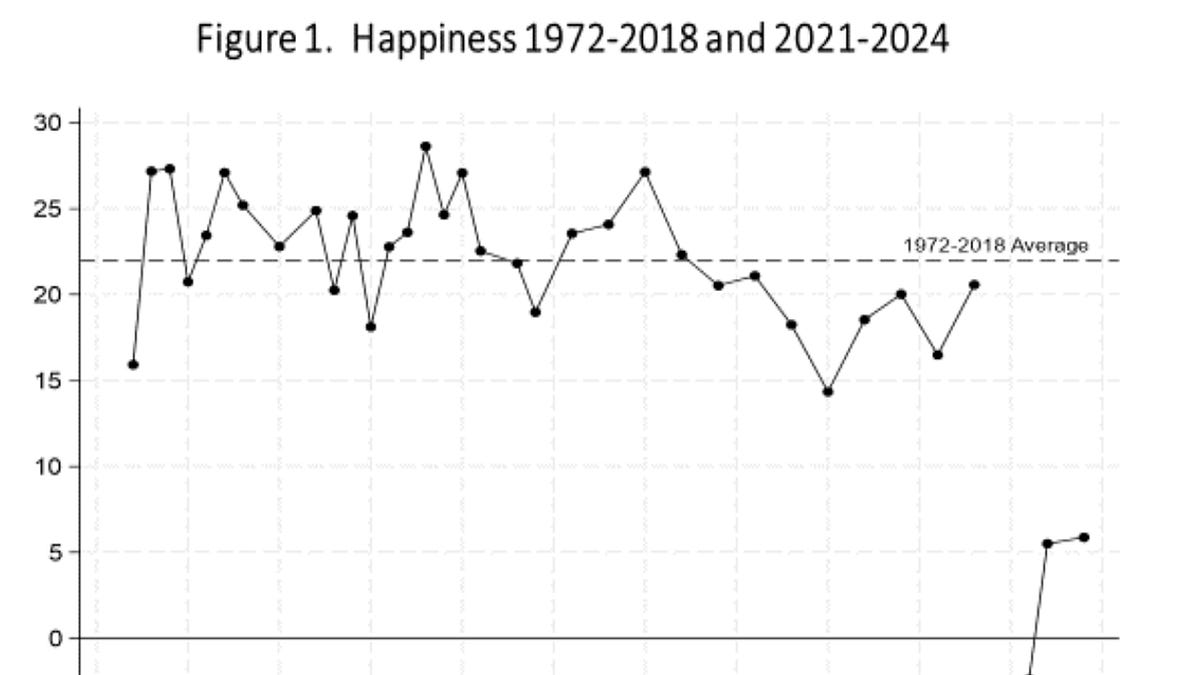
This article explores the paradox of declining national happiness in the United States despite unprecedented economic wealth during the 2020s. It examines how modern digital saturation and technological shifts have fractured collective mental health, leaving a materially rich population feeling increasingly disconnected and unhappy.
Comments2026-04-22

Acetaminophen vs. ibuprofen
2026-04-22This piece breaks down the medical differences between acetaminophen and ibuprofen to help readers make informed decisions about over-the-counter pain relief. It highlights essential advice from doctors regarding the safety, proper usage, and specific scenarios where one medication is preferred over the other.
Comments2026-04-18

All twelve Apollo moonwalkers experienced allergy-like symptoms, known as lunar hay fever, after sharp and abrasive moon dust clung to their spacesuits. This gunpowder-scented dust caused sore throats and watery eyes upon their return to the lunar module. Researchers are still investigating the exact toxicity of these particles to better understand the health risks for future human missions.
Comments2026-04-17
The GNU libc atanh is correctly rounded
2026-04-17The GNU C Library has updated its math functions to achieve fully correct rounding for the double-precision atanh operation, moving beyond the traditional 1 ULP accuracy target. This ongoing initiative provides strict numerical guarantees that are essential for designing reliable algorithms in critical fields like aerospace and medical simulations. While these highly accurate implementations perform well on modern CPUs, developers still face significant optimization challenges when adapting them for GPU and NPU architectures.
Comments2026-04-15
Developed by Saffron Health, Libretto is a new AI toolkit designed to help developers build deterministic and reliable browser automations. The project addresses the common unpredictability of AI-driven web interactions by providing a highly stable framework for automated tasks.
Comments