EU Tech Policy News
SubmitThe European Union has become one of the world's most active technology regulators. Stories here track the Digital Markets Act, the AI Act, GDPR enforcement, and other Brussels initiatives that affect companies far beyond Europe. The section also covers how tech firms are responding and adapting to EU rules.
Expect news on designation decisions and compliance deadlines under the major digital laws, fines and investigations targeting large platforms, and the detailed guidance that determines how abstract rules apply in practice. Debates within EU institutions about competitiveness and innovation increasingly share space with pure enforcement stories.
EU rules often become de facto global standards, since companies frequently apply one compliant design worldwide rather than maintaining separate versions. Legal and policy teams track this coverage professionally, while product leaders and founders read it to anticipate what their software will be required to do next.
2026-05-19

Show HN: Gaussian Splat of a Strawberry
2026-05-19A Hacker News user has shared a highly detailed 3D Gaussian splat of a strawberry captured from 90 distinct perspectives. To achieve this level of realism, the creator used a Nikon Z8 and a macro lens to shoot 88 focus-stacked images for every single angle.
Comments2026-05-18

Click (2016)
2026-05-18The 2016 browser game Click offers an interactive exploration of online profiling and digital tracking. By simulating real-time data collection, the project highlights the hidden privacy implications of everyday internet usage. It serves as an educational tool to help users understand how their digital footprints are monitored and utilized by algorithms.
Comments
2026-05-13

A History of IDEs at Google
2026-05-13Laurent Le Brun's blog post details the evolution of Google's internal development environments, tracing the company's shift from relying on third-party tools to building bespoke, cloud-based IDEs tailored for its massive monorepo. This overview highlights how the immense scale and complexity of Google's codebase forced the tech giant to engineer highly customized, scalable software ecosystems rather than relying on commercially available tools.
Comments2026-05-12

The European Union is investigating social media platforms like TikTok and Instagram over their addictive design features that target children. EU Commission President Ursula von der Leyen announced the crackdown to address how these apps allow minors to go down rabbit holes of harmful content.
Comments2026-05-09
The European Parliamentary Research Service has identified VPNs as a loophole that allows users to bypass online age-verification systems. The organization is urging policymakers to close this gap to ensure stricter enforcement of digital age restrictions.
Comments2026-05-04
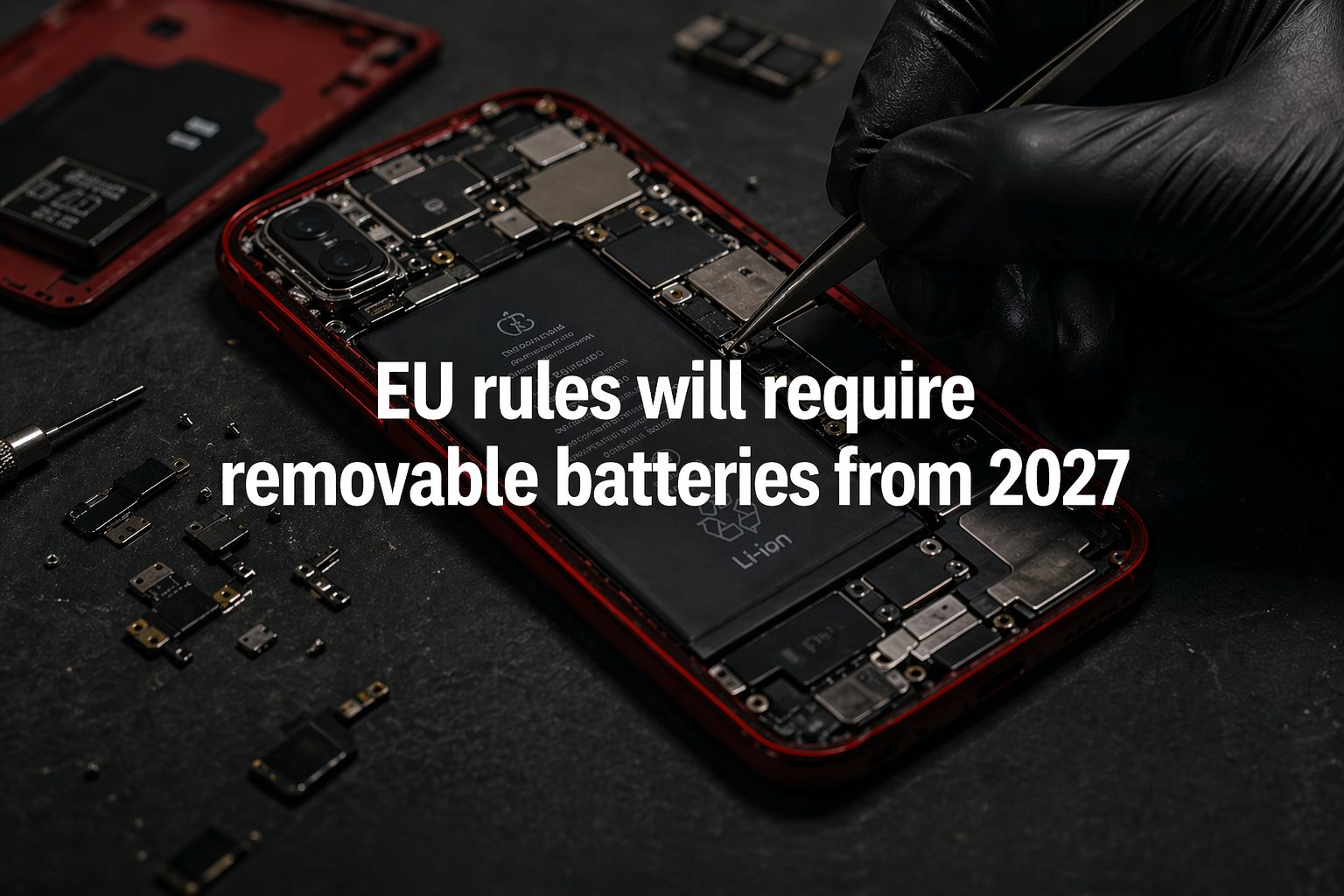
Beginning in 2027, a new European Union regulation will require all smartphones sold in the region to feature removable batteries. This mandate represents a major shift in modern device design for manufacturers. For users, the change means they will once again easily be able to swap out their own power cells to extend the life of their devices.
Comments2026-04-26
Online discussions regarding the EU's age verification mandates clarify that the policy is an explicit stepping stone toward a comprehensive cross-border digital identity system rather than a hidden trojan horse. While some readers defend the utility of mobile ID wallets for international authentication, many emphasize the critical need for privacy-preserving technologies to prevent corporate data harvesting. Ultimately, the debate underscores concerns that widespread digital identity checks could lead to severe privacy violations if businesses are permitted to store unnecessary personal information.
Comments2026-04-20

Starting in 2027, all smartphones and tablets sold in the European Union must feature user-replaceable batteries. This new mandate is part of a broader sustainability initiative aimed at slashing electronic waste and extending device lifespans. Consequently, tech manufacturers will need to adapt their hardware designs to comply with the upcoming environmental regulations.
Comments
The European Commission recently launched a new age verification app, claiming the technology was fully prepared for deployment, but cybersecurity experts quickly identified critical flaws. Hackers successfully breached the application in just two minutes, exposing significant security vulnerabilities in the EU digital initiative.
Comments2026-04-14

Spain plans to expand dynamic internet blocking during live sports and movie broadcasts to combat piracy, a strategy critics argue causes collateral damage by inadvertently restricting access to legitimate websites. In response to these aggressive measures and the sports industry pushing to ban consumer VPNs, digital rights advocates are calling for stricter EU-level intervention. They argue that broad IP-based restrictions violate net neutrality principles and set a dangerous precedent for internet freedom and user privacy across the European Union.
Comments2020-02-10

Shopping online is more popular than ever. Let's explore marketplace business models and payment methods for both regional and global services.
Comments