Canada Tech Policy News Today
Canada's government is shaping how technology is built and used in the country. This section follows Canadian tech policy news, from AI and privacy rules to measures affecting online platforms and startups.
Typical stories include federal AI legislation, the Online News Act and platform responses, digital services taxes, privacy law reform, funding programs for innovation, and trade disputes involving technology.
Canadian policy affects companies operating in the country and often reflects wider international debates. Founders, policy professionals, and investors follow this coverage to anticipate changes.
2026-10-24

Canada's Senate is currently reviewing Bill C-22, a controversial law that would significantly expand government surveillance powers and threaten citizen privacy. Having already passed the House of Commons, the legislation leaves Canadians with a rapidly closing window to voice their opposition before it is enacted.
Comments2026-10-17

Waymo in Toronto
2026-10-17Waymo is expanding its fully autonomous ride-hailing service to Toronto, marking its official entry into the Canadian market. The company is investing in local facilities and jobs to prepare for the launch. The service is expected to welcome its first riders in 2028.
Comments
2026-09-29

Behold the pawpaw
2026-09-29The pawpaw fruit, known for its unique blend of banana, mango, and pineapple flavors, was historically abundant across North America. Today, this distinctive fruit can still be discovered growing in the wild or cultivated in select regional orchards.
Comments2026-09-17

Australia is exploring deeper trade and diplomatic ties with the European Union, following a similar path recently taken by Canada. The Australian trade minister noted that Canberra is aligned with Ottawa's strategy and will closely monitor the actions of Mark Carney.
Comments2026-09-12

Recent research indicates that Great Lakes sturgeon can live for over 400 years, significantly longer than previously believed. This surprising discovery is prompting scientists to reconsider their long-term conservation strategies to save the endangered species from extinction.
Comments2026-08-23

Following the collapse of last-minute trade negotiations, the US has enacted a 50% tariff on $20 billion worth of Canadian imports. In retaliation, Canada announced it will match the American tariffs dollar for dollar.
Comments2026-08-16
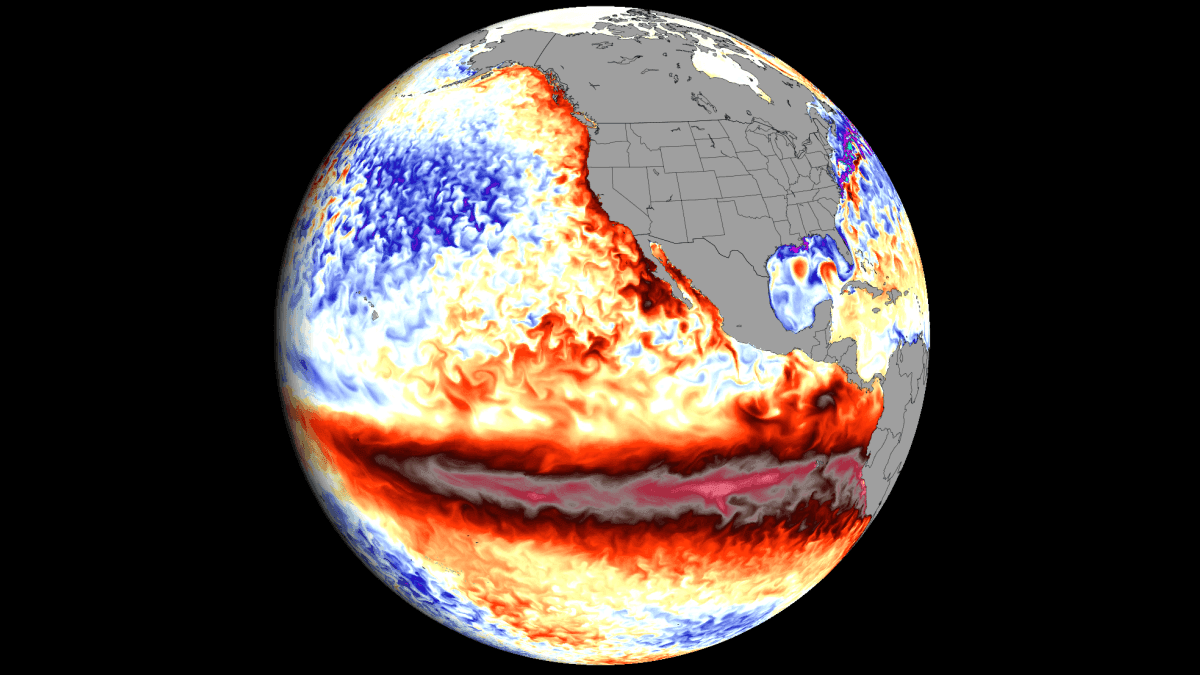
Latest forecasting models indicate that the ongoing Super El Niño is strengthening to record-breaking levels ahead of the winter season. This extreme weather pattern is expected to significantly shape seasonal conditions across the United States and Canada during the 2026/2027 winter season.
Comments2026-08-04

After sitting in 110 large vats at an abandoned Canadian factory for over two decades, a massive batch of fermenting fish sauce is finally being removed. The decomposing capelin and salt mixture has produced a foul stench that has plagued the local community for years. Cleanup crews are now working to safely empty the vats and eliminate the lingering odor.
Comments2026-07-08

Canada's only watchmaking school, the École national d’horlogerie, has remained in operation for 80 years since it was founded after World War II to help veterans reintegrate into society. Today, the institution has evolved its mission and focuses on training professional watchmakers for the global market.
Comments2026-06-27
A recent report on reducing tick density along Ottawa's recreational trails has prompted community discussions on effective personal and environmental tick-control strategies. Readers highly recommend treating clothing, gear, and vehicle interiors with permethrin, alongside utilizing permethrin-soaked tick tubes and employing biological controls like chickens or natural predators.
Comments2026-06-22

The Canadian federal government is planning a nuclear renaissance by constructing up to 10 new reactors over the next 15 years. This major infrastructure expansion will be completed by 2040 to significantly boost national energy production. The initiative will also diversify the power grid by building at least one of these new facilities outside of Ontario.
Comments2026-06-16
The retrieval of critical ocean sensors by the United States is severely disrupting international climate research, particularly for Canadian scientists monitoring the Atlantic Meridional Overturning Circulation ahead of El Niño. This specific action highlights a broader, systematic effort by the Office of Management and Budget to politicize, defund, and dismantle American scientific infrastructure. Researchers warn that withholding appropriated funds and arbitrarily cancelling grants will devastate the scientific community and permanently damage global research leadership.
Comments2026-06-12

"Don't You Just Upload It to ChatGPT?"
2026-06-12Many users assume ChatGPT can seamlessly replace human translators, but a freelance linguist proves otherwise with a humorous Ottawa anecdote. The story highlights specific instances where AI failed to grasp cultural nuance and context. Ultimately, it serves as a reminder that professional human judgment remains irreplaceable in the translation industry.
Comments2026-06-11
Petition to Withdraw Canada's Bill C-22
2026-06-11A petition is urging the Canadian government to withdraw Bill C-22 and the upcoming Bill C-34, legislation that critics warn will severely compromise digital privacy through encryption backdoors and bulk metadata retention. Meanwhile, industry observers are debating whether these strict surveillance measures will further stifle Canada's domestic tech sector or if the ecosystem's struggles stem primarily from local investment and capital market deficiencies.
Comments2026-05-27

In a strategic shift away from US suppliers, Canada is ordering a new military aircraft fleet from Sweden. Mark Carney announced the purchase of Saab's GlobalEye early warning planes to enhance surveillance and patrol capabilities across the country's Arctic territory.
Comments2026-05-14
Computer Hobby Movement in Canada
2026-05-14The York University Computer Museum (YUCoM) serves as a historical collection and research center dedicated to the history of computing in Canada. By focusing on the Canadian computer hobby movement, the museum preserves the nation's early technological milestones. It remains a vital resource for understanding the evolution and heritage of domestic computing.
Comments2026-05-12

The Canadian government has introduced Bill C-22, a new surveillance proposal also known as the Lawful Access Act. This legislation is a repackaged version of last year's Bill C-2, which was abandoned after facing intense backlash from the privacy community for threatening digital rights under the pretext of border security.
Comments2026-05-10

Dedicated volunteers travel across the globe to preserve the scientific practice of bird banding and track avian migrations. However, these crucial Canadian conservation programs are currently facing significant threats due to severe cross-border funding cuts.
Comments2026-05-06

Telus is using AI to alter the accents of its offshore call center agents in real time to reduce communication friction. The practice has sparked public backlash and criticism from labor groups who argue the technology is deceptive and requires mandatory disclosure. Meanwhile, Canadian competitors Rogers and Bell have confirmed they have no plans to implement similar voice-altering tools.
Comments2026-04-30

Rivian drivers can stop vehicle data collection by disabling cellular connectivity, but doing so will also disable essential features like navigation and over-the-air updates. While Canadian owners can toggle this off in their settings menu, non-Canadian drivers must schedule a service appointment to have the eSIM disabled. Users should also note that turning off connectivity does not automatically cancel paid Rivian subscriptions.
Comments2026-04-27
Three men in Toronto are facing charges for using a Stingray-like cell tower simulator to send spam and phishing text messages. Although authorities claim the criminal device is unprecedented in Canada, critics point out that law enforcement regularly uses similar surveillance technology. The suspects reportedly allowed emergency calls to bypass their fake network to avoid immediate detection by government scanners.
Comments