Breaking Tech News Today
Big technology stories can develop quickly, and this section highlights the ones drawing attention right now. It brings together significant announcements, product launches, company news, and industry developments so readers can see the most notable tech stories at a glance.
The kinds of events that surface here include surprise product unveilings, major acquisitions, leadership changes at prominent companies, significant outages or security incidents, and regulatory decisions with immediate impact. What unites them is urgency: these are the stories people are reacting to today.
When a big story breaks, early details are often incomplete and context is scarce. Following a curated feed of the most significant developments helps readers grasp what actually happened and why it matters, without drowning in speculation and duplicate takes.
The article examines society's growing complacency toward the normalization of surveillance technologies on college campuses. In response, reader discussions quickly pivoted to broader concerns about government overreach and the suppression of intelligence leaks. Commenters reflected on the legacy of whistleblowers like Edward Snowden, expressing deep frustration over political corruption and a perceived lack of true patriotism among modern leaders.
Comments
This article explores the application of CIA-style intelligence analysis and data modeling to evaluate a college football team. By treating the sports team like a foreign adversary, the project demonstrates how geopolitical analytical techniques can be repurposed to uncover hidden insights and predict on-field performance.
Comments

Scientists are intensifying their research into the unique cellular mechanisms that allow the human liver to regenerate itself after severe injury. Unlocking the biological secrets behind this remarkable process could drive major breakthroughs in regenerative medicine and biotechnology. These insights may eventually allow medical technologists to replicate these natural healing capabilities in the lab to treat chronic organ failure.
Comments
Researchers are leveraging next-generation large language models like GPT-6 and Opus 5.5 to decode complex 17th-century correspondence and trace the historical spread of alchemical knowledge. This application of advanced AI to archaic texts highlights the expanding role of cutting-edge technology in revolutionizing academic research and historical preservation.
CommentsA new research paper demonstrates a situational method for forging 1024-bit RSA signatures in nearly Special Number Field Sieve (SNFS) time by exploiting temporary access to a raw, unpadded RSA signing oracle. Rather than breaking RSA-1024 universally, the technique allows attackers to extract enough information during a session to generate future forgeries even after the private key becomes inaccessible. The researchers outline practical real-world scenarios where this vulnerability could be exploited, highlighting the ongoing risks of legacy textbook RSA implementations.
Comments
This retrospective explores the historical evolution of Windows scroll bar shortcuts, highlighting forgotten navigation methods like right-clicking and shift-clicking. The article details how these early interaction techniques shaped the user experience in older versions of the operating system before modern scrolling gestures became the standard.
Comments
Carbon is a newly launched open-source manufacturing ERP, MRP, MES, and QMS platform released under an AGPL-3.0 license. The software allows organizations to maintain complete control over their technology stack by supporting on-premises, VPC, and fully air-gapped deployments. Additionally, it is built on a self-hosted Postgres database to ensure users fully own their underlying data infrastructure.
CommentsI don't want the details
2026-09-24This article examines how accepting reasonable explanations without exploring the underlying details is a common tactic to avoid making necessary changes in tech organizations. By settling for surface-level justifications, teams can easily maintain the status quo rather than tackling complex engineering or product problems.
CommentsZ80 REPL (2018)
2026-09-24Prompted by an article on Z80 REPLs, readers share nostalgic memories of the built-in assemblers and monitor programs found in classic 8-bit computers like the Apple II, Commodore 64, and BBC Micro. Many commenters recall how these early, integrated environments were crucial tools for learning to program and reverse engineering software. The conversation also touches on the technical implementation of these features, such as the non-maskable interrupts used by freezer cartridges to invoke monitor routines.
Comments
The United States has criticized Australia's proposed legislation that would require tech firms to allow users to opt out of algorithmic feeds. The US government argues that the draft laws, which impose fines on companies for failing to provide an option to switch off algorithms, amount to censorship.
CommentsOpenAI's GPT-6 Astra has successfully decrypted an Enigma message that has remained unsolved since 2005 by leveraging a known plaintext technique. The AI used the repeated place name Rosenow from a related previously broken message as a cryptographic crib to align the machine's settings. The newly translated text reveals a historical military transmission requesting a route of march from the Rosenow district.
CommentsMicrosoft discontinued Visual FoxPro in 2007, but developers have now revived the legacy programming environment. The new project provides a 64-bit runtime and modern IDE for existing Visual FoxPro 9 applications. This rebuild reconstructs the original language using contemporary technologies, including Electron, React, and a Rust-based WebAssembly virtual machine.
CommentsA Pentagon report claims an overreliance on artificial intelligence contributed to a reckless missile strike on a school in Iran, though critics argue the technology is merely a scapegoat for human incompetence and gutted vetting teams. Observers contend that military leadership pushed for high target quotas without due diligence, using AI to deflect blame for flawed command decisions and accelerated bad policies.
Comments
MUNI Heritage Weekend in San Francisco
2026-09-23At the 2026 MUNI Heritage Weekend in San Francisco, a photographer utilized specialized imaging technology to document the historic transit system. The enthusiast spent three hours trackside using a line scan camera to capture continuous digital scans of passing trams.
CommentsDespite a harsh post-ZIRP tech job market worsened by AI-driven structural issues, the author shares a successful hiring anecdote that bypasses the traditional pitfalls of the Secretary Problem. The piece advocates for shifting the software industry toward collaborative, non-zero-sum matchmaking as the default hiring practice to better serve both employers and candidates.
Comments
Expanding upon recent congressional testimony, this article examines the shifting power dynamics and competitive landscape within the open-source model ecosystem. It highlights the growing influence of open models and their strategic implications for the broader technology industry and future regulatory policy.
Comments
Filmmaker and tech pioneer George Lucas is gifting the city of Los Angeles with the new Lucas Museum of Narrative Art. The upcoming cultural institution is expected to become a prominent landmark and a must-visit destination for tourists.
Comments
Obscura is a privacy-first VPN that utilizes a two-party relay system to guarantee it cannot log user activity. The service requires no email address for registration and includes built-in blocking for ads, trackers, and malware. It is currently available across all major desktop and mobile platforms.
CommentsCan gzip be a language model?
2026-09-23A recent article explores whether the traditional gzip compression algorithm can be repurposed as a functional language model. Building on the author's previous experiments with non-neural text generation, the piece demonstrates how standard data compression techniques can predict and generate text without requiring neural networks, weights, or training.
Comments
Apple has introduced persistent ads directly into the iOS interface, sparking widespread frustration among its user base. Many customers are criticizing the move, arguing that the new additions cheapen the premium experience traditionally associated with the company's devices.
CommentsWhat Sun got wrong
2026-09-22Reader discussions on Sun Microsystems' decline contrast its frustrating enterprise purchasing experience and highly controlled, vertically integrated ecosystem with the streamlined, commoditized hardware market. Although some debate the technical openness of the SPARC architecture, the consensus is that the company's closed platform ultimately failed to compete against the cheaper, interchangeable x86 and Linux stack.
Comments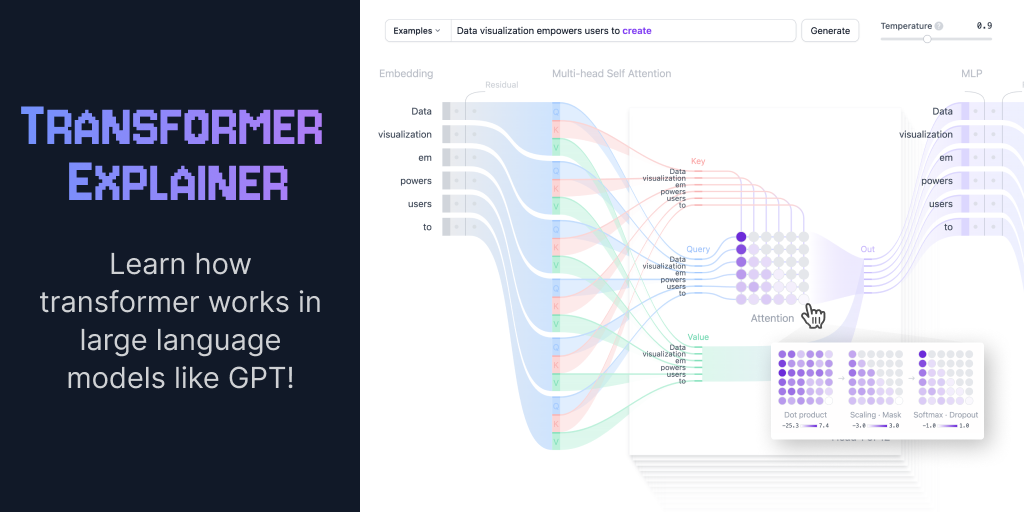
Transformers Explained Visually
2026-09-22A newly released interactive visualization tool provides a visual breakdown of how transformer models operate within large language models like GPT. This educational resource allows users to explore the complex inner workings of modern AI architectures in a highly accessible and engaging way. It serves as a valuable reference for developers and enthusiasts looking to demystify the foundational technology behind modern generative AI.
Comments
Attention is all you have
2026-09-22This piece examines the psychological Tetris effect, where prolonged exposure to repetitive activities like playing Tetris begins to alter our thoughts and visual perceptions. Titled Attention is All You Have, the article uses this phenomenon to illustrate how our limited focus is entirely consumed and shaped by the repetitive digital tasks we engage with daily.
Comments
Anthropic is currently experiencing elevated error rates across multiple models of its AI assistant, Claude. The company's official status page indicates ongoing service disruptions that may impact response times and overall reliability while the technical team works to resolve the issue.
Comments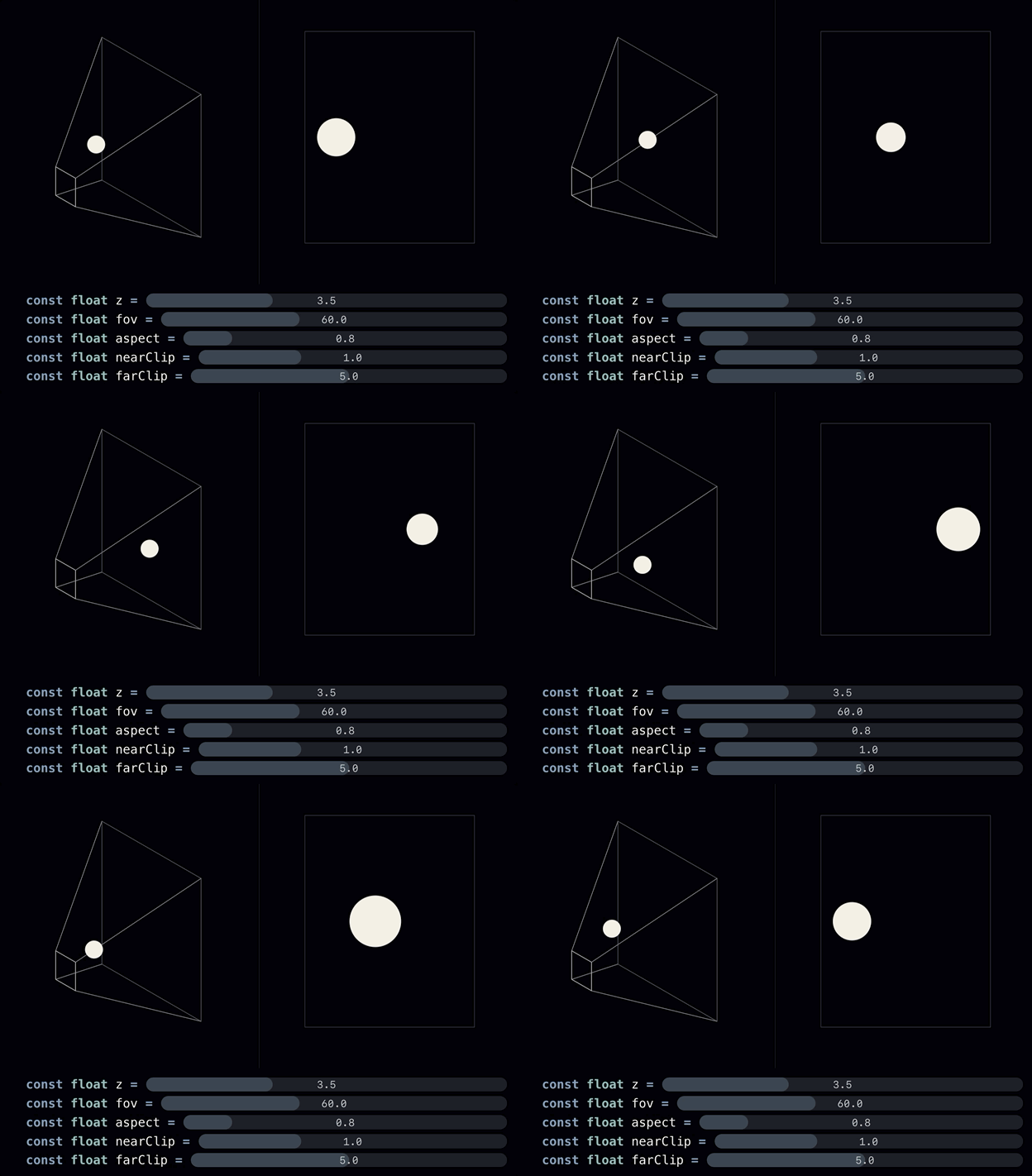
Divide by depth for instant 3D
2026-09-22A new technical tutorial explores the transition from relying on high-level game frameworks to understanding the underlying math of 3D rendering. It specifically breaks down the divide by depth technique used in computer graphics. By mastering this concept, developers can implement custom camera projections to achieve instant 3D effects without relying on pre-built engine tools.
Comments
Zelda Williams is urging fans to stop creating and sharing AI-generated videos of her late father, Robin Williams, asking those responsible to have some shame. Her public plea highlights the growing ethical concerns in the tech space regarding the unauthorized use of artificial intelligence to replicate deceased individuals.
Comments
The Advisory Group on Mathematics and Artificial Intelligence has published a guest post exploring the intersection of mathematical principles and artificial intelligence. The article, which was converted from a different file format using AI, outlines the group's foundational perspectives on this critical technological relationship.
Comments
How do traffic signals work? (2019)
2026-09-22This 2019 explainer details the underlying technology and operational logic behind modern traffic signal systems. It breaks down how sensors, timers, and centralized networks coordinate to efficiently manage urban traffic flow. The piece provides a foundational look at the engineering that keeps our daily commutes safe and organized.
CommentsFrontier AI on Your Own Hardware
2026-09-22A recent classroom poll revealed that 80 percent of students fear AI will prevent them from securing jobs after graduation. In response to these growing employment anxieties, the tech industry is increasingly focusing on enabling users to run frontier AI models directly on their own personal hardware. This shift toward local processing aims to democratize advanced AI capabilities and empower the next generation of workers to harness powerful tools independently.
Comments
First Shader from Zero in Godot 4
2026-09-22A new Godot 4 tutorial teaches developers how to build their first shader from scratch. The guide covers fundamental techniques such as texture sampling, UV coordinate shifting, and region masking. It concludes by demonstrating how to use noise to generate random shapes for a dynamic portal effect.
Comments