Breaking Tech News (news)
When something big happens in technology, it lands here. This section collects significant headlines from across the industry, including product launches, corporate shakeups, AI breakthroughs, and market-moving announcements. It is built for readers who want the day's most notable tech developments at a glance.
The stories that qualify tend to be the ones people talk about: surprise acquisitions, flagship AI model releases, major outages and security incidents, sudden executive departures, and regulatory decisions with immediate consequences. Smaller items make the cut when they signal a larger shift underway.
In a fast industry, the gap between hearing news early and hearing it late can shape decisions about investments, products, and careers. Readers who need to react quickly, from traders to founders to reporters, treat a breaking-news feed as their first stop before digging deeper elsewhere.

YC-backed startup truemetrics, which uses smartphone technology to optimize last-mile delivery routing, is hiring a Go-To-Market Lead in Berlin to help scale its core enterprise business and discover new product opportunities. The profitable company is seeking an autonomous commercial leader to work directly with the founders as it aims to grow its annual recurring revenue from €1.5M to over €10M.
Comments
GitHub has dramatically improved its code search performance by case-folding source code at memory speed using branch-free loops and byte-space arithmetic. This technique allows the platform to process every byte of code at rates exceeding 45 GiB/s on just a single core.
Comments
Oxide Computer raises $445M (SEC Form D)
2026-08-05Hardware startup Oxide Computer has raised $445 million in a Series D funding round, marking its fourth major capital raise in recent years. Although the company states this influx of capital ensures its long-term independence, community discussions reflect skepticism about whether massive funding guarantees actual business success. Commenters also note that Oxide targets specialized markets like high-frequency trading firms using advanced networking technologies, rather than pursuing traditional enterprise software customers.
Comments
LLMs reward expertise
2026-08-04Recent reader discussions highlight that large language models heavily favor users with existing technical expertise, as novices often lack the specific vocabulary needed to prompt effective code generation. While programming experts can build simple applications in a single prompt, non-technical users frequently get trapped in endless brainstorming loops or struggle with basic developer interfaces. This reveals a significant gap between the promised democratization of software creation and the reality of using AI tools without foundational domain knowledge.
CommentsAlthough the original article highlights ten recent advances in mathematics and theoretical computer science, reader discussions primarily focus on the societal and political implications of exponential technological growth driven by large language models. Commenters express concern over the unprecedented ability of AI to scalably manipulate individuals through highly personalized, real-time conversational engagement. The debate also explores how these computational breakthroughs will impact experimental fields like biology and potentially exacerbate political polarization through advanced digital manipulation.
Comments
Devtools must be open source
2026-08-04The article argues that developer tools must remain open source to support the industry's rapid shift toward highly personalized software. Open-source devtools provide the necessary flexibility and community-driven innovation required to build these customized applications. Ultimately, keeping these tools open is essential for developers to thrive in this new era of personalized technology.
CommentsAsk HN: Who is hiring? (August 2026)
2026-08-04Hacker News has launched the August 2026 edition of its monthly "Who is hiring?" thread, providing a centralized platform for tech professionals to discover new job opportunities. Companies and recruiters are actively posting open roles across various engineering and technology disciplines. Job seekers can browse the community-driven discussion to explore these openings and connect directly with potential employers.
Comments
A developer reflects on their unsuccessful 2015 Microsoft internship interview, which they pursued during their computer science degree after gaining confidence from open-source contributions. The author recalls targeting the tech giant specifically because of its impressive work on TypeScript and the open-source rewrite of the C# compiler.
CommentsThe August 2026 Hacker News hiring thread features numerous software engineers and infrastructure specialists showcasing their technical expertise to potential employers. Candidates highlight extensive backgrounds in AI infrastructure, distributed computing, and full-stack development using languages like Rust, Go, and TypeScript. While the majority of applicants are seeking remote opportunities, several remain open to relocation for the right roles.
Comments
Serving frontier AI models like Kimi and GLM at scale requires overcoming significant GPU memory constraints through techniques like KV cache quantization and weight compression. These optimizations enable faster and cheaper deployment, while newly implemented integrity checks ensure safer model serving.
CommentsThere Will Come Soft Rains (1950) [pdf]
2026-08-04Readers are revisiting Ray Bradbury's classic short stories There Will Come Soft Rains and The Pedestrian to discuss their enduring relevance to modern technological isolation and existential threats. The conversation compares the tales of post-human automation and nuclear annihilation to contemporary anxieties like global warming and upcoming science fiction films. Ultimately, the discussion highlights a debate over Bradbury's literary style and a growing cultural fatigue with dystopian narratives.
Comments
Andy Pavlo has joined ClickHouse, Inc. to establish and lead a new research team named ClickHouse Labs. This strategic addition will help expand the company's research capabilities and drive future technological innovation.
CommentsTwenty Years of Pandoc
2026-08-04The open-source universal document converter Pandoc is celebrating a major milestone by marking its twentieth anniversary. Over the past two decades, the software has become an indispensable utility for developers and academics to seamlessly convert between various markup formats. This occasion highlights the enduring impact and continued relevance of the foundational project within the modern tech ecosystem.
Comments
Massively Parallel Postgres Backups
2026-08-04PlanetScale has significantly reduced backup times for petabyte-scale sharded Postgres databases by completing the process in just a few hours. The company achieves this efficiency by leveraging massively parallel infrastructure, object storage, and WAL replay technologies to handle the massive data loads.
CommentsBattle of the Beams
2026-08-04Discussions surrounding the article Battle of the Beams highlight the pivotal World War II advancements in radar and radio navigation pioneered by scientists like Reginald Victor Jones. These historic breakthroughs in electronic countermeasures and beam navigation not only altered the course of the war but also established the technological foundation for modern aviation, GPS, and contemporary radar systems.
Comments
SwiftUI After 7 Years
2026-08-03Despite being introduced as the future of Apple development in 2019, SwiftUI still struggles with significant stability and performance issues seven years later. The framework continues to feel like a perpetual beta to many developers. A recent analysis explores the underlying flaws preventing the technology from reaching its full potential.
Comments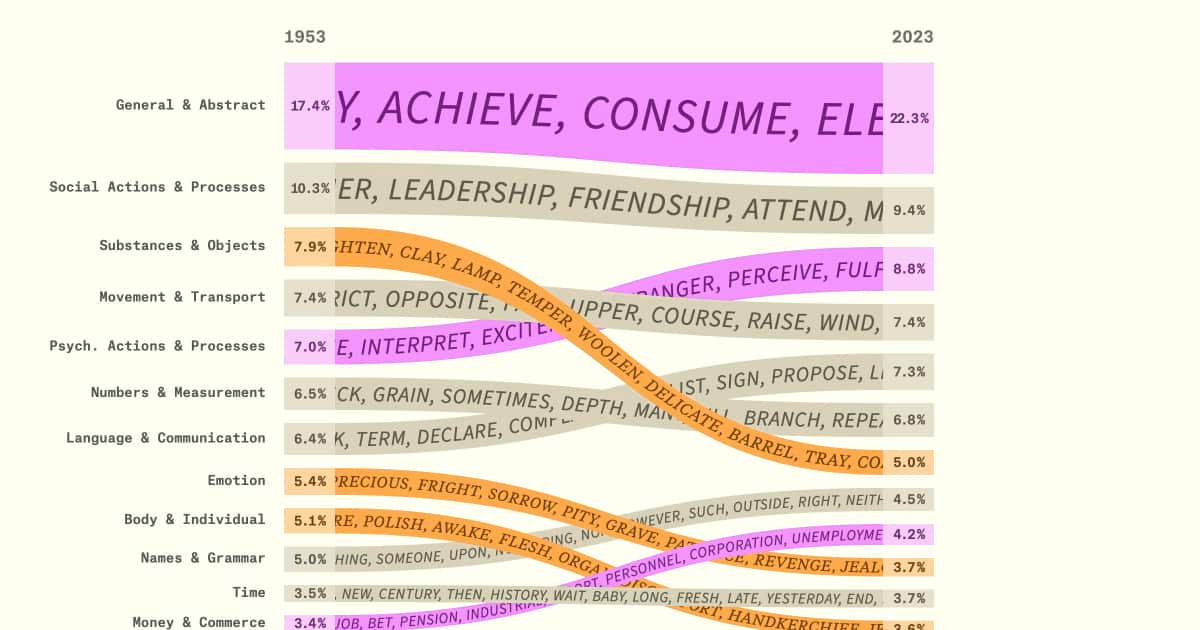
A recent comparison of essential vocabulary lists highlights how the core words taught to English language learners have evolved between 1953 and 2023. The analysis reveals that modern language instruction prioritizes different terms compared to those used seven decades ago. This shift reflects broader changes in daily communication, technological advancements, and evolving societal needs.
CommentsTwenty Years of RISC OS Open
2026-08-03The tech community is marking the twentieth anniversary of RISC OS Open by reflecting on the enduring legacy of the Acorn operating system and the dedicated developers who kept it alive. Long-time users and programmers shared nostalgic memories of the platform's unique ARM assembly environment and its historical significance as the original home for notable software like the Sibelius music notation program.
Comments
A graphic arts nonprofit recently highlighted the historical craftsmanship of transit passes, exploring how these everyday items were meticulously designed by hand before the digital era. This look back at analog typography and illustration techniques offers a fascinating contrast to the automated, digital ticketing systems used in modern transit.
Comments
The Myth of Snow Leopard
2026-08-03A recent tech retrospective examines the legacy of Snow Leopard, noting its notoriously chaotic and flawed execution. Despite being a complete hot mess during its run, the enduring myth surrounding it holds surprising value today. Ultimately, the narrative offers practical lessons and useful insights for modern tech professionals navigating complex industry challenges.
CommentsDiátaxis
2026-08-02Diátaxis is a widely-adopted framework in the software industry that provides a systematic approach to thinking about and creating technical documentation. This pragmatic methodology helps developers structure their documentation more effectively to meet the needs of their users.
Comments
Despite claims that Meta has little to show for its artificial intelligence investments, the company has developed competitive Muse AI models and secured distribution to 3.6 billion daily users. However, Mark Zuckerberg's aggressive $130 billion to $145 billion capital expenditure plan is severely draining the tech giant's free cash flow.
Comments
Following the upcoming rollout of plug-in solar, energy group Regen is urging the government to prioritize the introduction of plug-in batteries. This expansion of home energy storage technology could allow millions of additional households to significantly reduce their electricity bills.
CommentsA recent article explores four distinct time scales involved in the development and deployment of emerging technologies. Readers have noted that this framework closely parallels NASA's Technology Readiness Level, which measures technology maturity across various adoption phases.
Comments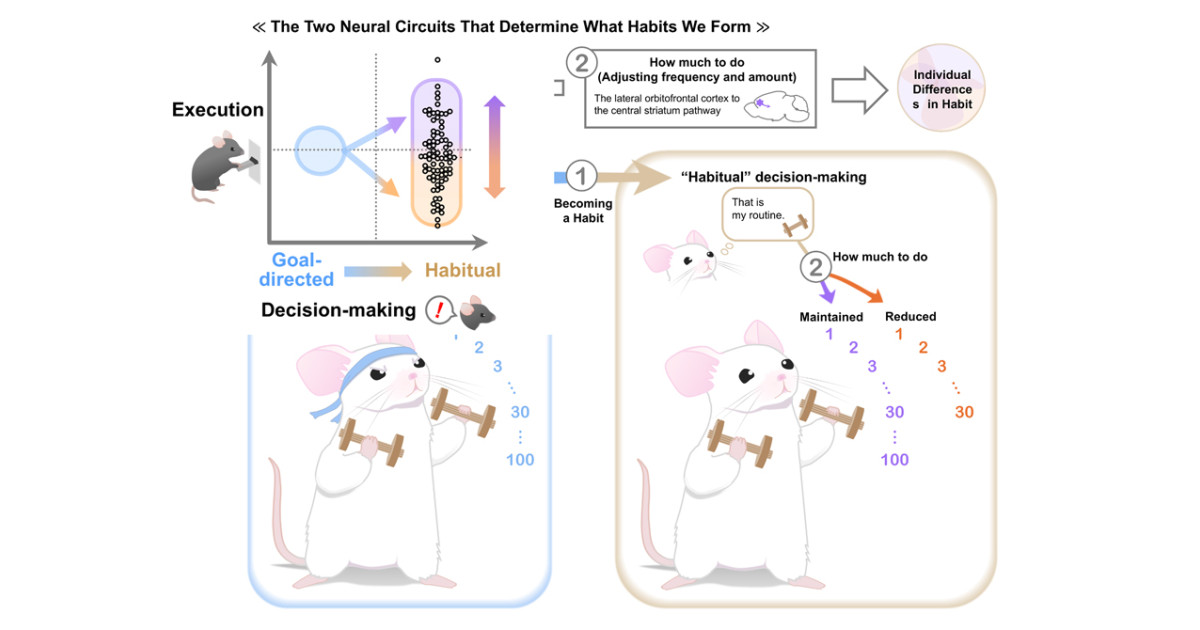
Researcher Nozomi Asaoka is leading a new study aimed at unraveling the complex mysteries of habit formation. By investigating the underlying mechanisms of how daily routines develop, this research offers valuable insights for behavioral science. The findings could ultimately help developers create better health and productivity technologies.
Comments
AI infrastructure startup Morph, a YC S23 company, is hiring a Member of Technical Staff to optimize its inference stack for open models. The performance engineer will work directly with founders to improve system speed, cost-efficiency, and reliability by optimizing everything from individual GPU kernels to distributed execution. Ideal candidates will possess deep expertise in GPU performance and complex production systems to help scale frontier-level model serving.
CommentsBut can your calculator run Linux?
2026-08-02Tech enthusiasts reflect on the legacy of HP graphing calculators, praising their physical buttons and specialized math capabilities while noting that smartphones and laptops have largely replaced them. Although the prospect of running Linux on a calculator is an amusing novelty, users agree that modern alternatives have rendered these dedicated devices mostly obsolete for everyday use.
Comments
A 2023 analysis examines how Google's strategic decisions, including the discontinuation of Google Reader and the push toward algorithmic feeds, significantly accelerated the decline of RSS adoption. By prioritizing proprietary, walled-garden platforms over open web standards, the tech giant fundamentally shifted user behavior away from decentralized content syndication.
CommentsAccelerated by Western technology export restrictions, China has begun manufacturing its own advanced deep-ultraviolet lithography machines to secure its domestic semiconductor supply chain. While the nation still trails behind in extreme ultraviolet technology, observers note that massive state funding and long-term strategic planning are rapidly closing the existing technological gaps. Ultimately, commentators suggest these sanctions have only hastened Beijing's inevitable push toward complete technological independence.
Comments
Alex Davies highlights the critical but often overlooked world of test engineering in his new book, Kobuk the Destroyer. The book offers an engaging exploration of the unsung professionals who rigorously test and ensure the reliability of the technology we use every day.
Comments