Breaking Tech News (news)
When something big happens in technology, it lands here. This section collects significant headlines from across the industry, including product launches, corporate shakeups, AI breakthroughs, and market-moving announcements. It is built for readers who want the day's most notable tech developments at a glance.
The stories that qualify tend to be the ones people talk about: surprise acquisitions, flagship AI model releases, major outages and security incidents, sudden executive departures, and regulatory decisions with immediate consequences. Smaller items make the cut when they signal a larger shift underway.
In a fast industry, the gap between hearing news early and hearing it late can shape decisions about investments, products, and careers. Readers who need to react quickly, from traders to founders to reporters, treat a breaking-news feed as their first stop before digging deeper elsewhere.
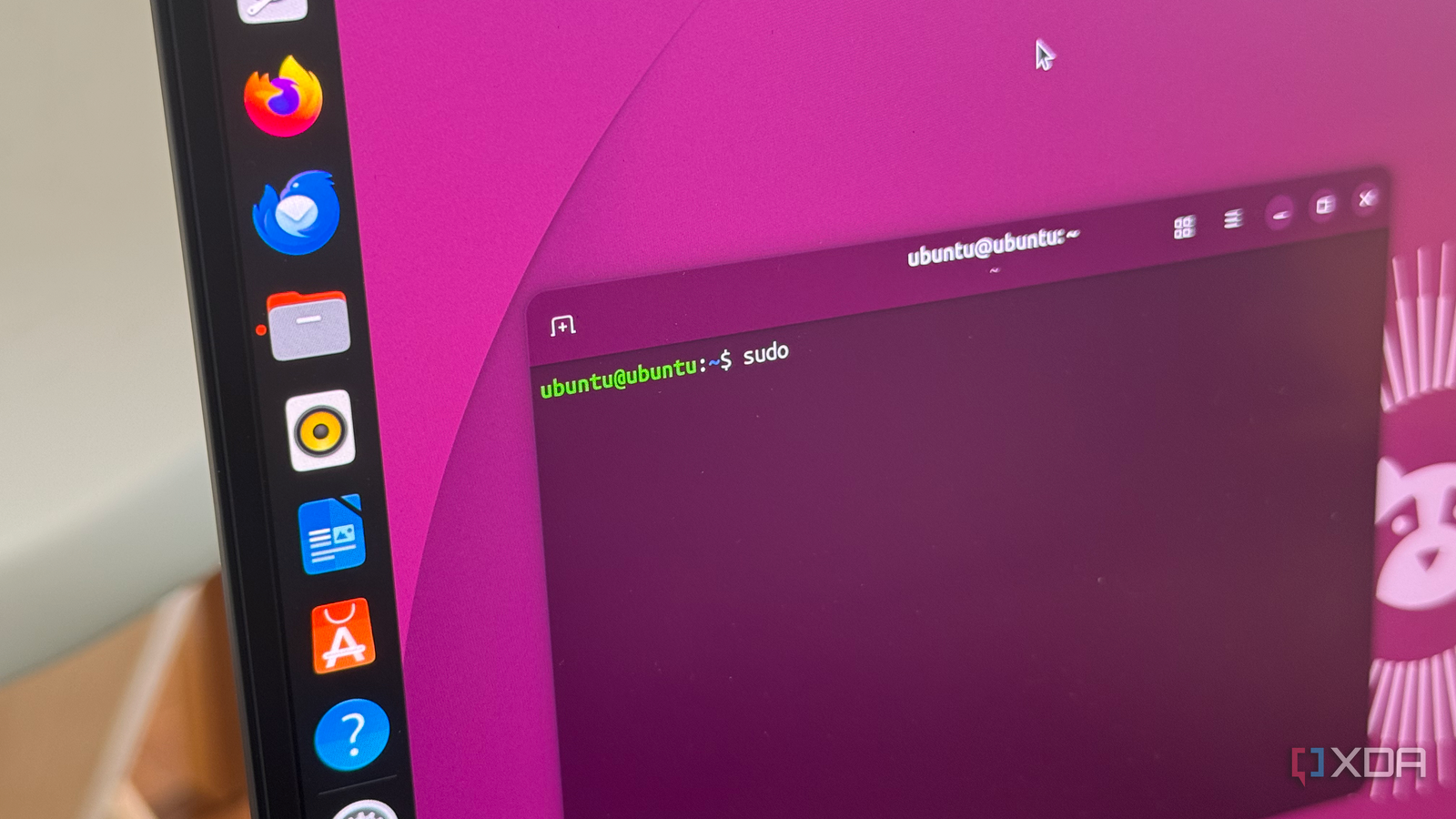
A 25-year-old video patent has officially expired, resolving a long-standing legal headache for the Linux operating system. This milestone marks the end of a rather small and niche era in software licensing. Developers can now utilize the technology without the looming threat of patent infringement.
CommentsA tiny satellite will position itself behind the Moon to use the lunar body as a shield against Earth's interference. Although the region is commonly misnamed as the dark side, it is technically the far side of the Moon. Utilizing this far side location will block terrestrial signals and allow the small spacecraft to operate in a uniquely quiet environment.
Comments
Bluesky recently revealed the technical details behind how it overlays its logo on user screenshots. Surprisingly, the platform achieves this watermarking effect by utilizing a standard iOS UI component called UITextField instead of complex custom rendering. This clever technique demonstrates a highly resourceful approach to implementing visual features using foundational development tools.
CommentsA judge has established a framework for Nine PBS to retrieve its archival data, prompting readers to compare the dispute to the recent Synapse bankruptcy where a middleman's failure left end-users without regulatory protection. The discussion underscores the critical need for clearer regulations to prevent tech and fintech companies from bypassing established legal frameworks under the guise of business innovation.
Comments
This technical overview explores the mechanics of stack memory allocation, detailing how functions like alloca dynamically adjust the stack pointer. It also covers the concept of stack probing, explaining how operating systems use guard pages to safely handle memory access and prevent segmentation faults.
CommentsHow to disable or avoid intrusive AI
2026-08-18A new guide provides practical steps for everyday users to disable or avoid unwanted artificial intelligence features in their personal tech environments. The tutorial addresses growing consumer frustration by offering actionable advice to minimize intrusive AI integrations and reclaim control over daily digital tools.
Comments
A simple fix for LLM tail latency
2026-08-18A newly proposed technique addresses large language model tail latency by simply sending every request twice and returning the faster response. This redundant execution strategy effectively bypasses slow outlier requests to significantly improve overall system responsiveness. Ultimately, it provides developers with a highly practical and low-complexity solution for optimizing LLM performance.
CommentsThe Life and Death of Direct File [pdf]
2026-08-17A retrospective on the IRS Direct File initiative details the program's success and its ultimate demise driven by political forces and centralized executive control rather than technical flaws. Readers praise the even-handed report for highlighting the vulnerability of public sector software to partisan power imbalances, offering vital lessons for future government tech delivery.
CommentsLow-Tech Ceramic Water Filter
2026-08-17Reader discussions highlight the enduring effectiveness of low-tech ceramic water filters, widely used in countries like Brazil and Sri Lanka, which naturally cool drinking water through evaporative cooling without requiring electricity. These traditional clay filters are praised as highly efficient, sustainable alternatives to expensive modern purification systems, illustrating how resource constraints often drive practical, everyday engineering solutions.
Comments
A recent interview highlights Amit Patel, creator of the 1990 BBS door game Solar Realms Elite, and his diverse career spanning programming, data analysis, and artificial intelligence. Patel is now leveraging his extensive technical experience to build interactive reference materials for modern game developers.
Comments
This retrospective explores the technical history of Intel's Pentium MMX processor and its pioneering integration of SIMD instructions into mainstream desktop PCs during the 1990s. The article details how this major architectural shift impacted software development and paved the way for modern parallel processing on consumer hardware.
CommentsClamiga: Common Lisp for the Amiga
2026-08-17Clamiga is a Common Lisp implementation for the classic Amiga computer that offers generous heap limits compared to modern alternatives. However, the community is mocking the project's unfortunate name, which sounds like the sexually transmitted infection chlamydia. Despite the branding blunder, retro computing enthusiasts remain intrigued by the technical achievement of bringing Common Lisp to the Amiga platform.
Comments
This article explores the groundbreaking innovations of scientist Mária Telkes, a pioneer in solar energy and alternative technology. Her remarkable inventions include the world's first solar-heated home and an electricity-free Easy Bake Oven, showcasing her lifelong dedication to practical, sustainable solutions.
Comments
Industry discussions reveal that AI in drug discovery is currently hindered by a reliance on limited existing data, meaning the technology accelerates routine tasks but has yet to yield genuinely novel scientific breakthroughs. Consequently, experts suggest the field's most immediate, tangible impact may actually be found in bottom-up, patient-centric care management rather than top-down drug development.
Comments
Eden GeoPower has developed a pulsed-power technology that uses electricity to fracture underground rocks and extract stimulated geologic hydrogen. This innovative rock-zapping technique unlocks access to a vast, previously untapped source of clean energy.
CommentsThe unpredictable nature of artificial intelligence is shifting software development from traditional coding to essential leadership skills. Developers must now prioritize providing clear context, direction, and iterative feedback to guide AI models, highlighting a fundamental evolution in how modern tech products are built.
Comments
A developer recently shared how they leveraged Codex for automated research to optimize a computational kernel, achieving a remarkable 232x performance speedup. The article details the iterative process of refining AI prompts and learning to ask better questions, demonstrating the growing capability of code models to autonomously drive deep technical research.
Comments
Egypt's 1962 missile development program relied heavily on former Nazi scientists to advance its aerospace technology. The initiative suffered a major disruption when its key coordinator, Heinz Krug, mysteriously disappeared from Munich and was never seen again.
Comments
A spectre is haunting Unicode
2026-08-15A new project called Dampfkraft, described as a collection of beautiful chaos, is reportedly causing unexpected disruptions within the Unicode standard. This emerging issue has been described as a spectre haunting the widely used character encoding system. The situation highlights the ongoing technical challenges developers face when managing unconventional character sets in modern text processing.
Comments
The Magnetophon high-fidelity tape recorder revolutionized the radio industry by enabling programs to be prerecorded and edited before airing. This groundbreaking technology fundamentally reshaped broadcast programming and directly led to the invention of the laugh track.
CommentsA new paper introduces a state-of-the-art method for line art vectorization that models strokes as Bézier curves and utilizes 2D Gaussian splatting for fast, differentiable rendering. By leveraging depth prediction and semantic feature extraction, the technique accurately captures artistic intent, supports video vectorization, and allows for seamless user corrections.
Comments
RISC-V: They should have known better
2026-08-15Developer Dmitry.GR has published a detailed critique explaining his strong distaste for the RISC-V instruction set architecture. The post outlines his specific technical grievances and argues that the creators of the open-standard design should have recognized and avoided its inherent flaws.
Comments
Cultivating solitude and deep focus is essential for fostering the creativity needed to generate groundbreaking ideas. The piece examines the habits of visionaries like filmmaker Ingmar Bergman and mathematician Alexander Grothendieck to illustrate this concept. Ultimately, it highlights how entering a specific mental state is crucial for driving true innovation and technological progress.
Comments
Hello, me. It's been a while
2026-08-14After a fourteen-year hiatus, a blogger is returning to their platform with a new update. Rather than focusing on technical topics, the post serves as a personal reflection on how both the world and the author have changed over the years.
Comments
Choose Boring Technology (2015)
2026-08-14The 2015 piece "Choose Boring Technology" advocates for selecting mature, well-understood tools for core infrastructure rather than chasing the latest industry hype. By relying on predictable systems, engineering teams can focus their innovation efforts on features that directly differentiate their product. This pragmatic approach ultimately reduces maintenance overhead and minimizes the risk of unexpected technical failures.
CommentsSpaghettifying DRAM
2026-08-14A new hardware research project demonstrates how attackers can use DRAM scrambling techniques to unlock restricted CPU features and bypass hardware security boundaries. By intentionally scrambling memory layouts, researchers have found a novel way to access previously hidden system capabilities across the entire processor. This discovery highlights potential new vulnerabilities in modern CPU memory management and underscores the need for robust hardware-level protections.
Comments
Understanding is the new bottleneck
2026-08-14As AI agents write code faster than humans can absorb it, comprehension has emerged as the primary bottleneck in modern software development. To maintain essential human understanding despite this rapid generation, developers are adopting new techniques like explainer docs, quizzes, and shared collaborative spaces.
CommentsNP-overrated
2026-08-14A recent tech analysis argues that NP technology is significantly overhyped and fails to deliver on the lofty promises made by industry proponents. The piece suggests that organizations should critically reevaluate their investments in NP solutions. Ultimately, the article highlights the practical limitations and hidden costs of NP that are frequently overlooked in today's market.
Comments
How Compaction Works in Pi
2026-08-14Large language models require compaction techniques to efficiently manage memory and maintain context during extended interactions. This article breaks down the mechanics of this process and explains how Pi specifically implements compaction to optimize performance and deliver a seamless user experience.
Comments
Ordinary abundance
2026-08-14This article details a walk through a modern apartment from the perspective of first-time inhabitants encountering its amenities. It highlights the contrast between ordinary technological abundance and the profound sense of wonder it evokes in those experiencing it for the first time.
Comments